The right mixing headphones help you hear balance and detail without fighting your room. But an open-back pair for a quiet studio is not necessarily the best choice for tracking or working on the move.
These seven Sennheiser options cover different workflows, including bundles that pair familiar headphones with a case. Here’s how to choose the design that fits yours.
Best 7 Sennheiser Headphones for Mixing Picks for 2026
Best for Detailed Mixing

- Open-back, wide soundstage
- Separate mixing and producing pads
- Detachable cable connects to either earcup
Best For: Critical mixing in a quiet studio
Best for Isolated Monitoring

- Up to 32 dB outside-sound attenuation
- Collapsible, padded over-ear design
- Replaceable pads, padding, and cord
Best For: Monitoring where passive isolation matters
Best Travel-Ready Bundle

- Includes Auray UHC-725 case
- Up to 32 dB outside-sound attenuation
- Collapsible cups and replaceable wear parts
Best For: Portable monitoring with included storage
Best for Open-Back Reference Listening

- Open-back reference design
- Hand-selected matched drivers
- Acoustic silk damping limits distortion
Best For: Quiet-room reference listening and mix checks
Studio Isolation Pick

- Closed over-ear passive isolation
- Accurate, linear sound reproduction
- Exchangeable cable; 245 g
Best For: Mixing and monitoring in noisy spaces
Lightweight DJ Pick
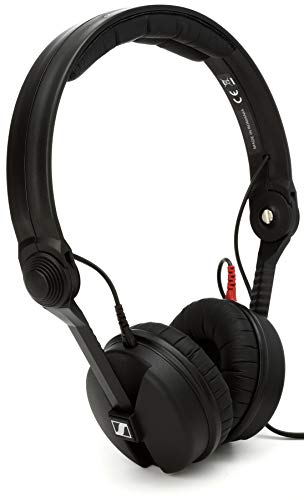
- Lightweight 140 g on-ear design
- Handles high sound pressure levels
- Detachable, single-sided cable
Best For: DJ monitoring and mobile audio work
Case-and-Holder Bundle
Sennheiser HD 25 Monitor Bundle

- Case and padded holder included
- Rotatable capsule for one-ear listening
- Detachable, single-sided cable
Best For: HD 25 buyers who also need storage accessories
Best for Detailed Mixing – Sennheiser HD 490 PRO
If you’re comparing Sennheiser headphones for mixing, the open-back HD 490 PRO is built for detailed listening. Its wide soundstage and precise localization help you place elements in a mix, while its uncolored response is intended to make tonal decisions more reliable.
Best For: Mixing in a quiet studio where stereo placement and tonal accuracy matter.
Pros:
- Wide, dimensional soundstage with precise localization.
- Includes separate mixing and producing ear pads.
- Detachable cable can connect to either earcup; pads are washable and replaceable.
Cons:
- Open-back design is a poor fit when you need isolation from room noise.
- 130-ohm impedance makes source compatibility worth checking.
The two pad options add useful flexibility between production and mix checks. Choose this model when critical listening takes priority over isolation.
Best for Isolated Monitoring – Sennheiser HD 280 Pro
Among Sennheiser headphones for mixing, the HD 280 Pro is a practical closed-back choice when outside noise gets in the way. Its around-ear cups provide up to 32 dB of attenuation, and its coiled cable suits a wired studio setup.
Best For: Monitoring and mix checks in spaces where passive isolation matters.
Pros:
- Closed-ear design attenuates outside sound by up to 32 dB.
- Padded, ergonomic earcups and collapsible earpieces.
- Earpads, headband padding, and audio cord are replaceable.
Cons:
- Closed-back design does not provide the open soundstage of an open-back model.
- Coiled cable may be less convenient if you prefer a straight cable.
This is the more sensible pick when isolation outweighs an expansive presentation. Its replaceable wear parts also make it practical for regular studio use.
Best Travel-Ready Bundle – HD 280 PRO with Auray Case
Sennheiser HD-280 PRO Headphones Bundle with Auray UHC-725 Universal Headphone Case
Check Price On AmazonIf you want Sennheiser headphones for mixing that can travel between workspaces, this bundle pairs the closed-back HD 280 PRO with an Auray UHC-725 headphone case. The headphones offer up to 32 dB of outside-sound attenuation and fold for transport.
Best For: Buyers who want isolated wired monitoring and a case in one package.
Pros:
- Includes an Auray UHC-725 headphone case.
- Closed-ear design offers up to 32 dB of outside-sound attenuation.
- Collapsible earpieces and replaceable pads, padding, and cord.
Cons:
- Closed-back design is less suited to listeners seeking an open-back presentation.
- The bundled case may be unnecessary if you already own suitable storage.
The case is the main reason to choose this listing over headphones alone. Check that the bundle contents match what you need before buying.
Best for Open-Back Reference Listening – Sennheiser HD 650
The HD 650 is an audiophile open-back option for shoppers considering Sennheiser headphones for mixing. Its matched driver elements and acoustic silk damping are designed to limit distortion, making it a useful candidate for attentive reference listening.
Best For: Critical listening and mix checks in a quiet room.
Pros:
- Open-back design for reference listening.
- Hand-selected matched driver elements.
- Acoustic silk damping is specified to reduce total harmonic distortion to 0.05%.
Cons:
- Open-back design is not ideal when you need isolation.
- Listed as an audiophile headphone rather than a dedicated studio model.
Consider the HD 650 as a quiet-room reference pair, particularly if low-distortion reproduction is a priority. For monitoring around outside noise, a closed-back option is more practical.
Studio Isolation Pick – Sennheiser HD 300 PRO
If you’re comparing Sennheiser headphones for mixing in a noisy room, the HD 300 PRO is the most studio-oriented option here. Its closed, over-ear design provides passive isolation, while Sennheiser describes its sound reproduction as accurate and linear.
Best For: Studio monitoring and mixing where outside noise is a concern.
Pros:
- Closed earcups attenuate ambient noise without active noise cancellation.
- Accurate, linear reproduction is suited to evaluating a mix.
- Padded design supports longer sessions; the cable is exchangeable.
Cons:
- Wired connection limits movement away from your equipment.
- At 245 g, it is heavier than the HD 25 listed here.
The HD 300 PRO makes the strongest case if your priority is an isolated, over-ear monitoring setup rather than a lightweight DJ-style headphone.
Lightweight DJ Pick – Sennheiser HD 25
Among these Sennheiser headphones for mixing, the HD 25 is the portable, on-ear choice. It combines a closed-back, sound-isolating design with high sensitivity and the ability to handle very high sound pressure levels.
Best For: DJ monitoring and mobile audio work where low weight matters.
Pros:
- Weighs 140 g and is designed for comfort over long periods.
- Handles very high sound pressure levels.
- Detachable, single-sided cable can be replaced if needed.
Cons:
- On-ear fit may not suit buyers who prefer full over-ear coverage.
- The supplied notes do not describe its response as linear for mix evaluation.
Choose the HD 25 when lightweight isolation and loud-environment monitoring matter more than an explicitly studio-focused sound description.
Case-and-Holder Bundle – Sennheiser HD 25 Monitor Bundle
Sennheiser HD 25 Monitor Headphones with Headphone Case & Padded Holder Bundle
Check Price On AmazonIf you want Sennheiser headphones for mixing alongside storage accessories, this HD 25 bundle includes a headphone case and a padded holder. The headphones offer sound isolation, a detachable single-sided cable, and a rotatable capsule for single-ear listening.
Best For: Buyers who want HD 25 monitoring headphones with a case and desk-side holder.
Pros:
- Includes a universal headphone case and padded, adjustable-angle holder.
- Rotatable capsule supports single-ear monitoring.
- Lightweight design and detachable cable suit regular handling.
Cons:
- Wired-only connection requires a compatible headphone jack.
- The supplied notes do not specify a linear frequency response for mixing decisions.
This bundle is most compelling for its included accessories and flexible monitoring setup; assess it as an HD 25 package rather than a separate studio-tuned model.
How We Picked the Best Sennheiser Headphones for Mixing
We organized these picks around practical mixing needs: an open-back design for quiet-room work, isolation for recording spaces, and portability for mobile monitoring. We also considered fit, replaceable parts where applicable, and how easily each headphone can be driven by typical studio gear. The two bundles count as separate purchase options, but their included cases do not change the sound of the headphones. No headphone guarantees a mix that translates everywhere, so reference tracks and checks on speakers still matter.
Quick Comparison
For quiet-room mixing: Start with the open-back HD 490 PRO or HD 650. Both let outside sound in and leak audio out, so they are poorly suited to tracking near live microphones.
For isolation: The closed-back HD 280 Pro and HD 300 PRO are more practical when you need to limit bleed or block some room noise. The HD 280 Pro bundle adds a case; choose it for the accessories, not a different listening experience.
For portable monitoring: The on-ear HD 25 and its case-and-holder bundle favor a compact setup. On-ear clamping comfort is personal, especially over long sessions.
Key Buying Factors for Sennheiser Headphones for Mixing
Open-Back Vs. Closed-Back
Open-back headphones are a sensible first look for mixing in a quiet space because they avoid sealing your ears off from the room. That openness comes with sound leakage and little isolation. Closed-back models are more flexible around microphones and in shared spaces, but their sealed presentation may take time to learn. Neither design replaces checking a mix on other playback systems.
Comfort and Fit
Mix decisions get harder when pressure or heat makes you cut sessions short. Consider over-ear versus on-ear fit, clamp force, pad material, and whether replacement pads are readily available for the exact model. If you wear glasses, check how well the pads seal around the frames.
Your Playback Chain
Check the headphone’s impedance, connector, and your audio interface’s headphone output before buying. In particular, confirm that your setup can provide comfortable volume with the HD 650. Avoid comparing headphones at different loudness levels: the louder pair can seem more detailed even when it is not the better match.
Who Should Buy Which Sennheiser Headphones for Mixing?
Choose the HD 490 PRO or HD 650 if you primarily mix in a quiet room and want an open-back over-ear option. Choose the HD 280 Pro for an isolating studio headphone, or the HD 300 PRO if your work also involves broadcast-style monitoring. Pick an HD 25 option when compact, on-ear monitoring matters more than an over-ear fit. For either bundle, compare the total price against buying the headphone and accessories separately; the extras are worthwhile only if you will use them.