Adding smart smoke protection to an older home can improve alerts without requiring a complete electrical retrofit. The best choice depends on your existing wiring, household layout, connectivity needs, and whether you also want carbon monoxide monitoring.
We selected 10 options spanning battery-powered, hardwired, interconnected, app-enabled, and gateway-based systems to help you find a practical upgrade for your home.
Best 10 Smart Smoke Alarms for Older Homes Picks for 2026
Best Smart Smoke and CO Coverage
Kidde Smart Smoke & CO Detector
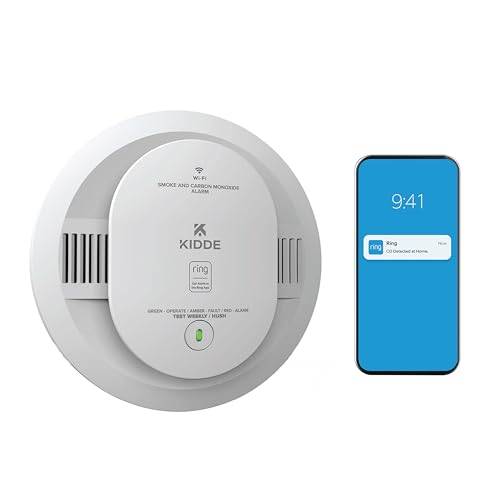
- Detects smoke and carbon monoxide
- Wire-free whole-home interconnectivity
- Ring app alerts without a subscription
Best For: Older homes needing flexible, connected smoke and CO protection
Best Low-Level CO and Air Quality Monitor

- Alerts for low and dangerous CO levels
- Tracks humidity and TVOC levels
- Plug-in power with AA backup
Best For: Connected homes wanting CO and indoor air quality monitoring
Best Straightforward Battery Smoke Alarm
First Alert Battery Smoke Alarm

- Easy battery-powered installation
- Designed to reduce cooking nuisance alarms
- Front-access battery compartment
Best For: Simple smoke coverage without wiring or smart-home features
Whole-Home Wireless Pick
Heiman S1-R 6-Pack with Gateway

- Six alarms plus gateway for broad coverage
- Local wireless interconnection without Wi-Fi
- 10-year batteries and app notifications
Best For: Older homes needing wireless, multi-room smoke coverage
Connected Replacement Pick
First Alert SC5 Smart Smoke and CO Alarm

- Smoke and CO detection in one alarm
- App, voice, and low-battery alerts
- Interconnects with compatible alarms
Best For: Room-by-room upgrades needing smoke and CO coverage
Hardwired Upgrade Pick
Kidde Smart Smoke and CO Detector
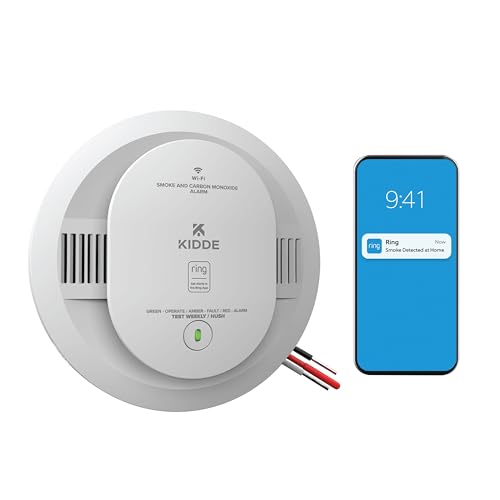
- Smoke and CO detection with AA backup
- Ring app alerts without required subscription
- Connects with compatible hardwired alarms
Best For: Existing hardwired systems using Ring or Alexa
Best with Extra Features
Kidde Smart Smoke & CO Detector
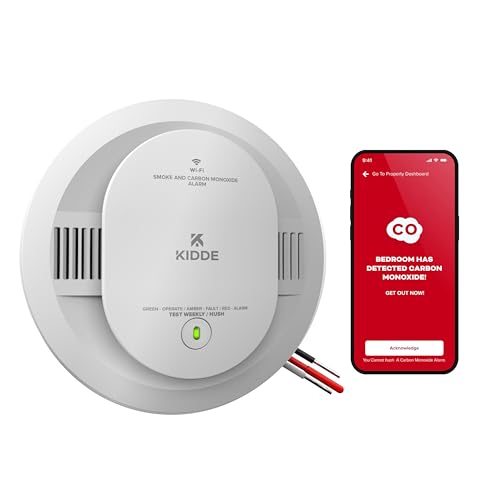
- Hardwired with AA battery backup
- Smoke and CO detection with voice alerts
- Wi-Fi alerts for alarms and low batteries
Best For: Older homes with compatible hardwired alarm wiring
Best Wire-Free Option
Kidde Smart Smoke Detector with Ring

- Battery-powered installation needs no wiring
- Ring alerts for smoke and low battery
- Wireless interconnectivity and Alexa support
Best For: Older homes where adding alarm wiring is difficult
Best Hardwired Ring Choice
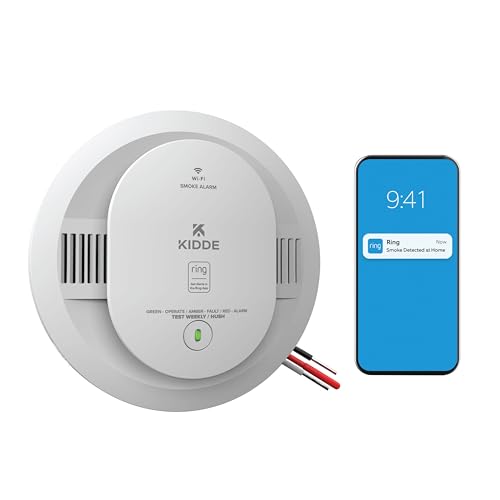
- Hardwired with AA battery backup
- Ring smoke and low-battery notifications
- Works with compatible alarms and Alexa
Best For: Older homes with existing hardwired alarms and Ring devices
Best Smart Smoke and CO Coverage – Kidde Smart Smoke & CO Detector
For older homes where adding new wiring can be inconvenient, this Kidde detector is a practical option among smart smoke alarms for older homes. It runs on two included AA batteries, detects both smoke and carbon monoxide, and sends app alerts without requiring a subscription.
Best For: Homeowners who want wire-free whole-home smoke and CO alerts with Ring and Alexa compatibility.
Pros:
- Detects both smoke and carbon monoxide.
- Provides real-time Ring app notifications for alarms and low battery warnings.
- Wire-free interconnectivity lets all compatible Kidde alarms sound together.
- Enhanced sensing is designed to reduce cooking-related nuisance alarms.
Cons:
- Optional 24/7 monitoring requires a separate Ring subscription.
- Uses replaceable AA batteries rather than a sealed long-life battery.
This is a strong fit for older properties where installation flexibility and coordinated alerts matter. Its combination of smoke, CO, app, and interconnectivity features makes it more capable than a basic standalone alarm.
Best Compact Sealed-Battery Pick – eufy Security Smoke Alarm E10
The eufy E10 is a compact choice among smart smoke alarms for older homes, especially when you want to avoid frequent battery changes or a bulky modern alarm. Its sealed lithium battery is designed to last up to five years, while app alerts provide notifications when you are away.
Best For: Homeowners seeking a small, low-maintenance smoke alarm for bedrooms, hallways, kitchens, or living areas.
Pros:
- Ultra-compact 70 mm design blends into a room.
- Built-in lithium battery provides up to five years of protection.
- Designed to meet UL 217 10th edition standards.
- Offers wireless range up to 656 feet in open air with HomeBase.
Cons:
- Requires a compatible eufy HomeBase to operate.
- The sealed battery is not intended for routine replacement.
The E10 can simplify installation in an older home, but its HomeBase requirement adds an extra equipment consideration. If you already use a compatible HomeBase, its small size and long battery life are appealing advantages.
Best Low-Level CO and Air Quality Monitor – Kidde Smart CO Detector
For older homes where combustion appliances or ventilation are a concern, this Kidde model adds low-level carbon monoxide monitoring and indoor air quality data. It plugs into a standard outlet, includes AA battery backup, and sends real-time app notifications over 2.4 GHz Wi-Fi.
Best For: Connected households that want CO protection plus humidity, TVOC, and broader indoor air quality insights.
Pros:
- Provides alerts for low CO levels from 30–70 ppm as well as dangerous levels.
- Monitors indoor air quality, humidity, and TVOC levels.
- Plug-in design includes two AA batteries for power-outage backup.
- Works with Alexa-enabled devices and Google Home.
Cons:
- It detects carbon monoxide, not smoke.
- Some advanced air-quality insights require an optional subscription.
- Requires access to a suitable electrical outlet and 2.4 GHz Wi-Fi.
This is best used as a connected CO and wellness monitor rather than a replacement for smoke alarms. Its low-level alerts and battery backup may be particularly useful in a home where early notification is a priority.
Best Straightforward Battery Smoke Alarm – First Alert Battery Smoke Alarm
For older homes where a simple, no-wiring installation is more important than app connectivity, this First Alert battery alarm is a practical alternative among smart smoke alarms for older homes. Its Precision Detection sensing is designed to reduce cooking nuisance alarms, and the front-access battery compartment simplifies maintenance.
Best For: Homeowners who want uncomplicated battery-powered smoke detection with easier battery access.
Pros:
- Battery operation supports straightforward installation.
- Precision Detection technology is designed to reduce cooking nuisance alarms.
- Front-access battery compartment makes replacements easier.
- End-of-life warning indicates when the alarm should be replaced.
Cons:
- Does not provide app notifications or smart-home connectivity.
- Detects smoke only and does not include carbon monoxide monitoring.
- Uses a 9V alkaline battery that requires periodic replacement.
This two-pack is a sensible choice for adding basic smoke coverage throughout an older home, particularly where wiring is limited. Choose it alongside a separate CO detector if broader protection is needed.
Whole-Home Wireless Pick – Heiman S1-R 6-Pack with Gateway
For older homes where running new wiring may be inconvenient, the Heiman S1-R provides a practical wireless approach to smart smoke alarms for older homes. Six alarms can interconnect locally, while the included gateway adds smartphone and email notifications when connected to 2.4GHz Wi-Fi.
Best For: Multi-story homes, apartments, landlords, and contractors seeking broad wireless coverage without hardwiring.
Pros:
- Six smoke alarms and one gateway support whole-home coverage.
- Wireless interconnection works locally even without Wi-Fi.
- 10-year CR123A lithium batteries reduce routine replacement.
- UL 217 10th Edition, CSFM, and FCC certifications are listed.
Cons:
- The gateway requires a 2.4GHz Wi-Fi network, not 5GHz.
- This product is focused on smoke detection rather than combined smoke and CO detection.
The Heiman kit is especially compelling when an older home’s layout makes hardwired installation costly. Its local interconnection, long-life batteries, and app-enabled gateway provide a scalable starting point for connected protection.
Connected Replacement Pick – First Alert SC5 Smart Smoke and CO Alarm
The First Alert SC5 is a straightforward option for smart smoke alarms for older homes when you want both smoke and carbon monoxide detection in a battery-powered unit. It can send alerts through the First Alert app, interconnect with compatible alarms, and work with Google’s Nest Protect ecosystem.
Best For: Homeowners replacing individual alarms who want smoke-and-CO protection, phone alerts, and voice warnings.
Pros:
- Detects both smoke and carbon monoxide.
- Phone alerts can identify smoke or CO events through the First Alert app.
- Voice alerts provide a heads-up about the hazard type and location.
- Battery notifications help identify low-battery conditions.
Cons:
- This listing is for one alarm rather than a multi-pack.
- Interconnection is specified for compatible alarms, so existing devices should be checked.
- The product information identifies the displayed date as the manufacture date.
For older homes upgraded one alarm at a time, the SC5 combines essential smoke and CO sensing with connected alerts in a single battery-powered device. Confirm compatibility with any alarms already installed before expanding an interconnected setup.
Hardwired Upgrade Pick – Kidde Smart Smoke and CO Detector
For older homes that already have hardwired alarm circuits, the Kidde Smart Smoke & CO Detector offers a connected upgrade without abandoning existing wiring. It uses AA battery backup, sends Ring app notifications without a required subscription, and can extend smart alerts to other hardwired Kidde alarms in the home.
Best For: Homes with existing hardwired Kidde-compatible alarms and households using Ring or Alexa.
Pros:
- Detects both smoke and carbon monoxide.
- Ring app notifications cover smoke, CO, and low-battery warnings.
- One smart detector can provide mobile alerts for other hardwired alarms in the home.
- Enhanced sensing is designed to reduce cooking-related nuisance alarms.
Cons:
- This model requires a hardwired installation, with AA battery backup.
- Optional 24/7 monitoring requires a separate Ring subscription.
- Its whole-home connectivity depends on compatible hardwired alarms.
The Kidde is a strong fit when an older home already has usable hardwired alarm infrastructure. Ring and Alexa integration add convenience, while dual smoke-and-CO detection makes it more versatile than a smoke-only replacement.
Best with Extra Features – Kidde Smart Smoke & CO Detector
For older homes with existing hardwired alarms, this Kidde model adds smart monitoring without giving up wired power. It detects both smoke and carbon monoxide, provides voice alerts, and sends notifications over 2.4 GHz Wi-Fi when you are home or away.
Best For: Older homes with compatible hardwired alarm wiring and homeowners who want smoke and CO coverage with app alerts.
Pros:
- Hardwired power with AA battery backup.
- Detects both smoke and carbon monoxide.
- Sends mobile alerts for smoke, CO, and low battery conditions.
- Can help connect other hardwired Kidde alarms to mobile notifications.
Cons:
- Requires hardwired installation and a 2.4 GHz Wi-Fi network.
- Only one alarm is included.
This is a strong choice when an older home already has suitable wiring. Its phone-based hush function and enhanced sensing may also be useful in kitchens or other areas prone to nuisance alarms.
Best Wire-Free Option – Kidde Smart Smoke Detector with Ring
This battery-powered Kidde is a practical fit for older homes where adding alarm wiring may be difficult. It uses two included AA alkaline batteries, sends alerts through the Ring app, and can wirelessly interconnect with other compatible Kidde alarms.
Best For: Older homes needing straightforward, no-wiring smoke alarm installation with Ring and Alexa notifications.
Pros:
- No wiring is needed; two AA alkaline batteries are included.
- Provides real-time smoke and low-battery notifications through Ring.
- Wire-free interconnectivity can make all connected alarms sound together.
- Optional Ring 24/7 smoke monitoring is available as a separate subscription.
Cons:
- It detects smoke but does not include carbon monoxide detection.
- 24/7 Ring monitoring requires an additional subscription.
For homes with inaccessible wiring or mixed renovation conditions, the battery design keeps installation simple. It is especially appealing if Ring or Alexa devices are already part of your household setup.
Best Hardwired Ring Choice – Kidde Smart Smoke Detector
This hardwired Kidde smoke detector suits older homes that already have alarm wiring and use Ring or Alexa. It adds app notifications and can extend whole-home alerts through compatible hardwired Kidde alarms, while AA batteries provide backup power.
Best For: Older homes with existing hardwired smoke alarms and households that want Ring notifications without replacing the entire alarm system.
Pros:
- Uses hardwired power with AA battery backup.
- Sends real-time smoke and low-battery alerts through the Ring app.
- Can provide mobile alerts for compatible hardwired Kidde alarms.
- Works with Alexa-enabled devices for notifications.
Cons:
- Requires suitable hardwired installation.
- It detects smoke only, not carbon monoxide.
- Optional 24/7 Ring monitoring costs extra.
This model is a sensible middle ground for a wired older-home system: it preserves hardwired connectivity while adding Ring-based remote awareness. Choose the separate Kidde smoke-and-CO model if carbon monoxide detection is also a priority.
How We Picked the Best Smart Smoke Alarms for Older Homes
We focused on alarms that fit common older-home challenges: limited wiring access, mixed electrical systems, small rooms, and the need for clearer alerts. The lineup includes standalone battery models, hardwired alarms with battery backup, interconnected systems, and devices with smartphone or voice notifications.
We also considered whether each alarm detects smoke only or adds carbon monoxide monitoring, how it receives power, whether multiple alarms can communicate, and how much installation complexity the system involves. Always verify local regulations and compatibility before replacing an existing alarm.
Quick Comparison
| Best For | Recommended Type | What to Look For |
|---|---|---|
| Homes without accessible wiring | AA battery smart alarm | Long battery life, app alerts, easy mounting |
| Existing alarm wiring | Hardwired smart alarm | Connector compatibility and battery backup |
| Whole-home coverage | Interconnected system | Reliable wireless or wired linking between alarms |
| Added gas safety | Smoke and CO alarm | Separate smoke and carbon monoxide sensing |
| Remote monitoring | App-connected model | Stable Wi-Fi, notifications, and account support |
Key Buying Factors for Smart Smoke Alarms for Older Homes
Power and Installation
Battery models are usually the simplest choice when wiring is old, inaccessible, or absent. Hardwired alarms can provide a cleaner permanent installation, but confirm the existing connector, voltage, and interconnect arrangement. A battery backup is especially useful during outages.
Interconnectivity
Interconnected alarms sound together when one unit detects danger, which is valuable in large or multi-story homes. Wireless systems can avoid opening walls, but they may require a gateway or careful pairing. Check the maximum number of devices and whether all units need to be from the same compatible family.
Smart Alerts and Connectivity
App alerts can notify you when smoke, carbon monoxide, low batteries, or faults are detected while you are away. Smart features depend on a functioning Wi-Fi network, compatible phone, and supported account or hub, so do not treat connectivity as a replacement for the local alarm.
Smoke, Carbon Monoxide, and Air-Quality Sensing
Choose a combination alarm if your home uses fuel-burning appliances, has an attached garage, or needs broader protection. A CO-only detector can complement smoke alarms but cannot replace them. Indoor-air-quality features may be useful, but they are secondary to certified smoke and CO detection.
Who Should Buy Which Smart Smoke Alarms for Older Homes?
Choose a battery-powered smart smoke alarm for a rental, older property, or room where rewiring is impractical. Select a hardwired model if compatible wiring is already installed and you want a more permanent upgrade. For larger homes, a wireless interconnected kit or gateway-based system can provide coordinated coverage without extensive cable work.
Buy a smoke-and-CO model for homes with fireplaces, furnaces, boilers, gas ranges, or attached garages. If remote notifications are your priority, favor an app-enabled alarm with dependable local sirens, clear battery warnings, and a straightforward setup process. Regardless of model, install alarms on every required level and outside sleeping areas, test them regularly, and replace units according to the manufacturer’s service life.