The best family smart smoke alarms do more than sound a local siren. They can provide app notifications, voice alerts, carbon monoxide detection, and interconnected coverage that helps your household respond faster.
We compared 10 leading options across battery and hardwired installation, smart-home connectivity, backup power, alarm communication, and multi-room coverage to help you choose the right setup for your home.
Best 10 Family Smart Smoke Alarms Picks for 2026
Best Smart Ring-Connected Pick
Kidde Smart Smoke & CO Detector
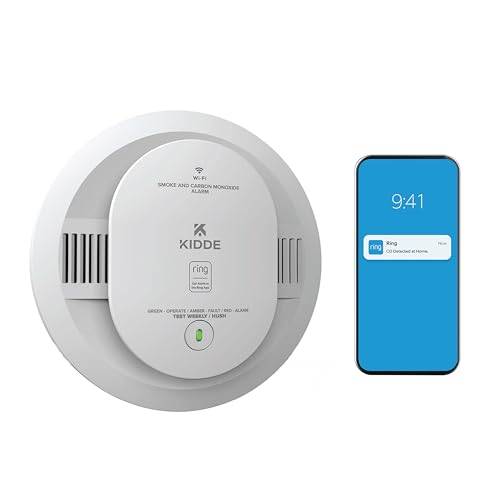
- Smoke and CO detection in one alarm
- Ring app alerts with no required subscription
- Wire-free whole-home interconnectivity
Best For: Ring and Alexa households wanting remote safety alerts
Best Low-Maintenance Standalone Pick

- Sealed battery rated for up to 10 years
- Photoelectric smoke and electrochemical CO sensors
- UL 217 and UL 2034 certified
Best For: Simple standalone protection with minimal maintenance
Best Whole-Home Kit
Heiman S1-R Wireless Smoke Detector System

- Six alarms plus gateway included
- Local wireless interconnection and remote alerts
- 10-year batteries with dual-beam sensing
Best For: Large homes and multi-room installations
Best Voice-Alert Option
First Alert SC5 Smart Smoke & CO Alarm

- Phone alerts through the First Alert app
- Voice warnings identify danger type and location
- Compatible with Google Nest Protect
Best For: Families wanting spoken warnings and app notifications
Smart Coverage Pick
Kidde Smart Smoke & CO Detector
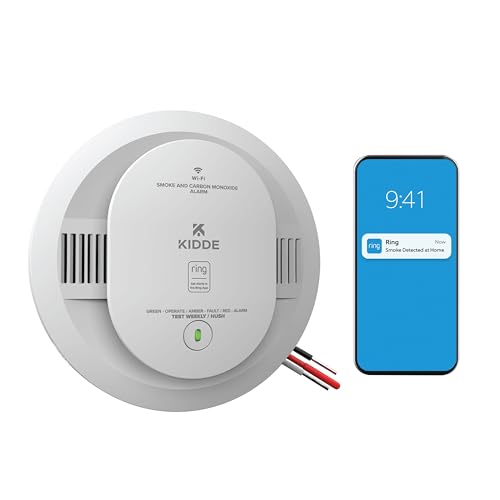
- Smoke and CO detection in one alarm
- Ring alerts without a required subscription
- Hardwired with AA battery backup
Best For: Families wanting connected hardwired smoke and CO protection
Whole-Home Value Pick
Kidde Hardwired Smoke & CO 4-Pack

- Four interconnected smoke and CO alarms
- Voice alerts identify the hazard
- AA backup supports protection during outages
Best For: Families covering multiple rooms with hardwired alarms
Easy Smart Setup

- Battery-powered with no wiring needed
- Ring smoke and low-battery notifications
- Wire-free interconnectivity for connected alarms
Best For: Families wanting flexible smart smoke protection without hardwiring
Long-Life Coverage
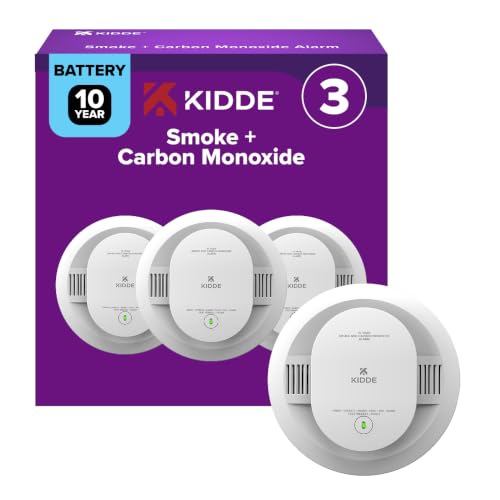
- Smoke and CO detection in each alarm
- Built-in 10-year battery
- Three-pack for multi-room coverage
Best For: Families wanting low-maintenance coverage throughout the home
Connected Smoke Alerts
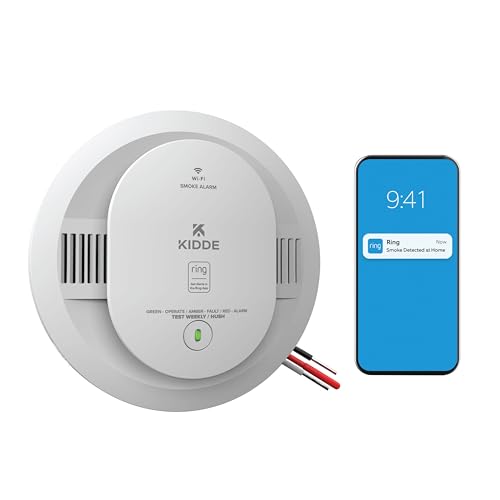
- Ring app alerts from home or away
- Whole-home hardwired alarm connectivity
- Alexa notifications and nuisance-alarm reduction
Best For: Ring-connected households wanting remote smoke alerts
Whole-Home Smart Protection
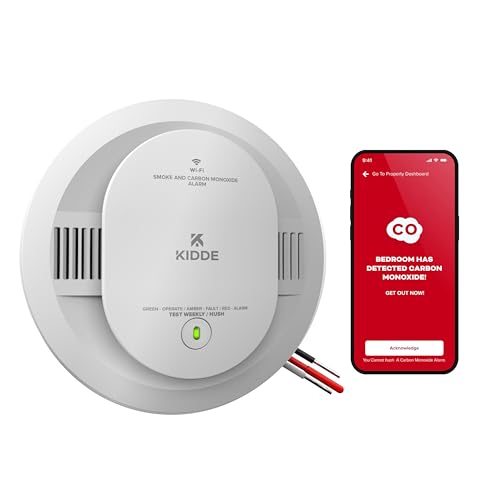
- App alerts for smoke, CO, and low battery
- Voice alerts and phone-based hush control
- Hardwired power with AA backup
Best For: Families upgrading compatible hardwired systems with smart controls
Best Smart Ring-Connected Pick – Kidde Smart Smoke & CO Detector
For families comparing family smart smoke alarms, the Kidde Smart Smoke & CO Detector combines smoke and carbon monoxide detection with Ring app notifications. Its battery-powered, wire-free interconnectivity can help provide whole-home alerts without hardwiring.
Best For: Families already using Ring or Alexa devices and wanting mobile alerts for smoke, CO, and low-battery conditions.
Pros:
- Detects both smoke and carbon monoxide.
- Provides Ring app alerts without a required subscription.
- Wire-free interconnectivity makes all linked Kidde alarms sound together.
- Uses included AA alkaline batteries and supports Alexa notifications.
Cons:
- Optional 24/7 monitoring requires a separate Ring subscription.
- Compatibility and interconnectivity details should be checked in the user guide.
This is a strong smart-home choice for households that value remote notifications and connected alarms. The lack of required wiring simplifies installation, while the combined smoke and CO coverage adds everyday practicality.
Best Low-Maintenance Standalone Pick – X-Sense SC07 Smoke & CO Alarm
The X-Sense SC07 is a straightforward option for families seeking family smart smoke alarms without Wi-Fi or app complexity. Its sealed 10-year lithium battery and combined smoke and CO sensors focus on simple, long-term standalone protection.
Best For: Households wanting a low-maintenance alarm for a room, apartment, or home area without wireless interconnection.
Pros:
- Built-in sealed lithium battery is designed to last up to 10 years.
- Combines photoelectric smoke and electrochemical CO detection.
- Includes mounting hardware and requires no rewiring.
- Independently certified to UL 217 and UL 2034 standards.
Cons:
- Does not support wireless interconnection, Wi-Fi, or base-station connection.
- It is a standalone one-pack rather than a whole-home connected system.
The SC07 is best viewed as a dependable basic alarm rather than a connected smart-home device. Choose it when sealed-battery convenience and simple installation matter more than phone alerts or linked alarms.
Best Whole-Home Kit – Heiman S1-R Wireless Smoke Detector System
For larger homes, the Heiman S1-R provides a ready-made family smart smoke alarms setup with six wireless detectors and a gateway. The alarms can sound together locally, while the gateway adds smartphone and email notifications over a 2.4GHz Wi-Fi network.
Best For: Multi-story homes, apartments, offices, landlords, and contractors needing broad wireless coverage in one package.
Pros:
- Includes six interconnected smoke detectors plus a smart gateway.
- One alarm sounding can trigger all linked units.
- Gateway supports smartphone and email notifications.
- 10-year CR123A battery life reduces routine battery changes.
Cons:
- Gateway setup requires a 2.4GHz Wi-Fi network and is not compatible with 5GHz.
- The six-detector bundle may be more than smaller households need.
- It focuses on smoke detection; the supplied notes do not list CO detection in the S1-R alarms.
This is the most comprehensive choice here for coordinated coverage across multiple rooms or floors. Its gateway adds remote awareness, while local wireless interconnection preserves alarm functionality even without Wi-Fi.
Best Voice-Alert Option – First Alert SC5 Smart Smoke & CO Alarm
The First Alert SC5 is a battery-powered option for families comparing family smart smoke alarms, especially those using the First Alert app or Google Nest Protect. It combines smoke and CO detection with phone alerts, voice warnings, and compatible alarm interconnection.
Best For: Families who want voice alerts identifying the type and location of danger, along with app notifications.
Pros:
- Sends smoke and CO alerts to your phone through the First Alert app.
- Voice alerts provide heads-up warnings about the danger type and location.
- Compatible with Google Nest Protect and supports interconnection with compatible alarms.
- Precision Detection Technology is designed to help reduce nuisance alarms.
Cons:
- Interconnection is limited to compatible alarms.
- The supplied notes do not specify the battery service life.
- It is listed as a one-count unit, so whole-home coverage may require additional alarms.
The SC5 stands out when audible, spoken guidance is more useful to your family than a basic alarm tone. Confirm compatibility with existing alarms before building a larger interconnected system.
Smart Coverage Pick – Kidde Smart Smoke & CO Detector
For families comparing family smart smoke alarms, this hardwired Kidde model adds carbon monoxide detection, Ring app notifications, and AA battery backup. It can also extend mobile alerts to other hardwired Kidde alarms when configured as directed.
Best For: Families wanting smart smoke and CO alerts with hardwired installation and Ring connectivity.
Pros:
- Detects both smoke and carbon monoxide.
- Sends real-time smoke, CO, and low-battery alerts through the Ring app without a required subscription.
- Includes AA battery backup and Alexa compatibility.
- Enhanced sensing is designed to reduce nuisance alarms caused by cooking.
Cons:
- Requires hardwired installation.
- 24/7 Ring monitoring requires an optional paid subscription.
This is a practical choice when you want smart notifications without giving up hardwired power or CO protection. Its strongest advantage is combining whole-home connectivity with app-based alerts.
Whole-Home Value Pick – Kidde Hardwired Smoke & CO 4-Pack
This four-pack is a practical foundation for family smart smoke alarms when you want broad room coverage and hardwired interconnection. Each unit combines smoke and CO detection, voice alerts, an 85-decibel alarm, and AA battery backup.
Best For: Families outfitting multiple rooms with interconnected hardwired alarms at once.
Pros:
- Four alarms provide coverage for multiple areas of the home.
- Voice alerts identify smoke or fire, carbon monoxide, and low-battery conditions.
- Hardwired alarms can activate one another throughout the connected system.
- AA battery backup helps maintain protection during power failures.
Cons:
- Does not list app notifications or smart-home connectivity in the supplied specifications.
- Requires 120V AC hardwired installation.
- Manual testing is still needed; self-testing is not a substitute for a push test.
Choose this pack when room-by-room coverage and audible guidance matter more than app control. The voice announcements and interconnectability make it especially useful in larger homes.
Easy Smart Setup – Kidde Smart Smoke Detector
For families seeking family smart smoke alarms without new wiring, this Kidde detector runs on two included AA alkaline batteries. It provides Ring app smoke and low-battery notifications, while wire-free interconnectivity can help connected Kidde alarms sound together.
Best For: Families wanting flexible, battery-powered smart smoke protection throughout the home.
Pros:
- No wiring is needed, making placement more flexible.
- Sends smoke and low-battery alerts through the Ring app without a required subscription.
- Supports wire-free interconnectivity so connected Kidde alarms can sound together.
- Works with Alexa and uses enhanced sensing intended to reduce cooking-related nuisance alarms.
Cons:
- Detects smoke but does not list carbon monoxide detection.
- Requires periodic replacement of its two AA alkaline batteries.
- Optional 24/7 Ring monitoring costs extra.
This model is the simplest fit for homes where hardwired installation is inconvenient. It delivers connected smoke alerts with flexible placement, provided you are comfortable managing battery changes.
Long-Life Coverage – 10-Year Smoke & CO 3-Pack
For families comparing family smart smoke alarms, this three-pack is a practical foundation for bedrooms, hallways, and other key areas. It combines smoke and carbon monoxide detection in each unit with a built-in 10-year battery, helping reduce maintenance and low-battery interruptions.
Best For: Families and homeowners who want multi-room smoke and CO coverage without routine battery replacements.
Pros:
- Detects both smoke and carbon monoxide in one alarm.
- Built-in 10-year battery avoids replacement batteries and low-battery chirps.
- Advanced sensing is designed to reduce false alarms from cooking and steam.
- Three alarms are included, with a 10-year limited warranty.
Cons:
- These are not app-connected smart alarms with mobile notifications.
- Battery power may not suit shoppers specifically seeking hardwired installation.
The 30CUD10 is best viewed as a low-maintenance, multi-room safety upgrade rather than a connected home device. Its combination of dual detection, long battery life, and tested safety standards makes it a straightforward choice for dependable household coverage.
Connected Smoke Alerts – Ring Smart Smoke Detector
Families seeking family smart smoke alarms with remote awareness may appreciate this Kidde detector’s Ring app notifications. It provides smoke and low-battery alerts whether you are home or away, while one smart detector can extend mobile alerts to other hardwired alarms in the home.
Best For: Ring users who want app-based smoke notifications and whole-home connectivity from a hardwired system.
Pros:
- Sends real-time smoke and low-battery notifications through the Ring app without requiring a subscription.
- Can provide mobile alerts for every hardwired alarm when one smart detector is added.
- Uses enhanced sensing designed to reduce cooking-related nuisance alarms.
- Works with Alexa-enabled devices for additional notifications.
Cons:
- Optional 24/7 smoke monitoring requires a separate Ring subscription.
- It is a smoke detector rather than a combination smoke-and-CO alarm.
- Hardwired installation may be less convenient for renters or homes without compatible wiring.
This model makes the most sense when remote alerts and Ring integration matter more than battery-only simplicity. Its connected features can improve awareness when the family is away, while the subscription remains optional for basic app notifications.
Whole-Home Smart Protection – Hardwired Smoke & CO Alarm
For households comparing family smart smoke alarms, this hardwired Kidde model adds app connectivity, voice alerts, and combined smoke-and-carbon-monoxide detection. Its Wi-Fi connection supports remote notifications and phone-based hush control, while AA batteries provide backup power.
Best For: Families upgrading a hardwired system who want smoke and CO alerts, voice guidance, and phone control.
Pros:
- Detects both smoke and carbon monoxide.
- Sends real-time smoke, CO, and low-battery alerts to a phone.
- Can notify you about other hardwired alarms throughout the home when one smart alarm is added.
- Includes voice alerts, phone-based hush control, and AA battery backup.
Cons:
- Requires hardwired installation and a 2.4 GHz Wi-Fi connection.
- AA batteries still need eventual replacement.
- The single-alarm package may cost more to deploy across multiple rooms.
This is the most feature-rich option of the three for a compatible hardwired home. It is particularly appealing when remote awareness and whole-home interconnection are priorities, though installation and Wi-Fi requirements make it less flexible than a battery-powered alarm.
How We Picked the Best Family Smart Smoke Alarms
We focused on alarms that combine dependable smoke detection with practical features for families, including carbon monoxide monitoring, app-based notifications, voice alerts, interconnection, and straightforward maintenance. The selection includes battery-powered, hardwired, and hybrid models, along with single alarms and multi-packs for broader coverage.
We also considered compatibility requirements. Some products use a dedicated app or gateway, while others connect through a partner platform such as Ring. A smart alarm is only useful when its notifications reach the people who need them, so installation location, Wi-Fi or hub requirements, and mobile access matter as much as the detector itself.
Quick Comparison
- Best for Ring households: Kidde Ring-compatible smart smoke and combination smoke/CO alarms.
- Best for interconnected coverage: Heiman’s wireless multi-pack with gateway or compatible hardwired interconnected Kidde models.
- Best for simple battery installation: X-Sense, First Alert, and battery-powered Kidde alarms.
- Best for low maintenance: Kidde models with sealed 10-year batteries.
- Best for larger homes: Multi-packs and interconnected systems that allow alarms to communicate throughout the property.
Key Buying Factors for Family Smart Smoke Alarms
Smoke and Carbon Monoxide Detection
For most households, a combination smoke and carbon monoxide alarm offers the broadest protection in one device. If you already have separate CO detectors, a smoke-only model may be sufficient, but confirm that every sleeping area and each level of the home is covered.
Smart Alerts and Platform Compatibility
Check whether the alarm connects directly to Wi-Fi, requires a gateway, or works through a platform such as Ring. Confirm app support for every caregiver who should receive alerts, and understand whether remote notifications depend on an internet connection or an additional subscription.
Battery Versus Hardwired Installation
Battery models are generally easier to install and suit rentals or homes without existing alarm wiring. Hardwired units can provide a cleaner permanent installation and may interconnect with other alarms, but compatibility with the home’s wiring and existing detector system is essential. Battery backup remains important during power outages.
Interconnection, Voice Alerts, and Maintenance
Interconnected alarms can sound together when one detects danger, giving occupants more time to react. Voice alerts may identify smoke, carbon monoxide, or a low-battery condition more clearly than a tone alone. Look for accessible test and hush controls, visible status indicators, and a replacement schedule that fits your maintenance routine.
Who Should Buy Which Family Smart Smoke Alarms?
Choose a Ring-compatible Kidde model if your household already uses Ring and wants alerts in the same ecosystem. Select a Heiman kit if you need wireless interconnection across several rooms and are comfortable installing a gateway. First Alert or X-Sense models are sensible choices for straightforward battery installation, while hardwired Kidde alarms fit homeowners replacing or expanding a wired system. For the least frequent battery changes, consider a sealed 10-year battery model, provided its smart features match your needs.
Whichever option you choose, install alarms according to local regulations and the manufacturer’s placement guidance. Test them regularly, keep escape routes clear, and replace any alarm that reaches the end of its rated service life.