The best solar generators for portable setups make it easier to power essential devices away from outlets, whether you are camping, working outdoors, traveling, or preparing for short outages.
This roundup compares 10 options across capacity, output, portability, solar charging, and battery technology so you can choose a system that fits your equipment and travel plans.
Best 10 Solar Generators for Portable Setups Picks for 2026
Best Overall

- 2,000W output with 1,024Wh LiFePO4 capacity
- Includes a 200W bifacial solar panel
- Under-10ms UPS and fast solar recharging
Best For: Portable setups needing strong output and quick recharging
Best for Home Backup

- 3,600W output and 3,584Wh capacity
- Expandable capacity for extended outages
- Wheels, handle, and multiple charging options
Best For: Household backup and high-demand appliances
Best Long-Run Option

- 2,010Wh capacity with 1,500W continuous output
- Low idle draw supports longer refrigerator runtime
- Compact 35.7-pound design with 400W solar input
Best For: Emergency loads and extended portable runtimes
Best Lightweight Pick
Jackery Solar Generator 1000 v2

- 1,500W output in a 23.8-pound package
- Includes a 200W solar panel
- Multiple ports and app-controlled charging modes
Best For: Camping, road trips, and compact emergency kits
Best Built-In Solar Design
BROWEY 1600W Portable Power Station
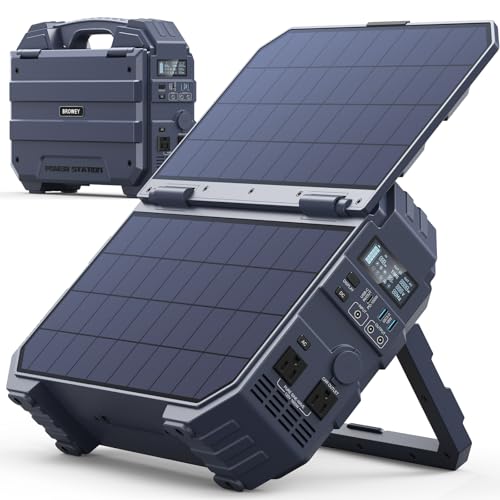
- Built-in 40W solar panel with MPPT controller
- 1,600W output and 1,024Wh LiFePO4 capacity
- Supports AC, car, DC, and USB-C charging
Best For: Campers and RV users wanting integrated solar charging
Best Large-Capacity Backup

- 3,072Wh capacity and 3,600W AC output
- Includes two 200W solar panels
- 20ms UPS and LiFePO4 battery rated for 4,000 cycles
Best For: Home backup and RV users with higher power demands
Best Fast-Charging Midrange Pick

- 1,800W output with 1,024Wh LiFePO4 storage
- 200W panel included with 0–80% solar charging in four hours
- 70-minute AC recharge, 10ms UPS, and quiet operation
Best For: Portable users prioritizing fast charging and quiet backup
Best Budget Solar Kit
ZeroKor 300W Generator with 60W Panel

- 300W output for small electronics
- Includes a foldable 60W solar panel
- Multiple AC, USB, and DC charging ports
Best For: Budget camping and portable charging
Best Lightweight Upgrade
BLUETTI Elite 30 V2 600W LFP Power Station

- 600W continuous and 1500W lifting output
- 288Wh capacity in a 9.5-pound design
- 10ms UPS and 45-minute 0–80% wall charging
Best For: Camping, road trips, and emergency backup
Best Pure Sine Wave Kit
MARBERO M823 300W with 60W Panel

- 237Wh battery with 300W pure sine wave output
- Includes a foldable 60W solar panel
- USB-A, USB-C PD, AC, and DC outputs
Best For: Camping, hiking, fishing, and emergency charging
Best Overall – Anker SOLIX C1000 Gen 2
The Anker SOLIX C1000 Gen 2 is a well-rounded choice among solar generators for portable setups, pairing a 1,024Wh LiFePO4 battery with 2,000W continuous output and a 200W solar panel. Its compact design, fast charging, and UPS capability make it suitable for camping, backup power, and work-from-anywhere use.
Best For: Portable setups needing strong output, quick recharging, and UPS backup.
Pros:
- Runs up to nine devices with 2,000W output and 3,000W peak power.
- Recharges fully from up to 600W of solar input in as little as 1.8 hours.
- Offers under-10ms UPS switchover and a five-year warranty.
- Compact housing is 14% smaller and 11% lighter than similar models, according to the supplied notes.
Cons:
- The power station and solar panel ship separately.
- The full 1,600W recharge rate requires HyperFlash activation in the Anker app.
This package stands out for buyers who want a capable, portable system without stepping up to a much larger home-backup unit. Confirm both package deliveries and use the app to access its charging and monitoring features.
Best for Home Backup – Jackery HomePower 3600 Plus
For solar generators for portable setups that may also support a household, the Jackery HomePower 3600 Plus offers 3,584Wh of capacity and 3,600W output. Its wheels and telescoping handle improve mobility, while expandable capacity and dual-voltage operation make it the most home-oriented option in this roundup.
Best For: Home backup users who need high capacity, heavy-appliance support, and easier movement around the house.
Pros:
- Provides 3,600W output, with up to 7,200W in parallel.
- Supports 120V and 240V operation when used in parallel.
- Offers four charging methods, including solar and hybrid AC+DC charging.
- Wheels and a telescoping handle make the 77.2-pound unit easier to move.
Cons:
- At 77.2 pounds, it is substantially less convenient for vehicle-based portability than smaller models.
- Home plug-and-play operation requires pairing with an MTS for the described setup.
This is a strong fit when portable means movable between rooms, a garage, or a work area rather than something carried to a campsite. Its size, output, and expansion options favor outage preparedness over lightweight travel.
Best Long-Run Option – Anker SOLIX S2000
The Anker SOLIX S2000 is designed for longer runtimes in a relatively compact package. Its 2,010Wh LiFePO4 battery, 1,500W continuous output, and low 6W idle draw make it a practical choice among solar generators for portable setups supporting refrigerators, essential appliances, and emergency loads.
Best For: Emergency and outdoor users prioritizing battery capacity, efficiency, and long runtimes.
Pros:
- Provides 2,010Wh of capacity with 1,500W continuous and 3,000W peak output.
- Designed to run a refrigerator for up to 35 hours under the stated conditions.
- Uses LFP cells rated for up to 10,000 charge cycles and a 15-year lifespan.
- Weighs 35.7 pounds and supports up to 400W of solar input.
Cons:
- There is no 12V DC port.
- The unit does not include solar panels in the supplied package details.
- Its 1,500W continuous output is lower than the larger Jackery and C1000 Gen 2 options.
The S2000 makes sense when runtime matters more than maximum AC output. Its lighter-than-average enclosure and flexible charging options help with portable emergency setups, but buyers needing 12V equipment support should plan around its port selection.
Best Lightweight Pick – Jackery Solar Generator 1000 v2
The Jackery Solar Generator 1000 v2 is a portable, approachable option for solar generators for portable setups, combining a 1,070Wh battery, 1,500W AC output, and a 200W solar panel. At 23.8 pounds with a foldable handle, it is well suited to camping, road trips, and compact emergency kits.
Best For: Campers and travelers who want useful AC power in a lighter package.
Pros:
- Delivers 1,500W continuous output and 3,000W surge power.
- Includes a 200W solar panel and supports several charging methods.
- Provides two USB-C ports, including 100W PD charging, plus USB-A, DC, and AC ports.
- Weighs 23.8 pounds and offers app-controlled charging modes.
Cons:
- The solar panel charges the station to 80% in about six hours under the supplied claim.
- The one-hour full-charge mode must be enabled in the Jackery app and is not the default setting.
- The supplied warranty information lists two years in the product details, while the package notes mention five years of coverage; verify the applicable terms.
This model balances useful appliance output with easier carrying, making it the most travel-friendly pick here. Its 1,070Wh capacity is better suited to personal electronics and moderate loads than extended whole-home backup.
Best Built-In Solar Design – BROWEY 1600W Portable Power Station
For solar generators for portable setups, the BROWEY S1600 stands out with a built-in 40W solar panel and a 1,024Wh battery. Its 1,600W pure sine wave output is suited to camping, RV trips, emergency backup, and off-grid use.
Best For: Campers, RV users, and anyone who wants an integrated solar panel with enough output for appliances such as refrigerators, CPAP machines, and power tools.
Pros:
- Built-in solar panel with MPPT controller; it can also connect to other solar panels.
- 1,600W output with 3,200W peak capacity and 1,024Wh storage.
- LiFePO4 battery rated for 3,000+ cycles to 80% capacity.
- Includes AC, car, DC, and USB-C charging options, plus a three-year warranty.
Cons:
- The built-in solar panel is rated at only 40W, so larger external panels may be preferable for faster solar charging.
- At about 12 kg, it is portable but not especially lightweight.
The BROWEY is a flexible choice when integrated solar collection matters more than minimizing weight. Its durable battery and strong AC output make it useful for both outdoor activities and short-term backup power.
Best Large-Capacity Backup – Jackery HomePower 3000
Among solar generators for portable setups, the Jackery HomePower 3000 is designed for higher-demand backup rather than ultralight travel. Its 3,072Wh capacity, 3,600W output, and included pair of 200W solar panels can support household essentials, RV equipment, and extended outages.
Best For: Homeowners and RV users who need substantial stored power for refrigerators, routers, lights, fans, and other essential devices.
Pros:
- Large 3,072Wh capacity with 3,600W output and 7,200W surge capability.
- UL-certified UPS switches within 20ms for supported essentials.
- Includes two 200W SolarSaga panels and can reach 80% charge in about nine hours from them.
- LiFePO4 battery supports 4,000 cycles while retaining 70% capacity.
Cons:
- At 59.5 pounds, it is considerably less convenient for frequent carry-in/carry-out use.
- The supplied solar-panel setup charges more slowly than its hybrid AC/DC charging mode.
The HomePower 3000 is the strongest fit here for sustained backup and larger loads. Its size and weight favor home, RV, or vehicle-based portability over backpack-style use.
Best Fast-Charging Midrange Pick – BLUETTI Elite 100 V2
The BLUETTI Elite 100 V2 is a practical choice for solar generators for portable setups when fast replenishment and quiet operation are priorities. This kit combines a 1,024Wh power station with a 200W solar panel, 1,800W AC output, and multiple charging methods.
Best For: Campers, road-trippers, and home users who want a relatively compact power station with fast charging, UPS protection, and app-based monitoring.
Pros:
- Includes a 200W solar panel and supports 0–80% solar charging in about four hours.
- 1,800W output, 2,700W Power Lifting, and 11 ports cover many everyday devices.
- TurboBoost AC charging can fully recharge the unit in about 70 minutes.
- 10ms UPS switching, silent operation as low as 30dB, and Wi-Fi/Bluetooth app control.
Cons:
- The 1,024Wh capacity is less suited to prolonged high-wattage loads than the Jackery’s 3,072Wh capacity.
- The 200W panel is shipped separately, according to the supplied details.
With a 25-pound chassis and unusually quick charging, the Elite 100 V2 balances portability and capability well. It is especially appealing for overnight use, mobile work, and short outages where quiet UPS performance matters.
Best Budget Solar Kit – ZeroKor 300W Generator with 60W Panel
For shoppers comparing solar generators for portable setups, the ZeroKor 300W kit offers a straightforward combination of a compact power station and included 60W monocrystalline panel. It is suited to charging phones, tablets, laptops, headphones, and other lower-power camping electronics.
Best For: Budget-conscious campers who want a basic solar charging kit with multiple outlets and an emergency flashlight.
Pros:
- Includes a 60W solar panel, AC adapter, and car-charging cables.
- Offers two AC outlets, USB ports, a DC port, and quick-charge USB connectivity.
- Built-in MPPT charging and battery protections support flexible off-grid use.
- Flashlight includes reading and SOS modes.
Cons:
- The 300W limit rules out high-draw appliances such as coffee makers, hair dryers, and water pumps.
- The solar panel junction box is not waterproof.
- Its included panel is relatively modest for faster recharging.
This is a practical entry-level choice when your portable setup centers on small electronics rather than heating appliances or heavy-duty equipment. Keep the panel dry and stay within the 300W output limit.
Best Lightweight Upgrade – BLUETTI Elite 30 V2 600W LFP Power Station
Among solar generators for portable setups, the BLUETTI Elite 30 V2 stands out for its 600W continuous output, 288Wh capacity, and 9.5-pound weight. It is designed for camping, road trips, and emergency backup, with support for solar, AC, and car charging.
Best For: Portable users who want a lightweight power station with fast wall charging, UPS functionality, and more output headroom than entry-level 300W models.
Pros:
- 600W continuous output and 1500W Power Lifting mode provide added flexibility.
- Reaches 80% charge in 45 minutes and full charge in 70 minutes from the wall.
- 10ms UPS switching can help protect laptops, routers, and CPAP devices during outages.
- At about 9.5 pounds, it remains easy to carry for trips and emergencies.
Cons:
- The 288Wh capacity is better suited to shorter-duration needs than extended high-power backup.
- The solar panel is not included in the listed package.
The Elite 30 V2 is the strongest all-around option here for users who value fast recharging and reliable output in a compact format. Its UPS feature and Power Lifting mode broaden its usefulness beyond basic camping electronics.
Best Pure Sine Wave Kit – MARBERO M823 300W with 60W Panel
The MARBERO M823 is a useful option for solar generators for portable setups when you want a bundled 60W foldable panel and pure sine wave AC output. Its 237Wh battery and varied ports cover common camping, hiking, fishing, and emergency-charging needs.
Best For: Outdoor users seeking an all-in-one 300W kit with pure sine wave AC outlets, broad USB connectivity, and a built-in emergency light.
Pros:
- Includes a foldable 60W solar panel and connection cable.
- Two pure sine wave AC outlets support compatible small electronics.
- Provides USB-A, USB-C PD, and DC outputs for varied devices.
- Panel conversion is rated at 21.5–23.5%, and the flashlight offers flashlight, strobe, and SOS modes.
Cons:
- The 300W rated output is unsuitable for appliances above that limit, especially heating devices.
- Its 237Wh capacity is intended for smaller devices and shorter sessions.
- The listed warranty is 12 months.
MARBERO’s bundle makes sense for buyers who want panel, generator, and multiple charging formats in one portable package. It offers useful versatility, but the modest capacity and output call for careful device selection.
How We Picked the Best Solar Generators for Portable Setups
We compared the selected power stations and solar-generator bundles by usable battery capacity, continuous and peak AC output, included solar panels, portability, battery chemistry, charging flexibility, and overall use case. A compact 200Wh-to-300Wh unit can be practical for phones, lights, cameras, and small electronics, while 1,000Wh or larger models are better suited to extended camping, remote work, medical equipment, refrigeration, or emergency backup.
We also considered whether each package includes a solar panel, how much solar capacity comes in the box, and whether the stated output is suitable for appliances with startup surges. Product specifications can vary by configuration, so verify the listing’s included accessories and current ratings before ordering.
Quick Comparison
| Best For | Typical Capacity | What to Prioritize |
|---|---|---|
| Emergency phone and lighting backup | 200–400Wh | Low weight, USB ports, simple controls |
| Weekend camping and remote work | 700–1,100Wh | Pure sine-wave AC, fast charging, useful solar input |
| High-demand equipment | 1,500–2,100Wh | Higher continuous wattage, surge capability, durable battery |
| Extended backup power | 3,000Wh or more | Large capacity, multiple solar panels, easy transport |
Key Buying Factors for Solar Generators for Portable Setups
Battery Capacity and Runtime
Watt-hours indicate how much energy a battery stores, but actual runtime is lower after inverter and conversion losses. Estimate your load in watts, then divide the battery capacity by that load and allow for real-world efficiency. For example, a 10W device may run much longer than a 500W appliance on the same station.
Output and Appliance Compatibility
Check continuous AC wattage first, then examine peak or surge output for motors, compressors, pumps, and other devices that draw extra power when starting. Pure sine-wave AC is generally the safer choice for sensitive electronics. USB-C output is valuable for directly charging modern laptops, tablets, and phones without using the AC inverter.
Solar Charging and Portability
More panel wattage can reduce recharge time in strong sunlight, but panels add bulk and setup space. Confirm the station’s solar-input limits and connector compatibility. For portable use, compare total kit weight, carrying handles, folding design, recharge time from an outlet, and whether the unit can be charged in a vehicle.
Battery Life and Safety Features
LiFePO4 batteries typically offer long cycle life and strong thermal stability, though they may increase weight. Look for clear displays, regulated outputs, temperature protection, overload protection, low-battery safeguards, and a warranty from a recognizable seller or manufacturer.
Who Should Buy Which Solar Generators for Portable Setups?
Choose a compact 237Wh-to-300Wh model if your priority is keeping phones, lights, cameras, routers, or small personal electronics running with minimal carrying weight. A midrange unit around 1,000Wh is a better all-purpose choice for weekend trips, laptops, CPAP equipment, small coolers, and short outages. Move to a 1,500Wh-to-2,100Wh station when you need more sustained AC power or want to run several devices at once.
For longer off-grid stays or serious home-backup needs, the 3,000Wh-plus Jackery systems offer substantially more stored energy and higher output, but they are less convenient to move. If you value fast setup, prioritize a bundle with an included panel; if you already own compatible panels, compare the station’s solar-input range and expansion options instead. Before buying, list the devices you expect to run, add their startup demands, and choose a battery with extra capacity rather than relying on the advertised maximum.