Choosing the right resin 3D printer for a craft fair means balancing fine detail with dependable batch production. A printer that creates attractive miniatures, jewelry, figures, or decorative pieces is only useful if it can keep up with your schedule and budget.
This roundup compares 10 resin printers across resolution, speed, build area, usability, and production flexibility, followed by a practical guide to choosing the best fit for your booth and workflow.
Best 10 Resin 3D Printers for Craft Fairs Picks for 2026
High-Detail Pick

- 7-inch 10K mono LCD with 17 × 17 μm XY pixels
- Uniform LighTurbo lighting supports smooth surfaces
- Beginner-friendly leveling and power-resume features
Best For: Detailed craft-fair items and miniatures
Large-Batch Standout

- 10-inch 12K LCD for detailed models
- Generous 250 mm build height for larger projects
- Up to 70 mm/h printing speed and broad slicer support
Best For: Larger products and multi-piece print runs
Compact Detail Choice

- 8K mono LCD with 22-micron XY resolution
- Compact volume for tabletop printing
- Works with Lychee, Chitubox, Tango, and open-source software
Best For: Beginners producing miniatures and small models
Easy-Setup Pick
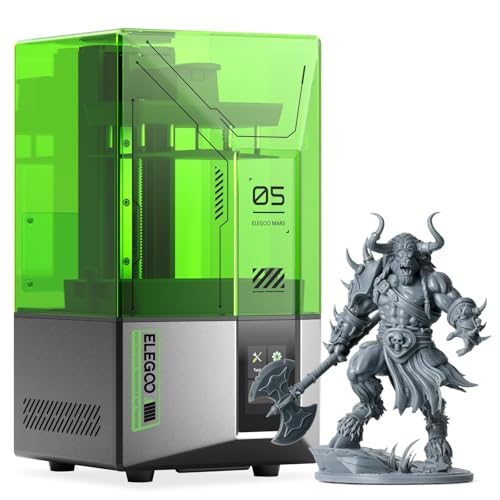
- One-click automatic leveling for simpler setup
- Self-checks and residue detection help prevent failures
- 4K mono LCD with COB lighting for detailed prints
Best For: Beginners prioritizing convenience and safeguards
Best for Two-Color Creations

- Dual-color or dual-material printing
- Automatic leveling and AI monitoring
- Supports resins up to 8,000 cps
Best For: Colorful, specialty-resin craft-fair products
Best for High-Speed Production

- High-contrast amber screen for detailed prints
- One-click slicing and automatic support generation
- Real-time force monitoring can pause risky jobs
Best For: Experienced sellers producing detailed batches
Best for Detailed, Beginner-Friendly Workflows

- 16K resolution for fine miniatures and figurines
- Factory pre-leveling and resin heating
- Remote monitoring through app or slicer
Best For: Detailed products with a simplified workflow
High-Output Pick

- Up to 170 mm/h with high-speed resin
- 14K optical system for fine detail
- Large build volume for batches and taller pieces
Best For: High-volume craft-fair production
Best Heavy-Duty Pick

- Automatic leveling simplifies setup
- Sensors monitor common printing issues
- 4K LCD supports detailed models at up to 70 mm/h
Best For: Beginners and small-batch sellers
Best Simple Pick
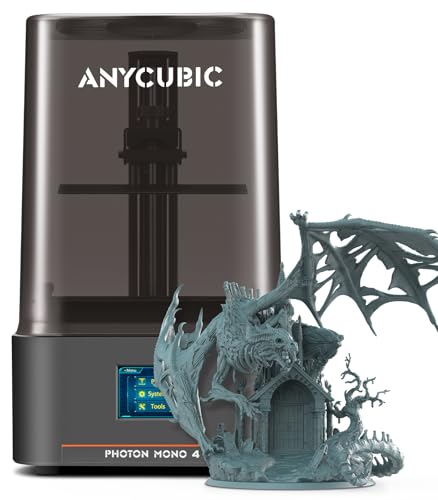
- 10K screen with 17 × 17 μm pixel precision
- Compact 10 × 10 × 15-inch product dimensions
- Assembled and factory-calibrated for quick startup
Best For: Detailed small items in limited workspace
High-Detail Pick – ANYCUBIC Photon Mono 4
For shoppers comparing resin 3D printers for craft fairs, the ANYCUBIC Photon Mono 4 is a strong choice for detailed, display-ready models. Its 7-inch 10K mono LCD, uniform light source, and useful mid-size build volume support intricate designs while keeping the printer approachable for beginners.
Best For: Detailed craft-fair items, miniatures, and makers who want a beginner-friendly setup.
Pros:
- 10K resolution with 17 × 17 μm XY pixels for highly detailed models.
- LighTurbo matrix light source is designed to reduce layer lines and rasterization.
- Laser-engraved platform improves adhesion while keeping removal manageable.
- Four-point leveling only needs to be repeated if the setup changes, according to the supplied specifications.
Cons:
- The build volume is smaller than the Saturn 3, limiting especially large pieces.
- Anycubic APP service is not supported.
The Photon Mono 4 balances fine resolution, useful capacity, and straightforward setup. It is a practical option when product detail matters more than producing very large batches or oversized designs.
Large-Batch Standout – ELEGOO Saturn 3 12K
Among resin 3D printers for craft fairs, the ELEGOO Saturn 3 stands out when you need more room for larger products or multiple pieces. Its 10-inch 12K LCD combines fine detail with a generous build volume and printing speeds up to 70 mm/h.
Best For: Larger models, ambitious craft-fair projects, and makers producing several pieces in a print run.
Pros:
- 12K mono LCD delivers 19 × 24 μm XY resolution for intricate models.
- Large 218.88 × 122.88 × 250 mm build volume supports bigger designs.
- COB and Fresnel lighting are designed for uniform, consistent exposure.
- Supports CHITUBOX, Lychee Slicer, and other third-party slicing software through the open-source GOO format.
Cons:
- At 33 pounds, it is substantially heavier than the other listed options.
- The larger footprint may require dedicated workspace.
The Saturn 3 is the capacity-focused pick in this group. Its combination of 12K detail and a tall build area makes it well suited to sellers whose craft-fair inventory includes larger or more numerous resin pieces.
Compact Detail Choice – Phrozen Sonic Mini 8K S
The Phrozen Sonic Mini 8K S is a compact contender among resin 3D printers for craft fairs. Its 8K mono LCD and 22-micron XY resolution are aimed at bringing fine detail to miniatures, models, and action figures without requiring a large tabletop footprint.
Best For: Beginners making detailed miniatures, models, and action figures in a compact workspace.
Pros:
- 8K mono LCD and 22 μm XY resolution capture fine design details.
- Compact 16.5 × 7.2 × 17 cm printing volume suits tabletop production.
- Compatible with open-source software and Lychee, Chitubox, and Tango slicers.
- Precise Z-axis calibration supports even printing.
Cons:
- The 6.5 × 2.8 × 6.7-inch print volume is less suitable for large products.
- Its 22-micron resolution is lower than the 10K and 12K alternatives listed here.
This printer makes sense for sellers whose craft-fair range centers on smaller, detail-oriented pieces. Its compact design and flexible software compatibility are useful advantages for new makers or limited workspaces.
Easy-Setup Pick – ELEGOO Mars 5
For makers entering resin 3D printers for craft fairs, the ELEGOO Mars 5 emphasizes simple preparation and print monitoring. Automatic leveling, one-click self-checks, residue detection, and a 4K mono LCD help reduce setup friction while supporting detailed small products.
Best For: Beginners who prioritize automatic setup, print safeguards, and small detailed craft items.
Pros:
- One-click automatic leveling simplifies initial setup.
- Self-check, resin-shortage alerts, and residue detection are designed to reduce avoidable failures.
- 4K mono LCD with COB lighting reproduces intricate details and textures.
- Overheat protection pauses printing and alarms if LED temperature exceeds 80°C.
Cons:
- The supplied notes do not specify the printer’s build volume.
- Its 4K resolution is lower than the higher-resolution printers in this roundup.
The Mars 5 is the convenience-first option here. Its automated checks and protections can be especially valuable when you are learning resin printing and want to minimize setup errors and wasted material.
Best for Two-Color Creations – Anycubic Photon P1
For craft sellers who want more visual variety from one machine, the Anycubic Photon P1 is a versatile choice among resin 3D printers for craft fairs. Its dual-color or dual-material printing can help create distinctive small models while reducing initial resin use, and its automated setup features are designed to simplify repeat production.
Best For: Makers producing colorful, detailed craft-fair items and experimenting with specialty or high-viscosity resins.
Pros:
- Dual-color or dual-material printing supports more creative product designs.
- Factory-calibrated automatic leveling reduces setup work between prints.
- Wave Release Technology lowers release force to help reduce failed prints.
- AI monitoring checks plate installation, layer separation, resin level, and vat residue.
Cons:
- At 39 pounds, it is not especially convenient to transport to craft fairs.
- The 28-by-14-by-13-inch footprint requires dedicated workspace.
- The advanced features may be more than needed for simple single-color items.
The Photon P1 is a strong fit when product variety and dependable unattended printing matter more than portability. Its support for resins up to 8,000 cps also gives experienced makers room to explore professional materials, though those capabilities may add complexity for basic projects.
Best for High-Speed Production – Reflex RS Turbo
The Reflex RS Turbo is aimed at sellers who need detailed resin 3D printers for craft fairs that can support a faster production workflow. Its high-contrast amber screen, automated preparation tools, and real-time force monitoring are geared toward consistent results across repeated jobs.
Best For: Experienced makers producing detailed merchandise in batches and prioritizing speed, dimensional accuracy, and process monitoring.
Pros:
- High-contrast amber screen is designed for crisp details and faster curing.
- One-click slicing can repair several model defects and generate supports automatically.
- Floating Screen Auto-Leveling corrects deviations up to 0.15 degrees.
- Force sensors can detect fine resin residue and automatically pause a print.
Cons:
- At 50.6 pounds, it is a substantial machine for a mobile craft-fair setup.
- Its advanced process controls may have a steeper learning curve than simpler printers.
- The 15-by-23-by-15-inch dimensions call for considerable bench space.
With stated positioning accuracy of up to 2 micrometers and printing tolerances of up to 0.05 mm, the RS Turbo is built for sellers who value repeatable detail. The combination of speed-oriented motion control and professional support makes it particularly compelling for higher-volume production.
Best for Detailed, Beginner-Friendly Workflows – UniFormation GK3T
The UniFormation GK3T combines very high resolution with convenience features that can make it a practical choice among resin 3D printers for craft fairs. Factory pre-leveling, resin heating, remote monitoring, and compatibility with wash-and-cure equipment help streamline the path from design to finished product.
Best For: Makers who want highly detailed miniatures, figurines, or prototypes with a guided workflow and remote print oversight.
Pros:
- 16K resolution and 14-by-19-micrometer pixels are designed to capture fine details.
- Factory pre-leveling supports a plug-and-play setup.
- Built-in heating helps maintain resin fluidity in temperatures as low as 0°C/32°F.
- App and slicer support enable remote control, progress updates, and timelapse recording.
Cons:
- At 52.8 pounds, it may be difficult to move between home and a craft fair.
- The 12.99-by-15.75-by-20.47-inch size requires a tall, dedicated workspace.
- The full workflow depends on compatible wash-and-cure equipment for streamlined post-processing.
The GK3T stands out for makers who want sharp, smooth output while minimizing setup and monitoring tasks. Its heating system and remote controls are useful for maintaining a repeatable production routine, especially when prints are running outside the work area.
High-Output Pick – Photon Mono M7 Pro
For sellers who need to produce batches of detailed items, this Anycubic model is a strong option among resin 3D printers for craft fairs. Its large build volume, high claimed speed, and temperature-control features are aimed at efficient, repeatable production.
Best For: Craft-fair sellers printing larger batches or taller display pieces.
Pros:
- Prints at up to 170 mm/h with high-speed 2.0 resin.
- 14K optical system is designed to reveal fine model details.
- Large 223 × 126 × 230 mm build volume supports bigger or multiple models.
- Temperature-controlled resin vat and auto-refill unit support more consistent workflows.
Cons:
- Its larger footprint may require substantial workspace.
- The fastest stated speed depends on using high-speed 2.0 resin.
- Odor filtering and automatic resin handling add equipment to manage.
The M7 Pro stands out when throughput and build capacity matter more than a compact setup. Temperature control and resin-handling accessories may also be useful for sellers printing regularly or working in cooler conditions.
Best Heavy-Duty Pick – ELEGOO Mars 5
The ELEGOO Mars 5 is a practical choice for makers looking for resin 3D printers for craft fairs without a complicated initial setup. Automatic leveling, built-in checks, and a compact 4K printing system help simplify the path from model preparation to finished inventory.
Best For: Newer makers and small-batch sellers who value setup assistance and safety checks.
Pros:
- Intelligent sensor checks for low resin, foreign objects, film replacement, and overheating.
- Automatic leveling and a laser-engraved build plate support print preparation.
- 6.6-inch 4K monochrome LCD provides 35 × 35 μm XY resolution.
- Print speeds reach up to 70 mm/h.
Cons:
- Its stated speed is lower than the faster model in this roundup.
- Successful printing still requires correct settings and properly supported models.
- The resin tank should be cleaned promptly after printing.
Automatic leveling and mechanical monitoring make the Mars 5 approachable for craft sellers building a repeatable process. It is best suited to smaller production runs where ease of use and dependable checks are priorities.
Best Simple Pick – Anycubic Photon Mono 4
For makers working with limited space, the Anycubic Photon Mono 4 combines a compact design with a 10K monochrome screen. It is a sensible option among resin 3D printers for craft fairs when fine detail, straightforward startup, and manageable equipment size are important.
Best For: Space-conscious sellers making highly detailed small items and accessories.
Pros:
- 7-inch 10K screen delivers 17 × 17 μm pixel precision.
- Stabilized light source supports smooth surfaces and 1.5-second exposures.
- Laser-engraved build plate improves adhesion and helps reduce shedding and warping.
- Comes assembled, tested, and factory-calibrated with a quick leveling check.
Cons:
- Its compact format may be less suitable for large pieces or high-volume batches.
- The supplied notes do not specify its build volume or maximum print speed.
- It still requires resin-printing preparation and post-print handling.
The Mono 4 is appealing for detailed products where a small footprint matters. Its ready-to-start setup and power-failure recovery can help reduce friction when producing individual pieces or modest inventory runs.
How We Picked These Resin 3D Printers for Craft Fairs
We focused on features that matter when producing saleable items in small batches: LCD resolution, XY detail, build volume, print speed, consistency, ease of setup, and useful workflow features. We also considered whether each model suits compact workspaces and varied product lines, from miniatures and charms to display pieces.
Resolution is not the only measure of quality. Reliable exposure control, a stable build platform, straightforward leveling, compatible slicer software, and readily available replacement parts can have a greater effect on production results than headline specifications alone.
Quick Comparison
| Priority | What to look for | Best suited to |
|---|---|---|
| Fine detail | 8K, 10K, 12K, or 14K LCD resolution and a small XY pixel size | Miniatures, jewelry masters, and intricate ornaments |
| Higher throughput | Fast lift speeds, dependable exposure profiles, and a larger build area | Batch-making repeated products |
| Easy operation | Smart sensors, guided leveling, and clear software controls | New users or makers with limited setup time |
| Product variety | A flexible build volume and broad resin compatibility | Mixed catalogs and changing seasonal designs |
Key Buying Factors for Resin 3D Printers for Craft Fairs
Detail and Surface Finish
High-resolution monochrome screens can reproduce small lettering, facial features, textures, and sharp edges. However, resin choice, orientation, support placement, exposure settings, and post-processing also strongly influence the final finish. Choose the resolution that matches your products rather than paying only for the largest number.
Build Volume and Batch Layout
A larger printer can produce more pieces per run, but it needs more workspace and may consume more resin. Measure your available area, including room for a wash-and-cure station and safe resin handling. For small items, efficient plate arrangement may matter more than maximum dimensions.
Speed and Reliability
Advertised speed is usually a best-case figure. Actual output depends on layer height, lift settings, model geometry, supports, and resin formulation. For craft fairs, predictable repeatability is often more valuable than peak speed because failed batches waste time and material.
Safety and Running Costs
Resin printing requires ventilation, gloves, eye protection, careful spill control, washing, and curing. Budget for resin, release film, replacement screens, gloves, cleaning supplies, and post-processing equipment. Factor these recurring costs into your per-item price before setting a fair-day margin.
Who Should Buy Which Resin 3D Printers for Craft Fairs?
Choose a compact, high-resolution model if your products are small, detailed, and made in limited quantities. A larger MSLA printer is a better match for sellers who regularly batch identical items or need room for taller pieces. Makers prioritizing simpler setup should favor models with leveling assistance, sensors, or guided controls. If your catalog changes frequently, prioritize flexible software support, dependable profiles, and a build area that accommodates multiple product sizes.
Before committing, confirm current resin compatibility, replacement-part availability, warranty coverage, and the printer’s physical footprint. The best choice is the model that delivers consistent sellable parts within your available time, workspace, and operating budget.