Reading cockpit gauges or spotting a distant braking point gets easier when your VR display is sharp—but resolution alone does not guarantee a better experience. Lens clarity, field of view, comfort, and PC requirements matter just as much.
These six listings cover premium Pimax options and an older standalone PICO model. Several are configurations of the same headset, so the right choice depends on the exact display and bundle you are buying.
Best 6 Vr Headsets with 4K Resolution Picks for 2026
Ultrawide Sim Pick

- 3840 × 3840 pixels per eye
- Stated 140° field of view
- Wired PC VR with eye tracking
Best For: PC flight and racing sim enthusiasts seeking a wide view
Standalone 4K Pick

- 3840 × 2160 LCD display
- Standalone PICO OS headset
- 128GB storage; 75Hz refresh
Best For: Buyers wanting a portable standalone headset
High-Detail PC Pick

- 3840 × 3840 pixels per eye
- Stated 57 PPD with local dimming
- Check conflicting FOV specifications
Best For: PC VR users prioritizing fine visual detail
Sim-Racing Value Pick
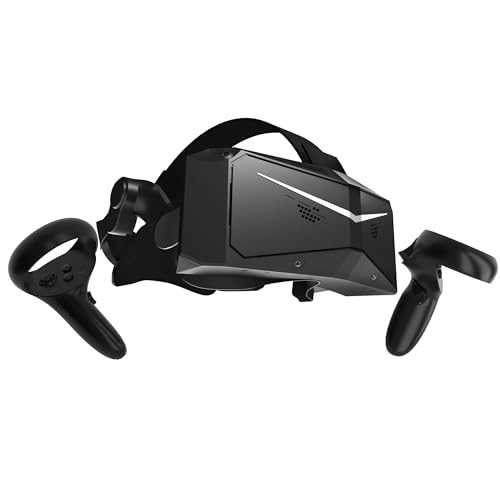
- 2880 × 2880 pixels per eye
- QLED display with local dimming
- Up to 120Hz refresh rate
Best For: PC flight and racing sims at sub-4K-per-eye resolution
Highest Pixel Count
Pimax Crystal Super with Studioform Face Pad

- 3840 × 3840 pixels per eye
- Glass aspheric lenses
- Studioform face pad kit included
Best For: PC VR users prioritizing per-eye pixel count
Micro-OLED Choice
Pimax Crystal Super Micro-OLED

- 3840 × 3552 pixels per eye
- Micro-OLED display with pancake lenses
- Eye tracking and 90Hz refresh rate
Best For: PC sim users seeking Micro-OLED and eye tracking
Ultrawide Sim Pick – Pimax Crystal Super Ultrawide
Among vr headsets with 4k resolution, this PC-connected Pimax stands out for its 3840 × 3840 pixels per eye and stated 140° field of view. Its wide view makes particular sense for flight and racing simulators, where peripheral awareness matters.
Best For: PC sim enthusiasts who prioritize a wide field of view and sharp visuals.
Pros:
- 3840 × 3840 resolution per eye with aspherical lenses and a stated 50 PPD.
- QLED and Mini-LED display with local dimming.
- Eye tracking, inside-out tracking, and adjustable IPD.
Cons:
- Wired DisplayPort and USB connection requires a compatible PC.
- High resolution may call for balancing field of view and frame rate against GPU performance.
Choose this version if a broad view is more important to your sim setup than maximizing pixels per degree; its dynamic FOV adjustment offers a way to tune the workload.
If you are comparing vr headsets with 4k resolution but do not want a PC connection, this standalone model lists a 3840 × 2160 LCD, 128GB of storage, and a 75Hz refresh rate. Its listed resolution is for the display, not per eye.
Best For: Buyers seeking a compact, standalone headset with a listed 4K display.
Pros:
- Standalone design runs on PICO OS.
- Listed 3840 × 2160 display and 128GB of storage.
- Lightweight design and stated 101° field of view.
Cons:
- 75Hz refresh rate is lower than the listed 90Hz option on the Pimax models.
- Its 3840 × 2160 specification should not be mistaken for per-eye resolution.
This is the practical portability choice in the group, provided standalone use matters more to you than the higher per-eye resolution of the wired PC headsets.
For shoppers comparing vr headsets with 4k resolution for PC gaming, this Crystal Super lists 3840 × 3840 pixels per eye and a stated 57 PPD. Its QLED and Mini-LED display uses local dimming, making image detail a central reason to consider it.
Best For: PC VR and flight-sim users who put fine visual detail first.
Pros:
- 3840 × 3840 resolution per eye with a stated 57 PPD.
- QLED and Mini-LED display with local dimming.
- Eye tracking and automatic IPD adjustment from 58 to 72mm.
Cons:
- Requires a PC rather than operating as a standalone headset.
- Field-of-view figures conflict in the supplied listing: 106° horizontal in the bullets versus 138° in the details.
Consider this model when clarity is your priority, but confirm the field of view and refresh-rate configuration before buying; the listing mentions both 72Hz and 90Hz.
Sim-Racing Value Pick – Pimax Crystal Light
Among vr headsets with 4k resolution, the Pimax Crystal Light is a lower-resolution alternative worth considering for PC flight and racing sims. Its 2880 × 2880 pixels per eye, QLED display with local dimming, and glass aspheric lenses prioritize a clear, high-contrast view.
Best For: PC sim players who want sharp visuals without requiring a 3840-pixel-per-eye display.
Pros:
- 2880 × 2880 resolution per eye with QLED local dimming.
- Glass aspheric lenses aim for clarity across the view.
- Up to 120Hz refresh rate and inside-out camera tracking.
- Supports SteamVR setups, including compatible Index and VIVE controllers.
Cons:
- Does not reach 4K resolution per eye.
- At approximately 815 g, headset weight may matter during long sessions.
Choose this model if refresh rate and sim-focused PC compatibility matter more to you than a 4K-per-eye specification. Check your PC and controller setup before buying.
For shoppers comparing vr headsets with 4k resolution, this Pimax Crystal Super offers 3840 × 3840 pixels per eye—the highest per-eye pixel count of these three listings. Its glass aspheric lenses and included Studioform face pad kit make it a notable PC VR option for buyers focused on detail and fit.
Best For: PC VR users prioritizing per-eye pixel count and an included face pad kit.
Pros:
- 3840 × 3840 resolution per eye and a stated 57 PPD.
- Glass aspheric lenses with a large sweet spot.
- Includes a tailored Studioform VR face pad kit.
Cons:
- Listed refresh-rate options top out at 90Hz.
- Field-of-view figures differ across the supplied listing details.
The resolution is the headline advantage here. Because the listing cites different field-of-view measurements, confirm the exact specification and refresh-rate options before ordering.
If you are browsing vr headsets with 4k resolution, this Pimax Crystal Super pairs a 3840 × 3552-per-eye Micro-OLED display with pancake lenses. The listing also specifies a 116° field of view, 90Hz refresh rate, eye tracking, and inside-out tracking for PC VR.
Best For: PC flight and racing sim users who want Micro-OLED displays and eye tracking.
Pros:
- 3840 × 3552 pixels per eye on Micro-OLED displays.
- Eye tracking and inside-out tracking are listed.
- 116° stated field of view and 90Hz refresh rate.
- Includes Studioform face cushion covers.
Cons:
- 3552 vertical pixels per eye fall short of a full 3840 × 3840 panel.
- PC VR and DisplayPort requirements limit device compatibility.
This is the display-technology pick rather than the highest-pixel-count pick. Confirm your PC has the required connection and that the included accessories match your needs.
How We Picked the Best Vr Headsets with 4K Resolution
We compared the listed per-eye resolution, display technology, field of view, tracking features, intended use, and what comes in each bundle. We also separated distinct headsets from variations of the Pimax Crystal Super: a different field-of-view specification, face-pad bundle, or Micro-OLED display should not be mistaken for a completely new platform.
Specifications in marketplace titles can be inconsistent. Confirm the display configuration, included accessories, warranty, and seller before ordering. We have not treated the advertised numbers as independent performance-test results.
Quick Comparison of Vr Headsets with 4K Resolution
- Pimax Crystal Super, 3840 × 3840 per eye: A high-resolution PC VR option aimed at flight and racing simulation. Compare the advertised 140° ultrawide and 106°/57 PPD listings carefully; they may describe different configurations or measurement methods.
- Crystal Super with Studioform face pad: Consider this listing if you want the 3840 × 3840 configuration and value the included comfort accessory. Check the total bundle price against buying the pad separately.
- Crystal Super Micro-OLED: Lists 3840 × 3552 per eye and eye tracking. Its display type and stated 116° field of view make it a distinct choice from the QLED-style Crystal Super listings.
- Pimax Crystal Light: Lists 2880 × 2880 per eye, local dimming, and inside-out tracking. It is a lower-resolution PC VR alternative, not a literal 4K-per-eye headset.
- PICO G2 4K Plus: An older standalone option with a 75 Hz listed refresh rate. Its “4K” branding does not mean 4K resolution per eye; check app support and current availability.
Key Buying Factors for Vr Headsets with 4K Resolution
Resolution and Visible Clarity
Look for a stated resolution per eye, not just “4K” or “8K” in the product name. Pixels per degree, lens quality, and the size of the sharp viewing area affect how readable text and instruments actually appear. Higher resolution also demands more rendering power, especially in demanding simulators.
Field of View, Display, and Comfort
A wider field of view can feel more immersive, but published figures may use different measurement methods. Micro-OLED, QLED, and local-dimming displays offer different trade-offs in contrast, brightness, and visual artifacts. Weight distribution and a suitable face pad matter if you plan to wear the headset for long sessions.
Setup and Compatibility
Check whether you need a capable gaming PC, compatible connections, controllers, or additional tracking accessories. Standalone convenience is appealing, but older standalone hardware may have limited software support. Verify return terms before investing in a headset whose fit and optics you cannot try first.
Who Should Buy Which Vr Headsets with 4K Resolution?
Choose a Crystal Super configuration if maximum listed per-eye detail is your priority and your PC can support it. Pick the Micro-OLED version if its display characteristics appeal more than the 3840 × 3840 specification. Consider Crystal Light if you want a high-resolution PC headset without paying for a Super configuration. The face-pad bundle suits shoppers who already know they want that accessory; the PICO G2 4K Plus makes sense only if its standalone software and older specifications meet your needs. In every case, compare the exact listing—not just the headset name—before checkout.