When you’re gearing up for live streaming, choosing the right video encoder can make all the difference. It impacts your broadcast’s quality, reliability, and viewer experience. With so many options available, from compact mini encoders to advanced 4K models, it’s crucial to know what features matter most. Let’s explore the best video encoders that can elevate your streaming game and help you achieve those seamless broadcasts.
Mini HDMI Encoder for Live Streaming

If you’re looking for a compact and efficient solution for live streaming, the UNISHEEN mini HDMI encoder is an excellent choice. Weighing just 3.52 ounces and measuring 3.54 x 2.13 x 1.14 inches, it easily fits into your setup. With support for 1080P P60 resolution and H.265/H.264 encoding, it guarantees high-quality streams. You can stream simultaneously to platforms like YouTube and Twitch without needing a computer. Plus, its advanced decoding capabilities and user-friendly web interface make it a breeze to configure. Enjoy seamless playback and efficient local network distribution, making it perfect for your live streaming needs.
Best For: Live streamers seeking a compact and efficient solution for high-quality streaming without the need for a computer.
Pros:
- Supports simultaneous streaming to multiple platforms like YouTube and Twitch.
- Compact size and lightweight design make it easy to integrate into any setup.
- User-friendly web interface simplifies configuration and management of streams.
Cons:
- Mixed reviews on compatibility with various camera models.
- Limited customer feedback may raise concerns for potential buyers.
- Some users may find the advanced features challenging to navigate initially.
ZowieBox 4K HDMI Video Encoder/Decoder (NDI HX3 Certified)

The ZowieBox 4K HDMI Video Encoder/Decoder shines for live streamers and content creators who need a compact yet powerful solution. Weighing just 5.9 ounces and measuring 4.84 x 2.68 x 0.87 inches, it easily fits into your gear. With NDI HX3 certification, it converts HDMI signals for seamless streaming to platforms like YouTube. You’ll enjoy high-resolution 4K streaming at low latency, while the web UI lets you adjust settings effortlessly. Although it can’t function as both encoder and decoder at once, it’s perfect for NDI workflows, making it a valuable addition to your streaming toolkit.
Best For: Content creators and live streamers looking for a compact and efficient solution to convert HDMI signals for streaming.
Pros:
- High-resolution 4K streaming capability with low latency ensures excellent video quality.
- Compact design allows for easy transport and integration into existing setups.
- User-friendly web UI for adjusting settings enhances overall usability.
Cons:
- Cannot function as both an encoder and decoder simultaneously, limiting versatility.
- Primarily supports RTSP, which may pose challenges for multicast NDI setups.
- Reports of unresponsive customer support may hinder troubleshooting for users.
HEVC H.265 H.264 Live HDMI Video Encoder
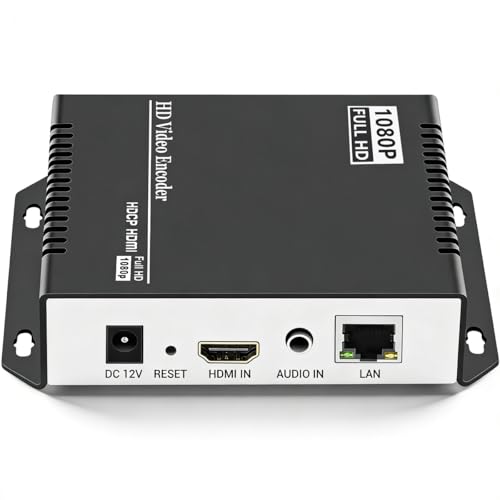
For content creators looking to elevate their live streaming experience, the HEVC H.265 H.264 Live HDMI Video Encoder stands out with its ability to support simultaneous output of four different video streams. This device is compatible with major platforms like YouTube and Twitch, ensuring you reach your audience effectively. With flexible streaming protocols, you can optimize bandwidth and video quality. Customization features let you add logos and text while adjusting resolution and bitrate. Plus, you’ll benefit from free lifetime technical support, making it an excellent choice for IPTV and live broadcasting in various media applications.
Best For: Content creators and broadcasters seeking high-quality live streaming solutions across multiple platforms.
Pros:
- Supports simultaneous output of four video streams, enhancing broadcasting capabilities.
- Offers extensive customization options, including adding logos and adjusting video parameters.
- Includes free lifetime technical support and development resources, ensuring ongoing assistance.
Cons:
- May require technical knowledge to fully utilize all features and customization options.
- Higher initial investment compared to basic streaming devices.
- Compatibility with certain platforms may vary, requiring additional setup.
EXVIST H.265 1080P HDMI Video Encoder for IPTV Live Streaming
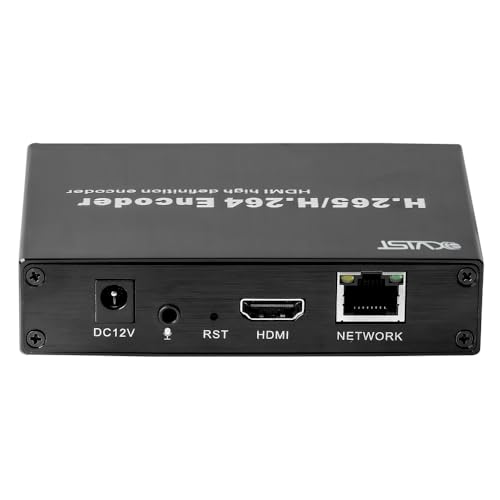
Designed specifically for IPTV live streaming, the EXVIST H.265 1080P HDMI Video Encoder stands out with its impressive capability to broadcast in high-definition while supporting multiple streaming protocols. You can easily push streams to platforms like YouTube and Facebook Live, or record directly to an SD card. Its user-friendly admin interface simplifies navigation, and it works seamlessly across various browsers. While it offers excellent video quality at up to 50fps, some users report latency issues. Overall, the EXVIST encoder is a versatile choice for anyone looking to enhance their live streaming experience.
Best For: Those seeking a reliable and user-friendly solution for high-definition live streaming across multiple platforms.
Pros:
- Multi-platform streaming capabilities.
- Direct recording to SD card.
- User-friendly admin interface.
Cons:
- Limited image format support (JPEG only).
- Manual firmware updates required.
- Setup complexity and potential UI navigation challenges.
Youyeetoo Link Pi ENC1-V3 4K HDMI Encoder & Decoder for Live Streaming
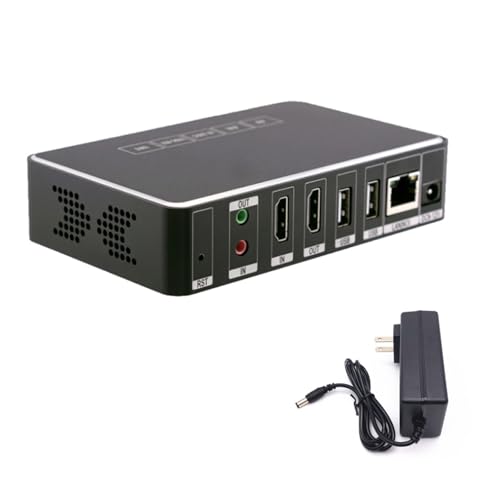
Offering seamless integration with devices supporting NDI and SRT protocols, the Youyeetoo Link Pi ENC1-V3 4K HDMI Encoder & Decoder stands out as an ideal choice for content creators and live streamers. With its high-performance quad-core CPU and 2GB of RAM, you’ll enjoy smooth 4K video quality at 30fps. It supports multiple encoding methods like RTSP and RTMP, making it versatile for various applications, including YouTube live streaming and surveillance. Weighing just 1.1 pounds and featuring onboard storage, it’s compact yet powerful. Plus, with a 30-day return policy, you can try it risk-free!
Best For: Content creators and live streamers looking for a reliable 4K HDMI encoder and decoder with multi-platform compatibility.
Pros:
- High-performance quad-core CPU ensures smooth video processing.
- Supports multiple encoding methods (RTSP, RTMP, HLS, UDP) for versatile applications.
- Compact design with onboard storage makes it easy to transport and use.
Cons:
- Customer rating of 3.4 out of 5 stars indicates mixed user satisfaction.
- NDI licenses need to be purchased separately, adding to overall cost.
- Limited compatibility with devices as only one model is currently supported.
4 Channel 4K Video Encoder for Live Streaming

If you’re seeking a powerful solution for professional live streaming, the ORIVISION 4 Channel 4K Video Encoder stands out with its ability to handle multiple high-resolution streams simultaneously. With 4 HDMI inputs and support for H.265, H.264, and MJPEG formats, you can easily stream to up to 16 platforms. It delivers stunning visuals at 4K@30Hz and 1080P@60Hz. Plus, the built-in RTMP server and LCD screen for real-time monitoring enhance your streaming experience. Enjoy flexible protocols and compatibility with software like OBS and VLC. You’ll appreciate the 3-year warranty and responsive customer support for any challenges you face.
Best For: Professionals and organizations seeking a reliable and high-quality video encoder for live streaming across multiple platforms.
Pros:
- Supports simultaneous streaming to up to 16 platforms with multiple input formats (H.265, H.264, MJPEG).
- High-resolution output capabilities with 4K@30Hz and 1080P@60Hz for exceptional video quality.
- Comprehensive customer support, including a 3-year warranty and free firmware upgrades.
Cons:
- Initial setup may be challenging due to language settings and documentation.
- Some users have reported difficulties in navigating the user interface.
- Limited to 2 channels at 4K resolution, which may not meet all streaming needs.
ZowieBox 4K Video Encoder/Decoder

For professionals seeking high-quality live streaming solutions, the ZowieBox 4K Video Encoder/Decoder stands out with its robust HDMI encoding and decoding capabilities. It transforms HDMI signals to SRT, RTMP, or RTSP formats, perfect for streaming on platforms like YouTube and Twitch. You can also connect HDMI cameras to computers for video calls or link UVC cameras to displays. With secure, low-latency transmission over unstable networks, ZowieBox guarantees smooth broadcasts. Plus, it handles 4K signals, looping out 4Kp60 while streaming at 1080p60, making it an excellent choice for large events and interactive settings.
Best For: Professionals in live streaming, content creation, and education looking for high-quality, low-latency video transmission solutions.
Pros:
- Supports multiple streaming formats (SRT, RTMP, RTSP) for versatile broadcasting options.
- Handles 4K signal input while providing seamless output and streaming capabilities.
- Enables secure video transmission over unstable networks, ensuring reliable broadcasts.
Cons:
- May require technical knowledge for setup and configuration.
- Higher cost compared to basic HDMI encoders/decoders.
- Limited compatibility with older video equipment not supporting HDMI.
J-Tech Digital 4 Ports HDMI Video Encoder for Live Streaming
The J-Tech Digital 4 Ports HDMI Video Encoder is an ideal choice for content creators looking to elevate their live streaming game. Supporting 4K at 30Hz and various platforms like YouTube Live and Twitch, this encoder lets you broadcast in stunning quality. It accepts multiple HDMI inputs and can handle up to four simultaneous livestreams, making it perfect for events. With support for common streaming protocols and customizable OSD options, you can tailor your broadcasts. Plus, you’ll get lifetime technical support and a one-year warranty, ensuring peace of mind as you share your content with the world.
Best For: Content creators and live streamers looking for a versatile and high-quality video encoding solution for multiple platforms.
Pros:
- Supports 4K resolution at 30Hz and multiple HDMI inputs for versatile streaming options.
- Allows up to four simultaneous livestreams, making it ideal for events and multi-source broadcasting.
- Includes lifetime technical support and a one-year warranty for customer assurance.
Cons:
- Some users have reported audio issues with specific devices.
- Performance can be unstable under certain conditions, affecting streaming quality.
- Requires a good internet connection to handle multiple HD streams effectively.
MPEG4 H.264 Live HDMI Video Encoder for IPTV and Live Streaming

Designed specifically for content creators and broadcasters, the MPEG4 H.264 Live HDMI Video Encoder stands out with its ability to support multiple streaming protocols like RTSP, RTP, and RTMP. You can simultaneously output four video streams using different protocols, making it perfect for broadcasting to various platforms like YouTube, Facebook, Wowza, and Twitch. Customize your streams by adding text, logos, or timestamps, and adjust resolution, frame rate, and bitrate to suit your needs. Plus, you’ll receive lifetime technical support and access to SDK and API documentation for further development, ensuring your streaming experience is seamless and professional.
Best For: Content creators and broadcasters looking for a versatile and customizable solution for live streaming across multiple platforms.
Pros:
- Supports simultaneous output of four video streams with different streaming protocols, enhancing flexibility.
- Customizable video settings allow for the addition of text, logos, and adjustable parameters like resolution and bitrate.
- Includes lifetime technical support and comprehensive documentation for easy integration and development.
Cons:
- May require a learning curve for users unfamiliar with video encoding and streaming protocols.
- The need for additional hardware or software may arise for optimal performance and integration.
- Higher initial investment compared to basic streaming solutions.
H265 H264 4K HDMI Video Streaming Encoder for Live Broadcast
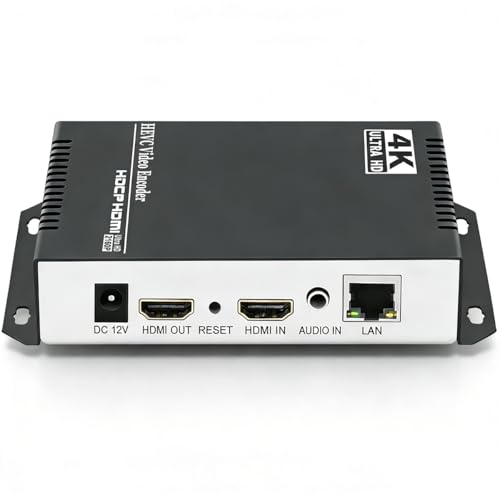
Offering unparalleled flexibility, the H265 H264 4K HDMI Video Streaming Encoder is perfect for content creators who demand high-quality live broadcasts across platforms like YouTube, Facebook, and Twitch. With support for multiple streaming protocols, you can easily customize your stream settings, adding logos or adjusting parameters like resolution and frame rate. It outputs up to four video streams simultaneously, ensuring versatility. While latency typically stays under 5 seconds, using high-quality settings may cause delays. Enjoy reliable performance and free lifetime support, making this encoder a top choice for seamless live broadcasts and a valuable addition to your AV setup.
Best For: Content creators and live streamers looking for a high-quality, versatile solution for broadcasting to multiple platforms.
Pros:
- Supports multiple streaming protocols for flexible broadcasting options.
- Allows customization of stream settings, including logos and resolution adjustments.
- Outputs up to four video streams simultaneously, enhancing versatility for various setups.
Cons:
- Latency can increase with high-quality settings, potentially causing delays in the stream.
- Initial setup may require network adjustments if the default IP address conflicts with existing networks.
- Firmware updates are not readily available online, requiring users to contact support for improvements.
Factors to Consider When Choosing Video Encoders for Live Streaming
When choosing a video encoder for live streaming, you need to contemplate several key factors. Think about the streaming resolution support, encoding formats, and protocol compatibility options that fit your needs. Additionally, the input/output capabilities and user interface design can greatly impact your streaming experience.
Streaming Resolution Support
Choosing the right video encoder for live streaming hinges greatly on streaming resolution support, as it directly impacts the quality of your broadcast. You’ll find common options like 1080p at 60fps for high-definition and up to 4K UHD at 30fps for ultra-high-definition streams. Different encoders support various maximum resolutions, with some allowing multiple simultaneous outputs at different quality levels. This flexibility helps you cater to diverse viewing platforms. Opting for an encoder that supports multiple resolutions is essential, especially for viewers with limited bandwidth. Remember, high-resolution encoding demands more processing power and bandwidth, so make sure your encoder can handle your desired output without introducing latency. Compatibility with popular streaming protocols also enhances your encoder’s effectiveness.
Encoding Formats Offered
Encoding formats play an essential role in determining the quality and efficiency of your live stream. Most video encoders support multiple formats, with H.264 and H.265 being the most popular. H.264 delivers good quality at lower bitrates, making it versatile across various devices and bandwidth scenarios. On the other hand, H.265 offers better compression efficiency, enabling higher resolutions without greatly increasing bitrates. Some encoders also include MJPEG and other formats, catering to specific needs like low-latency streaming or compatibility with certain systems. Your choice of encoding format can greatly affect compatibility with streaming platforms and the overall broadcast quality. It’s vital to evaluate whether the encoder can handle simultaneous streams in different formats for greater flexibility and adaptability.
Protocol Compatibility Options
Protocol compatibility is a key factor that can make or break your live streaming experience. When choosing a video encoder, you’ll want to verify it supports various streaming protocols like RTMP for Facebook and YouTube, SRT for secure transmissions, and RTSP for real-time streaming. Additionally, protocols like HLS and HTTP are essential for adaptive bitrate streaming, which optimizes video quality based on network conditions. Some encoders allow multiple simultaneous outputs with different protocols, enhancing your flexibility to broadcast across platforms. It’s also important to take into account compatibility with both multicast and unicast protocols for efficient local network distribution. Keeping these factors in mind will help you select the right encoder for your specific streaming needs.
Input/Output Capabilities
When evaluating video encoders for live streaming, it’s crucial to take into account their input and output capabilities, as these features directly impact your streaming experience. First, consider the number of HDMI input interfaces; some encoders support multiple inputs, allowing you to stream from various sources simultaneously. Also, look for encoders that can handle multiple output streams at once, enabling broadcasts to various platforms or servers. Check the maximum supported video resolutions and frame rates to guarantee quality, especially if you need 4K or 1080p output. Additionally, make sure the encoder supports a wide range of streaming protocols like RTMP, RTSP, and SRT for compatibility. Finally, review audio input options, including analog audio embedding, to enhance your content’s overall quality.
User Interface Design
A well-designed user interface is essential for maximizing your live streaming experience, as it simplifies the setup and management of your encoder. A user-friendly interface allows you to navigate and configure streaming settings without needing extensive technical knowledge. Web-based interfaces offer real-time monitoring, so you can make adjustments on the fly for peak performance. Look for customization options that let you add logos or static text, enhancing your branding and viewer engagement. Cross-browser compatibility means you can access the interface from various devices, increasing convenience and flexibility. Finally, a well-structured admin interface includes clear documentation and help resources, aiding you in troubleshooting and refining your streaming experience effectively.
Network Connectivity Features
Choosing the right video encoder for live streaming involves more than just user interface design; network connectivity features play a significant role in guaranteeing a smooth experience. Look for encoders that support various streaming protocols like RTMP, RTSP, SRT, and HLS. This compatibility gives you flexibility across platforms. Consider encoders with multi-client viewing capabilities for efficient multicast and unicast streaming on local networks. It’s also essential that your encoder can output multiple video streams simultaneously, allowing you to reach various platforms without needing extra hardware. Evaluate the adjustability of the default IP address via a web-based interface to simplify your network configuration. Finally, ensure seamless integration with existing network infrastructure, including support for DHCP and DNS.
Technical Support Availability
Technical support availability is essential for ensuring a smooth live streaming experience, especially since issues can arise unexpectedly. Reliable technical support helps you quickly resolve problems, and many users report varying experiences with customer service responsiveness and effectiveness. Some video encoders offer free lifetime technical support, which can be a lifesaver for long-term use and troubleshooting. Access to thorough documentation, like SDKs and APIs, enhances your experience by guiding secondary development and customization. Warranty durations vary, with some encoders providing one-year manufacturer replacement warranties, giving you recourse for defective units. User feedback often highlights the quality of technical support as a significant factor in overall satisfaction, directly impacting your encoder’s performance and reliability during broadcasts.