If you’re looking to cut down on your energy bills and enhance your home’s efficiency, smart home energy monitors can be a game-changer. These devices offer real-time insights into your energy usage, pinpointing which appliances consume the most power. With various options available, from those with circuit sensors to smart plugs, there’s a solution for every home. But which monitors truly stand out? Let’s explore the top contenders that could transform your energy management.
Emporia Vue 3 Home Energy Monitor
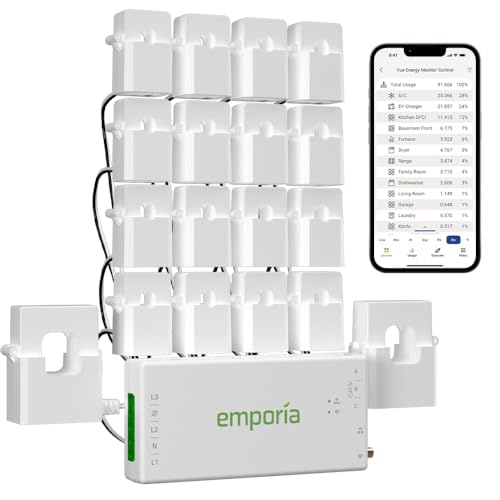
The Emporia Vue 3 Home Energy Monitor is an ideal choice for homeowners looking to take control of their energy consumption. This UL Listed device installs easily in your circuit panel using clamp-on sensors, and it’s compatible with various electrical systems. With 24/7 energy monitoring, you can automate and manage your usage remotely, even tracking solar energy. The Emporia Energy App helps you configure settings to lower your electric bills by providing insights and notifications about real-time spending. Plus, with sixteen 50A sensors, you can monitor your critical appliances accurately, making energy management straightforward and efficient.
Best For: Homeowners seeking to efficiently monitor and manage their energy consumption and reduce electric bills.
Pros:
- UL Listed for safety, ensuring compliance with rigorous standards to prevent hazards.
- Provides real-time monitoring and automation capabilities through a user-friendly app.
- Supports various electrical systems and includes multiple sensors for tracking critical appliances.
Cons:
- Requires a 2.4 GHz Wi-Fi connection for data monitoring, which may limit functionality in areas with poor connectivity.
- The need for a separate 200A sensor for 3-wire systems may incur additional costs.
- Installation in the circuit panel may require professional assistance for some users, especially those unfamiliar with electrical systems.
Smart Home Energy Monitor with 16 50A Circuit Level Sensors

Looking to optimize your home’s energy efficiency? The Smart Home Energy Monitor with 16 50A Circuit Level Sensors is your go-to solution. It measures power usage in real-time and sends data straight to your app, helping you track various appliances like your air conditioner and furnace. With compatibility for single, split, and three-phase systems, installation is a breeze. You’ll appreciate the real-time spending notifications that promote energy conservation, ultimately slashing your electric bills. Plus, it connects via 2.4GHz WiFi and offers accurate measurements, ensuring you stay informed about your energy usage without cloud dependence.
Best For: Homeowners looking to optimize energy efficiency and monitor their energy usage in real-time.
Pros:
- Provides real-time monitoring and historical data for various appliances, helping to identify energy consumption patterns.
- Easy installation process with clear instructions and positive customer support for setup assistance.
- Compatible with Home Assistant, allowing for integration into existing smart home systems.
Cons:
- Limited to 2.4GHz WiFi networks, which may affect compatibility with some home network setups.
- Slight discrepancies in measurements compared to utility power meters have been noted by some users.
- Requires a smartphone app for full functionality, which may not be ideal for all users.
Smart Home Energy Monitor with Circuit Sensors

For homeowners with heavy-duty appliances like heating pumps and air conditioners, the Smart Home Energy Monitor with Circuit Sensors offers unparalleled energy tracking and optimization. It features two main circuit sensors and 16 branch sensors, ensuring precise monitoring of your energy consumption. With the Refoss app, you can track power and voltage in real-time, allowing you to identify inefficient devices and potentially save 10%-20% on bills. Alerts notify you of unusual spikes, optimizing usage habits. Plus, its solar integration maximizes your energy investment while keeping your data private. Enjoy clear insights and take control of your energy efficiency today!
Best For: Homeowners with heavy-duty appliances seeking to optimize energy efficiency and reduce electricity bills.
Pros:
- Real-time energy monitoring with high accuracy (98%) for effective tracking of major appliances.
- Solar integration feature helps maximize returns on solar investments by automating energy usage.
- Personalized usage alerts notify users of unusual spikes, promoting proactive energy management.
Cons:
- API support is not available, limiting integration with other smart home systems.
- Requires a firmware update via the Refoss app for seamless Home Assistant integration.
- Data storage is local only, which may be a drawback for users preferring cloud-based solutions.
Emporia Vue 3 Home Energy Monitor
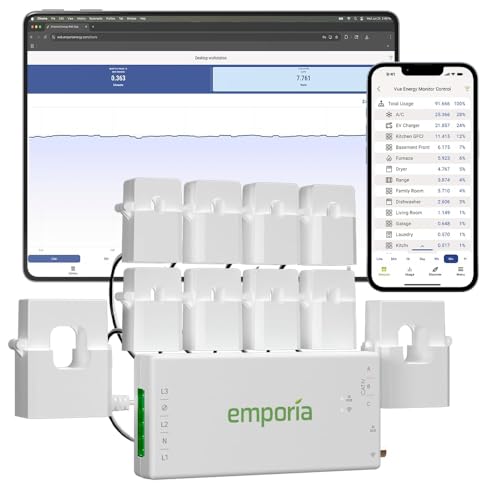
If you’re seeking a reliable solution to monitor your home’s electricity usage, the Emporia Vue 3 Home Energy Monitor stands out with its real-time tracking capabilities. UL Listed for safety, it installs easily in most circuit panels using clamp-on sensors. You can manage your energy 24/7, preventing costly repairs and conserving energy. The Emporia Energy App lets you configure settings for peak savings and provides live data tracking with impressive accuracy. Plus, you can access your energy data anytime through the app, ensuring you stay informed and in control of your energy expenses.
Best For: Homeowners looking for an efficient and user-friendly way to monitor and manage their electricity consumption in real-time.
Pros:
- UL Listed for safety and reliability, meeting rigorous safety standards.
- Easy installation in most circuit panels with clamp-on sensors.
- Provides live data tracking and actionable notifications for cost reduction.
Cons:
- Requires a 2.4 GHz Wi-Fi connection for monitoring via the app.
- Additional sensor may be needed for certain electrical systems, incurring extra cost.
- Limited data retention for minute data (7 days) may not suit all users’ needs.
Smart Home Energy Monitor with App and Circuit Level Sensors

Smart Home Energy Monitors with app integration and circuit level sensors are ideal for tech-savvy homeowners who want real-time insights into their energy consumption. These monitors easily install in your circuit panels using clamp-on sensors and support various configurations, including up to 415Y/240VAC. You can monitor your real power usage anytime, whether at home or on the go. Plus, with the ability to add up to eight additional sensors, you can track specific appliances. By measuring real-time spending, you’ll make smarter choices, lower your electric bills, and contribute to a more sustainable environment. Enjoy enhanced privacy with optional local operation modes.
Best For: Tech-savvy homeowners who want real-time insights into their energy consumption and the ability to monitor specific appliances.
Pros:
- Easy installation with clamp-on sensors for circuit panels.
- Real-time monitoring accessible via a user-friendly app on Android and Apple devices.
- Enhanced privacy options with local operation modes available.
Cons:
- Requires WiFi connectivity for full functionality, which may limit use in areas with poor signal.
- Additional sensors must be purchased separately for tracking more appliances.
- Initial setup may be complicated for users unfamiliar with electrical systems.
Smart Home Energy Monitor with 2 x 120A CTs

The Smart Home Energy Monitor with 2 x 120A CTs is ideal for homeowners who want precise control over their energy consumption. It offers real-time tracking of voltage, current, power, and total energy usage, ensuring you know exactly where your energy goes. With bi-directional power monitoring, it’s perfect for those using solar or battery systems. Its smart app integration allows for real-time data analysis and customizable alerts. Installation is quick and easy, though it requires managing several wires. Users appreciate its accurate readings and effective tracking, making it a valuable addition to your energy efficiency toolkit.
Best For: Homeowners looking for precise energy monitoring and control, especially those with solar or battery systems.
Pros:
- Accurate Real-Time Monitoring: Tracks voltage, current, power, and total energy consumption with Class 1 accuracy.
- User-Friendly App Integration: Compatible with the Smart Life app for real-time data analysis and customizable alerts.
- Easy Installation: Features pluggable terminals and compact split-core CTs for a hassle-free setup.
Cons:
- Limited Installation Instructions: Some users noted a lack of detailed guidance suitable for the US market.
- Non-Waterproof: The device is not waterproof and must comply with electrical codes during installation.
- Complex Wiring Requirements: Installation involves managing a total of seven wires, which may be challenging for some users.
Sense Energy Monitor – Track Electricity Usage in Real Time
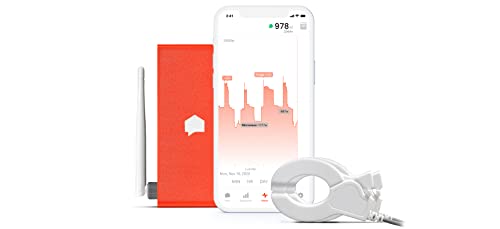
For homeowners looking to gain control over their energy consumption, the Sense Energy Monitor stands out as an invaluable tool. It tracks electricity usage in real-time, providing insights that help you save both energy and money. With the ability to monitor your home’s energy use from anywhere via iOS, Android, or web apps, you’ll always know what’s happening, whether family members are arriving home or devices are left on. Plus, you can set custom notifications for critical appliances, preventing potential disasters. Currently available in the U.S. and Canada, Sense is your partner in energy efficiency and informed living.
Best For: Homeowners who want to monitor and optimize their energy consumption for increased efficiency and cost savings.
Pros:
- Real-time tracking of electricity usage from anywhere via mobile and web apps.
- Custom notifications for critical devices help prevent potential disasters.
- Supports energy-saving insights and time-of-use rate plans for better financial management.
Cons:
- Currently only available in the United States and Canada.
- May require installation expertise for setup inside electrical panels.
- Not compatible with energy systems outside of the U.S. and Canada.
SIEMENS Inhab Smart Home Energy Monitor with Circuit Level Sensors

Looking to gain better control over your home energy usage? The SIEMENS Inhab Smart Home Energy Monitor is your go-to solution. With 16-50Amp circuit level sensors and 2-200Amp main sensors, you can track your electricity consumption in real-time. This device monitors energy usage 24/7, covering up to 16 branch circuits. You can set personalized alerts for energy savings and detect unusual behaviors, like an oven left on. Plus, it offers advanced features like Time of Use Management and excess solar management. Safety standards are met with CE marking and UL listing, ensuring reliability in your home.
Best For: Homeowners looking to monitor and optimize their energy consumption with real-time insights and personalized alerts.
Pros:
- Real-time tracking of energy usage across 16 branch circuits for detailed insights.
- Customizable alerts for energy savings and unusual activity, enhancing home safety.
- Advanced management features like Time of Use Management and excess solar management for energy efficiency.
Cons:
- Initial setup may require technical knowledge, which could be challenging for some users.
- Compatibility with specific smart devices may be limited, restricting full functionality.
- Price point might be higher compared to basic energy monitors, making it less accessible for budget-conscious consumers.
Emporia Energy Monitoring Smart Plug (4 Pack)

Emporia Energy Monitoring Smart Plug (4 Pack) is ideal for anyone wanting to gain control over their home energy usage without the hassle of complex setups. These WiFi smart plugs let you manage lights, fans, and other appliances from your smartphone. With real-time monitoring, you can track energy consumption and eliminate wasteful stand-by power, saving money and extending appliance life. The built-in scheduling feature allows you to set timers for devices, like brewing your coffee at 7 AM. Plus, remote access via the Emporia app keeps you in control, no matter where you are, as long as you have a 2.4GHz WiFi connection.
Best For: Those looking to efficiently manage and monitor their home energy usage with smart technology.
Pros:
- Energy Monitoring: Track and reduce energy consumption, leading to cost savings on electricity bills.
- Smart Scheduling: Set timers for devices, allowing for automated control of appliances like coffee makers and lamps.
- Remote Access: Control devices from anywhere using the Emporia app, providing convenience and flexibility.
Cons:
- Limited WiFi Compatibility: Only compatible with 2.4GHz WiFi networks, which may not suit all home setups.
- Maximum Load Limitations: Maximum continuous load is 10A, which may restrict use with high-powered appliances.
- Requires App for Full Functionality: Some features, like remote control and scheduling, require using the mobile app, which may not appeal to all users.
Smart Home Energy Monitor with 2 x 80A CTs

The Smart Home Energy Monitor with 2 x 80A CTs is perfect for homeowners enthusiastic to optimize their energy consumption. This device offers bi-directional power tracking, giving you real-time insights into your electricity usage. With accurate monitoring of major appliances like air conditioners and water heaters, you can track power, voltage, and current effectively. Installation’s a breeze—just clamp the CT sensors onto your power line and connect to your 2.4GHz Wi-Fi. Compatible with Tuya and Smart Life apps, it’s ideal for both solar systems and city grid setups, ensuring you manage your energy usage efficiently and save on bills.
Best For: Homeowners looking to optimize their energy consumption and monitor electricity usage in real time.
Pros:
- Easy installation with lightweight CT sensors that clamp onto power lines.
- Real-time tracking of power, voltage, current, and power factor for major appliances.
- Compatible with popular apps like Tuya and Smart Life for convenient monitoring.
Cons:
- Requires 2.4GHz Wi-Fi, limiting compatibility with newer 5GHz networks.
- May not support all appliances if they exceed the 80A current limit of the CT sensors.
- Historical data may not be as detailed as some users might expect for energy usage analysis.
Factors to Consider When Choosing Smart Home Energy Monitors
When choosing a smart home energy monitor, you need to contemplate several key factors to guarantee it meets your needs. Think about the installation complexity, how well it integrates with your existing systems, and the accuracy of energy monitoring. Also, assess the accessibility of data and any cost-saving features that could benefit you in the long run.
Installation Complexity
Choosing a smart home energy monitor involves considering several factors related to installation complexity. The type of wiring system in your home—whether single-phase, split-phase, or three-phase—can greatly impact installation, often requiring extra components like sensors or adapters. Many monitors use clamp-on sensors, simplifying the process and allowing for easy placement in existing circuit panels. Some models offer flexible installation options for homes with limited access to busbars, making them more adaptable. It’s essential to assess the ease of installation and the clarity of instructions provided. Some monitors may demand technical knowledge or professional help, especially with high-voltage systems. Additionally, verify your monitor integrates smoothly with your existing home automation system to avoid complications.
System Compatibility
Ensuring your smart home energy monitor is compatible with your electrical system is essential for ideal performance. First, check if it suits your system type—whether that’s single-phase, split-phase, or three-phase. Make sure it meets your home’s voltage requirements, typically around 120/240VAC for standard setups or higher for three-phase systems.
Next, consider how well it integrates with existing smart home platforms like Home Assistant for seamless control. If privacy is a concern, look for monitors that can operate without cloud access, allowing you to manage data on local servers. Ultimately, verify that the monitor can effectively track energy consumption across various appliances and circuits in your home, ensuring you get the most accurate insights for energy savings.
Energy Monitoring Accuracy
Accuracy in energy monitoring is essential for effectively managing your home’s electricity usage and identifying potential savings. Look for monitors with an accuracy range of ±1% to ±2%, as this precision is crucial for tracking consumption accurately. Real-time data reporting, available every second or minute, helps you spot fluctuations and peak usage times. Keep in mind that installation methods matter; proper placement of current transformers (CTs) around power lines can greatly impact accuracy. If you have solar systems, consider monitors that offer bi-directional power tracking for a complete view of both consumption and generation. Finally, don’t overlook the importance of regular firmware updates; they can enhance measurement accuracy and improve features over time.
Data Accessibility
How easily can you access your energy consumption data? When choosing a smart home energy monitor, look for a stable 2.4 GHz Wi-Fi connection that provides real-time monitoring through mobile apps or web interfaces. Many monitors offer data in various formats, like hourly, daily, monthly, and yearly statistics, helping you spot trends and inefficiencies. Some devices even allow cloud data export, letting you access your energy data remotely and maintain long-term usage records. If privacy is a concern, consider models that store data locally while still providing real-time insights. Additionally, notifications and alerts based on your energy patterns can enhance data accessibility, empowering you to react quickly to unusual spikes or anomalies in usage.
Cost-Saving Features
When selecting a smart home energy monitor, consider its cost-saving features, as these can greatly impact your monthly electric bill. Look for monitors that offer real-time spending insights and actionable notifications, helping you conserve energy effectively. Features like time-of-use configurations let you optimize energy usage during off-peak hours, saving you money on rates. If you have solar panels, choose a monitor that tracks excess energy generation and consumption, reducing grid reliance. Personalized energy usage targets and alerts for unusual spikes help identify inefficiencies, preventing costly repairs. Finally, consider models that integrate with home automation systems, enabling advanced features like peak demand management and load shedding to maximize your energy efficiency.
App Integration
Cost-saving features are just one aspect to contemplate; app integration plays an important role in maximizing the benefits of your smart home energy monitor. Look for monitors that work with popular home automation platforms like Home Assistant to enhance your control over energy management. Verify the app offers real-time monitoring, so you can track energy consumption instantly from your devices. Customizable notifications for usage spikes or savings opportunities keep you informed, enabling timely adjustments. Evaluate data export options too; having historical energy usage data available in various formats assists in deeper analysis. Finally, consider the app’s user experience—easy navigation, clear data presentation, and regular firmware updates can greatly improve functionality over time.
Warranty and Support
While selecting a smart home energy monitor, don’t overlook the importance of warranty and customer support. The warranty period can range from one to two years, so check what’s offered to verify you’re covered. Look for products that provide reliable customer support, including help with installation and troubleshooting, as this can enhance your overall experience. Some monitors also offer firmware updates, extending their functionality and lifespan. Make certain the warranty covers not just the device but any included sensors too, protecting you against manufacturing defects. Finally, read user reviews to gauge the responsiveness and helpfulness of customer service. This insight can help you choose a monitor that offers the support you need after your purchase.