Resin 3D printers can produce exceptionally fine details, smooth surfaces, and accurate miniature features, but the right model depends on more than screen resolution alone.
This roundup compares 10 leading options across print speed, build size, automation, workflow convenience, and value to help you choose a printer that fits your projects and experience level.
Best 10 Resin 3D Printers Picks for 2026
Fast Detail Specialist

- Up to 170mm/h with high-speed resin
- 14K display with 16.8 × 24.8 μm XY resolution
- Temperature-controlled vat and automatic resin filling
Best For: Fast, highly detailed prints with automated resin handling
Large-Format Smart Pick

- 16K resolution with 14 × 19 μm XY resolution
- Large 8.33 × 4.66 × 8.66-inch build volume
- Heated resin tank and AI monitoring camera
Best For: Large, intricate prints with automated monitoring
Compact Everyday Choice

- 10K LCD with 17 × 17 μm pixel size
- Compact 6.04 × 3.42 × 6.49-inch build volume
- Beginner-friendly four-point leveling
Best For: Detailed everyday prints in a compact, approachable machine
Efficient Monitoring Pick
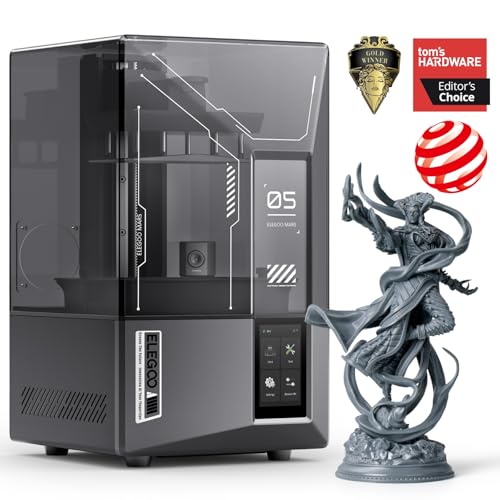
- 9K LCD with 18 μm XY resolution
- Up to 150mm/h using tilt-release technology
- AI camera and Wi-Fi cluster printing
Best For: Fast, monitored printing and multi-printer workflows
Best Beginner-Friendly Pick
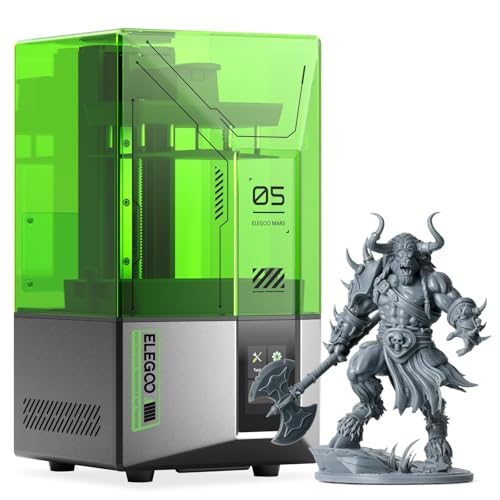
- One-click automatic leveling
- 4K mono LCD for detailed prints
- Self-checking and overheat protection
Best For: Beginners seeking simple setup and reliable monitoring
Best High-Resolution Pick

- 14K mono LCD for crisp fine details
- Auto-leveling and AI print monitoring
- Supports resins up to 8,000 cps
Best For: Detailed models and advanced high-viscosity resin workflows
Fast, Smart Precision

- Up to 150 mm/h printing with tilt release
- One-touch automatic leveling
- AI monitoring and print-resume features
Best For: Detailed, fast resin printing with minimal setup
Large-Format Production Power

- 18.3L build volume for large or batch prints
- 14-inch 12K monochrome screen
- Heated 1,900 ml resin tank and auto-leveling
Best For: High-volume production and oversized resin models
Automated High-Speed Control
Reflex RS Turbo Resin 3D Printer

- High-contrast amber screen for detail and speed
- One-click slicing with defect repair and supports
- Force-based protection and adaptive motion control
Best For: Managed, high-speed resin printing workflows
Fast Detail Specialist – Anycubic Photon Mono M7 Pro
For shoppers comparing resin 3D printers, the Anycubic Photon Mono M7 Pro stands out for combining high print speeds with a highly detailed 14K display. Its temperature-controlled resin vat, auto-fill system, and multiple detection features are designed to streamline larger or more demanding print jobs.
Best For: Users who want fast, highly detailed prints and automated resin handling.
Pros:
- Prints up to 170mm/h with high-speed resin and 130mm/h with standard resin.
- 14K resolution and 16.8 × 24.8 μm XY resolution support fine detail.
- Temperature-controlled vat, auto-fill, and one-key resin recycling simplify operation.
- Six intelligent detection systems help identify setup and printing issues.
Cons:
- Its advanced feature set and 33.3-pound weight may be more than casual users need.
- The advertised 170mm/h speed depends on using high-speed resin.
The Photon Mono M7 Pro is a strong choice when speed, resolution, and automation matter more than compactness or simplicity.
Large-Format Smart Pick – ELEGOO Saturn 4 Ultra 16K
The ELEGOO Saturn 4 Ultra 16K is one of the more feature-rich resin 3D printers in this group. It pairs a large build area and 16K resolution with automatic resin heating, AI monitoring, automatic leveling, and Wi-Fi transfer for a more hands-off workflow.
Best For: Makers who need large, intricate prints with automated monitoring and setup assistance.
Pros:
- 16K LCD delivers 14 × 19 μm XY resolution for intricate models.
- 8.33 × 4.66 × 8.66-inch build volume accommodates larger projects.
- Automatic heated resin tank helps maintain suitable printing temperatures.
- AI camera, automatic leveling, Wi-Fi transfer, and power-on resume support easier operation.
Cons:
- Its 35.4-pound weight and larger footprint require substantial workspace.
- Some smart features may be unnecessary for buyers seeking a basic resin printer.
Choose the Saturn 4 Ultra 16K if you want high resolution and generous capacity without giving up monitoring and convenience features.
Compact Everyday Choice – Anycubic Photon Mono 4
The Anycubic Photon Mono 4 is a practical entry point for shoppers seeking resin 3D printers with detailed output in a compact, lightweight design. Its 10K LCD, straightforward four-point leveling, and power-resume function make it suited to everyday projects without an overly complex setup.
Best For: Beginners and hobbyists who want detailed prints in a smaller machine.
Pros:
- 10K resolution and 17 × 17 μm pixel size support detailed models.
- 6.04 × 3.42 × 6.49-inch build volume handles many routine projects.
- Four-point leveling is designed to reduce the need for repeated leveling.
- Laser-engraved platform improves adhesion while keeping model removal manageable.
Cons:
- It lacks support for the Anycubic app.
- Its build volume is smaller than the larger-format options in this roundup.
The Photon Mono 4 makes the most sense for users prioritizing a compact footprint, approachable setup, and strong detail over maximum capacity or advanced automation.
Efficient Monitoring Pick – ELEGOO Mars 5 Ultra
The ELEGOO Mars 5 Ultra balances detailed output, fast printing, and practical monitoring features. For buyers comparing resin 3D printers, its 9K display, tilt-release technology, AI camera, and Wi-Fi cluster printing make it especially appealing for users who want to improve reliability or manage multiple machines.
Best For: Hobbyists and small-scale production users who value speed, error monitoring, and multi-printer control.
Pros:
- 9K resolution with 18 μm XY resolution reproduces fine details.
- Print speeds reach up to 150mm/h with tilt-release technology.
- AI camera monitors for issues such as empty build plates and model warps.
- Wi-Fi cluster printing enables control of multiple Mars 5 Ultra printers from one device.
Cons:
- AI detection results can vary with the environment, model, and resin type.
- Its 9K resolution is lower than the 14K and 16K models in this roundup.
The Mars 5 Ultra is a well-rounded option for users who want fast, detailed printing with safeguards and workflow tools that can scale beyond a single printer.
Best Large-Format Pick – Anycubic Photon Mono M7 Max
For resin 3D printers intended for large projects, the Anycubic Photon Mono M7 Max stands out with a spacious 298mm × 164mm × 300mm build volume. Its temperature-managed resin system, automatic filling, and faster printing features are designed to simplify bigger jobs.
Best For: Full-size masks, cosplay props, game terrain, and other large models that would otherwise require multiple printed sections.
Pros:
- Large build volume supports sizable models without cutting and assembly.
- LighTurbo 3.0 light source, anti-aliasing, and precision lead screws help improve detail quality.
- Dynamic resin temperature control, auto-fill, and one-key resin recycling add convenience.
- Flip-open cover supports one-hand opening and reaches print speeds up to 60mm/h.
Cons:
- Its 52.8-pound weight and large footprint require substantial workspace.
- The large 1300ml resin vat may be more capacity than smaller projects need.
The M7 Max is a practical choice when project size is the main priority. It combines generous capacity with automation aimed at making large-format resin printing more manageable.
Best Beginner-Friendly Pick – ELEGOO Mars 5
The ELEGOO Mars 5 is a resin 3D printer built around a simpler setup process. One-click automatic leveling, self-checking, and built-in warnings help reduce common setup and monitoring tasks, while its 4K mono LCD targets detailed prints.
Best For: Beginners and hobbyists who want straightforward setup, automatic checks, and detailed smaller-scale resin prints.
Pros:
- One-click automatic leveling helps eliminate tedious manual calibration.
- Residue detection, resin-shortage alerts, and leveling-failure alarms can reduce waste.
- 4K mono LCD and COB light source support detailed textures and fine features.
- Overheat protection stops printing and sounds an alarm if LED temperature exceeds 80°C.
Cons:
- The supplied notes do not specify the printer’s build volume or maximum speed.
- Its 4K display is less resolution-focused than the 14K model in this roundup.
Mars 5 is especially appealing if you value guided operation over manual tuning. Its automatic checks and safety features make it a sensible entry point for resin printing.
Best High-Resolution Pick – Anycubic Photon P1
The Anycubic Photon P1 is a high-resolution resin 3D printer designed for detail-focused work and advanced materials. Its 14K mono LCD, factory-calibrated auto-leveling, AI monitoring, and support for resins up to 8,000 cps make it a versatile option for demanding creators.
Best For: Detailed models and advanced users who want automated checks plus compatibility with high-viscosity industrial resins.
Pros:
- 14K mono LCD provides 13,312 × 5,120-pixel resolution and a stated 16.8 × 24.8-micrometer XY pixel size.
- Factory-calibrated Smart Leveling 3.0 performs self-checks and provides corner pressure feedback.
- AI monitoring checks build plate installation, layer separation, resin level, and vat residue.
- Wave Release Technology reduces release force by 60%, while the structure is designed to minimize vibration.
Cons:
- Its 14K capabilities and industrial-resin support may be unnecessary for basic hobby printing.
- The supplied notes do not specify its build volume or print speed.
- At 29.7 pounds, it needs a stable, dedicated workspace.
The Photon P1 is the strongest fit here for precision-oriented printing and specialized resin workflows. Its automation is useful for users who want advanced capability without relying entirely on manual inspection.
Fast, Smart Precision – ELEGOO Saturn 4 Ultra 12K
The ELEGOO Saturn 4 Ultra is a practical resin 3D printer for users who want detailed output with less setup and faster print cycles. Its 12K resolution, tilt-release technology, automatic leveling, and built-in monitoring features make it a strong choice for streamlined resin printing.
Best For: Makers who prioritize fast printing, fine detail, and convenient automated setup.
Pros:
- Tilt-release technology supports speeds up to 150 mm/h.
- One-touch automatic leveling reduces setup work.
- AI camera monitoring, foreign-object detection, and resin shortage alerts add convenience and protection.
- Resume printing and startup self-checks help support unattended jobs.
Cons:
- At 40 pounds, it is not especially lightweight or portable.
- AI detection results can vary with the environment, model, and resin type.
Choose the Saturn 4 Ultra if you want a feature-rich resin 3D printer that combines high-resolution printing with automated leveling and useful failure-monitoring tools.
Large-Format Production Power – ANYCUBIC Photon P1 Max
The ANYCUBIC Photon P1 Max is a large resin 3D printer designed for oversized prototypes and high-volume batch work. Its 18.3-liter build volume, heated resin tank, 12K screen, and automatic leveling system are aimed at users who need capacity and consistent operation.
Best For: Workshops and professionals producing large parts or multiple models in one print cycle.
Pros:
- 285.5 × 214 × 300 mm build volume accommodates large models and dense batches.
- 14-inch 12K monochrome screen supports fine, smooth details.
- Temperature-controlled 1,900 ml resin tank can heat resin up to 35°C.
- Auto-Leveling 3.0 includes calibration, self-checks, and force feedback.
Cons:
- Its large 68.9-pound body requires substantial workspace.
- The large-format design may be more printer than smaller projects require.
The Photon P1 Max makes the most sense when build capacity is the priority. Its heated vat and automated calibration also support more predictable resin printing in cooler workshop conditions.
Automated High-Speed Control – Reflex RS Turbo Resin 3D Printer
The Reflex RS Turbo is a resin 3D printer built around speed, process automation, and print protection. Its high-contrast amber screen, one-click slicing, force-based failure detection, and adaptive motion controls make it suited to users who want a more managed production workflow.
Best For: Experienced users and production teams seeking high-speed printing with detailed diagnostics and automated process control.
Pros:
- High-contrast amber screen is designed for crisp details and faster curing.
- One-click slicing can repair common model defects and generate supports.
- Force sensors can detect fine resin residue and automatically pause prints.
- C5 ball-screw Z-axis and calibrated lighting support precise, consistent output.
Cons:
- The advanced feature set may be more involved than necessary for casual users.
- At 50.6 pounds, it requires a stable, dedicated workspace.
The Reflex RS Turbo stands out for its emphasis on active monitoring and workflow automation. It is a compelling resin 3D printer for users who value speed, repeatability, and post-print diagnostics.
How We Picked the Best Resin 3D Printers
We compared these Resin 3D Printers by looking at the features that have the greatest effect on everyday printing: LCD resolution, build volume, advertised speed, leveling and calibration systems, resin handling, software compatibility, and overall workflow. We also considered whether each model is better suited to miniatures, prototypes, batch production, large-format parts, or general home use.
Resolution matters for fine detail, but it is only one part of print quality. Mechanical consistency, exposure control, screen size, support settings, and post-processing requirements can have just as much impact on final results. Product claims such as maximum speed should be treated as best-case figures rather than guaranteed results for every resin or model.
Quick Comparison
| What to Compare | Best For | Why It Matters |
|---|---|---|
| 14K–16K resolution | Highly detailed miniatures and display models | Can preserve fine surface features and crisp edges |
| 12K–13.6-inch or larger formats | Oversized parts and batch printing | Provides more build area per job |
| Auto-leveling and assisted setup | Beginners and convenience-focused users | Reduces calibration work and setup errors |
| High advertised print speed | Frequent printing and production workflows | May shorten print times when paired with suitable resin |
| Compact entry-level designs | Small workspaces and first-time users | Lower space requirements and simpler ownership |
Key Buying Factors for Resin 3D Printers
Resolution and Detail
Choose a high-resolution model when you regularly print miniatures, jewelry patterns, figurines, or parts with small text and sharp contours. A lower-resolution printer can still produce excellent results for larger objects, especially when correct exposure and support settings are used.
Build Volume
Check the usable build dimensions, not just the printer’s external footprint. A compact printer is practical for occasional small models, while a large-format machine is more useful for helmets, props, larger prototypes, or printing many parts at once.
Speed and Workflow
Fast printing is valuable for batches, but real-world output also depends on layer height, resin type, lift settings, supports, and post-processing. Features such as auto-leveling, monitoring, reliable release behavior, and straightforward slicing can save more time than headline speed alone.
Safety and Cleanup
Resin printing requires ventilation, gloves, eye protection, washing, and UV curing. Budget for wash-and-cure equipment, spare film or screens, cleaning supplies, and safe resin storage before buying.
Who Should Buy Which Resin 3D Printers?
Beginners should favor a compact printer with assisted leveling, a clear setup process, and accessible replacement parts. Miniature and model makers should prioritize fine resolution, consistent exposure, and dependable support performance. Frequent users may benefit from faster models or larger build platforms that reduce the number of separate jobs. Prop makers and large-part users should focus first on build volume, then confirm that the printer fits their workspace and post-processing setup. Value-focused buyers can often get excellent detail from a smaller machine rather than paying for capacity they rarely need.