Choosing among resin 3D printers for home studios means balancing print quality, build volume, speed, odor control, and day-to-day convenience. The right machine depends on whether you create miniatures, prototypes, functional parts, or larger display models.
We’ve gathered 10 notable options from Anycubic, Elegoo, and Yoopai, covering compact entry-level printers, high-resolution upgrades, large-format systems, and an enclosure designed to make home use more manageable.
Best 10 Resin 3D Printers for Home Studios Picks for 2026
Fast Detail Specialist

- 14K resolution for fine model detail
- Up to 170 mm/h with high-speed resin
- Heated vat and automated resin handling
Best For: Fast, detailed home-studio production
Smart Precision Workhorse

- 16K resolution for smooth, detailed models
- 30 °C intelligent tank heating
- Auto-leveling and AI print monitoring
Best For: Convenient high-detail studio printing
Large-Format Production Choice

- 18.3L build volume for large or batch prints
- 14-inch 12K screen for smooth detail
- Heated 1900 ml vat and auto-leveling
Best For: Large prototypes and high-volume batches
Compact Workflow Optimizer
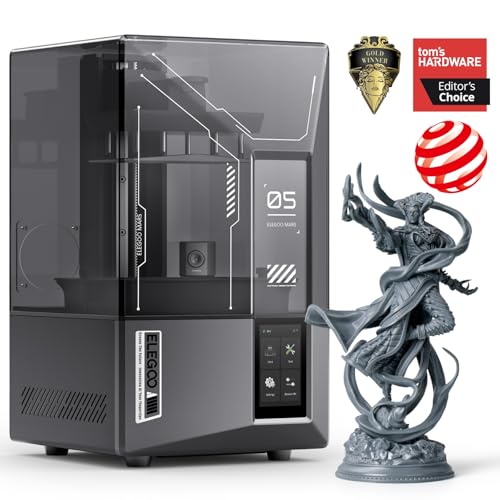
- 9K resolution with 18 μm XY detail
- Up to 150 mm/h with tilt release
- AI monitoring and Wi-Fi cluster printing
Best For: Efficient small-studio workflows
High-Precision Workhorse

- 14K mono LCD for crisp fine detail
- Automatic leveling and AI-assisted monitoring
- Supports resins up to 8,000 cps
Best For: Advanced home studios printing detailed models with specialized resins
Beginner-Friendly Safety Pick
ELEGOO Mars 5 Resin 3D Printer
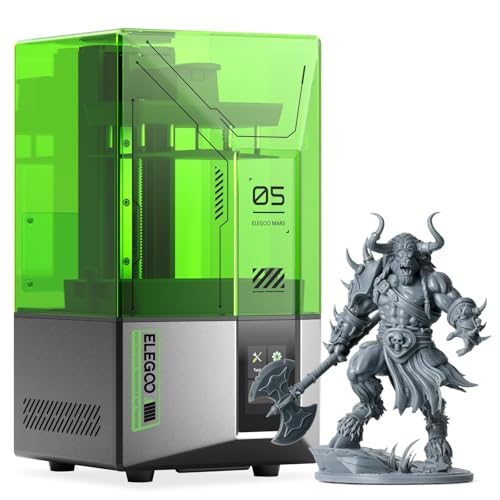
- One-click automatic leveling
- Residue, resin-shortage, and component checks
- 4K mono LCD with overheat protection
Best For: Beginners wanting simple setup and built-in print safeguards
Compact Detail Maker

- 10K mono LCD with 17-micrometer pixels
- Compact 7.7-pound design and useful build volume
- Power-resume and improved platform adhesion
Best For: Space-conscious studios making detailed everyday models
Best Beginner-Friendly Pick

- Automatic leveling simplifies setup
- 6.6-inch 4K monochrome LCD
- Built-in issue and safety detection
Best For: Beginners and hobbyists wanting an approachable compact resin printer
Best Studio Airflow Solution
YOOPAI Large Resin Printer Enclosure

- Fits two printers or a printer and curing machine
- Carbon filter and exhaust ventilation
- Transparent window and dust protection
Best For: Home studios prioritizing odor control and organized resin printing
Fast Detail Specialist – Photon Mono M7 PRO
For home studios that prioritize speed without giving up fine detail, the ANYCUBIC Photon Mono M7 PRO is a strong resin 3D printer for home studios. It combines 14K resolution with speeds up to 170 mm/h when paired with high-speed resin, while assisted resin handling and detection features simplify routine operation.
Best For: Makers who want fast, highly detailed prints and automated resin-management features.
Pros:
- 14K monochrome LCD with 16.8 × 24.8 μm XY resolution for detailed models.
- Print speeds reach up to 170 mm/h with high-speed resin and 130 mm/h with standard resin.
- Temperature-controlled resin vat, auto-fill, and one-key resin recycling reduce hands-on work.
- Multiple intelligent checks monitor resin, residue, build-plate installation, and failed prints.
Cons:
- Its 33.3-pound weight and 25 × 15 × 35-inch dimensions require substantial studio space.
- The highest listed speed depends on compatible high-speed resin.
The M7 PRO is a compelling choice when print throughput and small-detail reproduction matter most. Its automated features can also make repeated studio workflows more manageable.
Smart Precision Workhorse – Saturn 4 Ultra 16K
The ELEGOO Saturn 4 Ultra 16K is designed for home studios that want high-resolution output with a streamlined workflow. Its 16K screen, automatic leveling, heated resin tank, AI monitoring, and tilt-release system combine precision with practical convenience.
Best For: Users seeking detailed prints, easier setup, and built-in monitoring for unattended workflows.
Pros:
- 16K resolution delivers smooth surfaces and finely reproduced textures.
- Smart tank heating maintains resin at 30 °C to support fluidity and layer adhesion.
- Automatic leveling provides a plug-and-play setup without manual adjustment.
- AI camera monitoring, residue detection, and resin-shortage alerts help reduce avoidable failures.
Cons:
- AI detection results can vary with the environment, model, and resin type.
- At 35.5 pounds, it is less convenient to move between work areas.
With its combination of 16K detail and automated setup, the Saturn 4 Ultra 16K is well suited to creators who want fewer calibration steps without sacrificing print quality. Its monitoring tools add useful oversight for longer jobs.
Large-Format Production Choice – Photon P1 Max
The ANYCUBIC Photon P1 Max stands out among resin 3D printers for home studios when build volume is the priority. Its 18.3-liter capacity supports oversized prototypes and densely packed batches, while a heated 1900 ml vat and automatic leveling help maintain a more consistent workflow.
Best For: Studios producing large prototypes or multiple models in one print cycle.
Pros:
- 285.5 × 214 × 300 mm build volume accommodates large or batch-printed parts.
- 14-inch 12K monochrome screen provides 24.8 × 24.8 μm pixels for smooth surfaces.
- Temperature-controlled 1900 ml vat heats resin up to 35 °C for improved flow.
- Auto-Leveling 3.0 includes factory calibration, self-checks, and force feedback.
Cons:
- Its 68.9-pound weight and nearly 30-inch height demand a dedicated, sturdy location.
- The large footprint may be excessive for small home-studio projects.
The P1 Max is best viewed as a production-oriented machine rather than a compact desktop printer. Its large capacity and batch-friendly build area can significantly reduce the number of print cycles for bigger workloads.
Compact Workflow Optimizer – Mars 5 Ultra
The ELEGOO Mars 5 Ultra offers a practical balance of detail, speed, and ease of use for home studios. Its 9K monochrome LCD supports precise models, while tilt release, AI monitoring, residue detection, and Wi-Fi cluster printing make it appealing for efficient production workflows.
Best For: Makers who want a relatively compact printer with fast operation and smart monitoring features.
Pros:
- 9K resolution and 18 μm XY resolution reproduce intricate details.
- Print speeds reach up to 150 mm/h with tilt-release technology.
- AI camera monitoring can detect empty build plates and model warps.
- Wi-Fi cluster printing allows multiple Mars 5 Ultra units to be controlled from one device.
Cons:
- AI detection results may vary based on the environment, model, and resin.
- Its 9K resolution is lower than the 14K and 16K options in this roundup.
- Cluster printing is most useful when operating multiple compatible printers.
The Mars 5 Ultra is a versatile choice for creators who value a manageable footprint and automated oversight. It is especially attractive for small production setups that may expand to multiple machines.
High-Precision Workhorse – ANYCUBIC Photon P1 14K
For home studios seeking highly detailed resin 3D printers for home studios, the ANYCUBIC Photon P1 combines a 14K mono LCD with automatic leveling, vibration-reducing hardware, and monitoring features designed to make demanding prints more consistent.
Best For: Advanced home-studio users who want fine detail and support for high-viscosity industrial resins.
Pros:
- 14K resolution and a 16.8 x 24.8 micrometer XY pixel size support crisp detail.
- Factory-calibrated automatic leveling includes self-checks and pressure feedback.
- Wave Release Technology reduces plate-release force and may improve print success.
- Handles resins with viscosity up to 8,000 cps and includes AI monitoring features.
Cons:
- At 29.7 pounds, it is less convenient to move around a compact studio.
- Its advanced capabilities may be more than beginners need.
The Photon P1 is a strong choice when detail, stability, and resin flexibility matter most. Its automated checks and leveling reduce setup work, while the sturdy structure is suited to regular, demanding use.
Beginner-Friendly Safety Pick – ELEGOO Mars 5 Resin 3D Printer
The ELEGOO Mars 5 is one of the more approachable resin 3D printers for home studios, pairing one-click automatic leveling with self-checks, residue detection, and a straightforward 4K mono LCD for detailed everyday printing.
Best For: Beginners and hobbyists who prioritize simple setup, print monitoring, and compact operation.
Pros:
- One-click automatic leveling helps reduce setup and calibration work.
- Self-checks, resin-shortage alerts, and residue detection support more reliable printing.
- 4K mono LCD with COB lighting reproduces intricate details and textures.
- Overheat protection stops printing and sounds an alarm if LED temperature exceeds 80°C.
Cons:
- Its 4K resolution offers less stated precision than higher-resolution options in this roundup.
- The supplied details do not specify its build volume.
With automatic leveling and multiple protective checks, the Mars 5 is well suited to users who want to spend less time troubleshooting. It delivers a practical balance of accessibility, detail, and safety for a home studio.
Compact Detail Maker – ANYCUBIC Photon Mono 4
The ANYCUBIC Photon Mono 4 is a compact option among resin 3D printers for home studios, offering a 7-inch 10K mono LCD, a 153.4 x 87 x 165 mm build volume, and a simplified leveling process for detailed hobby projects.
Best For: Home-studio users who want high-resolution prints in a lightweight, space-conscious machine.
Pros:
- 10K resolution with 17 x 17 micrometer pixels supports highly detailed models.
- LighTurbo matrix lighting helps provide balanced exposure and smoother surfaces.
- The 6.04 x 3.42 x 6.49-inch build volume accommodates a range of daily projects.
- Laser-engraved platform improves adhesion, while power-resume helps reduce wasted material.
Cons:
- The four-point leveling process still requires an initial manual leveling step.
- Anycubic APP service is not supported.
The Photon Mono 4 makes a compelling fit for smaller workspaces that still demand fine detail. Its lightweight 7.7-pound design, capable build volume, and power-resume feature add practical convenience for regular hobby printing.
Best Beginner-Friendly Pick – ELEGOO Mars 5
For home studios seeking approachable resin 3D printers for home studios, the ELEGOO Mars 5 combines automatic leveling, a compact 6.6-inch 4K monochrome screen, and built-in monitoring features. Its guided design can simplify setup while supporting detailed, high-quality models.
Best For: Beginners and hobbyists who want a compact, easy-to-start resin printer with automated setup features.
Pros:
- Automatic leveling with a built-in sensor and spring helps simplify initial setup.
- 6.6-inch 4K monochrome LCD offers 4098 × 2560 resolution and 35 × 35 μm XY resolution.
- Mechanical sensing can detect low resin, foreign objects, film replacement needs, and overheating.
- COB light source, cooling fans, and copper tubes support consistent operation.
Cons:
- Print success still depends on correct machine settings and properly supported models.
- The compact build format is better suited to smaller projects than large parts.
- Users must clean the resin tank promptly and follow resin-printing maintenance practices.
The Mars 5 is a practical choice when ease of setup matters more than maximum build size. Its automatic leveling and self-check features make it particularly suitable for a home studio starting with detailed resin printing.
Best Studio Airflow Solution – YOOPAI Large Resin Printer Enclosure
The YOOPAI enclosure is a useful accessory for resin 3D printers for home studios, especially where odor control, dust reduction, and workspace organization are priorities. Its wide interior is designed to accommodate two resin printers or a printer and curing machine, depending on their measurements.
Best For: Home studios that need an enclosed printing area with ventilation, filtration, and room for multiple devices.
Pros:
- Large 30 × 19.7 × 28.3-inch interior can accommodate two resin printers or a printer and curing machine.
- Carbon filtration, exhaust fans, and expandable pipes help manage resin odors and emissions.
- Six-sided enclosure helps shield equipment from dust and resin splashes.
- Transparent front window allows monitoring without opening the cover.
Cons:
- Buyers must verify that their printer and curing machine fit before ordering.
- Activated-carbon filtration can slow airflow, so ventilation may require additional time or exhaust piping.
- It is an enclosure rather than a printer and does not add printing controls or resolution.
For a home studio, this enclosure can make resin printing more contained and organized. Its double-device capacity is especially useful, but careful measurement and attention to airflow setup are essential.
Best Large-Format Pick – ELEGOO Jupiter 2
For makers who need more capacity from resin 3D printers for home studios, the ELEGOO Jupiter 2 offers a 302.4 × 161.98 × 300 mm build volume and 16K resolution. Automatic leveling, tank heating, resin replenishment, and remote monitoring add convenience to larger or multi-part projects.
Best For: Experienced makers and home studios producing large models or multiple smaller models in one print job.
Pros:
- Large 302.4 × 161.98 × 300 mm build volume supports bigger objects and batch printing.
- 16K resolution with 20 × 26 μm XY resolution is designed for highly detailed results.
- Smart tank heating maintains a stated 30 °C preheat temperature for consistent resin flow.
- Auto leveling, automated resin replenishment, camera monitoring, and Wi-Fi management streamline operation.
Cons:
- Its 27.95 × 20.08 × 19.29-inch footprint and 63.8-pound weight require substantial studio space.
- The feature-rich large-format design may be more printer than smaller projects require.
- Manual leveling is still supported for maintenance and setup, despite the multi-point auto-leveling system.
The Jupiter 2 is the strongest fit here for ambitious home studios where build volume and workflow automation justify a larger machine. Its heated tank, resin system, monitoring camera, and high-resolution output are aimed at demanding production-oriented use.
How We Picked the Best Resin 3D Printers for Home Studios
We focused on specifications and features that matter in a home workshop: LCD resolution, build volume, print speed, leveling and sensor systems, workflow automation, enclosure compatibility, and overall usability. The selection includes both accessible starter machines and advanced models for makers who need greater detail, capacity, or throughput.
Because resin printing involves washing, curing, fumes, and liquid resin handling, convenience and workspace considerations were weighed alongside raw print performance. A higher-resolution printer is not automatically the best choice if its build area, software, or cleanup routine does not suit your projects.
Quick Comparison
| Best For | Look For | Models to Consider |
|---|---|---|
| Beginners and smaller projects | Simple setup, compact footprint, and reliable leveling | Elegoo Mars 5, Anycubic Photon Mono 4 |
| Fine detail and miniatures | High-resolution monochrome LCD and consistent exposure | Elegoo Saturn 4 Ultra, Elegoo Mars 5 Ultra |
| Fast production | High advertised speed plus dependable automation | Anycubic Photon Mono M7 Pro, Anycubic Photon P1 |
| Larger models or batches | Expanded build volume and sturdy mechanics | Anycubic Photon P1 Max, Elegoo Jupiter 2 |
| Cleaner home operation | Ventilation, filtration, and a controlled workspace | Yoopai resin printer enclosure |
Key Buying Factors for Resin 3D Printers for Home Studios
Resolution and Print Detail
Higher LCD resolution can produce sharper edges and finer surface detail, particularly on miniatures and intricate models. Check pixel size and XY resolution rather than relying only on a headline number such as 14K or 16K.
Build Volume and Footprint
A compact printer is easier to place and often suits individual figures or small parts. Larger machines can print multiple pieces at once, but they require more table space, more resin, and a safer setup for handling heavy build platforms and vats.
Speed and Automation
Advertised print speed depends on layer height, resin, exposure settings, and model geometry. Auto-leveling, resin monitoring, mechanical sensors, and guided calibration can reduce setup time and make repeated prints less demanding.
Ventilation and Cleanup
Resin printers should be used in a well-ventilated area, with gloves, eye protection, and appropriate washing and curing equipment. An enclosure may help manage odors and contain light, but it is not a substitute for proper ventilation or safe resin handling.
Who Should Buy Which Resin 3D Printers for Home Studios?
Choose a compact Mars or Photon Mono model if you are starting out, have limited workspace, or mainly print miniatures and small components. Step up to a Saturn 4 Ultra or Mars 5 Ultra when fine detail and a larger batch-friendly platform matter most.
Pick a fast Photon M7 Pro or Photon P1 for frequent printing and a more automated workflow. Choose the Photon P1 Max or Jupiter 2 for large props, oversized models, or production-style batches. If fumes and workspace organization are your biggest concerns, pair a suitable printer with the Yoopai enclosure and maintain a properly ventilated setup.