The best QLED televisions for gaming combine vivid color, strong contrast, and responsive refresh rates in one versatile screen. This roundup covers 10 options ranging from affordable 43-inch TVs to premium Mini-LED models.
Use the guide below to compare gaming-focused features such as refresh rate, VRR support, HDR performance, input connectivity, and screen size before choosing your next TV.
Best 10 QLED Televisions for Gaming Picks for 2026
Best Premium Pick
Hisense 65-Inch U7 Mini-LED Gaming TV
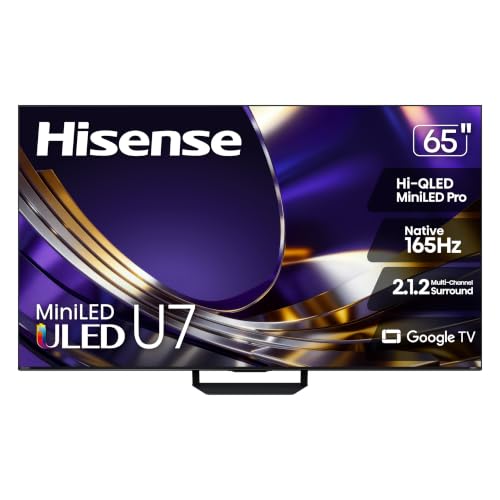
- Native 165Hz refresh rate for smooth gameplay
- Up to 3,000 nits and 3,000 local dimming zones
- Anti-reflection screen for bright rooms
Best For: Premium gaming and bright-room viewing
Best Midrange Gaming Value

- 120Hz panel with 144Hz gaming support
- QLED color and multi-format HDR support
- Four HDMI inputs for consoles and other devices
Best For: Balanced gaming and streaming setups
Best Easy-to-Use Big Screen
Roku 65-Inch Plus Series QLED TV

- 65-inch 4K QLED Mini-LED display
- Dolby Vision and HDR10+ support
- Simple Roku interface with voice features
Best For: Casual gaming and family streaming
Best Compact High-Refresh Pick
VIZIO 50-Inch Quantum Pro QLED TV

- 4K gaming up to 120fps and 1080p up to 240fps
- AMD FreeSync Premium Pro certification
- Full-array local dimming with up to 1,000 nits
Best For: Small-room PC and console gaming
Best Simple Setup
Roku 55-Inch Select Series QLED TV

- 4K QLED picture with HDR10 support
- Easy Roku interface and voice features
- 60Hz refresh rate suits casual gaming
Best For: Casual gamers and straightforward streaming setups
Best High-Refresh Performance
TCL 65-Inch QM6K Mini LED QLED TV
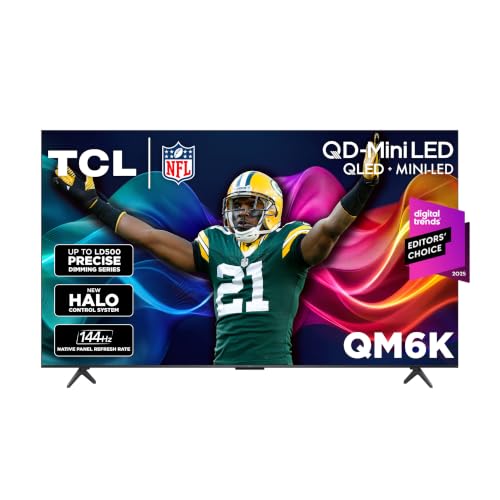
- 144Hz refresh rate with gaming VRR support
- Mini LED backlight with precise local dimming
- Large 65-inch screen and Onkyo 2.1 audio
Best For: Fast-paced gaming and immersive living-room play
Best Premium Gaming Pick
TCL QM7L 55-Inch Mini-LED QLED

- 144Hz refresh rate with Game Accelerator 288 VRR
- Mini-LED backlighting with up to 2,100+ dimming zones
- Vivid QLED color and expandable Bang & Olufsen audio
Best For: Gamers wanting advanced picture and motion features in a 55-inch TV
Best Compact HDR Value
Hisense E6 43-Inch Hi-QLED Fire TV

- 43-inch 4K Hi-QLED display with vibrant color
- Game Mode Plus and AI Smooth Motion with MEMC
- Dolby Vision, Dolby Atmos, and Fire TV built in
Best For: Smaller rooms and mixed gaming, streaming, and movie use
Best Small-Screen Gaming Features

- Auto Game Mode with ALLM and an on-screen Game Bar
- Quantum Dot color with broad HDR format support
- Dolby Atmos, DTS:X, Alexa, AirPlay 2, and HomeKit support
Best For: Compact gaming setups and console-focused everyday entertainment
Best Premium Pick – Hisense 65-Inch U7 Mini-LED Gaming TV
For shoppers seeking QLED televisions for gaming, the Hisense U7 stands out with a native 165Hz refresh rate, Mini-LED backlighting, and gaming-focused motion technology. Its anti-reflection treatment and high peak brightness also make it a strong choice for bright rooms.
Best For: Gamers who want premium motion performance, strong HDR brightness, and a large 65-inch screen.
Pros:
- Native 165Hz refresh rate supports fluid gaming and fast action.
- Mini-LED backlighting with up to 3,000 local dimming zones and up to 3,000 nits peak brightness.
- Supports Dolby Vision IQ, HDR10+, Dolby Atmos, and IMAX Enhanced.
- Anti-reflection and glare-free screen treatment helps in bright rooms.
Cons:
- Its 65-inch size may be too large for smaller rooms.
- Premium features may be more than casual viewers need.
The Hisense U7 is the most performance-oriented option in this group, combining high refresh-rate gaming with advanced Mini-LED contrast and vivid HDR. It is particularly compelling when bright-room visibility and fast gameplay matter.
Best Midrange Gaming Value – TCL 55-Inch T7 QLED Google TV
The TCL T7 is a practical pick among QLED televisions for gaming, pairing a 120Hz native panel with 144Hz gaming support and four HDMI inputs. Its QLED color, HDR support, and Google TV platform make it versatile for both play and streaming.
Best For: Gamers who want smooth motion, broad console connectivity, and an easy-to-use smart TV platform.
Pros:
- 120Hz native refresh rate with advertised 144Hz gaming support.
- QLED color covers nearly the entire DCI-P3 color space.
- Supports Dolby Vision, HDR10+, HDR10, and HLG.
- Four HDMI inputs, including one with eARC, simplify device connections.
Cons:
- The 55-inch screen is smaller than the 65-inch alternatives here.
- The supplied details do not specify a peak brightness figure.
The T7 offers a balanced mix of gaming speed, vivid color, HDR compatibility, and connectivity. It is a sensible middle-ground choice for a gaming setup that also serves as a general-purpose living-room TV.
Best Easy-to-Use Big Screen – Roku 65-Inch Plus Series QLED TV
The Roku Plus Series is one of the more straightforward QLED televisions for gaming, offering a spacious 65-inch 4K display with QLED color, Mini-LED backlighting, and Dolby Vision. Its main emphasis is simple streaming and everyday viewing rather than high-refresh-rate gaming.
Best For: Casual console gamers and households that prioritize simple Roku navigation, streaming, and a large screen.
Pros:
- 65-inch 4K QLED display with Mini-LED backlighting.
- Dolby Vision, HDR10+, and HLG support enhance compatible content.
- Roku interface offers free entertainment, voice control, and personalized recommendations.
- Built-in subwoofer, Dolby Atmos, and Bluetooth Headphone Mode add audio flexibility.
Cons:
- 60Hz refresh rate is less suited to high-frame-rate gaming.
- Glossy screen finish may be less ideal in rooms with reflections.
This Roku model is best viewed as a large, accessible entertainment display that can handle casual gaming. Choose it for its user-friendly platform and Mini-LED picture enhancements, not for competitive high-refresh-rate play.
Best Compact High-Refresh Pick – VIZIO 50-Inch Quantum Pro QLED TV
For smaller gaming spaces, the VIZIO Quantum Pro is a compelling choice among QLED televisions for gaming. It supports 4K gaming at up to 120fps, 1080p gaming at up to 240fps, and AMD FreeSync Premium Pro, while its full-array local dimming helps improve HDR contrast.
Best For: PC and console gamers who need a compact 50-inch display with high refresh-rate support.
Pros:
- Supports up to 120fps at 4K and 240fps at 1080p.
- AMD FreeSync Premium Pro certification supports smoother compatible gameplay.
- Quantum Color QLED delivers over 1 billion colors.
- Active Full Array backlighting and up to 1,000 nits peak brightness support HDR contrast.
Cons:
- The built-in speakers are rated at 10 watts per channel.
- VIZIO OS functionality and updates require a VIZIO Account.
The Quantum Pro is especially well suited to gaming desks, bedrooms, and smaller living rooms where a 50-inch screen fits better. Its 4K 120Hz and 1080p 240Hz modes give it more gaming flexibility than many similarly sized TVs.
Best Simple Setup – Roku 55-Inch Select Series QLED TV
For shoppers seeking QLED televisions for gaming without a complicated interface, this 55-inch Roku Select Series model pairs 4K resolution and HDR10 with Roku’s straightforward smart-TV experience. Its 60Hz refresh rate makes it better suited to casual gaming and everyday entertainment than high-refresh competitive play.
Best For: Casual gamers and streamers who prioritize simple navigation, free content, and a clean smart-TV interface.
Pros:
- QLED color, 4K resolution, and HDR10 support provide detailed, bright images.
- Roku Smart Picture optimizes incoming signals and selects suitable picture modes.
- Simple setup, voice control, AirPlay, and Bluetooth Headphone Mode add convenience.
- Personalized recommendations and extensive free entertainment reduce scrolling.
Cons:
- The 60Hz refresh rate is less suitable for high-frame-rate competitive gaming.
- Maximum brightness is listed at 330 nits, limiting HDR impact compared with brighter models.
This Roku is an approachable choice for a gaming-and-streaming room where ease of use matters most. Buyers wanting smoother motion or stronger HDR performance should consider a higher-refresh, brighter option.
Best High-Refresh Performance – TCL 65-Inch QM6K Mini LED QLED TV
This TCL QM6K stands out among QLED televisions for gaming with a 144Hz native refresh rate, Game Accelerator 288 VRR, and Mini LED backlighting. It also combines Quantum Dot color, local dimming, broad HDR support, and a large 65-inch screen for an immersive setup.
Best For: Gamers who want smooth motion, variable refresh support, strong contrast, and a large screen for gaming, sports, and streaming.
Pros:
- 144Hz native refresh rate and up to 288Hz variable gaming refresh support target fast gameplay.
- QD-Mini LED, precise dimming zones, and Halo Control improve brightness, contrast, and shadow detail.
- Supports Dolby Vision, HDR10+, HDR10, and HLG.
- Onkyo 2.1 audio with a built-in subwoofer and Dolby Atmos support enhances sound.
Cons:
- The 65-inch size may be excessive for smaller gaming rooms or desk setups.
- The glossy screen finish can be less forgiving in rooms with strong reflections.
With its combination of high refresh capability, VRR features, and Mini LED contrast control, the QM6K is the strongest gaming-focused option in this group. Its Google TV platform and capable built-in audio also make it a versatile living-room display.
Best Compact Gaming Hub – Samsung 43-Inch Q7F QLED TV
For smaller rooms, this 43-inch Samsung Q7F offers a compact 4K QLED display with HDR10+, a dedicated Game Mode, and Samsung Gaming Hub access. Its 60Hz refresh rate favors console gaming, casual play, and general entertainment over high-refresh competitive gaming.
Best For: Bedroom, dorm, or desk-area gamers who want a compact Samsung smart TV with built-in gaming and streaming features.
Pros:
- Quantum Dot technology delivers a wide range of color across brightness levels.
- Q4 AI Processor supports 4K upscaling and AI-optimized picture and audio.
- Game Mode and Gaming Hub provide gaming-focused functionality.
- HDR10+ dynamic tone mapping is designed to preserve contrast and detail.
Cons:
- The 60Hz refresh rate is not aimed at high-frame-rate competitive gaming.
- Two-channel, 20-watt audio may benefit from an external sound system for fuller sound.
- The 43-inch screen is less immersive than larger alternatives for couch gaming.
The Q7F is a practical small-space pick among QLED televisions for gaming, especially for players who value Samsung’s smart features and a compact footprint. Choose it for convenience and color rather than maximum motion performance.
Best Premium Gaming Pick – TCL QM7L 55-Inch Mini-LED QLED
For shoppers seeking QLED televisions for gaming, the TCL QM7L stands out with a 144Hz refresh rate, Mini-LED backlighting, and gaming-focused features designed for smoother motion and responsive play. Its 55-inch 4K screen also combines quantum-dot color with precise local dimming for a high-contrast picture.
Best For: Gamers who want a feature-rich 55-inch display with strong brightness, contrast, and advanced gaming support.
Pros:
- 144Hz refresh rate with Game Accelerator 288 VRR for smoother gameplay.
- Mini-LED backlighting and up to 2,100+ local dimming zones support deep blacks and detailed contrast.
- Ultra Color Filter and QLED technology deliver vivid, precise color.
- Bang & Olufsen audio and expandable home-theater support add flexibility for entertainment.
Cons:
- Its advanced features may be more than casual viewers need.
- The glossy screen finish can be less suitable for rooms with strong reflections.
The QM7L is the strongest all-around gaming option in this group for buyers prioritizing refresh rate, VRR, brightness, and contrast. It is also well equipped for movies and streaming, making it a versatile centerpiece for a gaming room or living room.
Best Compact HDR Value – Hisense E6 43-Inch Hi-QLED Fire TV
The Hisense E6 is a compact choice among QLED televisions for gaming, pairing a 43-inch 4K Hi-QLED display with Game Mode Plus and AI-assisted motion processing. Its 60Hz refresh rate is aimed more at everyday gaming and entertainment than high-refresh competitive play.
Best For: Gamers and streamers who need a smaller TV with broad HDR support and an easy-to-use Fire TV interface.
Pros:
- Hi-QLED color produces vibrant images across games, shows, and movies.
- Supports Dolby Vision, HDR10+ Adaptive, HDR10, and HLG.
- Game Mode Plus and AI Smooth Motion with MEMC help improve motion clarity.
- Fire TV, Alexa voice control, Dolby Vision, and Dolby Atmos support make it versatile for streaming.
Cons:
- The 60Hz refresh rate is less suited to high-refresh competitive gaming.
- The 43-inch screen may feel small for a larger gaming setup.
This Hisense makes sense when size, streaming convenience, and HDR compatibility matter more than maximum gaming speed. The built-in light sensor and Wi-Fi 6 further support comfortable everyday viewing and connected use.
Best Small-Screen Gaming Features – TCL F7D 43-Inch QLED
The TCL F7D is a practical pick among QLED televisions for gaming when you want a compact 43-inch screen with automatic low-latency features. Although its native refresh rate is 60Hz, Auto Game Mode, Game Bar, and Motion Rate 240 processing support a smoother, more convenient gaming experience.
Best For: Console gamers and small-space users who want a compact QLED TV with automatic game settings and broad HDR support.
Pros:
- Auto Game Mode with ALLM switches to lower-latency settings automatically.
- Game Bar provides on-screen access to gaming adjustments.
- Quantum Dot color delivers over a billion advertised shades.
- Supports Dolby Vision, HDR10+, HDR10, and HLG, plus Dolby Atmos and DTS:X audio formats.
Cons:
- The listed 60Hz refresh rate is not ideal for high-refresh competitive gaming.
- Only three HDMI ports may limit connected devices in a larger setup.
The F7D is a sensible small-room or bedroom gaming TV, especially for players who value automatic low-latency switching and easy on-screen controls. Its strong HDR and audio-format support also make it capable for movies and streaming between gaming sessions.
How We Picked the Best QLED Televisions for Gaming
We focused on the features that most directly affect console and PC gaming: native refresh rate, variable refresh rate support, HDR format compatibility, brightness, contrast control, input options, and smart-TV usability. Models with 120Hz, 144Hz, or higher refresh modes receive particular attention because they can deliver smoother motion than standard 60Hz televisions.
We also considered size and price flexibility. A 43-inch display can suit a desk or small room, while 55- to 65-inch models are better for a living-room setup. Mini-LED backlighting and full-array local dimming can improve HDR impact and dark-scene detail, although implementation varies by model.
Quick Comparison
- Best premium performance: Hisense 65-inch U7 Mini-LED ULED with a native 165Hz panel and advanced VRR features.
- Best high-refresh value: TCL T7, offering a 144Hz gaming-oriented refresh rate in a 55-inch format.
- Best Mini-LED variety: Roku Plus Series and TCL QM6K or QM7L models for brighter HDR and improved contrast.
- Best compact gaming TVs: Samsung Q7F, Hisense E6, and TCL F7D in 43-inch sizes.
- Best PC-focused flexibility: VIZIO Quantum Pro, with high-refresh gaming modes and 240Hz support at 1080p.
Key Buying Factors for QLED Televisions for Gaming
Refresh Rate and VRR
A 120Hz or faster panel can make fast games, camera movement, and sports look smoother. VRR helps synchronize the display with a console or graphics card, reducing tearing and stutter when frame rates fluctuate. Check whether the advertised refresh rate is native and which resolutions support the highest mode.
HDMI Features and Input Lag
Look for HDMI 2.1 connectivity if you want 4K gaming at 120Hz on current consoles or compatible PCs. Auto low-latency mode is also useful because it switches the TV into a responsive picture mode when gameplay begins. Manufacturers may advertise different gaming modes, so verify port bandwidth and supported resolutions before buying.
HDR, Brightness, and Contrast
QLED panels typically provide strong color volume, while Mini-LED backlighting can add brightness and local contrast. Dolby Vision and HDR10+ support may improve compatible games and streaming content, but peak brightness and local-dimming performance matter just as much as the format list.
Size, Viewing Distance, and Sound
Choose a screen size that matches your room and seating distance. Larger TVs create a more immersive experience, but a 43-inch model may be easier to use at a desk. Built-in speakers are convenient, while Dolby Atmos support and eARC make it easier to connect a soundbar or receiver.
Who Should Buy Which QLED Televisions for Gaming?
Competitive console and PC players should prioritize the Hisense U7, TCL QM7L, TCL T7, or VIZIO Quantum Pro for their higher refresh rates and gaming features. HDR-focused viewers should consider the Mini-LED Roku Plus or TCL QM6K. Small-room and desk gamers can save space with the Samsung Q7F, Hisense E6, or TCL F7D. Budget-conscious buyers may prefer the Roku Select Series, provided its feature set matches their console and resolution needs.
Before purchasing, confirm the TV’s supported refresh rate at your preferred resolution, the number of HDMI 2.1 ports, and compatibility with your console, graphics card, soundbar, and room lighting.