When you’re in the market for nearfield studio monitors, the choices can be overwhelming. In 2025, several models stand out for their exceptional sound quality and user-focused features. From the Edifier MR4 to the PreSonus Eris E5, each monitor has unique strengths tailored for different audio needs. But how do you decide which one suits you best? Let’s explore the top picks and what makes them worth considering.
Edifier MR4 Powered Studio Monitor Speakers (Black)
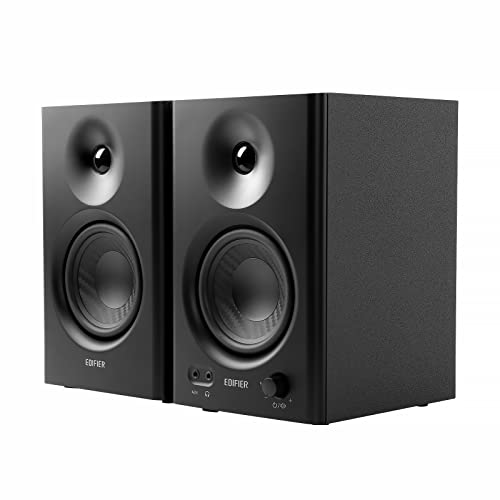
If you’re a music producer or a casual listener looking to elevate your audio experience, the Edifier MR4 Powered Studio Monitor Speakers are a fantastic choice. Weighing in at just under ten pounds, these active near-field monitors deliver studio-quality sound with a silk dome tweeter and a composite woofer. You’ll enjoy a flat frequency response, making them perfect for music production. With flexible connectivity options, including TRS and RCA inputs, you can easily set them up. Plus, the user-friendly bass and treble controls let you tailor your sound. Rated 4.6 stars, they offer great value for both audiophiles and casual listeners.
Best For: Music producers and casual listeners seeking high-quality audio for both production and enjoyment.
Pros:
- Studio-quality sound with a balanced frequency response for accurate audio reproduction.
- Flexible connectivity options allow for easy integration with various devices.
- User-friendly bass and treble controls enable personalized sound adjustments.
Cons:
- Some users may find the highs less pronounced, impacting certain audio preferences.
- Occasional feedback regarding potential LED issues with the speakers.
- Limited wireless connectivity options may restrict setup flexibility.
PreSonus Eris E4.5-2-Way 4.5 Near Field Studio Monitor (Pair)

The PreSonus Eris E4.5-2-Way 4.5 Near Field Studio Monitor is an excellent choice for music lovers, content creators, and gamers alike, thanks to its impressive sound quality and compact design. With a 4.5-inch woven-composite low-frequency transducer and a 1-inch silk-dome high-frequency transducer, you’ll enjoy balanced audio without harshness. It delivers 50W Class AB power for loud, clear sound, making it perfect for personal entertainment and music production. Multiple connectivity options, including RCA and TRS inputs, enhance usability. Plus, with a 4.6-star rating from over 26,000 users, its quality and performance make it a top pick for studio monitors.
Best For: The PreSonus Eris E4.5 is best for music lovers, content creators, and gamers seeking high-quality sound in a compact studio monitor.
Pros:
- Excellent sound clarity with a neutral sound curve for accurate audio reproduction.
- Multiple connectivity options, including RCA, TRS, and a front-panel aux input for versatility.
- Compact and lightweight design, making it easy to fit into any workspace.
Cons:
- Some users reported concerns regarding amplifier longevity after extended use.
- Bluetooth connectivity may introduce latency, which can affect audio performance.
- Limited bass emphasis may not satisfy those looking for a deep low-end response.
EVE Audio SC205 Active Nearfield Studio Monitor
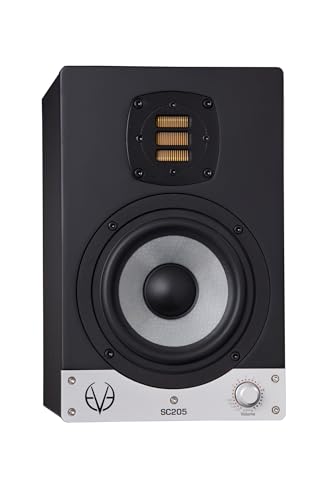
With its compact design and impressive sound performance, the EVE Audio SC205 Active Nearfield Studio Monitor stands out as an excellent choice for both aspiring and professional audio engineers. Featuring a 5-inch SilverCone woofer and AMT RS1 tweeter, it offers a free-field frequency range of 53Hz to 21kHz. This monitor delivers powerful low-end and crisp highs, making it ideal for various audio applications. Despite its higher price point, you’ll appreciate the natural mids and wide frequency response. Weighing just 13.75 pounds, it’s portable, and with threaded screw inserts, you can easily mount it for optimal sound arrangement.
Best For: The EVE Audio SC205 is best for aspiring and professional audio engineers seeking a compact monitor with exceptional sound quality for studio and road use.
Pros:
- Great sound image and wide frequency response for accurate audio reproduction.
- Impressive bass response for its size, enhancing low-end performance.
- Natural mids and smooth, crisp highs contribute to overall sound clarity.
Cons:
- Higher price point compared to other 5-inch monitors on the market.
- Single knob for all functions may limit ease of use and control.
- MDF cabinet construction lacks a wave guide, which could affect sound dispersion.
PreSonus Eris E5 2-Way 5.25 Near Field Studio Monitor

Designed for both budding producers and seasoned audio engineers, the PreSonus Eris E5 2-Way 5.25 Near Field Studio Monitor stands out with its impressive 5.25-inch woven composite woofer that delivers low-end sound with minimal distortion. Its 1-inch silk-dome tweeter guarantees balanced high frequencies, making it versatile for any mixing environment. With 80 Watts of Class AB bi-amplification, you’ll enjoy excellent sound clarity and a flat response. Acoustic tuning controls help tailor the sound to your space, while RF shielding and protection features enhance durability. Users rave about its quality, making it a fantastic value for both casual listening and professional use.
Best For: The PreSonus Eris E5 is best for both aspiring music producers and experienced audio engineers looking for high-quality sound in a compact studio monitor.
Pros:
- Excellent sound clarity with a flat response, ideal for mixing.
- Versatile connectivity options including balanced XLR, 1/4-inch, and unbalanced RCA inputs.
- Acoustic tuning controls allow for customization based on the listening environment.
Cons:
- Some users report a slight hiss that may require adjustment of input levels.
- Optimal performance may depend on using high-quality balanced cables.
- Low-end response may benefit from pairing with a subwoofer for enhanced bass.
Audea Sound Mate Studio Monitor Speaker

For those seeking high-resolution sound in a compact design, the Audea Sound Mate Studio Monitor Speaker stands out as an excellent choice. With a power output of 60 RMS watts and a frequency range from 20 Hz to 20 kHz, it delivers impressive audio clarity. The 5.25” fiberglass drivers and 1” silk dome tweeter guarantee detailed sound reproduction, making it ideal for studio recording and casual listening. Plus, its versatile connectivity options, including RCA and XLR inputs, allow for easy integration with various devices. Users rave about its professional build quality and enhanced bass compatibility, making it a top pick for any audio setup.
Best For: Those seeking high-resolution sound in a compact design for studio recording, music production, and casual listening.
Pros:
- High-resolution sound with clear detail and impressive audio clarity.
- Versatile connectivity options including RCA, TRS, and XLR inputs for easy integration.
- Modern design and professional build quality suitable for both studio setups and home audio systems.
Cons:
- Requires a second speaker for true stereo sound, as only one speaker is included.
- Limited power output may not suffice for larger studio spaces or professional environments.
- Some users may find the need for additional subwoofers for enhanced bass performance.
Yamaha HS3 Powered Studio Monitor in Black, Pair (HS3 B)

The Yamaha HS3 Powered Studio Monitor in Black (HS3 B) stands out for its compact design and powerful sound, making it an excellent choice for home studio enthusiasts and budding producers. Featuring a 2-way bass-reflex design, it includes a 3.5″ cone woofer and a 0.75″ dome tweeter, delivering a frequency response from 70 Hz to 22 kHz. With an output power of 26 W, these monitors provide clarity and precision in your mixes. Plus, the room control and high trim response controls let you tailor the sound to your environment. Accessories like cables and anti-slip pads guarantee a smooth setup experience.
Best For: The Yamaha HS3 Powered Studio Monitor is best for home studio enthusiasts and budding producers looking for compact and high-quality sound solutions.
Pros:
- Compact design makes it easy to fit into small studio spaces.
- Room control and high trim response controls allow for sound customization based on the environment.
- Included accessories like cables and anti-slip pads facilitate a seamless setup.
Cons:
- Limited low-frequency response may not satisfy those seeking deep bass for certain genres.
- Output power of 26 W might be insufficient for larger studio spaces or loud environments.
- 3.5″ woofer size may not deliver the full range of sound that larger monitors can provide.
EVE Audio SC204 Active Studio Monitor

With its compact design and exceptional audio performance, the EVE Audio SC204 Active Studio Monitor stands out as an ideal choice for home studios and small production spaces. You’ll appreciate its 4-inch SilverCone woofer and AMT RS1 tweeter, delivering a frequency range of 64Hz to 21kHz. With a maximum SPL of 106dBspl and 100W total output power, it packs a punch in sound quality. Weighing just 1 pound and measuring 7.68D x 5.71W x 9.06H inches, it’s easy to fit into any setup. Plus, it’s compatible with various devices, making it a versatile addition to your audio gear.
Best For: The EVE Audio SC204 Active Studio Monitor is best for home studio enthusiasts and small production spaces seeking high-quality audio in a compact design.
Pros:
- Exceptional Sound Quality: Delivers clear and accurate audio with a frequency range of 64Hz to 21kHz.
- Compact Design: Lightweight and small dimensions make it easy to integrate into any setup.
- Versatile Compatibility: Works well with various devices including desktops, laptops, and smartphones.
Cons:
- Limited Low-End Response: The 4-inch woofer may not provide as much bass as larger monitors.
- Maximum SPL: While adequate for most home studios, the max SPL of 106dBspl may not satisfy larger spaces or louder sound requirements.
- Power Source Dependency: Being corded limits placement options compared to battery-operated monitors.
Mackie CR3.5 Powered Studio Monitors

Elevate your sound experience with the Mackie CR3.5 Powered Studio Monitors, perfect for music producers, gamers, and casual listeners alike. These monitors deliver studio-quality sound with a silk dome tweeter and 3.5-inch woven woofer, ensuring clarity and strong low-end performance. You can easily connect to various devices via TRS, RCA, or a 3.5 mm input, while the built-in headphone output adds convenience. The tone control knob lets you customize your audio, whether you need a transparent response or enhanced bass. With a 4.6-star rating, the CR3.5 offers exceptional value for both professional and home use.
Best For: Music producers, gamers, and casual listeners looking for studio-quality sound in a compact design.
Pros:
- Exceptional sound quality with clear highs and strong low-end performance.
- Versatile connectivity options including TRS, RCA, and 3.5 mm inputs, plus a built-in headphone output.
- Customizable sound through the tone control knob, allowing for tailored audio experiences.
Cons:
- May require a subwoofer for enhanced bass for those seeking deeper low frequencies.
- Limited speaker size (3.5 inches) may not satisfy users needing larger speakers for bigger spaces.
- Some users have noted setup challenges with specific devices or configurations.
KRK Classic 5 Near-Field 2-Way Studio Monitor, Black (Pair)
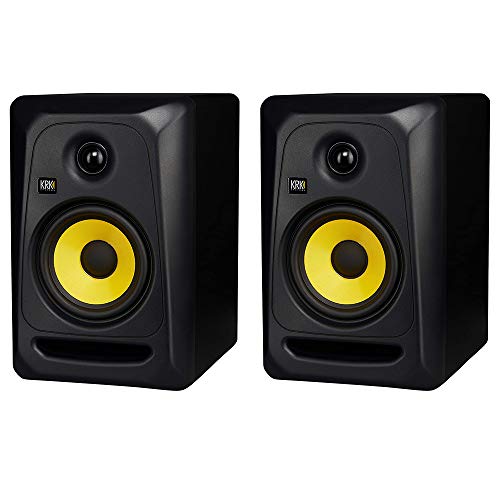
For those seeking a reliable studio monitor that delivers exceptional audio clarity, the KRK Classic 5 Near-Field 2-Way Studio Monitor stands out as a top choice. With its bi-amped Class A/B amplifier, you’ll enjoy large headroom and minimal distortion. The soft-dome tweeter and glass-aramid composite woofer guarantee crisp highs and tight bass, perfect for mixing. Measuring 12D x 10W x 15H inches and weighing 14.86 kg, these monitors fit comfortably on your tabletop. Plus, the optional KRK Bass Boost enhances low-end extension. Users rave about the clarity and balance, making it ideal for both professional and casual listening experiences.
Best For: The KRK Classic 5 Near-Field 2-Way Studio Monitor is best for musicians, audio engineers, and casual listeners who prioritize sound quality and clarity in their audio experience.
Pros:
- Bi-amped Class A/B amplifier provides large headroom and low distortion for superior sound quality.
- Versatile connectivity options including XLR cable and Bluetooth for easy integration with various devices.
- Optimized design features like low-resonance enclosure and adjustable bass boost enhance audio performance for mixing and enjoyment.
Cons:
- Some users report issues with woofer connectivity, which may affect overall sound quality.
- Limited mounting options as the monitors are designed for tabletop use only.
- Weight of 14.86 kg (32.7 lbs) may make them less portable compared to lighter studio monitors.
PreSonus Eris Studio 8 Active Studio Monitors

The PreSonus Eris Studio 8 Active Studio Monitors are an excellent choice for musicians and sound engineers looking to enhance their mixing experience in small studio spaces. With an impressive frequency response from 35 Hz to 20 kHz, these monitors deliver clear highs and accurate bass through their 1.25-inch silk-dome tweeters and 8-inch woven-composite drivers. The custom-tuned EBM waveguide guarantees lifelike stereo imaging, while the front-firing acoustic port optimizes bass response. At 140W, they provide powerful sound without distortion. Despite some setup challenges, users appreciate their sound quality and compatibility with various devices, making them a solid investment for any studio.
Best For: Musicians and sound engineers seeking high-quality sound reproduction in small studio spaces.
Pros:
- Clear sound with excellent high-frequency reproduction and accurate bass response.
- Custom-tuned EBM waveguide for lifelike stereo imaging.
- Compatible with various devices, making them versatile for different setups.
Cons:
- Some users experience setup challenges that may require additional time.
- Potential hum issues reported by a few customers.
- Quality control concerns regarding shipping and delivery.
Factors to Consider When Choosing Nearfield Studio Monitors
When you’re choosing nearfield studio monitors, several key factors come into play. You’ll want to take into account sound quality performance, size, and connectivity options to make certain they fit your space and workflow. Additionally, power output rating and design can greatly influence your overall experience, so keep those in mind too.
Sound Quality Performance
Sound quality performance is an essential aspect to take into account in your search for the best nearfield studio monitors. Look for a frequency response that spans from 20 Hz to 20 kHz, ensuring you hear both lows and highs accurately. Quality drivers, like woven-composite woofers and silk-dome tweeters, enhance clarity and balance in sound reproduction. A higher output power rating, measured in watts, helps deliver loud, clear audio without distortion, critical for both casual listening and professional work. Adjustable bass and treble controls let you customize sound for your environment, improving your listening experience. Finally, a higher signal-to-noise ratio (SNR) means less background noise, allowing for better audio clarity, which is essential in studio settings.
Size and Dimensions
Choosing the right size and dimensions for your nearfield studio monitors can greatly impact your audio experience. Monitor sizes typically range from 3 to 8 inches in woofer diameter, affecting bass response and overall sound quality. If you have a smaller space or a desktop setup, compact models with 3 to 4-inch woofers are perfect, providing clear sound without overwhelming your environment. For larger studios or expansive listening areas, monitors with 5-inch woofers and above deliver deeper bass and higher volumes. Dimensions also vary, with standard models measuring around 7 to 12 inches tall and wide, influencing placement in your studio. Finally, consider weight, as most monitors range from 2 to over 14 pounds, impacting portability and stability.
Connectivity Options
After determining the right size and dimensions for your nearfield studio monitors, the next step is to evaluate their connectivity options. You’ll want to take into account a variety of input options like balanced XLR, unbalanced RCA, and 1/4-inch TRS connectors to guarantee compatibility with your audio sources. Some monitors even feature front-panel aux inputs and headphone outputs, making direct connections more convenient. If you’re into wireless setups, look for models with Bluetooth capability, but keep in mind that it may introduce latency. Having multiple input types allows you to connect different devices effortlessly. Finally, verify the monitors come with the necessary cables for immediate setup, saving you time and extra costs during installation.
Power Output Rating
When selecting nearfield studio monitors, understanding their power output rating is essential for achieving ideal sound quality and volume. This rating, measured in watts, indicates how much power the speakers can handle and how loud they can play audio without distortion. A higher power output generally means greater volume levels, which is particularly beneficial in larger studio spaces or for monitoring bass-heavy tracks. Class AB amplifiers often found in monitors typically range from 25W to 140W. It’s important to match the power output to your room size; smaller rooms may need monitors with lower ratings to prevent overwhelming sound levels. Also, consider the monitor’s sensitivity rating, as higher sensitivity allows for greater sound output with less power.
Design and Build
While you’re exploring nearfield studio monitors, the design and build quality play an essential role in achieving accurate sound reproduction. Look for compact models that fit easily on your desk, providing ideal sound projection in close listening environments. Many monitors utilize MDF cabinets, which minimize resonance and distortion for clearer audio. Features like front-firing acoustic ports enhance bass response and reduce boundary coupling, perfect for smaller spaces. User-adjustable controls for high and low frequencies allow you to fine-tune the sound to your specific acoustic environment. Finally, robust build quality, including durable materials and thoughtful design elements like isolation pads or integrated mounting options, guarantees longevity and effectiveness in various settings. Choose wisely for the best listening experience!
Price and Value
Choosing the right nearfield studio monitors involves more than just picking a model that sounds good; it’s crucial to take into account price and value. Most monitors fall within the $100 to $1,000 range, but many quality options exist around $100 to $300, perfect for both beginners and pros. While higher-priced monitors often deliver superior sound accuracy and build quality, you’ll want to assess customer ratings—look for those with 4.5 stars and above. Consider warranty length, as a solid warranty indicates manufacturer confidence. Finally, think about resale value; some brands hold better resale potential, helping you recoup your investment when it’s time to upgrade. Balancing these factors guarantees you make a smart purchase.
Room Acoustic Compatibility
Understanding room acoustics is essential for getting the most out of your nearfield studio monitors, as they can greatly influence sound quality. Reflective surfaces can create unwanted echoes and distortions, impacting audio playback accuracy. Make sure the frequency response of your monitors aligns with your room’s characteristics; smaller rooms may need monitors with controlled bass to prevent overwhelming low frequencies. Also, consider the placement of your monitors—keeping them away from walls and corners can help avoid amplified bass and an unbalanced sound profile. Implementing acoustic treatments like bass traps and sound-absorbing panels can further enhance performance by minimizing reflections. Finally, position your monitors at ear level and equidistant from your listening spot for a balanced soundstage and accurate stereo imaging.
Brand Reputation and Support
When it comes to selecting nearfield studio monitors, brand reputation and support are key factors that can’t be overlooked. Established brands often offer a track record of quality and reliability, giving you the confidence you need. Pay attention to customer reviews and average ratings; positive feedback reflects a brand’s commitment to high-quality audio equipment. Additionally, consider the warranty terms and responsiveness of customer support, as these directly affect your satisfaction and the longevity of the product. Brands that provide setup guides, troubleshooting support, and regular firmware updates show they prioritize your experience and product improvement. Ultimately, investing in a reputable brand can enhance your overall monitoring experience and guarantee lasting performance.