In 2025, finding the right audio interface can truly elevate your vocal recordings. Whether you’re just starting out or looking to upgrade, the market offers a range of options tailored to your needs. From affordable models to high-end devices, each one brings unique features that can enhance your sound. Curious about the top choices and what they can offer you? Let’s explore the best audio interfaces that can transform your recording experience.
Focusrite Scarlett Solo 3rd Gen USB Audio Interface

If you’re a vocalist or podcaster seeking studio-quality sound without breaking the bank, the Focusrite Scarlett Solo 3rd Gen USB Audio Interface is an excellent choice. It features high-performing mic pre-amps that deliver bright recordings, while the switchable Air mode enhances clarity for acoustic instruments. With two high-headroom instrument inputs, you can capture guitar and bass sounds without clipping. Expect professional-quality recordings thanks to its 24-bit/192kHz converters. Plus, the included software like Pro Tools Intro+ and Ableton Live Lite provides a complete package for immediate music creation. Enjoy peace of mind with a three-year warranty for added security.
Best For: Vocalists, podcasters, and guitarists seeking studio-quality sound at an affordable price.
Pros:
- High-performing mic pre-amps deliver bright and clear recordings.
- Switchable Air mode enhances clarity for acoustic instruments.
- Includes a comprehensive software bundle for immediate music creation.
Cons:
- Limited to two inputs, which may not suffice for larger setups.
- Some users may prefer more advanced features available in higher-end models.
- The included software might have a learning curve for beginners.
Focusrite Scarlett 2i2 4th Gen USB Audio Interface
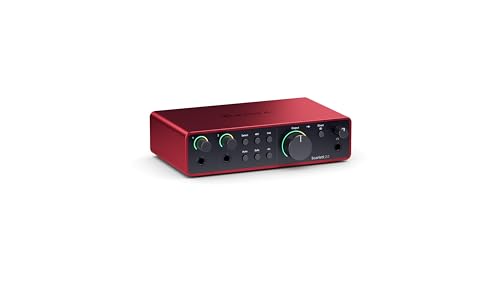
The Focusrite Scarlett 2i2 4th Gen USB Audio Interface is the perfect choice for musicians and podcasters seeking studio-quality sound in a compact design. With a dynamic range of 120dB, it utilizes professional-grade converters for exceptional recordings. Features like Auto Gain and Clip Safe simplify your workflow, while the Air mode gives your vocals and guitars an extra boost. You’ll appreciate the included software package, including Pro Tools Intro+ and FL Studio. Plus, its USB-C connectivity guarantees compatibility across various devices. Users rave about its sound quality and ease of setup, making it a top pick for both beginners and pros.
Best For: Musicians and podcasters looking for professional-quality audio recording in a user-friendly and compact interface.
Pros:
- Studio-quality sound with a dynamic range of 120dB and professional-grade converters.
- User-friendly features like Auto Gain and Clip Safe streamline the recording process.
- Versatile compatibility with multiple operating systems and audio recording software.
Cons:
- Limited number of inputs compared to some other interfaces, which may not suit larger setups.
- No MIDI input/output, which could be a drawback for users needing MIDI connectivity.
- Can be sensitive to gain settings, requiring careful adjustment to avoid distortion.
M-AUDIO M-Track Solo USB Audio Interface for Recording and Streaming

For aspiring vocalists and podcasters seeking an affordable yet high-quality recording solution, the M-AUDIO M-Track Solo USB Audio Interface stands out with its excellent 48 kHz audio resolution. This interface features one combo XLR/Line input with phantom power and an additional Line/Instrument input, making it versatile for various recording needs. You’ll appreciate the 1/8” headphone output and stereo RCA outputs for thorough monitoring. Plus, the USB/Direct switch offers zero latency monitoring, allowing real-time sound feedback. With a transparent Crystal Preamp, your recordings will capture peak sound quality, and the included MPC Beats Software enhances your production capabilities.
Best For: Aspiring vocalists, podcasters, and musicians looking for an affordable, high-quality audio interface for recording and streaming.
Pros:
- High-quality 48 kHz audio resolution ensures clear and professional recordings.
- Versatile input options with combo XLR/Line and Line/Instrument inputs for various recording needs.
- Zero latency monitoring with USB/Direct switch allows for real-time feedback during recordings.
Cons:
- Limited to one XLR input, which may not be sufficient for multi-mic setups.
- Basic software bundle might not meet the needs of advanced users looking for extensive production tools.
- No MIDI input/output, limiting its use with MIDI devices and controllers.
M-AUDIO M-Track Duo USB Audio Interface for Recording and Streaming

Designed specifically for budding musicians and aspiring podcasters, the M-Audio M-Track Duo USB Audio Interface stands out with its dual combo XLR/Line/DI inputs, making it incredibly versatile for recording vocals and instruments alike. With 48 kHz audio resolution, you’ll enjoy high-quality recordings whether you’re on a Mac or PC. Its USB-powered design guarantees portability, while zero-latency monitoring through the headphone output assures a clean listening experience. Plus, the included MPC Beats software helps you dive right into music production. Rated highly by users, it’s perfect for home recording, streaming, and podcasting applications, offering exceptional sound quality and ease of use.
Best For: Budding musicians, aspiring podcasters, and home recording enthusiasts seeking a versatile and portable audio interface.
Pros:
- High-quality 48 kHz audio resolution for clear recordings.
- USB-powered design ensures portability and ease of use.
- Zero-latency monitoring allows for a clean listening experience.
Cons:
- Some users reported sensitivity in gain control requiring careful adjustments.
- Compatibility issues may arise with older PC systems.
- Limited advanced features compared to higher-end audio interfaces.
Focusrite Scarlett Solo Studio 4th Gen USB Audio Interface Bundle

If you’re a songwriter, guitarist, or vocalist looking to elevate your recordings, the Focusrite Scarlett Solo Studio 4th Gen USB Audio Interface Bundle is an ideal choice. This compact bundle includes a CM25 MkIII condenser microphone, SH-450 headphones, and essential cables, delivering studio-quality sound with a 120dB dynamic range. The Air mode enhances your vocals and guitars for a rich tone. With Pro Tools Intro+, Ableton Live Lite, and six months of FL Studio Producer Edition included, you’ll have powerful tools at your fingertips. Users rave about its ease of use and excellent sound quality, making it a worthy investment for your setup.
Best For: Songwriters, guitarists, and vocalists seeking a comprehensive recording solution with studio-quality sound.
Pros:
- Compact and lightweight design, making it portable and easy to set up.
- High-quality sound with a 120dB dynamic range and integrated preamps for excellent audio fidelity.
- Includes industry-standard software tools, providing users with everything needed to start recording right away.
Cons:
- Some users have reported driver crashes with specific software, which may affect recording sessions.
- Limited to two XLR input channels, which may not be sufficient for larger recording setups.
- Occasionally, users may experience compatibility issues with certain operating systems despite the USB-C connectivity.
PreSonus AudioBox 96 USB Audio Interface

The PreSonus AudioBox 96 USB Audio Interface stands out as an excellent choice for aspiring musicians and podcasters who need a reliable, portable solution for high-quality recordings. This value-packed 2-channel interface features two Class-A mic preamps and high-headroom instrument inputs, ensuring studio-grade audio at up to 24-bit/96 kHz. Its heavy-duty steel chassis is compact and built for travel, while USB bus power means you won’t need extra supplies. Included software like Studio One Artist makes it user-friendly, perfect for beginners. With a solid 4.4-star rating, it’s praised for its ease of use and impressive audio quality.
Best For: Aspiring musicians and podcasters seeking a reliable and portable solution for high-quality recordings.
Pros:
- User-friendly setup: Simple plug-and-play installation, ideal for beginners.
- Excellent audio quality: Supports 24-bit/96 kHz recording for professional sound.
- Durable design: Heavy-duty steel chassis ensures longevity and portability.
Cons:
- Limited for high SPL: May struggle with high sound pressure levels, especially for percussion instruments.
- Potential compatibility issues: Although generally compatible, some users may encounter challenges with specific DAWs.
- MIDI I/O may be unnecessary: Not all users may require MIDI inputs, adding to complexity for some.
MAONO USB Audio Interface for PC (PS22 Lite Black)

For aspiring vocalists and podcasters seeking high-quality recordings without breaking the bank, the MAONO USB Audio Interface PS22 Lite stands out with its impressive 24-bit/192kHz resolution and 106dB dynamic range. This compact interface features an XLR input for professional microphones, supporting both condenser and dynamic mics with 48V phantom power. You’ll appreciate the intuitive controls and dynamic light ring that show sound input status. Plus, it’s compatible with Mac, Windows, and iPads, making setup a breeze. The LOOPBACK feature is perfect for mixing audio sources during streams, ensuring you capture every detail of your voice or instrument beautifully.
Best For: Aspiring vocalists and podcasters seeking high-quality recordings at an affordable price.
Pros:
- High-resolution recording at 24-bit/192kHz with a dynamic range of 106dB.
- Intuitive controls and dynamic light ring for easy monitoring.
- LOOPBACK feature for seamless mixing of audio sources during streams.
Cons:
- Some users may experience crackles and pops, requiring driver reinstallation for resolution.
- Suggestions for enhanced preamps and additional power options for consistent performance.
- Potential build quality concerns and need for better quality control in future iterations.
M-AUDIO M-Track Duo HD Audio Interface
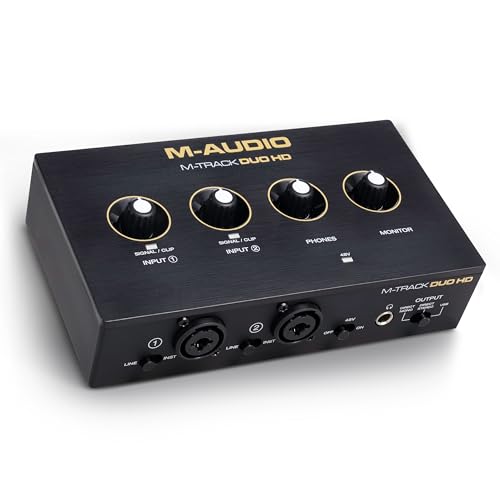
Ideal for beginner producers and pro podcasters alike, the M-AUDIO M-Track Duo HD Audio Interface delivers exceptional audio quality with its 24-bit/192kHz resolution and zero-latency monitoring. Weighing just 1.04 pounds, it’s compact and easy to integrate with any setup. With two combo inputs for mics or instruments and a headphone output featuring independent level control, it meets diverse recording needs. You’ll appreciate the crystal preamps providing 55dB gain and switchable +48V phantom power. Plus, it comes with software like Ableton Live Lite, making it a fantastic choice for home recording, streaming, or podcasting.
Best For: The M-AUDIO M-Track Duo HD Audio Interface is best for beginner producers, session musicians, and pro podcasters seeking high-quality audio recording in a compact design.
Pros:
- High audio resolution of 24-bit/192kHz for exceptional sound clarity.
- Zero-latency monitoring allows for real-time audio feedback during recording.
- Compact and lightweight design makes it easy to integrate into any setup.
Cons:
- Gain control sensitivity can lead to clipping issues if not carefully managed.
- Solo output blends all sounds to one output, which may limit recording flexibility.
- Compatibility issues may arise with older PCs, particularly those running Windows 7.
MAONO Audio Interface, MaonoCaster Podcast Mixer (AME2)

Looking to elevate your podcasting or streaming game? The MAONO Audio Interface, MaonoCaster Podcast Mixer (AME2) is an excellent choice. With its superior preamp and 48V phantom power, you’ll enjoy crystal-clear sound from your XLR microphones. Its 11 customizable sound pads let you add flair to your recordings, while the six reverb modes and auto-tune features enhance your vocal quality. Compatible with popular software like OBS and Zoom, this compact 2.09-pound mixer is perfect for any setup. Plus, with quick customer support, you can tackle any issues efficiently. Transform your audio experience today!
Best For: Podcasters and streamers looking for a versatile audio mixer that enhances sound quality and offers customizable features.
Pros:
- Superior sound quality with a 32-bit high-performance chipset and built-in preamps for XLR microphones.
- Customizable features including 11 sound pads and multiple reverb modes to enhance recordings.
- Quick and friendly customer support that assists with any issues efficiently.
Cons:
- Limited recording capabilities; does not support USB microphones.
- Concerns about build quality from some users, suggesting it may not be as durable.
- Weight may be a consideration for those needing a highly portable solution, as it weighs 2.09 pounds.
FIFINE PC Audio Mixer for Recording Music

The FIFINE PC Audio Mixer shines as a top choice for aspiring musicians and podcasters seeking high-quality sound without the complexity of professional equipment. With its USB interface, you can easily stream and podcast. The XLR microphone interface and dedicated instrument input deliver studio-grade vocals and authentic guitar tones, while the 48V phantom power guarantees your condenser mics perform at their best. Plus, the intuitive mic gain knob and separate volume control offer precise adjustments. It’s compatible with both Mac and PC, and the plug-and-play functionality makes setup a breeze, allowing you to focus on your creativity.
Best For: Aspiring musicians and podcasters seeking high-quality sound without the complexity of professional equipment.
Pros:
- High-quality sound reproduction with XLR microphone and instrument inputs.
- Easy plug-and-play setup compatible with both Mac and PC.
- Real-time sound control with dedicated monitoring and volume knobs.
Cons:
- Limited to USB interface, which may not suit all professional setups.
- No built-in effects or processing features.
- May require additional equipment for optimal use with certain microphones or instruments.
Factors to Consider When Choosing Audio Interfaces for Vocals
When choosing an audio interface for vocals, it’s essential to reflect on several key factors. You’ll want to take into account the quality of the preamps, audio resolution, and input options that suit your needs. Additionally, monitoring capabilities and software compatibility can make a big difference in your recording experience.
Preamp Quality Importance
Choosing an audio interface with a high-quality preamp is vital for capturing the full depth and nuance of vocal performances. A good preamp greatly enhances sound clarity and warmth, providing better gain and lower noise levels. This is essential for picking up subtle vocal nuances without distortion. You’ll want to look for preamps with higher gain to handle soft passages effectively. If you’re using condenser microphones, which are often preferred for their sensitivity, make sure your interface has phantom power support. Additionally, a transparent preamp preserves your voice’s original tonal qualities, making recordings sound natural. Aim for an interface with a wide dynamic range to capture both quiet and loud vocal moments accurately, guaranteeing your recordings shine.
Audio Resolution Specifications
Understanding audio resolution specifications is essential for achieving high-quality vocal recordings. Audio resolution includes bit depth and sample rate, with 24-bit depth and sample rates like 44.1 kHz or 48 kHz being common. Higher bit depth enhances dynamic range, letting you capture subtle nuances in your vocals. Sample rate, which measures how often the audio signal is sampled per second, is vital for accurately representing high-frequency sounds—important for vocal clarity. Professional audio interfaces often support resolutions up to 24-bit/192 kHz, delivering superior fidelity for studio recordings. Choosing the right audio resolution can greatly impact your final sound quality, making it essential for vocal applications where clarity and detail truly matter.
Input Options Available
After grasping audio resolution specifications, the next step is evaluating the input options available on audio interfaces for vocal recordings. Look for audio interfaces with combo XLR/line inputs; they offer versatility for connecting various microphones and instruments. Consider those that provide phantom power (48V) to support sensitive condenser mics, which are ideal for capturing clear vocals. Opt for devices with multiple input channels to record vocals and instruments simultaneously, enhancing your session’s flexibility. Evaluate the gain range of the inputs; a higher gain level (55dB or more) accommodates a wider variety of microphones, guaranteeing peak audio capture. Finally, verify the interface supports zero-latency monitoring for real-time feedback, which is vital for achieving high-quality performances.
Monitoring Capabilities Needed
When it comes to capturing high-quality vocal recordings, effective monitoring capabilities make a significant difference. You should prioritize audio interfaces that offer zero-latency monitoring. This guarantees you hear yourself in real-time, allowing for precise adjustments during your takes. Look for interfaces with dedicated headphone outputs and independent level controls, so you can tweak your monitoring levels without impacting your main output. Many models also feature direct monitoring switches, letting you switch between the live input and processed audio from your DAW. Additionally, consider interfaces with multiple output options, such as stereo RCA outputs, to connect various speakers or studio monitors. This flexibility enhances your monitoring experience, resulting in better vocal performances.
Software Compatibility Considerations
Choosing the right audio interface for your vocals hinges on its software compatibility. Make sure the interface supports popular DAWs like Pro Tools, Ableton Live, and FL Studio for smooth integration into your workflow. It’s vital to check compatibility with both Mac and Windows operating systems, as well as mobile platforms like iOS and Android, ensuring versatility across devices. Look for interfaces that come with software bundles to enhance your production capabilities with essential mixing and mastering tools. Verify that the interface has ASIO driver support for low-latency performance during recording and playback. Finally, consider class-compliance, which simplifies setup by eliminating extra drivers, making it easier to use across various systems.
Portability for Recording
Since portability is essential for recording vocals on the go, selecting an audio interface that’s lightweight and compact can make all the difference. Look for USB-powered options that don’t require an external power supply, allowing for hassle-free transport. Consider the weight and dimensions; a smaller design fits easily into your gear bag. Additionally, interfaces with multiple combo inputs enhance versatility, enabling you to record vocals and instruments simultaneously. Plug-and-play functionality is vital too; it simplifies connections and minimizes setup time, so you can start recording wherever inspiration strikes. Keep these factors in mind, and you’ll find an audio interface that supports your mobile recording needs without compromising on quality.
Build Quality and Durability
Build quality and durability are critical factors in selecting an audio interface for vocals. You’ll want an interface that can withstand frequent transport and various environments, so look for heavy-duty chassis materials. Interfaces made with solid metal enclosures typically resist wear better than plastic ones, guaranteeing long-term reliability. A compact design is essential for portability, especially if you’re a traveling musician or podcaster. While lighter models may be easier to carry, they must still have robust construction to prevent damage. Pay attention to user feedback regarding sturdy knobs and connectors, as these components often wear out and influence the interface’s performance. Prioritize build quality to guarantee your audio interface lasts through countless sessions.