Studio doors are often the weakest link in an otherwise carefully treated room. Hard, thin surfaces can reflect sound, let room noise through, and make recordings less controlled.
This roundup compares 10 acoustic panels, door kits, and heavy sound barriers suited to studio doors and nearby surfaces. The right choice depends on whether you need echo reduction, added door coverage, or a more substantial sound-isolation layer.
Best 10 Acoustic Door Panels for Professional Studios Picks for 2026
Best Door Blanket

- Large 80-by-48-inch coverage
- Grommets support quick hanging
- Also blocks light in studio spaces
Best For: Temporary, full-door coverage and flexible blackout treatment
Best Premium-Looking Panel Set
DMD Stagger Acoustic Panel Design Pack
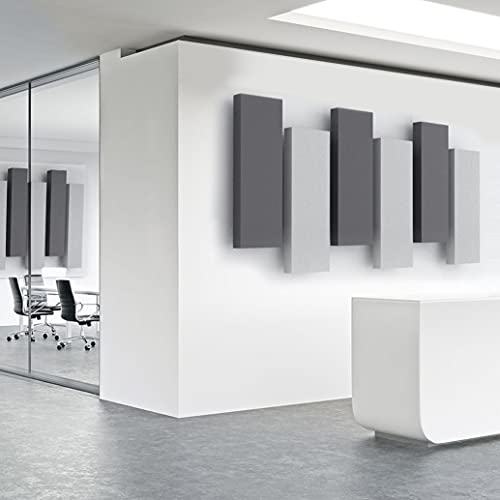
- Average NRC rated at 0.95 or higher
- Rockwool core with wood frame and fabric
- Class A fire rating and hardware included
Best For: Professional studios seeking framed, high-absorption treatment
Best Peel-and-Stick Door Treatment
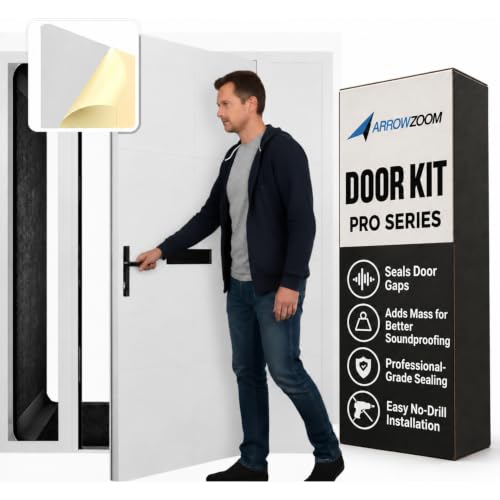
- 20 modular 12-inch self-adhesive tiles
- Class B1 flame-retardant polyester
- Targets echo and mid-to-high reflections
Best For: Home studios and offices needing quick, trim-friendly treatment
Best Thick Panel Coverage
Fiberglass Studio Acoustic Panels

- 2-inch-thick sound-absorbing construction
- Fabric-wrapped fiberglass inner core
- Removable mounting hardware included
Best For: Studios and rooms needing substantial reverberation control
Best Overall Value
Thicker 12-Inch Polyester Panels

- Thicker, dense polyester construction
- Rotatable chamfered design for DIY layouts
- Removable adhesive installation
Best For: Targeted acoustic treatment in compact studios and rooms
Best for Full Coverage

- Large 54-panel treatment set
- Wedge-cut surface helps dampen echoes
- Adhesive pads included for quick mounting
Best For: Broad treatment across studio walls or ceilings
Best Decorative Option

- Covers about 20 square feet
- Peel-and-stick installation
- Decorative brick-shaped polyester design
Best For: Visible studio, control-room, and office treatment areas
Best Felt Door Panel – TroyStudio Thickened Acoustic Panels
For acoustic door panels for professional studios, TroyStudio’s felt tiles offer a flexible, cut-to-fit approach. The six 16-by-12-inch polyester panels cover 8 square feet and are designed to reduce reverberation, echoes, and standing waves around doors, walls, and recording spaces.
Best For: Home studios, vocal booths, podcast rooms, and doors needing lightweight, customizable acoustic treatment.
Pros:
- High stated NRC of 0.97 and average absorption coefficient of 0.85.
- Dense 100% polyester construction is non-toxic, odorless, formaldehyde-free, and flame retardant Class B1.
- Panels can be cut and installed with adhesive, double-sided tape, or small screws.
- Felt construction provides cushioning as well as sound absorption.
Cons:
- The six-panel pack covers only 8 square feet.
- External adhesive or hardware is required for installation.
- These are individual tiles rather than a single full-door covering.
TroyStudio is a practical choice when you want strong stated absorption performance and the ability to tailor coverage around a studio door. Plan your layout and mounting method before installation, particularly if you need to cover the entire door.
Best Large Studio Panel – AudioSilk Large Acoustic Panel
AudioSilk’s large panel is a convenient option among acoustic door panels for professional studios when you want broad coverage from a single piece. Measuring about 45.7 by 22.8 inches, it uses recycled PET and is rated up to NRC 0.91 for reducing flutter echo, reverb, and distortion.
Best For: Project studios, rented spaces, and large doors where a clean appearance and removable installation matter.
Pros:
- Large 45.7-by-22.8-inch format reduces seams and installation time.
- High-density recycled PET construction has a stated NRC of up to 0.91.
- Removable sticky-strip installation can suit rented spaces.
- Available in modern colors and includes acoustic-treatment advice.
Cons:
- Sticky strips are sold separately.
- Only one panel is included.
- At 0.4 inches thick, it may not provide the same visual bulk as thicker treatment.
This panel stands out for efficient coverage and a polished look. It is especially useful when you want to treat a broad door surface without committing to permanent adhesive, though you should budget for suitable mounting strips.
Best Door Blanket – VEVOR Sound Dampening Blanket
VEVOR’s grommeted blanket is a flexible alternative to rigid acoustic door panels for professional studios. Its 80-by-48-inch, three-layer construction is intended to absorb indoor echoes and reflections while covering a standard door or window with one hanging barrier.
Best For: Temporary studio setups, doors requiring full coverage, blackout applications, and spaces where quick hanging is more important than permanent treatment.
Pros:
- Large 80-by-48-inch size covers broad door and window areas.
- Grommets and woven straps support hanging from hooks, screws, or curtain rods.
- Quilted, double-stitched construction is designed to resist tearing and maintain shape.
- Also blocks light for home theaters, projection rooms, and recording environments.
Cons:
- The manufacturer describes it as providing limited sound insulation and mainly serving as a protective barrier.
- It must be kept dry to avoid odors or material damage.
- Its 4.63-pound weight may require sturdy mounting hardware.
Choose this blanket when coverage, portability, and light blocking are priorities. It can help manage reflections around a door, but it should not be treated as a substitute for a dedicated sound-isolation door or permanent acoustic treatment.
Best Premium-Looking Panel Set – DMD Stagger Acoustic Panel Design Pack
Acoustimac DMD Stagger Acoustic Panel Design Pack: 6 Pcs 6)3'x1'x2" 3-gray & 3-charcoal
Check Price On AmazonThe DMD Stagger pack provides a more structured studio-treatment approach than flexible felt tiles or blankets. It includes six fabric-covered panels in gray and charcoal, with a cabinet-grade wood frame, Rockwool insulation, and a stated average NRC of 0.95 or higher.
Best For: Professional recording, rehearsal, and mixing rooms where framed panels, high absorption, and included installation hardware are priorities.
Pros:
- Stated average NRC of 0.95 or higher.
- Wood, Rockwool, and fabric construction creates a substantial framed panel design.
- ASTM E84 Class A fire-rated construction.
- Installation hardware is included.
Cons:
- The product is sold as a six-piece set rather than a single door-sized panel.
- Its framed construction may be less convenient to reposition than adhesive-mounted tiles.
- The supplied details do not specify individual panel dimensions clearly enough to confirm full door coverage.
This set is a strong fit for buyers prioritizing framed construction and a professional studio appearance. Before ordering, verify the panel layout and available door area to ensure the six-piece design provides the coverage you need.
Best Peel-and-Stick Door Treatment – White Acoustic Door Kit
For a quick, low-construction approach to acoustic door panels for professional studios, this 20-piece kit targets mid-to-high frequency reflections. Its modular 12-inch tiles can be trimmed around door hardware and frames, making them practical for doors, walls, or ceilings where flutter echo and room reverb are concerns.
Best For: Home studios, vocal areas, gaming setups, and offices needing simple reflection control with a clean white finish.
Pros:
- Self-adhesive peel-and-stick installation avoids sprays and heavy tools.
- High-density polyester is Class B1 flame-retardant, formaldehyde-free, and odorless.
- Modular panels can be trimmed around doorknobs, frames, and irregular spaces.
- Helps reduce flutter echoes, background reverb, and unwanted reflections.
Cons:
- Twenty 12-inch tiles provide less continuous coverage than a full-size blanket or large panel.
- Its stated focus is mid-to-high frequency absorption rather than complete sound isolation.
This is a convenient choice when installation flexibility and appearance matter more than covering an entire door in one piece. It works best as a complement to broader soundproofing measures.
Best Thick Panel Coverage – Fiberglass Studio Acoustic Panels
These 2-inch fiberglass panels are a substantial option for acoustic door panels for professional studios when stronger absorption is a priority. The four black, fabric-wrapped panels use mounting brackets and nails for a more secure, removable installation on a wall or ceiling.
Best For: Recording studios, rehearsal rooms, meeting spaces, cinemas, and other rooms where reducing reverberation and echo is a central goal.
Pros:
- Two-inch thickness is designed for superior absorption compared with typical 1-inch poly-fiber panels.
- High-density polyester fabric wraps a white fiberglass inner core with an E0 environmental rating.
- Included templates, brackets, and nails support stable installation.
- Panels are removable and suitable for a wide range of studio and commercial spaces.
Cons:
- The four-panel format may require careful placement to cover a complete door area.
- Fiberglass construction and mounting hardware may be less convenient than peel-and-stick tiles.
- No STC rating is specified, so the panels should not be treated as a quantified sound-isolation solution.
Choose this set when acoustic absorption performance and secure mounting outweigh the need for a minimal installation. It is particularly well suited to controlling room reflections in professional-style environments.
Best Full-Door Blanket – TroyStudio Soundproofing Curtain
This weighted blanket offers full-door coverage for buyers comparing acoustic door panels for professional studios with a flexible hanging solution. Measuring 37.5 by 86.6 inches, it is designed for standard doors and combines dense cotton filling with dirt-resistant Oxford cloth to reduce noise, echo, and reverb.
Best For: Recording rooms, rehearsal spaces, bedrooms, offices, and temporary vocal-booth or room-divider setups.
Pros:
- Large door-oriented dimensions provide continuous coverage without arranging multiple tiles.
- Dense, weighted cotton filling helps with noise reduction, sound absorption, echo, and reverb.
- Includes screws and hooks for long-term mounting plus hook-and-loop strips for temporary use.
- Also provides light blocking and thermal insulation for added room comfort.
Cons:
- At 9.6 pounds, it is heavier than adhesive acoustic tiles and needs suitable support.
- Temporary hook-and-loop installation is intended for shorter-term use.
- The product notes advise ventilation for odor-sensitive users.
This blanket is a strong fit when complete door coverage, removability, and added privacy are more useful than a permanent panel array. Its hanging format can also support DIY enclosure projects such as vocal booths or drum cages.
Best Overall Value – Thicker 12-Inch Polyester Panels
For shoppers comparing acoustic door panels for professional studios, this 8-pack offers a thicker polyester construction and flexible 12-by-12-inch format. The chamfered edges create a decorative look while the self-adhesive backing supports a straightforward installation on suitable surfaces.
Best For: Small studio, podcast, piano-room, or home-theater setups needing compact, decorative echo control.
Pros:
- High-density, 0.47-inch-thick polyester construction is designed for durability and sound absorption.
- Chamfered panels can be rotated and arranged into custom patterns.
- Includes removable adhesive tape and requires no tools for installation.
- Flame-retardant, odorless material is suitable for extended room use.
Cons:
- The 8-pack covers approximately 7.6 square feet, so larger rooms require multiple packs.
- For stronger absorption, the manufacturer recommends covering the target area completely.
- Only a 30-day manufacturer warranty is listed.
This is a practical choice when appearance, removable installation, and thicker-than-traditional construction matter. Its limited coverage makes it better suited to targeted treatment than full-room studio coverage.
Best for Full Coverage – 54-Pack Wedge Foam Panels
For professional studios that need more coverage, this 54-pack of 12-by-12-inch acoustic foam panels provides a larger treatment set than the smaller alternatives. The wedge-cut surface helps dampen echoes and reverberation, while included adhesive pads simplify wall or ceiling mounting.
Best For: Larger studio, office, or home-theater spaces where broad wall or ceiling coverage is the priority.
Pros:
- 54 panels provide substantially more pieces for distributing treatment around a room.
- Wedge-cut surfaces are designed to reduce echoes and reverberation.
- Lightweight polyurethane foam is easy to position and install.
- Included adhesive pads allow tool-free mounting on clean, smooth surfaces.
Cons:
- The supplied notes do not specify total square-foot coverage for the 54-pack.
- Adhesive pads may not suit dusty, uneven, damp, or peeling walls.
- Long-term installation on unsuitable surfaces may require a more secure mounting method.
This set stands out for quantity and layout flexibility. Confirm the wall condition before installation, and plan for an alternative mounting method if the surface cannot support adhesive pads reliably.
Best Decorative Option – Self-Adhesive Brick Panels
These brick-style panels are a useful option for acoustic door panels for professional studios when you want sound absorption without sacrificing a finished decorative appearance. The self-adhesive backing mounts directly to walls, doors, windows, or ceilings, and the 20-piece set covers about 20 square feet.
Best For: Home studios, control rooms, offices, and home theaters needing decorative treatment with broad stated coverage.
Pros:
- 20 panels cover approximately 20 square feet.
- Peel-and-stick backing eliminates the need for additional tape or adhesive spray.
- Brick-shaped design combines acoustic treatment with wall decor.
- High-density polyester construction is described as odorless and non-toxic.
Cons:
- Each panel is approximately 0.36 to 0.4 inches thick, offering less thickness than the 12-inch 0.47-inch panels.
- Actual results depend on using enough panels and the room’s existing acoustics.
- Self-adhesive mounting may be difficult to reposition after application.
The combination of stated 20-square-foot coverage and a brick finish makes this the most decor-forward option. It is well suited to visible treatment areas where a studio should look finished as well as sound-controlled.
How We Picked the Best Acoustic Door Panels for Professional Studios
We selected products based on their potential usefulness around studio doors, including panel thickness, coverage, mounting style, material, portability, and suitability for recording or monitoring spaces. The list includes compact foam and felt tiles, fiberglass panels, decorative acoustic boards, door kits, and heavy blankets.
Because absorption and soundproofing are different goals, we also considered whether each option is better suited to reducing reflections inside a room or limiting sound transmission through a door. Product dimensions and pack quantities were compared to help estimate real coverage rather than judging by product names alone.
Quick Comparison
| Type | Best for | Main advantage | Watch for |
|---|---|---|---|
| Foam or felt tiles | Reducing high-frequency reflections | Lightweight and easy to install | Limited low-frequency control |
| Fiberglass or thick acoustic panels | Broader-band absorption | More substantial sound treatment | Needs secure mounting and edge protection |
| Door kits | Covering a door face | Designed around smaller door-area coverage | May not seal gaps or block transmission |
| Soundproof blankets | Temporary or movable coverage | Flexible and useful for doors or windows | Requires hanging hardware and storage space |
Key Buying Factors for Acoustic Door Panels for Professional Studios
Absorption Versus Sound Isolation
Panels primarily absorb reflections inside the room; they do not automatically make a door soundproof. For transmission control, prioritize full door coverage, dense materials, minimal gaps, and a tight perimeter seal. A blanket can reduce reflections and add mass, but it is not a substitute for a solid-core door, weatherstripping, or an automatic door sweep.
Thickness and Material
Thin foam and felt tiles are convenient for taming speech-range and high-frequency flutter echo. Thicker fiberglass or mineral-fiber-style panels generally offer more useful broadband absorption, especially when mounted with a small air gap. Check whether the product has a finished edge, protective facing, or installation requirements appropriate for a professional environment.
Coverage, Fit, and Installation
Measure the door slab, frame, handles, hinges, and any required clearance before ordering. A panel that covers the center but leaves large exposed areas may deliver inconsistent results. Adhesive-backed products are simple, while blankets and heavier panels may need hooks, rails, or mechanical fasteners. Avoid blocking emergency exits, door closers, ventilation, or hardware.
Appearance and Maintenance
Studios often benefit from durable, cleanable surfaces and a finish that works with the room. Felt and decorative panels can look more polished, while blankets are practical but less permanent. Consider replacement access if the door must remain fully operational.
Who Should Buy Which Acoustic Door Panels for Professional Studios?
Choose compact foam or felt tiles for a budget-friendly way to reduce door reflections and flutter echo. Select thicker fiberglass or dense acoustic panels when you want stronger broadband absorption and have room for secure mounting. A dedicated door kit is a straightforward option for covering a smaller door area, while a heavy grommeted blanket is best for renters, temporary setups, or studios that need movable treatment.
For the best overall result, pair door treatment with perimeter seals and a door sweep, then check the room by listening from the recording and monitoring positions. Treating the door is most effective when it complements—not replaces—a balanced acoustic plan.