A bare door can create strong reflections that make spoken audio sound boxy, harsh, or overly reverberant. The right acoustic treatment can help create a cleaner podcast recording space without requiring a full studio remodel.
This roundup compares 10 panel and blanket-style options, including self-adhesive foam, felt tiles, thick wall panels, and large sound-dampening blankets. Use the buying guide below to match coverage, installation, and treatment depth to your room.
Best 10 Acoustic Door Panels for Podcasting Picks for 2026
Best Overall Coverage
TONOR Dual-Layer Acoustic Panels

- Large panels cover broad wall areas
- Dual-layer polyester helps reduce echo
- Peel-and-stick installation
Best For: Permanent podcast room wall treatment
Best for Doors and Temporary Setups
Sound Dampening Blanket Panels

- Large panels hang over doors or windows
- Three-layer sound-absorbing construction
- Washable with reinforced grommets
Best For: Removable podcast-room and door coverage
Best Peel-and-Stick Panels

- Tool-free peel-and-stick installation
- 18 square feet of polyester coverage
- Works on doors, walls, windows, and ceilings
Best For: Modular treatment of reflective podcast surfaces
Best for Deep Foam Treatment

- 2-inch pyramid profile absorbs reflections
- 24 panels suit studios and podcast rooms
- Flame-retardant polyurethane foam
Best For: Thicker textured treatment for echo-prone rooms
Large-Coverage Pick
Extra-Large Sound Dampening Blankets

- Two 96-by-80-inch blankets
- Grommets and straps for hanging
- Portable coverage for doors and walls
Best For: Flexible podcast rooms and renter-friendly setups
Quick-Install Pick
2-Inch Self-Adhesive Foam Panels

- 12 one-square-foot tiles
- 2-inch high-density foam
- Self-adhesive and fast expanding
Best For: Small podcast doors and targeted echo control
Thick Polyester Pick
12-Inch High-Density Acoustic Panels

- Odorless, flame-retardant polyester construction
- Customizable chamfered-edge DIY layouts
- Self-adhesive installation with removable tape
Best For: Targeted podcast-room treatment and decorative DIY layouts
Podcast Studio Foam
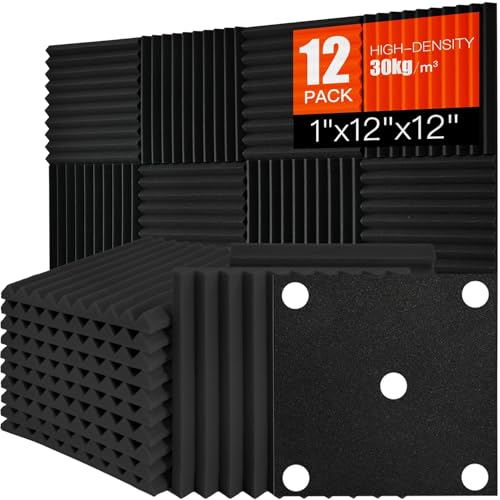
- One-inch polyurethane foam for reflection control
- Includes nano double-sided installation tape
- Two-year manufacturer warranty
Best For: Podcast booths, vocal recording, and livestreaming setups
Wide-Coverage Brick Design

- Approximately 20 square feet of coverage
- Peel-and-stick installation for walls and doors
- Odorless, non-toxic polyester construction
Best For: Larger podcast spaces needing quick, decorative coverage
Best Overall Coverage – TONOR Dual-Layer Acoustic Panels
For broad wall coverage, these TONOR panels are a practical option among acoustic door panels for podcasting. Their dual-layer polyester construction is designed to disperse echo and noise, while the peel-and-stick backing simplifies installation.
Best For: Podcasters who want large, permanent wall coverage with a decorative striped finish.
Pros:
- Large 47.2-by-23.6-inch panels provide extensive coverage.
- Dual-layer, high-density polyester construction targets echo reduction.
- Self-adhesive backing requires no additional tape.
- Panels can be cut to fit different spaces.
Cons:
- Adhesive installation may be less convenient if you plan to reposition the panels.
- The supplied coverage figure is noted as unverified.
The reinforced corners and two-year warranty add practical value, but these panels are best suited to fixed wall treatment rather than temporary door setups.
Best for Doors and Temporary Setups – Sound Dampening Blanket Panels
These hanging blankets are especially versatile acoustic door panels for podcasting because grommets allow them to be mounted over doors, windows, or walls. The three-layer design is intended to absorb sound and reduce echo without claiming full sound isolation.
Best For: Podcasters who need removable coverage for doors, windows, or changing recording locations.
Pros:
- Large 41.33-by-70.86-inch panels cover doors and windows.
- Three-layer construction includes a high-density sound-absorbing middle layer.
- Reinforced webbing and metal grommets simplify hanging.
- Machine-washable and reusable for regular use.
Cons:
- These blankets reduce ambient noise but do not provide total isolation.
- The product dimensions listed in the details appear inconsistent with the stated panel size.
For podcasting in multipurpose rooms, the removable design is a major advantage. Expect sound reduction and echo control rather than true soundproofing.
Best Peel-and-Stick Panels – Self-Adhesive Wall Panels
These compact polyester panels offer a straightforward way to add acoustic door panels for podcasting to doors, walls, windows, or ceilings. Their self-adhesive backing and 12-by-12-inch format make it easy to build a targeted treatment area.
Best For: Podcasters who prefer modular, tool-free installation and smaller coverage sections.
Pros:
- Self-adhesive backing needs no spray adhesive or double-sided tape.
- Porous polyester material is designed to absorb reflections and echo.
- 18 panels provide 18 square feet of stated coverage.
- Suitable for walls, doors, windows, and ceilings.
Cons:
- At 0.4 inches thick, they provide less thickness than the listed foam alternative.
- Adhesive mounting is less flexible for renters or frequent repositioning.
This set works well when you want to treat specific reflective surfaces without cutting large panels. Plan the layout carefully before pressing the adhesive into place.
Best for Deep Foam Treatment – Pyramid Acoustic Foam Panels
For podcasters prioritizing textured foam absorption, this 24-pack provides 2-inch pyramid panels designed to reduce echo and reverberation. They can be used on walls or ceilings, though adhesive must be purchased separately.
Best For: Home studios, podcast rooms, and vocal areas that need thicker, textured acoustic treatment.
Pros:
- 2-inch pyramid profile increases the panel’s textured surface area.
- Designed to absorb sound waves and reduce echo and reverberation.
- Flame-retardant polyurethane foam is intended for durable use.
- Suitable for podcast rooms, vocal booths, and home studios.
Cons:
- Construction adhesive or nano double-sided tape is not included.
- Designed for absorption, not full soundproofing or external-noise isolation.
- Foam panels may require more planning than peel-and-stick options.
The pyramid texture makes this a focused acoustic-treatment choice, but the missing adhesive adds an extra setup step. Use it to manage room reflections rather than block outside noise.
Large-Coverage Pick – Extra-Large Sound Dampening Blankets
For podcasters needing flexible acoustic door panels for podcasting, these two oversized blankets provide broad, temporary coverage for doors, walls, or windows. Each 96-by-80-inch blanket includes grommets and straps for hanging, while the dense construction is designed to reduce echoes and outside noise.
Best For: Portable podcast setups, door and window coverage, home offices, and renters who want a flexible treatment option.
Pros:
- Extra-large 96-by-80-inch size covers substantial wall or door areas.
- Dense 19.4-pound construction is designed to absorb sound waves and vibrations.
- Nine grommets and included straps support flexible hanging configurations.
- Can also function as a blackout curtain, furniture protector, or pet barrier.
Cons:
- Heavy overall package weight may require sturdy mounting points.
- Blanket-style treatment is less permanent and less decorative than rigid panels.
This is the most versatile option when you need wide coverage and easy storage rather than a fixed studio installation. It can help tame room reverberation and filter some outside chatter, but mounting hardware and placement will matter for best results.
Quick-Install Pick – 2-Inch Self-Adhesive Foam Panels
These 2-inch foam tiles are a practical choice for acoustic door panels for podcasting when you want compact, permanent-looking treatment. The 12-pack covers 12 square feet, and the upgraded adhesive is intended to simplify installation on walls or doors without extra tape.
Best For: Podcasters treating a small door or wall section, home studios, gaming spaces, and creators who prioritize fast installation.
Pros:
- Two-inch-thick, high-density foam is designed to reduce echoes, reverb, and flutter echoes.
- Self-adhesive backing avoids the need for additional tape.
- Foam expands to its normal size within seconds rather than requiring days.
- Each 12-pack covers 12 square feet.
Cons:
- The pack provides less coverage than an oversized blanket.
- Self-adhesive installation may be less suitable where wall protection is a priority.
- Foam tiles offer a studio-treatment look rather than decorative felt styling.
Choose this set for targeted echo control and straightforward setup. Since the manufacturer notes that larger coverage improves noise reduction, measuring the door or nearby wall first will help determine whether one pack is enough.
Decor-Friendly Pick – Thickened Felt Acoustic Tiles
For a more finished studio appearance, these felt tiles offer a durable alternative to foam acoustic door panels for podcasting. The six 16-by-12-inch polyester panels cover 8 square feet and can be installed on a door, wall, or ceiling using adhesive, tape, or small screws.
Best For: Home studios, podcast rooms, vocal booths, and users who want acoustic treatment that blends with room decor.
Pros:
- High-density polyester felt is designed to absorb reverberation, echoes, and standing waves.
- Six panels cover 8 square feet and can be cut for customized placement.
- Felt construction retains its color and provides cushioning against impacts.
- Non-toxic, odorless, formaldehyde-free, and flame-retardant Class B1 material.
Cons:
- At 0.5 inch thick, the panels are thinner than the 2-inch foam option.
- Installation requires separate adhesive, tape, or screws.
- Six panels cover less area than the extra-large blanket.
These panels are a strong fit when appearance, cut-to-fit installation, and permanent room treatment matter. Their listed acoustic ratings support echo control, while the range of mounting options gives you more flexibility than pre-backed adhesive tiles.
Thick Polyester Pick – 12-Inch High-Density Acoustic Panels
For acoustic door panels for podcasting, these 12-inch polyester panels offer a thicker, denser option for reducing echo and improving room acoustics. Their chamfered edges support flexible DIY layouts, while the included self-adhesive design makes installation straightforward on suitable surfaces.
Best For: Podcasters, home studios, offices, and rooms where a decorative, customizable panel arrangement is important.
Pros:
- Made from odorless, flame-retardant polyester.
- 25% thicker and 35% denser than the product’s referenced traditional panels.
- Chamfered design can be rotated and arranged into custom patterns.
- Includes self-adhesive and removable tape for tool-free installation.
Cons:
- An 8-pack covers approximately 7.6 square feet.
- At 0.47 inches thick, these are not the thickest panels in the roundup.
- The instructions recommend covering the installation area completely for better absorption.
This is a practical choice when you want acoustic treatment that also contributes to the room’s décor. The smaller pack and limited coverage make it better suited to targeted treatment than covering a large podcast room.
Podcast Studio Foam – 12-Pack One-Inch Wedge Panels
These one-inch wedge foam panels are a versatile option for acoustic door panels for podcasting, especially when the goal is to manage reflections and echo rather than provide structural soundproofing. The 12-pack covers 12 square feet and includes nano double-sided tape for installation on walls, doors, or ceilings.
Best For: Podcast booths, vocal recording spaces, livestreaming setups, home offices, and small media rooms.
Pros:
- One-inch polyurethane foam is designed to reduce reflections and reverberation.
- Suitable for podcasts, vocal booths, YouTube creation, and live broadcasting.
- Includes nano double-sided tape for easier installation.
- Backed by a two-year manufacturer warranty.
Cons:
- Panels arrive vacuum packed and may need 24–48 hours to fully expand.
- Foam treatment improves room acoustics but is not structural soundproofing.
- The 12-pack covers 12 square feet, so larger rooms may require additional packs.
Among these options, this is the most directly aligned with podcast and vocal recording use. Its wedge profile, one-inch thickness, included mounting tape, and broad application range make it a flexible starting point for a dedicated or multipurpose recording space.
Wide-Coverage Brick Design – 20-Pack Self-Adhesive Panels
If you need acoustic door panels for podcasting with broader coverage, this 20-pack provides approximately 20 square feet of treatment. The self-adhesive polyester panels peel and stick to walls, doors, windows, or ceilings, while the brick pattern adds a more finished decorative look to a studio or office.
Best For: Podcasters who want wider coverage, simple peel-and-stick installation, and a decorative brick-style appearance.
Pros:
- 20 panels cover approximately 20 square feet.
- Self-adhesive backing requires no extra tape or adhesive spray.
- High-density polyester construction is described as odorless and non-toxic.
- Brick-shaped design suits recording studios, control rooms, offices, and home theaters.
Cons:
- At about 0.36–0.4 inches thick, the panels are thinner than the one-inch foam option.
- The supplied performance claim is manufacturer-provided and should not be treated as complete room soundproofing.
- Peel-and-stick installation may be less forgiving if panels need repositioning.
This model stands out for coverage and convenience. It is a strong fit for treating a larger door or wall section quickly, although its relatively slim profile may appeal more to buyers prioritizing easy installation and appearance than maximum thickness.
How We Picked the Best Acoustic Door Panels for Podcasting
We focused on products that can realistically be used on or around a podcast-room door, including rigid acoustic panels, foam tiles, felt boards, and hanging blankets. We considered panel thickness, coverage, mounting method, surface area, portability, and how easily each option can be combined with treatment on nearby walls.
Because “soundproof” is often used loosely in product listings, this roundup prioritizes sound absorption and echo control rather than promising complete isolation from voices, traffic, or equipment noise. Absorption improves the sound inside the room; true soundproofing usually requires sealing gaps, adding mass, and modifying the door or surrounding structure.
Quick Comparison
- Best for broad coverage: Large sound-dampening blankets can cover an entire door and are convenient for renters or temporary studios.
- Best for targeted reflection control: Thick panels and 2-inch foam provide more substantial absorption than thin decorative tiles.
- Best for simple installation: Self-adhesive foam and felt panels install quickly, though removal may damage paint or leave residue.
- Best for flexible layouts: Grommeted blankets can be hung, removed, folded, or repositioned as your recording setup changes.
Key Buying Factors for Acoustic Door Panels for Podcasting
Coverage and Door Size
Measure the door before buying. A small pack of 12-inch tiles may treat only part of the surface, while a large blanket can cover most or all of the door in one piece. Leave room for handles, hinges, and safe operation.
Thickness and Absorption
Thicker foam and dense panels generally offer more useful absorption than very thin tiles, particularly through the low-mid frequencies that can contribute to a boxy voice. For a noticeable improvement, prioritize coverage and thickness over decorative appearance alone.
Mounting and Reversibility
Adhesive-backed products are convenient but may be difficult to remove cleanly. Blankets with grommets work well with hooks, tension hardware, or a removable rod. Rigid panels may need stronger mounting hardware and enough clearance for the door to open.
Sound Leakage and Door Gaps
Panels will not stop much sound from passing through gaps around the frame. If outside noise is the main problem, pair absorption with weatherstripping, a door sweep, and—where appropriate—a removable draft stopper. Keep ventilation and emergency access in mind.
Who Should Buy Which Acoustic Door Panels for Podcasting?
Choose a large acoustic blanket if you rent, need removable treatment, or want to cover a full door quickly. Choose thick wall panels or 2-inch foam if vocal clarity and stronger reflection control are your priorities. Choose self-adhesive tiles for a low-cost, permanent-looking setup when you are comfortable with the mounting method. Choose felt panels if appearance, light absorption, and a finished studio aesthetic matter as much as basic echo reduction.
For the best result, treat the door plus the wall behind the microphone, then record a short test before and after installation. Listen for reduced flutter echo and a more controlled voice, rather than expecting complete sound isolation.