If you need reliable monitoring for tracking sessions, band rehearsals, podcasts, or classroom setups, a good headphone amp can make a big difference. The best models give every listener enough volume without adding noise or strain.
This roundup of headphone amplifiers for studio use focuses on practical picks with multiple outputs, simple controls, and the power to keep sessions moving smoothly.
Best 10 Headphone Amplifiers for Studio Use Picks for 2026
Compact 4-Output Studio Splitter
Mackie HM-4 4-Way Headphone Amp

- Feeds one stereo source to 4 headphones
- Per-output level control for each listener
- Metal build with included 12V AC adapter
Best For: small studios that need simple shared monitoring for up to four people
Ultra-Compact 4-Channel Monitor Amp
Fosi Audio PH04 Studio Headphone Splitter
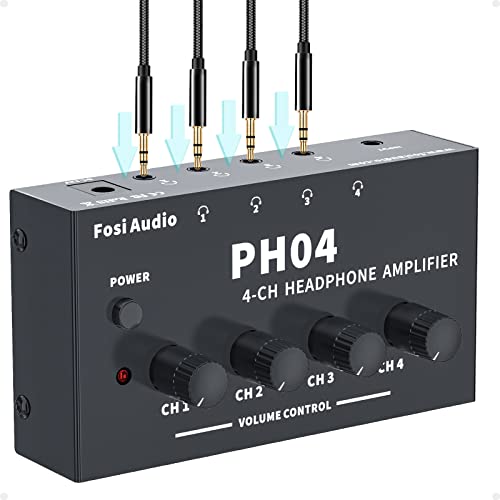
- Four stereo amp sections with individual level controls
- Compact and portable for studio or stage use
- Supports 3.5mm and 6.35mm headphones with adapter
Best For: portable sessions and small studios that need four independently controlled headphone feeds
Mic-and-Monitor Utility Amp
LiNKFOR MA400 Headphone Amplifier
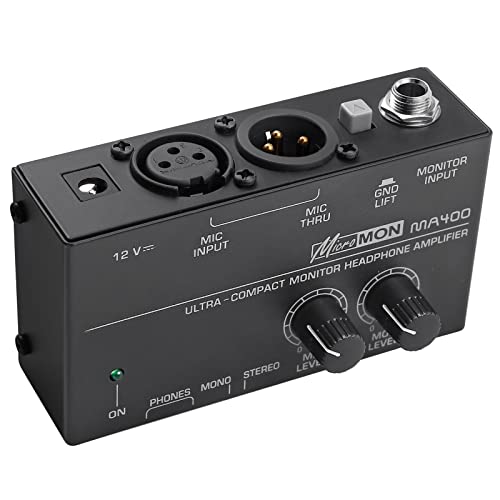
- Independent mic and source volume controls
- Mono/stereo switch with 1/4-inch and 1/8-inch outputs
- Portable metal unit with included power adapter
Best For: vocal tracking and portable monitoring where mic signal control is important
Rackmount 8-Channel Monitoring Hub
16-Output Headphone Mixing Amp

- 8 amplifiers support up to 16 headphone outputs
- Mono/stereo routing with per-channel control
- 1U rack design with real-time LED metering
Best For: professional studios and live monitoring rigs that need many headphone outputs
4-Channel Studio Sharing Pick
FIFINE 4-Channel Metal Stereo Headphone Amp
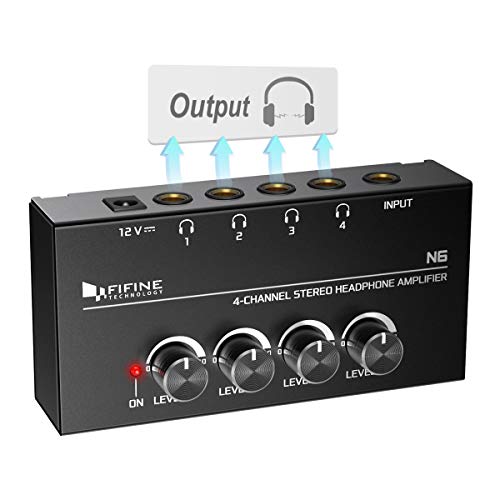
- 4 independent volume knobs
- 1 stereo input, 4 headphone outputs
- Metal build with 12V adapter included
Best For: Small studios and tracking sessions with up to four listeners
8-Channel Monitoring Workhorse
STABCL 8-Channel Stereo Headphone Amp

- Eight independent output channels
- Mono/stereo switch for flexible routing
- Includes 9 adapters plus 12V power supply
Best For: Larger recording sessions and multi-listener monitoring
Bass-Boosted Session Pick
LZSIG 6-Channel Stereo Headphone Amp

- Six outputs with independent volume control
- Bass boost adds extra vocal and low-end presence
- Works with 3.5mm and 6.35mm headphones
Best For: Studios that want six-way distribution with bass boost
8-Channel Studio Hub
Bolanle PH800 8-Channel Headphone Amplifier

- Drives headphones up to 250Ω.
- Offers 16 total headphone outputs.
- Includes mono/stereo switching for monitoring flexibility.
Best For: Large studio, band, and stage monitoring
Compact 4-Person Mixer Feed
Pyle PHA40 4-Channel Headphone Amplifier

- Powers up to four headphones at once.
- Each listener gets independent volume control.
- Compact design suits portable studio use.
Best For: Small studios and portable monitoring sessions
Ultra-Compact Monitoring Amp
HA400 4-Channel Metal Stereo Audio Amplifier

- Four headphone outputs with independent volume controls.
- Low-noise JRC4580 chip supports clean monitoring.
- Ultra-compact metal body is easy to carry.
Best For: Portable four-person monitoring in studio or stage setups
Compact 4-Output Studio Splitter – Mackie HM-4 4-Way Headphone Amp
If you need headphone amplifiers for studio use to share one stereo source with a small team, the Mackie HM-4 keeps things simple. It sends one mix to up to four pairs of headphones, with individual level control on each output so every listener can set a comfortable monitoring level.
Best For: Small studios, home recording setups, and any session where up to four people need a shared headphone feed.
Pros:
- Shares a single stereo source with up to 4 pairs of headphones
- Individual level control for each output
- Included 12V AC adapter for powered operation
- Metal build and compact footprint
Cons:
- Limited to 4 headphone outputs
- No advanced routing or metering features
The HM-4 is a practical pick when reliability matters more than extras. Its straightforward layout and rugged construction make it a solid utility piece for basic monitoring duties.
Ultra-Compact 4-Channel Monitor Amp – Fosi Audio PH04 Studio Headphone Splitter
For headphone amplifiers for studio use where space is tight, the Fosi Audio PH04 delivers a compact way to power four listeners at once. It offers four independent stereo amplifier sections with individual output level controls, and it’s built for studio and stage monitoring with a simple, portable design.
Best For: Small recording sessions, playback monitoring, and portable studio/stage setups that need four independent headphone levels.
Pros:
- 4-channel stereo design with independent volume control on each channel
- Compact, portable format for studio and stage use
- Supports 3.5mm and 6.35mm headphones with adapter
- Includes power switch and 3.5mm headphone output
Cons:
- 3.5mm to 6.35mm adapter is needed for some headphones
- Best suited to small-scale monitoring rather than large routing needs
The PH04 is a value-focused monitor amp that covers the essentials without taking up much desk space. If you want four-way headphone distribution with individual control in a compact box, it fits that role well.
Mic-and-Monitor Utility Amp – LiNKFOR MA400 Headphone Amplifier
When headphone amplifiers for studio use also need to work with a microphone signal, the LiNKFOR MA400 is built for that job. It supports independent volume control for the microphone and mixer or Hi-Fi source, plus a mono/stereo switch and both 1/4-inch and 1/8-inch headphone outputs for flexible monitoring.
Best For: Vocal tracking, mic monitoring, and portable studio or stage setups that need flexible headphone output options.
Pros:
- Independent volume control for mic and mixer/Hi-Fi signals
- Mono/stereo switch for flexible routing
- 1/4-inch and 1/8-inch headphone outputs
- Compact metal build with included power adapter
Cons:
- Single-channel unit rather than a multi-headphone distributor
- 60mW output is modest compared with larger monitoring amps
The MA400 is less about feeding a group and more about giving one listener control over a mic plus source blend. That makes it a useful niche tool for tracking and monitoring tasks where portability and flexibility matter.
Rackmount 8-Channel Monitoring Hub – 16-Output Headphone Mixing Amp
For larger headphone amplifiers for studio use, this 8-channel distribution unit is designed to handle demanding monitoring sessions. It offers mono/stereo modes, dual input routing, independent control per channel, and enough outputs to let up to 16 headphones monitor 8 discrete mixes.
Best For: Professional studios, live sound monitoring, and rack-based systems that need many headphone feeds and flexible routing.
Pros:
- 8 high-power amplifiers with up to 16 headphone outputs
- Mono/stereo modes and flexible input routing
- Independent volume control per channel plus master input control
- 1U rack-mount design with LED meters for all 8 channels
Cons:
- Much larger and more specialized than a basic desktop amp
- Designed for wired rack use, not portable listening
This is the most scalable option in the group and clearly aimed at serious monitoring workflows. If you need lots of outputs, level visibility, and rack integration, it brings the right feature set.
4-Channel Studio Sharing Pick – FIFINE 4-Channel Metal Stereo Headphone Amp
If you need headphone amplifiers for studio use that let multiple people monitor the same mix without fuss, the FIFINE N6 is a straightforward option. It provides one stereo input and four independent 1/4″ TRS headphone outputs, with a separate volume knob for each channel and a compact metal build that suits studio or stage setups.
Best For: Small studios, tracking sessions, and any setup where up to four listeners need their own level control.
Pros:
- Four headphone outputs with individual volume controls.
- Designed for stereo TRS input/output use with low noise and minimal distortion at higher volumes.
- Solid metal construction and compact footprint for studio portability.
- Includes a 12V DC power adapter.
Cons:
- TRS/TS cables are not included.
- It is a 1-in/4-out splitter, not a mixer with multiple inputs.
For basic studio monitoring, this model keeps the setup simple while giving each listener a dedicated level control. It is a practical pick if your priority is shared monitoring rather than extra routing features.
8-Channel Monitoring Workhorse – STABCL 8-Channel Stereo Headphone Amp
For headphone amplifiers for studio use where you need more output positions, the STABCL 8-channel unit is built for group monitoring. It offers eight independent stereo channels, separate volume control on each output, and support for both mono and stereo operation, making it a flexible fit for recording spaces and live applications.
Best For: Larger studio sessions, rehearsals, and monitoring setups that need up to eight headphone feeds.
Pros:
- Eight output channels with individual level control.
- Compatible with 1/4″ and 1/8″ TS and TRS plugs, using the included 6.35mm-to-3.5mm adapters.
- Mono/stereo switch adds routing flexibility.
- Metal construction and included 12V AC adapter for stable power.
Cons:
- 1/8″ devices need a conversion plug.
- More outputs may be unnecessary for smaller setups.
This is the most expansion-friendly option in the group if your sessions regularly involve many listeners. The tradeoff is that its strengths are aimed at capacity and flexibility rather than simplicity.
Bass-Boosted Session Pick – LZSIG 6-Channel Stereo Headphone Amp
If you want headphone amplifiers for studio use with a little extra tonal shaping, the LZSIG 6-channel model adds a bass boost function on top of its monitoring features. It supports one input and six outputs, gives each channel its own level control, and works with both 1/4″ and 1/8″ TRS headphones without conversion adapters.
Best For: Studios that want six-way headphone distribution with bass boost and independent volume control.
Pros:
- Six-channel stereo output with individual volume control per channel.
- Bass boost switch increases emphasis in the 400~600 Hz and 3000~7200 Hz ranges.
- Compatible with both 3.5mm and 6.35mm headphones, with no converter adapters required.
- Ultra-low-noise design with ROHM op-amps and mono/stereo switching.
Cons:
- Bass boost changes the sound, so it may not suit neutral monitoring needs.
- The included notes mention powering up to four pairs of headphones despite having six outputs.
As a studio monitoring tool, this model stands out for offering both distribution flexibility and an easy-to-use tonal boost. It is a good fit when you want shared headphone feeds and a little extra presence in the mix.
8-Channel Studio Hub – Bolanle PH800 8-Channel Headphone Amplifier
If you need headphone amplifiers for studio use that can handle a room full of listeners, the Bolanle PH800 is built for high-output monitoring. It can drive up to 250Ω headphones and gives you 16 total outputs, making it a practical choice for recording sessions, band rehearsals, and live monitoring setups.
Best For: Studios, bands, and stage setups that need many headphone connections with strong output.
Pros:
- Drives high-impedance headphones up to 250Ω.
- Provides 16 outputs: 8× 3.5mm and 8× 6.35mm.
- Mono/stereo switch adds flexibility for different monitoring needs.
- 7-color LED volume knob gives visible feedback in dim spaces.
Cons:
- Designed as a wired unit only.
- Bulkier than simple 2- or 4-channel personal amps.
For larger monitoring setups, the PH800 stands out because it focuses on clean distribution and output capacity rather than portability. If your priority is giving multiple people a solid listening feed at once, this is a strong studio-oriented option.
Compact 4-Person Mixer Feed – Pyle PHA40 4-Channel Headphone Amplifier
Among headphone amplifiers for studio use, the Pyle PHA40 is a simple way to give up to four people their own headphone feed from one source. Its independent volume controls and compact body make it a practical fit for small recording spaces, mixer monitoring, and portable setups.
Best For: Small studios, on-the-road sessions, and groups that need four separate headphone outputs.
Pros:
- Powers up to four headphones at the same time.
- Each channel has its own volume control.
- Compact size is easy to transport and fit into tight setups.
- Uses 1/4″ TRS input and 1/4″ TRS headphone outputs.
Cons:
- Only supports four output channels.
- Built with a plastic enclosure rather than metal.
The PHA40 is best viewed as a straightforward distribution amp for small monitoring jobs. If you do not need a lot of outputs but want individualized volume control for a few listeners, it does the basics well.
Ultra-Compact Monitoring Amp – HA400 4-Channel Metal Stereo Audio Amplifier
If you want headphone amplifiers for studio use in a tiny footprint, the HA400 is designed for four-way sharing with independent volume control. It supports 32-100Ω headphones and uses a low-noise JRC4580 chip, which makes it a practical monitor splitter for recording, stage work, and other multi-listener setups.
Best For: Small studios, stage monitoring, and portable setups that need four headphone feeds.
Pros:
- Supports up to four pairs of headphones with separate volume controls.
- Uses a low-noise JRC4580 operational chip.
- Metal construction keeps the unit compact and portable.
- Works across studio, stage, karaoke, and conference scenarios.
Cons:
- Best suited to headphones in the 32-100Ω range.
- Requires a 1/4″ TRS source connection.
The HA400 is the most portable option here, with a very small chassis and simple four-channel layout. It is a good fit when you want basic monitoring distribution without adding much weight or space to your rig.
How We Picked the Best Headphone Amplifiers for Studio Use
We looked for Headphone Amplifiers for Studio Use that are easy to deploy in real recording and rehearsal spaces. Priority went to clean signal handling, enough output power for multiple listeners, sturdy construction, flexible input/output options, and straightforward volume control.
We also favored models that suit common studio needs: compact desktop footprints, rack- or shelf-friendly designs, and options that work well for both personal monitoring and group distribution.
Quick Comparison
For small home studios, 4-channel units are usually the simplest and most affordable choice. They are ideal when one source needs to feed a few performers.
For larger control rooms, rehearsal spaces, and content teams, 6- to 8-channel models offer more flexibility, especially when several people need independent monitoring at once. If you expect frequent multi-user sessions, higher-output distribution amps are usually the better long-term buy.
Key Buying Factors for Headphone Amplifiers for Studio Use
Number of Channels and Outputs
Choose the number of headphone outputs based on how many people need to monitor at the same time. Remember that some units list input channels separately from total headphone outs, so check both.
Power and Headroom
Studio headphones vary widely in impedance and sensitivity. If you use demanding headphones, look for stronger amplification and enough headroom so you do not have to run the unit near maximum volume.
Signal Type and Connectivity
Balanced TRS connections are common in studio environments, while 3.5mm outputs can be useful for portable or mixed-device setups. Make sure the amplifier matches your source gear, whether that is an interface, mixer, or mic signal path.
Mono, Stereo, and Control Features
Some monitoring workflows need mono compatibility, bass enhancement, or independent channel controls. These features can be useful, but only if they match your workflow; otherwise, simple and clean often wins.
Build Quality and Placement
Metal housings, compact footprints, and mounting-friendly designs tend to hold up better in studios where gear gets moved or shared often. Low-noise operation matters too, especially for vocal tracking and editing.
Who Should Buy Which Headphone Amplifiers for Studio Use?
If you run a home studio or solo podcast setup, a compact 4-channel amplifier is usually enough and keeps your desk uncluttered. If you record small bands, choose a 6- or 8-channel model for easier shared monitoring.
For portable rigs, mobile production, or classrooms, lightweight amps with mixed output types can be the most convenient option. If your sessions often involve louder performers or multiple headphones with different requirements, prioritize power, channel count, and independent volume control over extra features.