Choosing the right camera can make or break your virtual tour workflow. The best models balance image quality, stitching reliability, and easy control so you can shoot faster with fewer retakes.
This roundup highlights 10 strong options for different needs, from real estate and hospitality to VR content and professional panorama capture.
Best 10 360 Cameras for Virtual Tours Picks for 2026
Flagship 8K Creator Pick

- 8K30fps 360 capture with dual 1/1.28" sensors
- Triple AI chips improve low-light clarity and noise handling
- FlowState stabilization, horizon lock, and replaceable lenses
Best For: Creators who want premium 360 footage for virtual tours and polished edits
Premium Photo-First Choice

- 23MP 360 stills with a 1-inch sensor
- 4K 360 video plus image stabilization
- RAW support for more flexible editing
Best For: Real estate and tour creators who care most about 360 photos and RAW workflows
Lightweight 8K Runner-Up
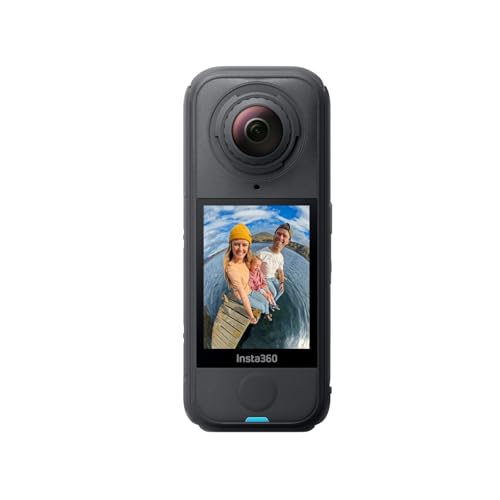
- 165g body makes it easy to carry and use
- 8K30fps 360 capture with frame-later editing
- FlowState stabilization and replaceable lenses
Best For: Creators who want a lightweight 8K camera for flexible virtual tour shooting
Budget Tour Kit

- Smartphone-based 360 tour workflow with included gear
- App adds dollhouse, floor plan, and touch-up tools
- Fast capture process aimed at real estate tours
Best For: Budget-minded users who want a smartphone-driven virtual tour setup
Professional Detail Pick

- 11K stills up to 60MP
- 5.7K/30fps video with stabilization
- Built-in GPS and swappable battery
Best For: Professional virtual tours and high-detail capture
Indoor Tour Specialist

- 8K, 32MP panoramic images
- NodeRotate one-click tripod capture
- Built-in 8GB storage
Best For: Indoor virtual tours and commercial spaces
Most Versatile Option

- 5.7K 360 video with reframing
- 4K single-lens mode
- Waterproof with FlowState stabilization
Best For: Mixed-use creators who also shoot travel and action
Best Still-Image Pick
8K Panoramic Still Camera for Real Estate

- 8K, 32MP panoramic stills
- Low-distortion commercial lens
- APP remote shooting and auto stitching
Best For: Property and architecture virtual tours
Best Premium Hybrid

- 1-inch sensor with strong low-light performance
- Native 8K 360 video and 120MP photos
- Built-in storage plus invisible selfie stick kit
Best For: Premium creators who want tours, video, and action use
Best Compact Classic

- 4K 360 video and hi-res spherical stills
- Built-in 4-channel spatial microphone
- Compact body with Bluetooth/Wi‑Fi transfer
Best For: Simple VR content and lightweight virtual tour capture
Flagship 8K Creator Pick – Insta360 X5 Starter Bundle
If you’re comparing 360 cameras for virtual tours and want a premium all-around option, the Insta360 X5 Starter Bundle brings the detail and flexibility to handle polished walkthroughs as well as action-style capture. Its 8K30fps 360 video, strong low-light processing, and AI-assisted reframing make it easy to record first and refine the final view later.
Best For: Creators and professionals who want high-resolution 360 footage, strong stabilization, and flexible editing for virtual tour content.
Pros:
- 8K30fps 360 video with dual 1/1.28" sensors for sharp detail
- Triple AI chip design helps improve low-light performance and noise reduction
- FlowState Stabilization and 360° Horizon Lock keep footage level and smooth
- Replaceable lenses, waterproofing to 49ft, and 208-minute battery life add durability
Cons:
- Invisible Selfie Stick is sold separately
- More feature-rich than a simple point-and-shoot option
- Best results may depend on using the app for reframing or AI editing
This is the most capable option in the group if you value high-end capture quality and editing flexibility. For virtual tours, it stands out when you need crisp 360 footage, steady movement, and reliable shooting in difficult light.
Premium Photo-First Choice – Ricoh Theta Z1
For buyers focused on 360 cameras for virtual tours, the Ricoh Theta Z1 is a strong still-image option with a 1-inch sensor and 23MP 360 photos. It also records 4K 360 video and supports RAW files, which is useful if you want more control over image editing and final presentation.
Best For: Real estate and virtual tour creators who prioritize high-quality 360 still images and RAW editing support.
Pros:
- 23MP 360 stills backed by a large 1-inch sensor
- 4K 360 video with image stabilization
- Supports RAW file format for more advanced editing
- Lightweight, compact body for easier handling
Cons:
- Not water resistant
- Video resolution is 4K, not 8K
- More photo-oriented than the latest action-style 360 cameras
If image quality for still tours matters more than headline video specs, this camera is very compelling. It is especially attractive for creators who want a compact body, strong photo performance, and editing latitude.
Lightweight 8K Runner-Up – Insta360 X4 Air
If you want 360 cameras for virtual tours that are easy to carry and quick to use, the Insta360 X4 Air is a practical middle-ground pick. At 165g, it stays compact while still offering 8K30fps capture, invisible selfie stick effects, and flow-state stabilization for smooth, level footage.
Best For: Mobile creators who want a lightweight 8K 360 camera with simple shoot-first, frame-later editing.
Pros:
- Very lightweight at 165g for easy all-day carrying
- 8K30fps 360 video with shoot-first, frame-later workflow
- Invisible Selfie Stick effect for clean third-person perspectives
- Replaceable lenses and FlowState stabilization add practicality
Cons:
- Not water resistant
- Single camera body only in the box
- Best features depend on the Insta360 app and cloud tools
This model makes sense when portability matters as much as image quality. It keeps the core 360 tour essentials—high-resolution capture, stabilization, and easy reframing—without the bulk of a larger setup.
Budget Tour Kit – asteroom 3D Virtual Tour Kit
If you’re building 360 cameras for virtual tours on a tighter budget, this asteroom kit is a different kind of solution: it turns a smartphone into a 360-degree capture setup for real estate tours. The bundle includes the gear needed for 3D tour shooting, and the companion app handles processing into a virtual tour format after upload.
Best For: Budget-conscious real estate users who want a smartphone-based virtual tour workflow.
Pros:
- Turns a smartphone into a 360 degree camera setup for virtual tours
- Includes tripod, digital camera rotator, and fisheye cam lens
- Promotes fast capture, with tour creation described as possible in about 15 minutes
- App-based tour output includes dollhouse, floor plan, and image touch-up features
Cons:
- Phone case is not included and must be purchased separately
- Tours are processed in the app in 24-48 hours
- Virtual tours are priced per active tour rather than by camera-only ownership
This kit is best viewed as a workflow starter rather than a standalone camera. It is useful when you want to create tours with familiar smartphone hardware and keep upfront gear costs lower.
Professional Detail Pick – Ricoh Theta X 11K 360 Camera
If you want 360 cameras for virtual tours with maximum detail, the Ricoh Theta X stands out for its 11K stills, 5.7K/30fps video, and built-in GPS data. The large 2.25-inch touchscreen makes it easier to shoot, review, and adjust settings on the camera itself, while the swappable battery and expandable storage support longer sessions.
Best For: Professional virtual tour creators who need high-resolution stills, embedded location data, and all-day shooting flexibility.
Pros:
- 11K still images up to 60MP for highly detailed tour photos
- 5.7K video with image stabilization for smoother walkthrough clips
- Built-in GPS (QZSS and A-GPS compatibility) for location-tagged tour content
- Swappable battery and microSD support for extended shooting sessions
Cons:
- No compatible mounting accessory is listed in the supplied details
- Higher-end feature set may be more than casual users need
Overall, the Theta X is a strong pick when image detail and workflow convenience matter more than compact simplicity. It is especially compelling for professional tour work where GPS-tagged images and in-camera touchscreen controls help speed up the process.
Indoor Tour Specialist – Trisio Lite 2 VR 8K Bundle
For 360 cameras for virtual tours focused on indoor real estate and commercial spaces, the Trisio Lite 2 VR is built around nodeRotate shooting and distortion-free aspherical optics. It captures 8K, 32MP panoramic images and uses its anyScene adaptive imaging system to handle challenging brightness and dark areas more reliably.
Best For: Indoor virtual tour work where tripod-based, one-click panoramic capture is the priority.
Pros:
- 8K, 32MP image capture for high-resolution tour photos
- NodeRotate technology with built-in precision motor for one-click shooting
- anyScene adaptive imaging system helps balance bright and dark areas
- Built-in 8GB storage means no extra memory card is needed
Cons:
- Designed mainly for tripod use rather than handheld action shooting
- Battery life is listed at 200 minutes, so longer jobs may need planning
The Lite 2 VR is a specialized tool for users who want a simple, controlled workflow for indoor panoramas. If your virtual tours are mostly stationary and you value repeatable capture over versatility, this bundle is a practical choice.
Most Versatile Option – Insta360 X3 360 Action Camera
If you need 360 cameras for virtual tours that can also handle travel and action footage, the Insta360 X3 offers 5.7K 360 capture with easy reframing in the app. Its FlowState stabilization and Horizon Lock help keep footage smooth, while the 2.29-inch touchscreen makes quick setup straightforward.
Best For: Creators who want a versatile 360 camera for virtual tours plus action and travel content.
Pros:
- 5.7K 360 Active HDR video with reframing support in the app
- 4K single-lens mode for traditional wide-angle shots
- FlowState Stabilization and Horizon Lock for smoother footage
- Waterproof design for outdoor and travel use
Cons:
- Lower still resolution than dedicated tour-focused cameras in this roundup
- Best known as an action camera, so it is less specialized for stationary tour workflows
The X3 is the most flexible option here if your projects go beyond real estate or indoor walkthroughs. It is a strong fit when you want one camera for immersive tours, vlogging, and action-oriented filming.
Best Still-Image Pick – 8K Panoramic Still Camera for Real Estate
If you’re comparing 360 cameras for virtual tours, the Trisio Lite 2 is built around still-image capture rather than action video. Its 8K, 32MP panoramic output, low-distortion commercial lens, and automatic stitching make it a practical pick for real estate, architectural, and other indoor walkthrough-style shoots.
Best For: Photographers and property marketers who want high-resolution 360° stills for virtual tours.
Pros:
- 8K, 32MP panoramic image capture for detailed virtual tour photos
- Aspheric commercial lens is designed to reduce distortion
- APP remote control with one-click shooting and automatic splicing
- nodeRotate technology and adaptive imaging help with mixed lighting
Cons:
- Built for stills, not a video-first workflow
- Only 8GB built-in storage
- Not water resistant
For virtual tour work, the Trisio Lite 2 makes the most sense when image clarity and ease of capture matter more than video features. It is a focused tool for panoramic photography, especially in controlled indoor environments where distortion and lighting consistency are key.
Best Premium Hybrid – 1-Inch 8K 360 Action Combo
For buyers who want 360 cameras for virtual tours with strong all-around capture, the DJI Osmo 360 brings a 1-inch 360° imaging system, native 8K video, and ultra-high-resolution 120MP photos. It leans more toward premium content creation and flexible shooting than a dedicated real-estate still camera, but it offers plenty of image quality and convenience for immersive walkthrough-style projects.
Best For: Creators who want a premium 360 camera that can handle immersive tours, video, and action shooting.
Pros:
- 1-inch 360° imaging for strong low-light performance
- Native 8K/30fps 360° video and 120MP 360° photos
- 1.2m invisible selfie stick helps create clean third-person angles
- Built-in 105GB storage and up to 190 minutes of recording
Cons:
- More action-camera oriented than a dedicated virtual tour tool
- Battery average life is listed at 100 minutes
- App download note may add a small setup step
The Osmo 360 is a strong choice if you want one camera that can cover immersive 360 capture, travel, and action content. For virtual tours, its photo quality and 8K capture are appealing, but its broader feature set makes it best for users who need versatility as much as tour-ready imagery.
Best Compact Classic – Compact 4K Spherical Camera
If you’re shopping for 360 cameras for virtual tours and want a compact, proven spherical camera, the Ricoh Theta V is a straightforward option. It captures 4K 360 video and hi-res spherical stills, while its 360 spatial audio and smartphone connectivity make it useful for simple content workflows.
Best For: Users who want a compact 360 camera for simple virtual tour capture and VR content.
Pros:
- 4K 360 video and hi-res spherical still capture
- Built-in 4-channel microphone for spatial audio recording
- Bluetooth and wireless transfer support for easier workflow
- Compact, lightweight form factor for travel and quick setups
Cons:
- 14MP still resolution is lower than newer virtual tour cameras
- Video resolution is listed as 4K rather than native 8K
- No viewfinder and limited on-device display size
The Theta V is best treated as a compact, easy-to-use spherical camera rather than a high-end tour platform. It still covers the basics well, especially when portability, wireless convenience, and simple 360 capture matter more than maximum resolution.
How We Picked the Best 360 Cameras for Virtual Tours
We focused on practical features that matter in real tour production: resolution, stitching quality, low-light performance, lens protection, battery life, file workflow, and how easy each camera is to position, trigger, and review on site. For 360 Cameras for Virtual Tours, consistency matters more than headline specs alone.
Quick Comparison: What Matters Most
Some cameras are better for fast, all-in-one capture, while others are better for dedicated panorama stills or larger estates where image clarity is the priority. Action-style models often give you more versatility, while purpose-built virtual tour cameras can streamline capture and deliver cleaner stills with less editing.
Key Buying Factors for 360 Cameras for Virtual Tours
Still Image Quality Vs. Video Capability
If your virtual tours rely mainly on still panoramas, prioritize sensor quality, dynamic range, and stitching consistency. If you also want walk-through clips, social content, or behind-the-scenes footage, look for stronger video features and stabilization.
Workflow Speed
Fast setup, reliable mobile apps, quick transfer options, and simple exposure controls save time on busy shoots. A camera that is slightly less advanced but much faster to use can be the better business choice.
Low-Light Performance
Many interiors include mixed lighting, reflective surfaces, and darker corners. Better low-light performance helps preserve detail and reduce noise without heavy post-processing.
Durability and Lens Protection
Virtual tour work often involves moving through tight spaces, crowded properties, and outdoor environments. Replaceable lenses, rugged bodies, and protective cases can lower long-term ownership costs.
Mounting, Accessories, and File Handling
Tripods, invisible selfie-stick support, rotators, and mobile editing tools can improve results and speed. Also check whether the camera produces files that fit your existing tour platform or editing software.
Who Should Buy Which 360 Cameras for Virtual Tours?
If you want the most versatile option, choose an all-purpose 360 camera with strong stills and video. Real estate professionals who shoot many listings may prefer a camera or kit built specifically for virtual tour capture. Photographers who value maximum detail and control should look at higher-resolution models with stronger still-image performance. Budget-conscious buyers or beginners should focus on easy setup and dependable app support before chasing the highest specs.
In short, the best choice depends on how often you shoot, how much editing you want to do, and whether your priority is speed, image quality, or flexibility. Matching the camera to your workflow is the fastest way to get better virtual tours with less friction.