Choosing the right lens can make a bigger difference than upgrading your camera body. The best cinema lenses for crop sensor cameras help you get cleaner low-light performance, more controlled focus, and a more polished cinematic look.
In this roundup, we focused on practical options for APS-C and Super 35 shooters who want reliable optics, useful focal lengths, and real production value in 2026.
Best 10 Cinema Lenses for Crop Sensor Cameras Picks for 2026
APS-C Standard Zoom Pick
Sigma 18-35mm F1.8 Art DC HSM Lens for Canon

- Fast f/1.8 aperture
- Useful 18-35mm APS-C range
- AF motor with full-time manual focus
Best For: Canon crop-sensor shooters needing a versatile bright zoom
Anamorphic Crop-Sensor Choice
SIRUI 40mm T1.8 1.33X Anamorphic AF

- 1.33x anamorphic squeeze
- Autofocus with tracking support
- Compact 614g body
Best For: Sony E APS-C filmmakers wanting an easy-to-use anamorphic look
Ultra-Wide APS-C Option

- Very wide 8-16mm APS-C zoom
- Quiet HSM with internal focusing
- FLD and aspherical elements
Best For: Canon APS-C video shoots needing an ultra-wide perspective
Manual Full-Frame Cine Prime

- Fast T1.5 manual prime
- 11-blade iris for smoother bokeh
- Sony E-mount cine design
Best For: Sony E-mount filmmakers wanting a fast manual cinema prime
Full-Frame Portrait Telephoto
7artisans 75mm T1.5 Dream Series

- 75mm telephoto with strong subject separation
- T1.5 aperture and 13-blade bokeh
- 300° manual focus throw with geared rings
Best For: Portrait closeups and compressed cinematic framing
Weather-Sealed Wide Cine Prime
Irix Cine 30mm T1.5 for RF Mount

- 30mm T1.5 wide cine prime for versatile framing
- MIL-STD-810 weather sealing and engraved markings
- 86mm filter thread with magnetic filter support
Best For: Rugged production work and wide-angle cine shooting
Natural-View Narrative Prime
7artisans 35mm T1.5 Dream Series
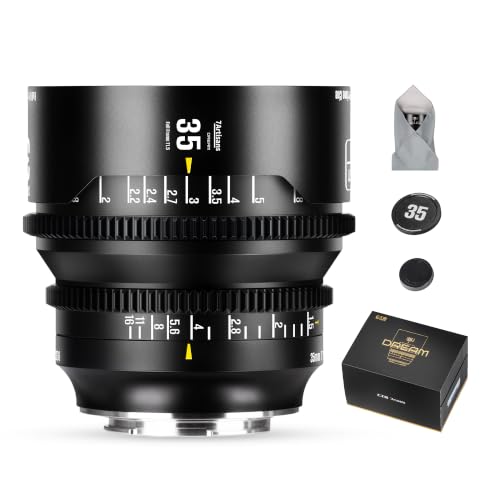
- 35mm perspective suits dialogue and handheld work
- T1.5 aperture with 11-blade bokeh
- 300° focus throw and de-clicked aperture ring
Best For: Dialogue, handheld scenes, and environmental portraits
Military-Grade Wide Prime
- 30mm T1.5 full-frame cine prime
- MIL-STD-810 weather-sealed build
- 86mm filter thread with magnetic filter support
Best For: Rugged EF-mount cine setups needing a wide manual prime
Narrative 35mm Prime
- 35mm T1.5 full-frame cine prime
- 300° manual focus throw
- 11-blade aperture with creamy bokeh
Best For: Narrative work that needs smooth manual focus and a natural perspective
Portrait-Centric Cine Prime
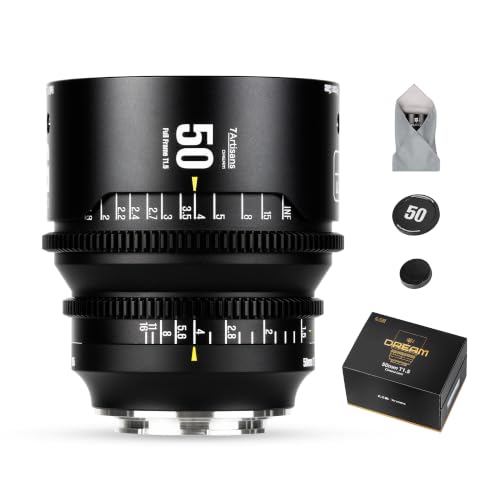
- 50mm T1.5 full-frame cine prime
- 300° manual focus throw
- 4 threaded points for rig accessories
Best For: Portraits and dialogue scenes with a classic short-tele perspective
APS-C Standard Zoom Pick – Sigma 18-35mm F1.8 Art DC HSM Lens for Canon
Sigma 18-35mm F1.8 Art DC HSM Lens for Canon, Black (210101) | Canon compatibility
Check Price On AmazonFor cinema lenses for crop sensor cameras, the Sigma 18-35mm F1.8 Art DC HSM stands out as a practical all-purpose zoom. Its 18-35mm range covers a useful field of view on APS-C bodies, and the fast f/1.8 aperture gives you more control over low light and depth of field when shooting run-and-gun or controlled scenes.
Best For: Filmmakers using Canon EF-S crop-sensor bodies who want a versatile, bright zoom for everyday video work.
Pros:
- Constant f/1.8 maximum aperture for brighter shooting and shallower depth of field.
- 18-35mm zoom range is highly useful for general filmmaking on crop sensors.
- Ring-type ultrasonic autofocus with full-time manual focus support.
- USB Dock compatibility adds tuning flexibility for supported setups.
Cons:
- Designed for Canon EF-S/APS-C use, so it is not a full-frame option.
- No optical image stabilization is listed.
As a crop-sensor cinema-style zoom, this lens offers a strong mix of speed, range, and focusing features. It is especially appealing if you want one lens that can handle a wide variety of shooting situations without sacrificing aperture speed.
Anamorphic Crop-Sensor Choice – SIRUI 40mm T1.8 1.33X Anamorphic AF
If you are comparing cinema lenses for crop sensor cameras and want a more stylized look, the SIRUI 40mm T1.8 1.33X Anamorphic Lens is built for that purpose. It delivers a 1.33x squeeze for a wider 2.35:1 aspect ratio in 16:9 shooting, while the autofocus design and compact body make it easier to use in modern hybrid video setups.
Best For: Sony E-mount APS-C creators who want an autofocus anamorphic lens with a compact build.
Pros:
- 1.33x anamorphic squeeze creates a 2.35:1 look from 16:9 capture.
- Autofocus with eye focusing and subject tracking support.
- Fast T1.8 aperture helps in low light and with subject separation.
- Lightweight 614g design is well suited to run-and-gun filmmaking.
Cons:
- Fixed 40mm focal length offers no zoom flexibility.
- Only listed for Sony E mount in the supplied details.
This is a strong pick if your priority is a cinematic anamorphic image rather than maximum versatility. The combination of autofocus, low weight, and neutral flare option makes it easy to slot into a practical video workflow.
Ultra-Wide APS-C Option – Sigma 8-16mm f/4.5-5.6 DC HSM
Sigma 8-16mm f/4.5-5.6 DC HSM FLD AF Ultra Wide Zoom Lens for APS-C sized Canon Digital DSLR Camera
Check Price On AmazonFor cinema lenses for crop sensor cameras, an ultra-wide zoom can be invaluable for interiors, establishing shots, and tight spaces. The Sigma 8-16mm f/4.5-5.6 DC HSM gives Canon APS-C users a very wide 8-16mm range, plus internal focusing and quiet HSM autofocus for smoother operation during video work.
Best For: Canon APS-C shooters who need an ultra-wide zoom for dramatic perspectives and confined shooting spaces.
Pros:
- Extremely wide 8-16mm zoom range on APS-C cameras.
- Internal focusing and quiet HSM motor suit video use.
- FLD and aspherical elements are included in the design.
- USB Dock compatibility is available for the supported mount.
Cons:
- Maximum aperture is only f/4.5-5.6, so it is less bright than faster options.
- Canon APS-C EF-S compatibility limits its audience.
This lens makes sense when your shot list demands breadth over background blur. It is a specialized tool, but for ultra-wide coverage on a crop-sensor Canon body, it fills an important niche.
Manual Full-Frame Cine Prime – IRIX 30mm T1.5 Cine Lens
Although this is not a crop-sensor-specific model, it can still matter in a roundup of cinema lenses for crop sensor cameras if you want a manual cine prime with a simple, purpose-built layout. The IRIX 30mm T1.5 Cine Lens offers a fast T1.5 aperture, manual focus operation, and an 11-blade iris for a more cinematic out-of-focus rendering.
Best For: Sony E-mount filmmakers who prefer a manual cinema prime with a fast aperture and classic cine handling.
Pros:
- Fast T1.5 aperture supports low-light shooting and shallow depth of field.
- Manual focus design is straightforward for cinema workflows.
- 11 diaphragm blades help create smoother out-of-focus highlights.
- 86mm filter size and HD coating round out the cine-friendly spec list.
Cons:
- Supplied details describe it as a full-frame lens, not a crop-sensor-specific option.
- No autofocus or image stabilization is listed.
This lens is best viewed as a manual cine prime for shooters who value simplicity and a fast look over automation. If your setup can use full-frame E-mount glass, it is a solid traditional cinema-style choice.
Full-Frame Portrait Telephoto – 7artisans 75mm T1.5 Dream Series
If you’re comparing cinema lenses for crop sensor cameras, this 75mm T1.5 is better thought of as a full-frame telephoto option that can still make sense for tighter portrait-style framing. Its long focal length, 13-blade aperture, and manual cine controls are geared toward shallow-depth closeups, emotional cutaways, and smooth focus pulls.
Best For: Filmmakers who want a manual cine telephoto for closeups, portraits, and compressed perspective.
Pros:
- 75mm focal length creates strong subject isolation and gentle spatial compression.
- T1.5 aperture and 13-blade iris support bright, creamy background blur.
- 300° focus throw and geared metal rings help with precise manual focus pulls.
- Full-frame coverage and robust metal build suit mirrorless cine rigs.
Cons:
- Not a native crop-sensor-specific lens, so field of view will be narrow on smaller sensors.
- Manual focus only, which may not suit fast run-and-gun work.
- Best used when you have space to work and want a telephoto look.
For cinematic closeups and portrait-driven storytelling, this lens prioritizes character, compression, and tactile manual control. It’s a strong pick if you want a telephoto cine prime with soft bokeh and a pro-style mechanical feel.
Weather-Sealed Wide Cine Prime – Irix Cine 30mm T1.5 for RF Mount
For buyers browsing cinema lenses for crop sensor cameras, this 30mm T1.5 is a practical wide-to-normal option with a full-frame image circle and a modular cine build. The manual focus design, 180° focus rotation, engraved markings, and accessory-friendly front end make it well suited to controlled production work.
Best For: Crews needing a weather-sealed 30mm cine prime for dialogue, handheld work, and documentary-style shooting.
Pros:
- 30mm focal length offers a versatile wide-angle field of view.
- T1.5 aperture helps in low light and supports shallow depth of field.
- Weather sealing and MIL-STD-810 certification add durability in harsh conditions.
- 86mm filter thread, 95mm front diameter, and magnetic filter support make it accessory-friendly.
Cons:
- Manual focus only, so it’s less convenient for quick stills-style shooting.
- Heavy 2.6 lb build may be more than some lightweight rigs want.
- Designed for full-frame coverage, so it may be wider than some crop-sensor users expect.
This lens stands out if you need a rugged cine prime that’s easy to integrate into a standard production kit. Its uniform gearing, marked scales, and tough construction make it a dependable choice for demanding sets.
Natural-View Narrative Prime – 7artisans 35mm T1.5 Dream Series
If you’re looking at cinema lenses for crop sensor cameras, this 35mm T1.5 is a strong storytelling prime with a natural perspective and full-frame coverage. It’s built for over-the-shoulder dialogue, handheld scenes, and environmental portraits where you want the background to feel part of the story.
Best For: Narrative shooters who want a versatile 35mm manual cine prime for dialogue and handheld filmmaking.
Pros:
- 35mm focal length delivers a natural, human-eye-like perspective.
- T1.5 aperture and 11-blade iris create soft, cinematic bokeh.
- 300° focus throw and de-clicked aperture ring support smooth manual control.
- Full-frame coverage and metal construction fit serious mirrorless cine setups.
Cons:
- Manual focus only, so it’s not ideal for quick autofocus-driven workflows.
- Full-frame coverage means crop-sensor framing will be tighter than the native focal length suggests.
- Best suited to deliberate filmmaking rather than casual shooting.
This is the most flexible storytelling focal length in the group if you want a grounded, natural look. Its cine-style mechanics make it especially appealing for controlled scenes where focus and exposure need to be adjusted smoothly.
Military-Grade Wide Prime – Irix Cine 30mm T1.5 EF
If you’re comparing cinema lenses for crop sensor cameras, the Irix Cine 30mm T1.5 is worth a close look for shooters who want a wide, manual-focus prime with serious build quality. It’s a full-frame cine lens with an EF mount, weather sealing, engraved UV-reflective markings, and a 180° focus rotation, so it fits comfortably into a pro rig while staying practical on set.
Best For: Filmmakers who want a rugged 30mm manual cine prime for EF-mount rigs, including crop sensor setups that can benefit from a full-frame image circle.
Pros:
- 30mm T1.5 prime with full-frame sensor coverage and a 61.9-degree angle of view.
- Weather-sealed and MIL-STD-810 certified for freezing rain/icing and humidity.
- 86mm front filter thread plus compatibility with Irix Edge magnetic filters.
- Unified lens-set design with matching gear position for faster lens swaps.
Cons:
- Manual focus only, so it’s not a fit for autofocus workflows.
- EF mount means compatibility depends on your camera body or adapter setup.
- At 2.5 lb, it may feel substantial on lighter rigs.
This lens is best viewed as a tough, production-ready wide prime rather than a lightweight everyday option. If your priority is dependable mechanics, clean optics, and pro accessory compatibility, it brings a lot to a crop-sensor cinema kit.
Narrative 35mm Prime – 7artisans Dream 35mm T1.5
For creators building cinema lenses for crop sensor cameras, the 7artisans 35mm T1.5 Dream Series offers a classic narrative focal length with a full-frame image circle and a very bright T1.5 aperture. Its manual-focus design, long 300° throw, and geared metal rings make it a strong choice when you want controlled focus pulls and a more tactile on-set workflow.
Best For: Narrative shooters who want a full-frame 35mm cine prime with smooth manual control and a natural, story-friendly field of view.
Pros:
- 35mm T1.5 prime with full-frame coverage and a 43.5mm image circle.
- 300° focus throw and geared metal rings for precise manual pulling.
- 11-blade aperture creates soft, creamy bokeh.
- Native E, Z, RF, and L mounts for direct camera compatibility.
Cons:
- Manual focus only, so it’s not suited to autofocus-driven shooting.
- Built for full-frame mounts, so crop-sensor users may need to consider framing and setup goals carefully.
- No image stabilization is listed.
This is a practical choice if you want a versatile 35mm cine look with pro-style mechanical control. It leans toward narrative work, handheld dialogue, and environmental portraits where focus feel matters as much as image character.
Portrait-Centric Cine Prime – 7artisans Dream 50mm T1.5
If you’re shopping cinema lenses for crop sensor cameras and want a more portrait-friendly look, the 7artisans 50mm T1.5 Dream Series delivers a classic short-telephoto perspective with full-frame coverage. It’s a manual-focus cine prime with a 300° throw, geared metal rings, and a 10-blade aperture, making it a solid option for controlled close-ups and shot-reverse-shot scenes.
Best For: Filmmakers who want a full-frame 50mm cine prime for portraits, dialogue, and close-up storytelling.
Pros:
- 50mm T1.5 prime with full-frame image circle coverage.
- 300° focus throw and geared rings support precise manual operation.
- 10-blade aperture helps produce smooth, organic bokeh.
- Includes 4 screw threads for rigging accessories like support rails or matte box adapters.
Cons:
- Manual focus only, which may slow run-and-gun shooting.
- The 50mm field of view may be tight for some crop-sensor framing needs.
- Native mount options are geared toward mirrorless systems, not every camera platform.
This lens is strongest when you want a cinematic portrait look and dependable manual mechanics. The accessory threads are especially useful if you plan to build out a more stable rig around the camera.
How We Picked the Best Cinema Lenses for Crop Sensor Cameras
We prioritized optics that make sense for Cinema Lenses for Crop Sensor Cameras: strong sharpness, usable apertures, consistent color rendering, and features that matter on set such as manual focus control, declicked or cine-style operation, and durable build quality. We also weighed focal length versatility, mount compatibility, and whether each lens offers a clear use case for narrative work, interviews, or run-and-gun shooting.
Quick Comparison
Broadly speaking, zooms offer flexibility for fast-moving shoots, while prime cine lenses usually deliver smoother focus control, more consistent exposure, and a more deliberate filmmaking feel. Wider focal lengths suit establishing shots and cramped interiors, while 30mm to 50mm options are often the best all-around choices for dialogue, documentaries, and general production work.
Key Buying Factors for Cinema Lenses for Crop Sensor Cameras
Focal Length and Field of View
On APS-C and Super 35 cameras, lenses behave tighter than they do on full-frame bodies. A 30mm lens may feel closer to a normal lens, while 50mm and 75mm become strong portrait or detail options. If you want a versatile everyday lens, start in the 24mm to 35mm range.
Aperture and Low-Light Performance
Fast apertures such as T1.5 or F1.8 help isolate subjects and keep ISO under control. For controlled narrative scenes, a faster prime often matters more than extra zoom range.
Focus Handling
Cine lenses are usually chosen for smooth manual focus throws and better repeatability. If you pull focus by hand or work with a follow-focus system, this is a major advantage over standard still-photo lenses.
Mount and System Compatibility
Make sure the mount matches your camera and future upgrade plans. Some lenses in this group are native to E, RF, EF, or Z mounts, while others may require adapters or be better suited to a specific ecosystem.
Who Should Buy What
If you need one lens for many situations, choose a flexible wide-to-standard zoom or a general-purpose prime around 30mm to 35mm. If you shoot interviews, a 50mm or 75mm prime is a strong pick. If you want a stylized look, anamorphic options can add distinctive flare and horizontal compression. For filmmakers prioritizing weather resistance or a more cinema-specific build, look closely at the dedicated cine primes.
Ultimately, the best choice depends on how you shoot, but the most practical Cinema Lenses for Crop Sensor Cameras are the ones that match your focal-length habits, lighting conditions, and workflow on set.