Choosing the right encoder can make or break a live stream. The best hardware live streaming encoders deliver stable performance, lower latency, and consistent video quality without depending on a fragile PC setup.
Whether you are streaming events, church services, esports, or multi-camera productions, the right unit should match your inputs, resolution needs, and streaming protocols.
Best 10 Hardware Live Streaming Encoders Picks for 2026
HDMI Encoder Pick
URayCoder 1080p60 Multi-Protocol Streamer

- 1080p60 H.265/H.264 HDMI encoding
- Up to 4 simultaneous stream outputs
- Text, logos, timestamps, and image controls
Best For: HDMI streaming with flexible protocols and simple source handling
All-in-One Production Pick
Magewell Director One 7" Touch Switcher

- Switching, streaming, recording, and monitoring in one unit
- Supports HDMI, USB-A, and IP sources including NDI HX
- 7-inch AMOLED touchscreen with multi-destination streaming
Best For: Standalone live production with built-in control and recording
SDI Encoder Pick
URayCoder 3G-SDI 1080p Live Output

- 3G-SDI input with H.265/H.264 encoding
- Up to 4 simultaneous outputs with different protocols
- Text, logo, time, crop, rotate, and mirror tools
Best For: Broadcast and SDI-to-IP streaming workflows
Compact Production Pick
Magewell Director Mini 5.5" Touch

- Compact all-in-one switcher, encoder, recorder, and streamer
- Supports HDMI, USB-A, and IP inputs including NDI HX
- 5.44-inch AMOLED touchscreen with 1080p60 encoding
Best For: Portable multi-source production with built-in touchscreen control
Compact 1080P60 IP Encoder
1080P60 HDMI encoder with broad protocol support

- 1080P60 H.265/H.264 hardware encoding
- Supports SRT, RTMP, RTSP, HLS, WebRTC, and more
- Browser-based setup with compact 24/7-ready design
Best For: Live broadcasts, digital signage, and IP video distribution
Portable 4K NDI HX3 Stream Box
4K NDI HX3 encoder/decoder with passthrough

- Native NDI HX3 certified with low-delay streaming
- 4K passthrough, capture, and decoder support
- Web UI controls tally, OSD, PTZ, and stream settings
Best For: Gaming, PTZ cameras, and NDI-based production workflows
4K Multi-Platform Encoder
4K HDMI encoder with multi-protocol output
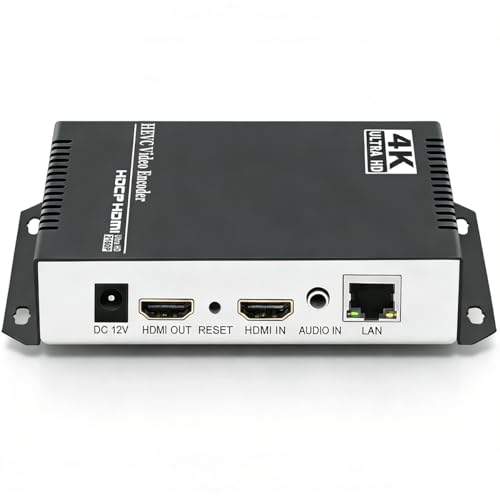
- 4K UHD input with H.265/H.264 dual encoding
- Simultaneous output to multiple streaming protocols
- Overlay, cropping, rotation, and audio controls
Best For: Multi-platform live streaming and branded AV distribution
Portable SRT Pick
DDMALL AVC-2K Mini 1080P Encoder

- Pocket-size HDMI encoder with 2.4W power use
- 1080P60 input and 1080P30 output
- Supports SRT, RTMP, RTMPS, HLS, RTSP, UDP
Best For: Mobile and compact streaming setups
4K Multi-Platform Pick
URayCoder UHE265-4-4K Multi-Protocol Encoder
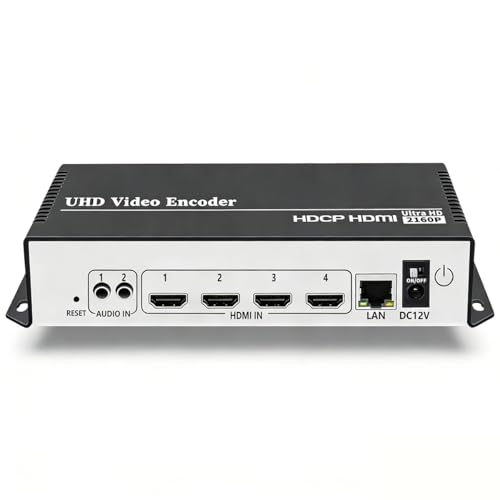
- 4K UHD input with H.265/H.264 dual encoding
- Up to 4 simultaneous output streams
- Wide support for HTTP, RTSP, RTMPS, SRT, HLS, WebRTC
Best For: Multi-platform 4K streaming workflows
Multi-Channel Broadcast Pick
ORIVISION EH1304 4-Channel 4K Encoder

- Four HDMI inputs plus four audio inputs
- Streams to up to 16 feeds simultaneously
- LCD screen and built-in RTMP server
Best For: Multi-camera broadcasts and IPTV distribution
HDMI Encoder Pick – URayCoder 1080p60 Multi-Protocol Streamer
If you’re comparing hardware live streaming encoders for a simple HDMI workflow, this URayCoder unit is built around broad protocol support and flexible output control. It accepts HDMI sources up to 1080p60 and can push streams to major platforms and servers using multiple formats, making it a practical fit for compact live production setups.
Best For: HDMI-based streaming to multiple platforms with customizable overlays and low-latency network output.
Pros:
- Supports H.265/H.264 encoding with 1080p input and output at up to 60fps.
- Can output up to 4 streams with different protocols at the same time.
- Works with RTSP, RTMP(S), SRT, HLS, UDP, RTP, ONVIF, and more.
- Allows text, scrolling captions, logos, timestamps, cropping, rotation, flipping, and mirroring.
Cons:
- Single HDMI input limits it to one source.
- Designed for encoding and streaming, not full production switching.
- Audio options are limited to HDMI embedded audio or line-in.
This is a strong choice if you want a straightforward encoder with deep protocol support and branding controls rather than a more complex all-in-one system. It should suit users who need reliable network streaming from one HDMI source and want room to tailor the output.
All-in-One Production Pick – Magewell Director One 7" Touch Switcher
For buyers who want hardware live streaming encoders that do more than encode, the Magewell Director One is a true all-in-one production box. It combines switching, encoding, recording, monitoring, and streaming in one standalone unit, with a built-in AMOLED touchscreen and support for multiple HDMI and IP inputs.
Best For: Mobile or fixed live production that needs switching, streaming, and recording in one device.
Pros:
- All-in-one system with switching, encoding, recording, monitoring, and streaming.
- Supports up to 2 HDMI, 2 USB-A, and 3 simultaneous IP sources.
- Built-in 7-inch AMOLED touchscreen for scene control and monitoring.
- Offers H.264/H.265 hardware encoding up to 1080p60 plus multi-destination streaming.
Cons:
- More complex than a basic encoder if you only need one stream output.
- Higher feature count may be unnecessary for simple HDMI-to-IP tasks.
- Battery and connectivity options are geared toward production use, not minimal setups.
This model stands out when you need an integrated production workflow instead of a single-purpose encoder. It is especially appealing if you want on-device control, scene building, and the ability to stream and record without relying on a PC.
SDI Encoder Pick – URayCoder 3G-SDI 1080p Live Output
If your workflow starts with SDI gear, this URayCoder model is a practical hardware live streaming encoder for converting 3G SDI sources into network streams. It supports a wide list of protocols and can push up to four simultaneous streams, which makes it useful for broadcast-style distribution and multi-platform delivery.
Best For: SDI source encoding for broadcast-style streaming and multi-server output.
Pros:
- Accepts SDI input and is designed for devices with SDI output.
- Supports H.265/H.264 encoding with 4 simultaneous video streams.
- Works with HTTP, RTSP, RTMP(S), SRT, HLS, UDP, RTP, ONVIF, and more.
- Includes text, scrolling text, logo, time, and video adjustment options.
Cons:
- Single SDI port limits source flexibility.
- No built-in switching or touchscreen production controls.
- Best suited to SDI workflows, so HDMI users will need another model.
For SDI-based setups, this encoder offers the protocol variety and multi-stream support that matter most. It is a good fit when you need dependable network output from a broadcast camera or SDI source without extra production hardware.
Compact Production Pick – Magewell Director Mini 5.5" Touch
The Magewell Director Mini is a compact option in the hardware live streaming encoders category for users who want a small standalone production tool. It combines switching, encoding, recording, and streaming in one device, while still supporting multiple HDMI, USB, and IP sources plus on-device scene control.
Best For: Portable live production with multi-source switching in a compact form factor.
Pros:
- Standalone system with switching, encoding, recording, monitoring, and streaming.
- Supports up to 2 HDMI, 2 USB-A, and 3 simultaneous IP sources.
- Built-in 5.44-inch AMOLED touchscreen for direct scene control.
- Offers H.264/H.265 encoding up to 1080p60 with simultaneous streaming and recording.
Cons:
- Smaller screen than the Director One may be less comfortable for detailed monitoring.
- Compact design may suit lighter productions better than larger studio builds.
- USB modem cellular support requires an external modem, which is not included.
This model is a strong match if you need Magewell’s production features in a smaller footprint. It keeps the same core multi-source workflow while making portable and field use easier to manage.
Compact 1080P60 IP Encoder – 1080P60 HDMI encoder with broad protocol support
If you want hardware live streaming encoders that keep setup simple while delivering solid performance, this 1080P60 HDMI unit is built for straightforward IP video distribution. Its dedicated H.265/H.264 hardware encoding, broad protocol support, and browser-based configuration make it a practical fit for live broadcasts, monitoring, and digital signage.
Best For: Live broadcasters, AV teams, and integrators who need a compact 1080P60 encoder with wide protocol compatibility.
Pros:
- Hardware H.265/H.264 encoding at 1080P60 for broadcast-quality output
- Supports SRT, RTMP, RTSP, RTMPS, UDP, HTTP, HLS, WebRTC, TRTC, Icecast, and SHOUTcast
- Web UI setup works in a browser with no software or driver installation
- Compact, low-power design suits 24/7 use and tight installs
Cons:
- 1080P60 output may not be enough if you need a 4K workflow
- Single HDMI input limits use cases to one source at a time
- No plug included, so power planning matters for deployment
Overall, this encoder covers the core needs of dependable live streaming without adding complexity. It stands out for protocol flexibility and easy web-based control, especially when you need one box to feed multiple distribution endpoints.
Portable 4K NDI HX3 Stream Box – 4K NDI HX3 encoder/decoder with passthrough
Among hardware live streaming encoders, this ZowieBox stands out for users who want a compact 4K-capable device that can switch between encoding and decoding modes. It combines native NDI HX3 certification, passthrough capture, and web-based control, making it a versatile option for gaming, PTZ workflows, and point-to-point HDMI transmission.
Best For: Streamers and AV users who need a compact NDI HX3 device with encoding, decoding, and pass-through options.
Pros:
- Native NDI HX3 certified support with low-delay streaming
- 4K capture with zero-lag passthrough and up to 4K@30 or 1080p@60 decoding support
- Can operate as either an encoder or decoder, plus HDMI extender use with two units
- Web UI management includes preview, OSD, tally light, and PTZ controls
Cons:
- Cannot encode and decode at the same time
- USB capture card function is not currently supported
- Does not support full NDI signals, only NDI HX modes
This is a flexible pick when you need more than a basic encoder and want NDI-focused connectivity in a small footprint. The tradeoff is mode switching rather than simultaneous encoder/decoder operation, but the feature set is strong for hybrid streaming setups.
4K Multi-Platform Encoder – 4K HDMI encoder with multi-protocol output
If you’re comparing hardware live streaming encoders for a more demanding workflow, this URayCoder model offers a strong mix of 4K input support, multi-protocol output, and stream customization. It is built for users who want one encoder to handle distribution to platforms like YouTube, Facebook, Twitch, and Vimeo with minimal setup.
Best For: Multi-platform streamers and AV teams that need 4K input, flexible stream formats, and custom overlays.
Pros:
- Supports 4K UHD input up to 30fps and higher frame rates at lower resolutions
- Can output multiple streams at once using RTMP(S), SRT, HLS, RTSP, WebRTC, TRTC, and more
- Includes static text, scrolling captions, logos, timestamps, and image adjustment tools
- Supports HDMI embedded audio plus line-in audio for more flexible audio setups
Cons:
- 4K support is limited to 30fps at maximum resolution
- Feature set may be more than needed for simple single-platform streaming
- Setup is easier than some pro tools, but it still has many configurable options to manage
For users who want broad compatibility and real stream-shaping tools, this encoder is one of the more capable choices in the category. Its biggest advantage is the ability to push multiple protocols simultaneously while still giving you control over branding and signal formatting.
Portable SRT Pick – DDMALL AVC-2K Mini 1080P Encoder
If you need a practical hardware live streaming encoder for compact setups, the DDMALL AVC-2K focuses on portability, low power draw, and flexible protocol support. It is built for HDMI sources that need stable 1080P streaming with low latency, whether you are broadcasting from a camera, PC, drone, or NVR.
Best For: Mobile creators, small studios, worship streams, and compact installs that need remote management.
Pros:
- Ultra-compact design at 2.95 x 1.26 x 0.87 inches and just 1.13 oz.
- Low 2.4W power use with USB or HDMI-source power options.
- Supports 1080P60 input with stable 1080P30 encoding output.
- Works with SRT, RTMP, RTMPS, HLS, RTSP, and UDP.
Cons:
- Encoding output tops out at 1080P30 rather than 4K.
- Best suited to single-source workflows rather than multi-channel production.
- Advanced cloud and private-cloud features may require extra setup support.
This encoder stands out when portability and simple deployment matter more than raw channel count. The dual-stream and cloud-management features make it a strong fit for users who want a small device with serious workflow flexibility.
4K Multi-Platform Pick – URayCoder UHE265-4-4K Multi-Protocol Encoder
For buyers comparing hardware live streaming encoders with 4K input support and broad platform compatibility, this URayCoder model is built around flexible network delivery. It handles HDMI-to-IP streaming with a wide protocol list and can push multiple streams at once, making it useful for more demanding live production workflows.
Best For: Teams that want 4K-capable streaming with multi-protocol output and platform flexibility.
Pros:
- Supports 4K UHD input at up to 30fps, plus 2K at up to 120fps.
- Can output up to 4 video streams with different protocols.
- Works with HTTP, RTSP, RTMP(S), SRT, HLS, WebRTC, and more.
- Includes editing tools like logos, timestamps, cropping, rotation, and mirroring.
Cons:
- Single HDMI port limits it to one input source.
- Larger and heavier than compact mini encoders.
- Feature depth may be more than casual streamers need.
This is a strong choice if your priority is protocol variety and 4K-capable input rather than a tiny footprint. The ability to send multiple simultaneous streams makes it especially appealing for users who distribute one source to several destinations.
Multi-Channel Broadcast Pick – ORIVISION EH1304 4-Channel 4K Encoder
If you need hardware live streaming encoders for multi-camera production, the ORIVISION EH1304 is designed for serious channel density. With four HDMI inputs, extra audio jacks, and support for up to 16 total platform feeds, it is aimed at broadcast-style workflows rather than simple one-camera streaming.
Best For: Multi-camera live broadcast setups, IPTV systems, and head-end distribution.
Pros:
- Four HDMI inputs with four external audio input jacks.
- Can stream up to 16 platform feeds at once.
- Supports 2CH 4K@30Hz plus 2CH 1080P@60Hz input/output.
- Includes LCD status display, RTMP built-in server, and OSD tools.
Cons:
- More complex than a basic single-input encoder.
- Best value depends on actually using multiple channels and feeds.
- Heavier and less portable than mini streaming encoders.
This model makes the most sense when one encoder needs to cover several sources and several destinations at the same time. Its screen, multi-input design, and broad protocol support make it well suited to structured broadcast or IPTV environments.
How We Picked the Best Hardware Live Streaming Encoders
We focused on encoder stability, supported resolutions, input types, protocol coverage, and how well each model fits real-world streaming workflows. Priority went to units that support common delivery standards like RTMP, RTMPS, SRT, HLS, RTSP, and WebRTC, since those determine where and how you can stream.
We also considered whether a device is built for simple one-source streaming or for more advanced production with switching, monitoring, recording, and multiple inputs. That distinction matters because not every buyer needs the same level of control.
Quick Comparison
If you want the simplest setup, a compact HDMI encoder is usually the fastest path to going live. If you need more flexibility for cameras, presenters, or live event switching, an all-in-one production encoder can reduce the amount of gear you need to carry and wire.
For higher-end workflows, look for models with 4K support, SDI compatibility, multiple network protocols, and hardware encoding that keeps the stream stable under load.
Key Buying Factors for Hardware Live Streaming Encoders
Input Type and Signal Compatibility
Match the encoder to your source. HDMI works well for cameras, laptops, and switchers, while SDI is better for longer cable runs and pro video rigs. Some hybrid units support both, which can simplify setup.
Resolution, Frame Rate, and Codec Support
For most live use, 1080p60 is the sweet spot. If you need future-proofing or production flexibility, choose 4K-capable hardware. H.264 is still the broadest compatibility option, while H.265 can improve efficiency when bandwidth is limited.
Streaming Protocols
Make sure the encoder supports the destinations and platforms you use. SRT is excellent for reliable contribution links, RTMP/RTMPS is common for social platforms, and HLS or WebRTC can help with broader distribution or lower-latency playback.
Monitoring, Control, and Reliability
Built-in screens, touch controls, preset profiles, and cloud or web management can save time during live production. Hardware Live Streaming Encoders are most valuable when they keep running consistently, so stable thermal design and straightforward configuration should matter as much as feature count.
Who Should Buy Which Hardware Live Streaming Encoders?
If you are a solo creator or small team, a compact HDMI encoder is often the best value. If you need switching, recording, and streaming in one box, an all-in-one production encoder is a better fit. For pro AV, houses of worship, and event venues, prioritize SDI support, multi-protocol output, and models designed for dependable always-on operation.
For multi-camera workflows or distribution to several endpoints, choose a higher-channel unit or a device with multi-output networking features. The best choice is the one that matches your source, your platform, and your bandwidth, not simply the one with the longest spec sheet.