When floor space is limited, a robot vacuum should reduce cleaning work without adding a bulky dock or complicated setup. The best compact models combine efficient navigation, strong pickup, and storage-friendly designs.
We compared 10 space-saving robot vacuum cleaners across suction power, navigation, dust handling, mopping features, battery life, and dock size to help you choose the right fit for your home.
Best 10 Space-Saving Robot Vacuum Cleaners Picks for 2026
Best Dockless Pick
iRobot Roomba 205 DustCompactor
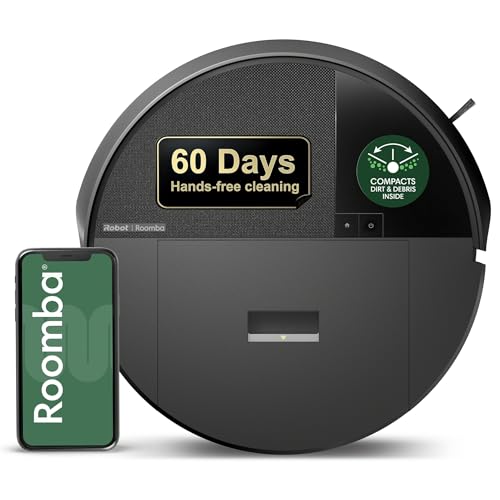
- Dockless, bagless design saves floor space
- Compresses debris for up to 60 days
- LiDAR mapping and adjustable suction
Best For: Small homes and apartments needing long intervals between emptying
Best Ultra-Slim Value
Tikom G8000 Max Robot Vacuum and Mop

- Only 3 inches high for low-clearance areas
- 5000Pa suction and simultaneous mopping
- Up to 150 minutes in quiet mode
Best For: Budget-conscious homes with low furniture and mixed floors
Best Premium Cleaning
Roborock Q10 S5+ Robot Vacuum and Mop

- 10,000Pa suction for carpets and pet hair
- Self-empties for up to 70 days
- LiDAR mapping with auto mop lifting
Best For: Pet owners wanting powerful, low-maintenance cleaning
Best Bagless Self-Emptying

- Bagless base holds up to 60 days
- Strong suction and self-cleaning brushroll
- LiDAR and Matrix Clean navigation
Best For: Pet owners wanting hands-free, bag-free debris storage
Best Budget 2-in-1
Compact S1 Robot Vacuum and Mop

- 5,200Pa suction with three power levels
- Vacuuming and adjustable electronic mopping
- App, remote, and voice control
Best For: Pet owners and smaller homes needing vacuum-and-mop automation
Best for Smart Navigation

- ClearView LiDAR mapping and neat-row cleaning
- Up to 200 minutes of battery life
- Recharge-and-resume with keep-out zones
Best For: Multi-room homes prioritizing precise navigation and vacuum-only cleaning
Best Hands-Free Option

- 3L dock supports up to 90 days between bag changes
- 6,000Pa suction with automatic carpet boost
- LiDAR mapping, no-go zones, and mopping
Best For: Busy pet owners with mixed floors and multiple rooms
Best for Pet-Hair Performance

- 30,000Pa suction with Carpet Boost
- Anti-tangle brushes for pet hair
- Up to 90 days of self-emptying
Best For: Pet owners and busy homes needing powerful, low-maintenance vacuuming
Best Compact Combo Value

- Vacuum-and-mop cleaning in one pass
- LiDAR navigation with No Mop Zones
- Up to 900 sq. ft. per charge
Best For: Small to medium homes needing adjustable vacuuming and light mopping
Best Low-Maintenance Mopping

- 46% slimmer design for under-furniture cleaning
- 20,000Pa suction and spinning mop pads
- 90-day emptying plus self-washing dock
Best For: Pet households wanting automated vacuuming, mopping, and dock upkeep
Best Dockless Pick – iRobot Roomba 205 DustCompactor
The iRobot Roomba 205 is one of the most space-saving robot vacuum cleaners for homes where a conventional auto-empty dock would be difficult to place. Its built-in DustCompactor stores compressed debris inside the robot for up to 60 days, while LiDAR mapping, adjustable suction, and multi-surface cleaning support everyday floor care.
Best For: Small homes, apartments, and shoppers who want extended debris storage without a bulky base station.
Pros:
- Dockless, bagless design helps minimize floor-space requirements.
- Built-in compactor can hold debris for up to 60 days.
- LiDAR navigation maps rooms and supports orderly cleaning, even in the dark.
- Four suction levels and a multi-surface brush accommodate different cleaning tasks.
Cons:
- Debris remains inside the robot, so the onboard container still needs occasional emptying.
- The listed battery details vary between the advertised runtime and specification information.
The Roomba 205 stands out when saving space is more important than having an automated emptying base. It combines a compact footprint with long intervals between manual emptying, making it a practical choice for smaller living spaces.
Best Ultra-Slim Value – Tikom G8000 Max Robot Vacuum and Mop
The Tikom G8000 Max is a practical choice among space-saving robot vacuum cleaners because its 3-inch height lets it clean beneath many beds, sofas, and cabinets. It combines vacuuming and mopping, offers up to 150 minutes of runtime in quiet mode, and uses sensors to help navigate around obstacles and stairs.
Best For: Budget-conscious households that need an ultra-slim vacuum-and-mop combo for hard floors, carpets, and pet hair.
Pros:
- Ultra-slim 3-inch profile can reach under low furniture.
- 5000Pa suction targets dust, debris, and pet hair.
- Vacuuming and mopping can run together to reduce cleaning time.
- App, remote, voice, and button controls offer flexible operation.
Cons:
- The 450 ml dustbin and 300 ml water tank require regular attention.
- Its navigation uses anti-collision and anti-fall sensors rather than LiDAR mapping.
For shoppers prioritizing low clearance over advanced mapping, the G8000 Max offers useful everyday versatility. Its slim body is especially helpful when furniture clearance is limited, though the smaller onboard capacities mean more hands-on maintenance than a self-emptying model.
Best Premium Cleaning – Roborock Q10 S5+ Robot Vacuum and Mop
The Roborock Q10 S5+ is designed for households that want strong cleaning performance and reduced maintenance, although its self-emptying station needs more room than a dockless robot. It delivers 10,000Pa suction, dual-zone sonic mopping, LiDAR navigation, and a 2.7-liter dust bag rated for up to 70 days of cleaning.
Best For: Pet owners and larger households that can accommodate a self-emptying station and want advanced vacuuming and mopping features.
Pros:
- 10,000Pa suction tackles embedded pet hair, crumbs, and debris.
- Self-emptying station provides up to 70 days of maintenance-free cleaning.
- LiDAR supports detailed maps and multi-level navigation.
- Auto mop lifting and carpet detection help manage transitions between floor types.
Cons:
- The self-emptying dock takes more space than a dockless or compact-base design.
- Disposable dust bags add an ongoing consumable requirement.
- Its feature-rich system may be more than smaller homes need.
The Q10 S5+ is best when cleaning power and hands-off maintenance outweigh the need for the smallest possible setup. Consider its station footprint carefully, but its high suction, obstacle avoidance, and long dust-bag interval make it a capable premium option.
Best Bagless Self-Emptying – Shark AI Ultra Robot Vacuum
The Shark AI Ultra is a strong option for shoppers seeking space-saving robot vacuum cleaners with extended hands-free cleaning, provided there is room for its XL self-empty base. The bagless base holds up to 60 days of debris, while Matrix Clean navigation, LiDAR mapping, and a self-cleaning brushroll support whole-home and pet-hair cleaning.
Best For: Pet owners who want powerful carpet-and-hard-floor cleaning without buying replacement disposal bags.
Pros:
- Bagless self-emptying base stores up to 60 days of dirt and debris.
- Strong suction and a self-cleaning brushroll are suited to pet hair.
- Matrix Clean makes multiple passes over messes for broader coverage.
- LiDAR mapping supports precise navigation and object detection, even in the dark.
Cons:
- The XL base has a larger footprint than a dockless robot.
- Runtime is listed at up to 90 minutes, which is shorter than some alternatives.
- The bagless base still needs manual debris disposal.
The Shark AI Ultra balances reduced maintenance with a bag-free emptying system and strong pet-hair features. It is a sensible choice for homes that can spare docking space but want to avoid replacement bags and frequent bin emptying.
Best Budget 2-in-1 – Compact S1 Robot Vacuum and Mop
The ROPVACNIC S1 is a practical option for shoppers seeking space-saving robot vacuum cleaners with both vacuuming and mopping in one compact, round design. Its 5,200Pa suction, app and voice controls, and 120-minute battery life make it suited to routine cleaning on hard floors and low-pile carpets.
Best For: Pet owners and households that want affordable automated vacuuming and adjustable mopping.
Pros:
- Combines vacuuming with electronically controlled mopping and adjustable water flow.
- 5,200Pa suction, three power levels, and a pet-hair-focused no-entanglement design.
- Supports app, remote, and Alexa or Google Assistant voice control, with automatic recharging.
Cons:
- Its 120-minute battery life is shorter than some larger-capacity models.
- Designed for hardwood floors and low-pile carpets rather than a broad range of carpet heights.
The S1 stands out when you want a relatively compact cleaner that handles everyday debris and light mopping without adding separate appliances. It is a sensible fit for smaller homes and pet households, provided its surface coverage matches your floors.
Best for Smart Navigation – Roomba 105 Vac Robot
The iRobot Roomba 105 Vac is a strong candidate among space-saving robot vacuum cleaners for shoppers who prioritize organized navigation and simple controls. ClearView LiDAR mapping, neat-row cleaning, and a slim 4.1-inch height help it navigate rooms while supporting targeted and scheduled cleaning.
Best For: Homes that need precise room mapping, targeted cleaning, and long battery runtime without mopping.
Pros:
- LiDAR navigation maps the home, supports keep-out zones, and helps the robot clean in neat rows.
- Claims 70X more power-lifting suction than Roomba 600 series robots, with a three-stage cleaning system.
- Offers app, button, and compatible voice-assistant control, plus recharge-and-resume cleaning.
- Up to 200 minutes of battery life supports longer cleaning sessions.
Cons:
- It is a vacuum-only model and does not provide mopping.
- Wi-Fi setup and operation use a 2.4GHz network.
The Roomba 105 is a particularly convenient choice when navigation and coverage matter more than combination features. Its low profile, mapping tools, and recharge-and-resume behavior make it well suited to maintaining multiple rooms with limited supervision.
Best Hands-Free Option – S6 Pro Self-Emptying Robot
The S6 Pro is a feature-rich pick among space-saving robot vacuum cleaners, combining LiDAR mapping, vacuuming, mopping, and self-emptying in a relatively low 3.87-inch robot height. Its dock stores debris in a 3L bag for up to 90 days between changes, reducing routine maintenance for busy households.
Best For: Pet owners and multi-room homes that want extended hands-free cleaning across carpets and sealed hard floors.
Pros:
- LiDAR smart mapping supports room-by-room cleaning, schedules, and no-go zones.
- 6,000Pa suction, four levels, and automatic carpet boost help address pet hair and fine debris.
- Vacuum-only, mop-only, and combined modes work across low-pile carpet and several hard-floor surfaces.
- Self-emptying dock with a 3L dust bag can provide up to 90 days between bag changes.
Cons:
- Requires 2.4GHz Wi-Fi for app-based control.
- The self-emptying station requires replacement dust bags.
- Its 160-minute battery life is below the listed runtime of some vacuum-only models.
The S6 Pro offers the most hands-off maintenance of these options while still fitting under low-clearance furniture better than many taller robots. Choose it if self-emptying and detailed floor mapping are worth prioritizing, especially in homes with pets or mixed flooring.
Best for Pet-Hair Performance – Roomba Max 715 Pet
For shoppers comparing space-saving robot vacuum cleaners for a busy home with pets, the Roomba Max 715 Pet emphasizes powerful pickup, obstacle avoidance, and low-touch maintenance. Its dual rubber brushes, 30,000Pa suction, LiDAR mapping, and self-emptying dock are designed for carpets, hard floors, and recurring pet-related messes.
Best For: Pet owners and busy households that want strong vacuuming with up to 90 days of hands-free dust storage.
Pros:
- 30,000Pa suction and Carpet Boost support deeper cleaning on rugs and carpets.
- Dual rubber brushes and an edge-sweeping brush help reduce hair wrap and reach corners.
- ClearView Pro LiDAR and PrecisionVision AI help it map rooms and avoid common obstacles.
- AutoEmpty uses odor-control AllergenLock bags for up to 90 days of hands-free operation.
Cons:
- Its feature-rich system may be more than needed for smaller, simpler spaces.
- The supplied notes focus on vacuuming rather than mopping capability.
The Max 715 Pet is a strong choice when pet hair, carpets, and reduced maintenance matter most. It combines advanced navigation with substantial suction, while the dock limits how often you need to handle collected debris.
Best Compact Combo Value – Roomba 115X Combo
The Roomba 115X Combo is a practical option among space-saving robot vacuum cleaners for small to medium-sized homes. It vacuums and mops in one pass, uses LiDAR to navigate multi-room layouts, and includes controls for suction, cleaning passes, and mopping intensity.
Best For: Small to medium-sized homes that need straightforward vacuuming and light mopping in a compact robot.
Pros:
- 15,000Pa suction combines with a washable microfiber pad for everyday cleaning.
- LiDAR mapping supports orderly rows and navigation in low light.
- A No Mop Zone helps protect rugs while the robot mops sealed hard floors.
- Four suction levels, two cleaning-pass choices, and three water or solution levels add flexibility.
Cons:
- Its stated coverage is up to 900 square feet per charge, limiting suitability for larger homes.
- The dock recharges the robot but does not provide the self-emptying or mop-washing functions found on some higher-end models.
- Setup requires 2.4GHz Wi-Fi.
Choose the 115X Combo if you want a relatively compact vacuum-and-mop setup without moving into a more elaborate dock system. Its washable pad and adjustable modes suit routine upkeep, while LiDAR and carpet-protection settings make mixed-floor cleaning easier.
Best Low-Maintenance Mopping – Roomba Plus 415X
For households seeking space-saving robot vacuum cleaners that can handle both dry debris and wet messes, the Roomba Plus 415X offers an automated cleaning dock and a slimmer design. It combines 20,000Pa suction with spinning mop pads, intelligent mop lifting, and automatic pad washing and drying.
Best For: Pet households and mixed-floor homes that want hands-off vacuuming, mopping, and dock maintenance.
Pros:
- A 46% slimmer design fits under more furniture than the referenced Roomba 105.
- 20,000Pa suction, tangle-free rubber brushes, and SmartScrub target pet hair and stubborn messes.
- The dock empties debris for up to 90 days, refills water, and washes and heat-dries mop pads.
- Mop pads lift 10mm over rugs to help keep carpets dry during mixed-floor runs.
Cons:
- The multifunction dock requires space for more than the robot itself.
- Its advanced washing, drying, and water-management features may be unnecessary for vacuum-only buyers.
The 415X stands out for reducing daily chores rather than simply automating floor coverage. Its slimmer body helps it reach beneath furniture, while the self-maintaining dock and rug-aware mopping make it particularly convenient for homes with pets and hard floors.
How We Picked the Best Space-Saving Robot Vacuum Cleaners
We focused on the features that matter most in smaller homes, apartments, and rooms with limited clearance. Our comparison considers the robot’s overall footprint, whether it needs a large docking station, dustbin capacity, emptying frequency, navigation technology, cleaning performance, and control options.
We also included a range of designs: compact robots without conventional docks, models with self-emptying bases, vacuum-and-mop combinations, and higher-suction options for homes with pets or carpets. Product claims such as runtime, suction, and hands-free cleaning should be treated as manufacturer specifications and may vary with floor type and settings.
Quick Comparison
- Smallest storage requirement: The iRobot Roomba 205 DustCompactor is designed to compact debris inside the robot and does not require a conventional dock.
- Best for hands-free emptying: Models with 60- or 90-day self-emptying docks reduce routine dustbin maintenance, but their bases require additional floor space.
- Best for pet hair: Look for strong suction, rubber or anti-tangle brushes, and a large dust-handling system.
- Best for mixed cleaning: Combo models can vacuum and mop, although their water tanks and maintenance needs add complexity.
- Best for navigation: LiDAR-equipped models generally offer more systematic mapping and room-to-room control.
Key Buying Factors for Space-Saving Robot Vacuum Cleaners
Robot and Dock Dimensions
Measure both the robot and its dock, including the clearance needed in front and above the base. A self-emptying station may be convenient but can occupy substantially more space than the vacuum itself. Check whether the dock can fit under furniture, beside a cabinet, or against a wall without blocking traffic.
Dustbin Capacity and Emptying
A compact robot may have less internal storage, while a self-emptying base shifts debris into a larger bag or container. If you lack closet or floor space, a dockless compaction design can be more practical. If you prioritize minimal maintenance, choose a model with an extended emptying interval.
Navigation and Obstacle Handling
LiDAR mapping is useful for creating room maps, setting no-go zones, and cleaning efficiently. Regardless of navigation type, compare obstacle avoidance, edge cleaning, and the robot’s ability to cross thresholds or reach low-clearance areas.
Cleaning and Mopping Performance
Higher advertised suction can help with carpet and pet debris, but brush design and airflow also matter. For mopping, check whether the pad is washable, whether the robot lifts it over carpet, and how often the tank and pad must be cleaned.
Who Should Buy Which Space-Saving Robot Vacuum Cleaners?
Choose the Roomba 205 if saving floor and dock space is your top priority. Select a self-emptying model if you want fewer manual emptying sessions and have room for its base. LiDAR models suit buyers who want dependable mapping and room-specific schedules, while high-suction Roomba and Roborock options are better suited to pets, rugs, and heavier debris. For hard-floor homes that want one device for routine vacuuming and light mopping, a combo model from Tikom, ROPVACNIC, or iRobot may offer the most flexibility.
Before buying, confirm the dock dimensions, replacement filter and bag costs, app compatibility, warranty coverage, and the maintenance required for brushes, sensors, mop pads, and water tanks.