The best professional keyboard workstations combine expressive keybeds, powerful sound engines, deep sequencing, and performance-ready control in one instrument. This roundup compares 10 standout options for studios, stages, and serious home setups.
From flagship synthesizers and weighted 88-key models to arranger workstations and controller keyboards, the right choice depends on your playing style, workflow, portability needs, and reliance on software.
Best 10 Professional Keyboard Workstations Picks for 2026
Flagship Expression

- 88-key GEX action with Polyphonic Aftertouch
- 400-note polyphony across three sound engines
- Seamless Sound Switching and dedicated performance controls
Best For: Professional performers and producers who prioritize expressive control
Streamlined Performance Hub

- 76-note keyboard in a portable workstation format
- ZEN-Core and SuperNATURAL sound technologies
- Touchscreen, RGB pads, sliders, and synth controls
Best For: Performers and producers wanting broad sounds with hands-on control
Classic Workstation Depth
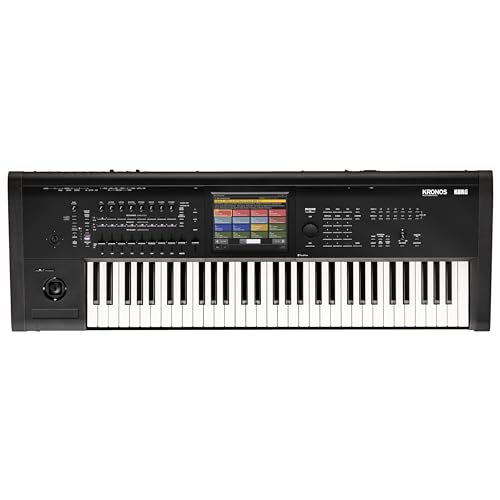
- Nine sound engines for broad sonic flexibility
- Natural Touch semi-weighted 61-key action
- 8-inch TouchView display, ribbon, and joystick controls
Best For: Players seeking deep workstation features in a 61-key format
Portable Production Power

- 13-pound 61-note workstation for easy transport
- Sampling, clip sequencing, and extensive effects
- 4x32 USB audio interface with major DAW integration
Best For: Mobile producers and performers needing flexible production tools
Versatile Arranger

- 370+ music styles and 1,700+ sounds
- Built-in MP3 player with vocal remover
- Two 25W speakers and 61 velocity-sensitive keys
Best For: Intermediate performers needing onboard accompaniment and speakers
Software Controller

- 88 semi-weighted Fatar keys
- Polyphonic aftertouch and NKS integration
- Full-color screen for browsing and control
Best For: Computer-based production with Kontakt and NKS software
Expressive Flagship
Korg Nautilus 88-Key Workstation

- Weighted hammer action with aftertouch
- Nine sound engines and advanced effects
- Advanced sequencer and intuitive Set List Mode
Best For: Performers needing piano-style action and deep workstation features
Flagship Performance

- 88 weighted-action keys with piano-focused response
- Thousands of sounds and deep onboard sampling
- Advanced sequencing, DAW integration, and connectivity
Best For: Serious performers, producers, and composers needing a comprehensive workstation
Portable Production

- Compact 61-key synth-action workstation
- Step and MIDI sequencers included
- Mic/line inputs and onboard audio recorder
Best For: Portable composing, sequencing, and synth-focused performance
Weighted Workstation Value

- 88-key natural weighted hammer-action keybed
- Step and MIDI sequencers for composition
- Mic/line inputs and onboard audio recorder
Best For: Piano-oriented players wanting integrated workstation features
Flagship Expression – Yamaha MONTAGE M8X
The Yamaha MONTAGE M8X is a premium choice for professional keyboard workstations, combining an 88-key GEX action keyboard with Polyphonic Aftertouch and three powerful sound engines. Its deep controls and large, stage-ready design suit players who want expressive performance control and extensive sound-shaping options.
Best For: Performers and producers seeking a flagship 88-key workstation with expressive control.
Pros:
- 400-note total polyphony across three engines
- AN-X engine provides detailed analog-style synthesis and modulation
- Polyphonic Aftertouch allows pressure control on individual held notes
- Seamless Sound Switching supports smooth transitions between sounds
Cons:
- Large 61.9-pound chassis may be difficult to transport
- Premium flagship design may be more capability than casual players need
The MONTAGE M8X stands out when expressive key response and sophisticated synthesis matter most. Its dedicated performance controls and Expanded Softsynth Plugin also make it a strong centerpiece for a studio or professional live rig.
Streamlined Performance Hub – Roland FANTOM-07
The Roland FANTOM-07 is a flexible option among professional keyboard workstations, pairing a 76-note keyboard with thousands of electronic and acoustic sounds. Its touchscreen, pads, sliders, and dedicated synth controls support hands-on creation in the studio or onstage.
Best For: Players who want a versatile 76-key workstation with modern performance controls.
Pros:
- 76-note keyboard balances range with a more streamlined format
- ZEN-Core and SuperNATURAL technologies cover electronic and acoustic sounds
- Color touchscreen, RGB pads, knobs, and sliders encourage hands-on workflow
- New SuperNATURAL pianos provide acoustic-grand-style sound and response
Cons:
- Its 24.2-pound weight is lighter than many full-size workstations but still substantial for frequent travel
- The supplied notes do not specify detailed onboard sampling or audio I/O features
With a broad sound library and an interface designed around direct manipulation, the FANTOM-07 is a practical middle ground for creators who need workstation depth without moving to an 88-key instrument.
Classic Workstation Depth – Korg Kronos 3 61
The Korg Kronos 3 is a focused 61-key option for shoppers comparing professional keyboard workstations. It combines Natural Touch semi-weighted action with an 8-inch color TouchView display, nine sound engines, a ribbon controller, and a four-way joystick.
Best For: Keyboardists who want extensive sound-engine variety in a 61-key workstation.
Pros:
- Nine sound engines offer a broad synthesis and workstation platform
- Natural Touch semi-weighted action provides a more substantial playing feel
- 8-inch color TouchView display supports visual control of the instrument
- Ribbon controller and four-way joystick add expressive control options
Cons:
- 61 keys provide less range than 76- or 88-key alternatives
- At 39.4 pounds, it is not especially lightweight for a 61-key instrument
The Kronos 3 makes the most sense for players who value a dedicated workstation interface and multiple sound engines over maximum portability. Its control set offers useful variety for both sound design and performance.
Portable Production Power – Roland FANTOM-06
The Roland FANTOM-06 brings many professional keyboard workstations features into a lightweight 61-note design. It combines ZEN-Core, V-Piano, and SuperNATURAL sounds with sampling, sequencing, DAW integration, RGB pads, and extensive connectivity for production and performance.
Best For: Mobile producers and performers who need broad sounds, sampling, and computer integration.
Pros:
- Only 13 pounds, making it notably portable for a feature-rich workstation
- Includes deep sampling, multisample support, effects, and a Master FX processor
- Clip-based sequencing, TR-REC, and piano-roll editing support varied workflows
- 4×32 USB audio interface and integration with Logic Pro, MainStage, and Ableton Live
Cons:
- 61-note range may not suit players who need a larger keyboard span
- Plastic construction may feel less substantial than a metal-cased flagship
- Its extensive feature set may require time to learn fully
The FANTOM-06 is a strong choice when portability and production flexibility are priorities. Its sampling tools, sequencing workflow, connectivity, and Roland Cloud expansion options give it unusual range for a lightweight instrument.
Versatile Arranger – Korg Pa700 61-Key Workstation
The Korg Pa700 is a practical choice among professional keyboard workstations for performers who want built-in accompaniment, broad sound selection, and straightforward live-use features. Its 61 velocity-sensitive keys, 370-plus music styles, and more than 1,700 sounds support a wide range of playing setups.
Best For: Intermediate players, live performers, and entertainers who want an arranger workstation with onboard speakers and accompaniment styles.
Pros:
- Includes more than 370 built-in music styles and 1,700-plus sounds.
- Features a built-in MP3 player with vocal remover.
- Two 25W speakers provide an integrated 50W speaker system.
- 61 velocity-sensitive keys offer a manageable performance format.
Cons:
- The 61-key layout offers less range than an 88-key workstation.
- At 31.1 pounds, it may be less convenient for frequent transport.
The Pa700 stands out when built-in accompaniment and self-contained sound are more important than a full piano-style key range. Its USB connectivity, TouchView display, and two-year warranty add practical value for stage and home use.
Software Controller – Komplete Kontrol S88 MK3
The Native Instruments S-Series Komplete Kontrol S88 MK3 is suited to professional keyboard workstations setups centered on computer-based production. Its 88 semi-weighted Fatar keys, polyphonic aftertouch, and NKS integration are designed for hands-on control of Kontakt and compatible software instruments.
Best For: Producers, composers, and keyboardists who work with Native Instruments, Kontakt, and NKS-compatible software on Windows or macOS.
Pros:
- 88 semi-weighted keys use a Fatar keybed.
- Polyphonic aftertouch supports expressive software control.
- Next-generation NKS integration connects directly with compatible instruments and effects.
- High-resolution full-color screen supports browsing, tweaking, and mixing.
Cons:
- It is a keyboard controller rather than a standalone sound workstation.
- Its 17.8 kg weight may be substantial for mobile setups.
The S88 MK3 makes the most sense when your workflow depends on a laptop or desktop and supported Native Instruments software. Buyers seeking built-in sounds without a computer should consider a standalone workstation instead.
Expressive Flagship – Korg Nautilus 88-Key Workstation
Korg Nautilus 88 Key Workstation with Aftertouch | Aftertouch for expressive control
Check Price On AmazonThe Korg Nautilus 88 is a powerful option among professional keyboard workstations for players who want realistic piano response alongside deep synthesis and sequencing features. Its weighted hammer-action keybed with aftertouch, nine sound engines, and advanced effects support detailed performance and production workflows.
Best For: Performers and producers who need an 88-key piano-style action, expressive aftertouch, extensive sounds, and onboard sequencing.
Pros:
- 88-key weighted hammer action with aftertouch provides an expressive piano-style feel.
- Nine sound engines and advanced effects cover varied musical roles.
- Advanced sequencer and Set List Mode support performance organization.
- Color-coded touchscreen controls provide quick access to sounds and sequences.
Cons:
- At 50.9 pounds, it is relatively heavy for transport.
- Its 56.57-inch width requires substantial stand and storage space.
The Nautilus 88 is a strong fit when authentic key response and workstation depth matter more than portability. Its dynamics knob also lets players adjust key sensitivity for different playing situations.
Flagship Performance – Roland FANTOM-08
The Roland FANTOM-08 is a professional keyboard workstation for players who want an 88-note weighted-action keybed, extensive sound design, and deep sequencing capabilities in one instrument. Its ZEN-Core, V-Piano, and SuperNATURAL technologies support a broad range of electronic and acoustic sounds, while the touchscreen, performance pads, and DAW integration suit studio and stage workflows.
Best For: Serious performers, producers, and composers who need weighted piano response plus advanced synthesis, sampling, sequencing, and connectivity.
Pros:
- 88-note weighted-action keybed with acoustic grand piano response.
- Thousands of electronic and acoustic sounds, plus deep onboard sampling.
- Powerful sequencing, clip-based workflow, TR-REC, piano-roll editing, and broad effects options.
- Comprehensive audio, MIDI, USB, and dual CV/gate connectivity with DAW integration.
Cons:
- At 61 pounds, it is less convenient to transport than lighter workstations.
- Its extensive feature set may take time to learn.
For buyers seeking a full-scale professional keyboard workstation, the FANTOM-08 offers an unusually broad combination of piano feel, synthesis, sampling, production tools, and performance controls.
Portable Production – Korg Kross 2-61
The Korg Kross 2-61 is a practical professional keyboard workstation for musicians who want a lighter 61-key setup with core production features. Its synth-action keybed, EDS-i sound engine, step and MIDI sequencers, audio recorder, and mic/line inputs provide a flexible foundation for composing, arranging, and performing.
Best For: Players who prioritize portability, synth-style action, and integrated sequencing and recording tools.
Pros:
- 61-key synth-action keybed supports a compact workstation setup.
- Includes step and MIDI sequencers for arranging and pattern-based creation.
- Mic/line inputs and an onboard audio recorder expand recording options.
- EDS-i sound engine provides the workstation’s core sound generation.
Cons:
- Synth action may not suit players who want weighted piano-style response.
- Its 61-key range provides less coverage than an 88-key workstation.
The Kross 2-61 is a sensible choice among professional keyboard workstations when portability and hands-on production features matter more than a full weighted keybed.
Weighted Workstation Value – Korg Kross 2-88
The Korg Kross 2-88 brings workstation functionality to players who want a full 88-key range and natural weighted hammer action. It combines mic/line inputs, step and MIDI sequencers, an EDS-i sound engine, and an audio recorder in a matte-black instrument designed for broad songwriting and performance use.
Best For: Keyboardists who need weighted hammer-action keys and integrated sequencing and recording without moving to a larger feature set.
Pros:
- 88-key natural weighted hammer-action keybed supports piano-style playing.
- Step and MIDI sequencers provide integrated composition tools.
- Mic/line inputs and an audio recorder support practical recording workflows.
- USB/MIDI connectivity supports connection with compatible equipment.
Cons:
- At 38.5 pounds, it is less portable than the 61-key Kross 2.
- The weighted keybed may feel less suited to synth-focused playing than synth action.
For players comparing professional keyboard workstations with an emphasis on piano response, the Kross 2-88 offers full-range weighted keys alongside useful sequencing, input, and recording features.
How We Picked These Professional Keyboard Workstations
We selected these models based on the features that matter most to working musicians: sound quality, key action, sequencing and arrangement tools, performance controls, connectivity, expandability, and overall workflow. The list includes full production workstations, synthesizer-focused instruments, arranger keyboards, and a dedicated controller for producers who work primarily with computer-based instruments.
We also considered practical differences between 61-key and 88-key formats, including portability, playing range, weighted action, and suitability for piano-led performance. Because these instruments serve different roles, the best workstation for one buyer may be excessive—or limiting—for another.
Quick Comparison
- Best for flagship sound design: Yamaha Montage M8X
- Best for modern all-in-one production: Roland FANTOM series
- Best for workstation depth: Korg Kronos 3
- Best for arranging and live accompaniment: Korg Pa700
- Best for software-based production: Native Instruments Komplete Kontrol S88 MK3
- Best for a broad 88-key workstation setup: Korg Nautilus 88
- Best for portability and value: Korg Kross 2
Key Buying Factors for Professional Keyboard Workstations
Key Count and Action
Choose 61 keys for easier transport, synth parts, and compact studios. An 88-key model is better for piano technique, broad arrangements, and players who want a full range without octave-shift controls. Weighted or hammer-action keys add realism but also increase size and weight. Semi-weighted or synth actions are generally faster for leads, pads, and organ-style playing.
Sound Engine and Library
Compare the instrument’s synthesis architecture, acoustic emulations, drum sounds, effects, and expansion options. Flagship models are useful when sound design is central to your work, while streamlined workstations may be preferable when you need immediate access to polished sounds.
Workflow and Sequencing
Look for the recording method you actually use: linear song arrangement, pattern-based composition, clip-style performance, or arranger-style accompaniment. A workstation with a large display, physical controls, sampling, and fast editing can reduce computer dependence, but a controller may be the better choice if your DAW is the main production hub.
Connectivity and Performance Control
Check MIDI and USB capabilities, audio interfaces, pedal inputs, outputs, storage, and compatibility with your existing setup. Aftertouch, assignable knobs, pads, scenes, and real-time control are especially valuable for expressive stage performance and hands-on sound shaping.
Who Should Buy Which Professional Keyboard Workstations?
Studio composers and sound designers should prioritize the Yamaha Montage M8X, Korg Kronos 3, or Korg Nautilus 88 for broad synthesis, sequencing, and detailed programming options. Live performers may prefer a Roland FANTOM model for its performance-oriented interface, sound variety, and flexible control.
Pianists and orchestral arrangers should focus on 88-key instruments with expressive weighted action, while mobile producers and gigging musicians may find a 61-key Korg Kross 2 or Roland FANTOM-06 easier to transport. Players who rely on accompaniment styles should consider the Korg Pa700. Finally, computer-centric producers should choose the Native Instruments S88 MK3 when premium key response and deep DAW and instrument integration matter more than built-in workstation sequencing.