Reliable monitoring can make the difference between a smooth worship set and a distracted one. The best wireless in ear monitor systems for churches help vocalists, musicians, and pastors hear clearly without fighting stage volume.
This guide focuses on practical options for church teams that want dependable audio, simple setup, and enough flexibility for rehearsal, service, and special events.
Best 10 Wireless in Ear Monitor Systems for Churches Picks for 2026
Quick-Pair Budget Pick
LEKATO MS-1 Wireless IEM for Small Church Teams
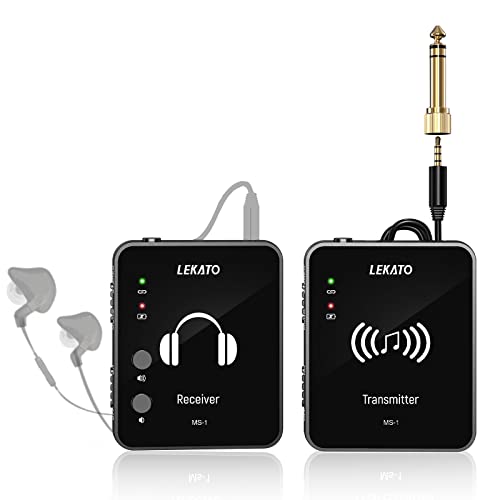
- One transmitter can pair with multiple receivers
- Auto-pairing makes setup very easy
- Stereo 2.4GHz audio with 100 ft range
Best For: Small church bands and volunteer worship teams
Tour-Ready Compact Choice
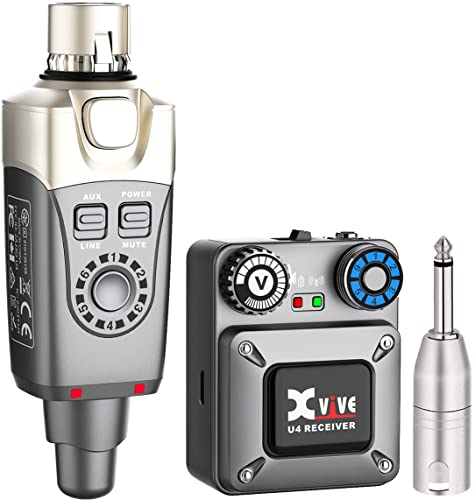
- Compact 2.4GHz wireless IEM set
- Less than 5ms latency
- Over 90 ft range with 5-hour battery life
Best For: Portable church stages and small worship teams
Rack-Mount Worship Workhorse
Phenyx Pro PTM-33-4B Quad IEM System

- Four bodypacks support multiple performers
- UHF system offers 4x25 frequencies
- Rack-mount design fits installed church setups
Best For: Church worship teams needing four separate mixes
Channel-Scan Upgrade
Xvive U45 5.8GHz Wireless IEM System

- 5.8GHz true diversity wireless design
- Channel Scan mode helps pick a clean channel
- 24-bit/48kHz audio with USB-C charging
Best For: Church musicians wanting a compact channel-scan IEM
Editor Pick

- Low-latency 2.4GHz mono/stereo monitoring
- One transmitter supports up to 4 receiver pairs
- 6-8 hour battery life with LED indicators
Best For: Church bands and smaller worship teams needing simple multi-receiver monitoring
Reliable UHF Option

- UHF mono monitoring with 50 selectable frequencies
- Separate inputs and outputs for easy routing
- Metal transmitter base with carry case and rackmount kit
Best For: Pastors, speakers, and bands wanting a stable mono UHF setup
Long-Run Pick

- Up to 10 hours of battery life with fast charging
- One transmitter supports multiple receivers, up to 6 sets
- 164 ft range with one-key mute and mono/stereo switching
Best For: Worship teams needing longer runtime and scalable receiver support
Rack-Mount 4-Pack IEM
2 Channel 4 Bodypacks Pro Mono System

- Includes 4 bodypack receivers for shared monitoring
- UHF PLL system with 2x40 preset frequencies
- 330-foot open-space range with rack-mount transmitter
Best For: Church bands needing a multi-user mono IEM package
6-Bodypack Worship IEM

- Includes 6 bodypack receivers for larger teams
- UHF PLL with 2x40 adjustable frequencies
- Metal housing and 250-350 ft stated range
Best For: Larger church worship teams needing more receivers
Quick-Pair Budget Pick – LEKATO MS-1 Wireless IEM for Small Church Teams
If you need wireless in ear monitor systems for churches on a budget, the LEKATO MS-1 is built around simplicity and small-team flexibility. It supports one transmitter to multiple receivers, auto-pairs with minimal setup, and delivers stereo monitoring with low-latency 2.4GHz transmission for rehearsals and small services.
Best For: Small church bands, volunteer worship teams, and rehearsal spaces that want an easy one-to-many IEM setup.
Pros:
- Supports up to 6 receiver sets on one transmitter
- Auto-pairing keeps setup fast and straightforward
- True stereo transmission with 2.4GHz low-latency audio
- 100 ft open-area range and over 5 hours of battery life
Cons:
- Range is best suited to small and medium spaces
- Requires a stereo source to get full stereo performance
The MS-1 is a practical entry point if your church wants a simple monitoring system that is easy to deploy and recharge between services. Its appeal is convenience first, with enough performance to handle everyday worship use.
Tour-Ready Compact Choice – Xvive U4 Wireless IEM Set
For churches that want wireless in ear monitor systems for churches with a simple portable format, the Xvive U4 is a compact 2.4GHz set designed for small venues and live performance. It offers under-5ms latency, a 90+ foot working range, and rechargeable transmitter and receiver units for straightforward use on stage.
Best For: Small church stages, worship teams, and portable setups that value compact gear and low latency.
Pros:
- Less than 5ms latency for distraction-free monitoring
- Over 90 feet of working range for small venues
- 2.4GHz system works anywhere in the world
- Rechargeable transmitter and receiver with up to 5 hours of battery life
Cons:
- Single set format is less expandable than multi-receiver systems
- Best suited to smaller venues rather than large stages
The U4 stands out for teams that want a lightweight, easy-to-carry wireless monitor solution without a lot of setup overhead. It is a strong fit when portability and quick deployment matter more than advanced routing features.
Rack-Mount Worship Workhorse – Phenyx Pro PTM-33-4B Quad IEM System
If your church needs wireless in ear monitor systems for churches that can handle multiple performers at once, the Phenyx Pro PTM-33-4B is built for larger worship setups. It includes a transmitter plus four bodypack receivers, supports up to four independent mixes, and uses UHF frequencies with IR sync to simplify receiver linking.
Best For: Church worship teams, bands, and stage productions needing four performer mixes from one rack-mountable system.
Pros:
- Includes 4 bodypack receivers for multi-person monitoring
- Up to 4 standalone mixes with loop outputs and daisy chaining
- UHF operation with 4×25 frequencies helps reduce interference
- Rack-mount transmitter and included mounting kit suit permanent installs
Cons:
- Mono monitoring only, not stereo
- Larger system may be more than needed for very small teams
- Best performance depends on avoiding thick walls and metal obstructions
This is the most full-featured option in the group for churches that need coordinated monitoring for multiple musicians. It is especially useful when you want a rack-friendly setup that can stay installed and ready for Sunday services.
Channel-Scan Upgrade – Xvive U45 5.8GHz Wireless IEM System
For churches comparing wireless in ear monitor systems for churches, the Xvive U45 adds a useful channel-scan feature to a 5.8GHz wireless setup. It delivers a solid connection out to 100 ft, 24-bit/48kHz audio, and USB-C charging that can keep a service day moving with quick top-ups.
Best For: Church musicians and audio teams who want a compact 5.8GHz IEM with channel scanning and clean sound.
Pros:
- 5.8GHz true diversity design helps avoid wireless interference
- Channel Scan mode makes finding a suitable channel easier
- 24-bit/48kHz audio with 110 dB signal-to-noise ratio
- USB-C charging and quick-charge support add convenience
Cons:
- Single receiver/transmitter set is not meant for multiple performers
- Best range is around 100 ft, so it is better for smaller stages
The U45 is a good fit when you want a modern wireless monitor with a little extra control over channel selection. Its combination of scan mode, clean audio, and simple charging makes it a strong small-stage option.
Editor Pick – LEKATO MS-02 2.4G Stereo IEM
If you need wireless in ear monitor systems for churches that are simple to set up and flexible for small teams, the LEKATO MS-02 is built around a one-transmitter-to-many-receivers approach. Its low-latency 2.4GHz design, mono/stereo switching, and compact beltpack-style receiver make it a practical fit for singers, rehearsal spaces, and stage monitoring.
Best For: Church bands, singers, and small-to-medium teams that want a budget-friendly multi-receiver IEM setup.
Pros:
- Upgraded mono mode latency is listed at under 4.5 ms for tighter live monitoring.
- Supports one transmitter sending to multiple receivers, up to 4 pairs.
- Offers 6-8 hours of battery life with LED battery and volume indicators.
- Includes mono/stereo switching plus a one-key mute function.
Cons:
- Earbuds are not included and must be purchased separately.
- Open-area wireless range is listed at 100 feet, which may be limiting in larger venues.
Overall, the MS-02 is a solid entry-point option if your church wants a compact wireless monitor system with easy pairing and multiple receiver support. It focuses on convenience and basic live-performance features rather than advanced pro-level flexibility.
Reliable UHF Option – Phenyx Pro PTM-11 Mono IEM
For church teams looking at wireless in ear monitor systems for churches with a more traditional UHF setup, the Phenyx Pro PTM-11 stands out for its mono monitoring and clean signal path. It uses 50 selectable frequencies, separate inputs/outputs, and a metal transmitter base, making it a practical choice for pastors, hosts, and performers who want stable stage monitoring.
Best For: Church pastors, live speakers, and bands that prefer a mono UHF in-ear monitor system with separate outputs.
Pros:
- Mono monitoring helps avoid phase issues and keeps the mix focused.
- UHF operation includes 50 selectable frequencies and support for up to 5 systems together.
- Separate left/right inputs and outputs let audio pass through to the soundboard or speaker.
- Includes a metal transmitter, carry case, rackmount kit, and receiver accessories.
Cons:
- It is a mono-only system, so it is not meant for stereo monitoring.
- Rated operating range is 164 feet, but obstacles like walls and metal can reduce performance.
The PTM-11 is a strong fit when reliability and clean mono monitoring matter more than stereo imaging. It has the hardware and frequency control needed for a straightforward church or stage setup.
Long-Run Pick – XTUGA J02S Stereo IEM
If you want wireless in ear monitor systems for churches with longer battery life and a wider operating range, the XTUGA J02S is worth a close look. It uses a 2.4GHz low-latency design, supports one transmitter to multiple receivers, and adds practical controls like instant mute and mono/stereo switching for live church use.
Best For: Worship teams, stage performers, and church techs who want extended runtime and multi-receiver support.
Pros:
- Listed mono latency is under 4.5 ms with a 24-bit/48kHz sampling rate.
- Battery life is rated at up to 10 hours with a 3-hour fast charge.
- Supports one transmitter to multiple receivers, with up to 6 sets used at once.
- Offers a 164 ft/50 m wireless range and one-key mute control.
Cons:
- Built-in media is listed as cable only, so the package is focused on core monitoring gear.
- Warranty information is not provided in the supplied notes.
The J02S is a practical option if your priority is long runtime and the ability to scale to more receivers. It combines the features most church teams need for rehearsals and live services without adding unnecessary complexity.
Rack-Mount 4-Pack IEM – 2 Channel 4 Bodypacks Pro Mono System
If you need wireless in ear monitor systems for churches that can cover a small team from one transmitter, this 2-channel UHF setup is built for practical stage monitoring. It includes four bodypacks, preset 2×40 frequencies, and a stated 330-foot open-space range, making it a workable fit for worship bands, vocalists, and spoken-word teams that want a cleaner on-stage mix.
Best For: Church bands or ministry teams that need a 4-bodypack mono IEM system with rack-mount convenience.
Pros:
- Includes 4 bodypack receivers, so multiple users can monitor from one system.
- UHF PLL design and built-in limiter are aimed at stable signal handling and less distortion.
- Preset 2×40 frequencies and IR sync help simplify setup.
- Metal transmitter and LCD controls add a more durable, stage-friendly feel.
Cons:
- Mono monitoring only, so it is not intended for stereo IEM mixes.
- Open-space range is affected by thick walls, glass, and metal blocks.
- Uses 6.35 mm jack connectivity on the transmitter side, which may require matching gear.
This model makes sense when you want a straightforward multi-user IEM package for a church stage without overcomplicating routing or setup. The four receivers and included earphones give it immediate usefulness, while the mono design keeps the focus on reliable monitoring rather than premium stereo detail.
Low-Latency One-to-Many IEM – Clip-On Receiver & Transmitter
For churches looking at wireless in ear monitor systems for churches with simple pairing and shared monitoring, this UHF kit focuses on ease of use and low-delay performance. It offers less than 3ms latency, a 20Hz-22kHz response, and one transmitter that can send to up to 15 receivers, which is useful for rehearsal rooms, broadcast setups, and smaller worship teams.
Best For: Church rehearsals, live broadcast, and small-to-medium worship teams that want low-latency shared monitoring.
Pros:
- Less than 3ms latency supports real-time monitoring.
- One transmitter can feed up to 15 receivers for one-to-many use.
- 8-hour battery life is practical for longer services or rehearsals.
- Clip-on receiver/transmitter design keeps the system compact.
Cons:
- 164-foot range is shorter than some stage-focused alternatives.
- Uses 3.5 mm jacks, so compatibility should be checked with your monitors.
- Best suited to shared monitoring rather than larger, more complex stage systems.
This is a solid option if your priority is fast response and easy multi-receiver deployment rather than maximum range. The low-latency design and long battery life fit church workflows well, especially when the same mix needs to reach several musicians or speakers.
6-Bodypack Worship IEM – UHF Wireless Stage Monitor
If your church needs wireless in ear monitor systems for churches that can handle a larger worship team, this XTUGA setup is built around six bodypack receivers and a metal transmitter. It uses UHF PLL technology, offers 2×40 adjustable frequencies in the 550 MHz-580 MHz range, and claims a 250-350 foot operating range for stage monitoring and live performance.
Best For: Church worship teams that need a durable multi-receiver IEM system with broad coverage.
Pros:
- Comes with 6 bodypack receivers, making it useful for larger teams.
- UHF PLL design and dynamic expansion circuit are aimed at cleaner, more stable monitoring.
- Built-in limiter helps reduce distortion at high input levels.
- Metal housing and receiver indicators add durability and status visibility.
Cons:
- Monitors are mono/stage-focused rather than stereo-centric.
- Uses AA batteries, so battery management is part of regular operation.
- Range can vary, and the brand notes 250-350 feet rather than a fixed maximum.
For churches with multiple vocalists, musicians, or presenters, this package offers the most receiver capacity of the three. Its durable build, adjustable UHF frequencies, and stated long-range operation make it a practical choice for busy worship stages where several people need independent monitoring.
How We Picked the Best Wireless in Ear Monitor Systems for Churches
We looked for systems that fit real church workflows: stable wireless performance, low-latency monitoring, easy pairing, and enough receiver options for small teams or full worship bands. We also favored systems with straightforward controls, durable build quality, and formats that work for both stationary and mobile ministry use.
Quick Comparison
For smaller churches, compact 2.4GHz or single-receiver setups can be the simplest choice. Mid-size worship teams often benefit from systems with multiple bodypacks or expanded channel options. Larger churches or churches with more RF congestion may prefer UHF-based models with more frequency control and rack-friendly hardware.
Key Buying Factors for Wireless In-Ear Monitor Systems for Churches
Channel Count and Expansion
Choose a system that matches the number of people who need personal monitoring now, plus a little room for growth. One-to-many systems are useful for compact bands, while multi-bodypack systems are better for full worship teams.
Frequency Band and Signal Stability
2.4GHz systems are often easy to use, but crowded Wi-Fi environments can be a concern. UHF systems usually offer more flexibility for larger churches and busy RF spaces. If your sanctuary has strong wireless activity, that matters more than raw specs.
Mono Vs. Stereo
Mono is usually sufficient for most church applications and is often easier to manage. Stereo can improve instrument separation and spatial detail, which some musicians prefer during more demanding sets.
Latency and Range
Low latency is essential so singers and instrumentalists stay in time. Range should be evaluated based on your stage size, FOH position, and any overflow or remote monitoring needs.
Who Should Buy Which Wireless in Ear Monitor Systems for Churches?
Smaller churches and volunteer-led teams should prioritize simple setup and reliable basics over advanced features. Mid-size worship teams should look for multi-receiver or multi-channel flexibility. Larger churches, production teams, and venues with complicated RF environments should lean toward UHF systems with more adjustability and more robust hardware.
If your goal is clean vocals, tighter timing, and less stage noise, the right monitor system can improve every service. Matching the system to your team size and worship space is the fastest way to get the best results.