Choosing the right DAC can make studio monitors sound cleaner, more detailed, and easier to control at realistic listening levels.
This roundup focuses on standalone DACs for studio monitors that balance sound quality, connectivity, and desktop convenience.
Best 10 Standalone DACs for Studio Monitors Picks for 2026
Flagship Balanced Desktop DAC

- Fully balanced DAC/preamp with XLR and RCA outputs
- USB, optical, coax, Bluetooth, and HDMI ARC inputs
- DSD512 and PCM 32bit/768kHz support
Best For: desktop systems needing a flexible balanced DAC for active monitors
Bluetooth Monitor Controller

- Adds stereo Bluetooth to speaker setups
- Balanced TRS inputs for pro audio gear
- Easy source switching with Bluetooth on/off control
Best For: monitor setups that need wireless input and simple control
Balanced DAC Headphone Amp
- DAC, headphone amp, and preamp in one desktop unit
- Balanced XLR and RCA outputs with multiple inputs
- Bass/treble EQ and filter options for headphone tuning
Best For: desktop rigs that need both headphone power and preamp flexibility
Portable USB DAC/AMP

- Dual CS43198 DAC chips with three LDO power chips
- App-based DSP tuning with detailed parameter control
- Compact USB DAC/amp with 4Vrms output
Best For: portable listening and laptop use with precise digital tuning
Portable Hi-Res Upgrade

- USB-C DAC for PC, laptop, and tablet use
- Balanced headphone output with PowerMatch
- RCA L/R stereo output for desktop systems
Best For: Desktop users who want a simple Hi-Res DAC upgrade for stereo playback
Tube-Infused Desktop DAC

- R2R DAC with tube buffering for a warmer sound
- RCA and XLR outputs for flexible system hookup
- 46W linear power supply for low-noise operation
Best For: Desktop audio setups that want analog flavor and balanced connectivity
Budget DAC Amp Combo
- USB-C, optical, and coaxial inputs for common sources
- RCA output for powered speakers or amps
- Includes headphone output plus bass and treble controls
Best For: Budget desktop users who want one box for monitors and headphones
Desktop Balanced Power for Studio Monitors

- RCA line-out for active speakers
- USB, coaxial, and optical inputs
- Up to 1400mW balanced headphone power
Best For: Desktop users needing a flexible DAC/amp for monitors and headphones
DSP-Tuned Desktop Hub
TOPPING DX1 II Gaming DAC Amp Combo

- 10-band PEQ for detailed tuning
- Optical I/O for speaker and TV setups
- Balanced and single-ended headphone outputs
Best For: Listeners who want EQ control and flexible desktop connectivity
All-in-One Desktop Audio Hub
Fosi Audio K7 DAC Headphone Amp

- RCA output for powered speakers
- USB-C, optical, coaxial, and Bluetooth inputs
- Up to 2100mW headphone power
Best For: Users who want a versatile desktop DAC for speakers, headphones, and mic input
Flagship Balanced Desktop DAC – Fosi Audio ZD3
If you’re shopping for standalone DACs for studio monitors and want a compact hub with serious connectivity, the Fosi Audio ZD3 is built for flexible desktop systems. It combines a fully balanced design with USB, optical, coaxial, Bluetooth, and HDMI ARC inputs, plus XLR and RCA outputs for different monitor and stereo setups.
Best For: Desktop listeners who want a balanced DAC/preamp with broad input support for active speakers and studio-style setups.
Pros:
- Fully balanced DAC/preamp with XLR and RCA outputs
- Supports USB, optical, coaxial, Bluetooth, and HDMI ARC
- High-resolution playback up to DSD512 and PCM 32bit/768kHz
- Includes OLED display, remote, preamp bypass, and 12V trigger in/out
Cons:
- More features than a basic DAC if you only need simple monitor conversion
- Designed as a desktop hub, so it may be more complex than a plug-and-play interface
For buyers comparing standalone DACs for studio monitors, the ZD3 stands out for its input flexibility and balanced outputs. It makes the most sense in systems where you want one compact unit to handle multiple sources and preamp duties.
Bluetooth Monitor Controller – PreSonus MicroStation BT
The PreSonus MicroStation BT is a practical choice if you want a simple way to add Bluetooth and monitor control to a speaker setup. For buyers looking at standalone DACs for studio monitors, this unit focuses on balanced TRS connectivity and easy source switching rather than high-end decoding features.
Best For: Studio and media reference monitor users who want Bluetooth input and straightforward speaker control.
Pros:
- Stereo Bluetooth input adds wireless playback to speaker systems
- Balanced 1/4-inch TRS inputs connect professional gear
- 3/8-inch TRS input/output supports consumer audio devices and headphones
- Simple Bluetooth on/off and pairing controls make source changes easy
Cons:
- Not a feature-heavy DAC compared with desktop converter/preamp units
- Connectivity is focused on monitoring and switching, not advanced format support
If your priority is monitor control with Bluetooth convenience, the MicroStation BT keeps the workflow simple. It’s a good fit when you want easy integration with studio monitors without adding unnecessary complexity.
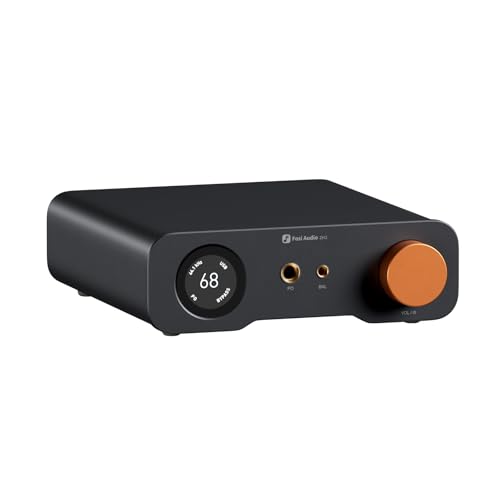
Balanced DAC Headphone Amp – Fosi Audio ZH3
The Fosi Audio ZH3 is an all-in-one desktop DAC, headphone amp, and preamp that can also work in speaker-based systems. For people comparing standalone DACs for studio monitors, it brings balanced XLR and RCA outputs, plus USB, optical, coaxial, and RCA inputs in one compact box.
Best For: Users who want one desktop unit for headphones now and active speakers or studio monitors later.
Pros:
- DAC, headphone amp, and preamp functions in one unit
- Balanced XLR and RCA outputs for flexible system matching
- USB, optical, coaxial, and RCA inputs cover common source options
- Bass/treble EQ, filter modes, and swappable op-amps allow tuning
Cons:
- EQ is limited to headphone output, not the preamp output
- RCA and XLR output levels differ, so backend matching matters
The ZH3 is a strong choice if you want more than a basic DAC for studio monitors. Its balanced output options and preamp role make it useful in flexible desktop rigs, especially when headphones are also part of the setup.
Portable USB DAC/AMP – MOONDROP Dawn PRO 2
The MOONDROP Dawn PRO 2 is a portable USB DAC/amp built around dual CS43198 chips and app-based DSP control. While it is not a traditional desktop unit, it can still be relevant for buyers evaluating standalone DACs for studio monitors when they need a compact USB source with a clean 4Vrms output.
Best For: Mobile and laptop users who want a compact DAC with fine-grained DSP control and solid output voltage.
Pros:
- Dual CS43198 DAC chips and three independent LDO power chips
- App-based DSP tuning with filter, frequency, gain, and Q adjustments
- 100-level volume control helps keep adjustments smooth and precise
- 4Vrms output and balanced 4.4mm support in a compact aluminum body
Cons:
- Portable USB format is less like a traditional desktop DAC for monitors
- Headphone-focused design may not suit users who only need studio monitor outputs
If your setup needs portability as well as DAC quality, the Dawn PRO 2 offers a lot of control in a very small package. It’s best viewed as a travel-friendly conversion option rather than a full monitor controller.
Portable Hi-Res Upgrade – iFi Zen Air DAC 2
If you want one of the more approachable standalone DACs for studio monitors, the iFi Zen Air DAC 2 is a simple USB-C upgrade for a PC, laptop, or tablet setup. It focuses on cleaner conversion, balanced headphone output, and easy-to-use tuning features, making it a practical way to improve everyday audio playback without adding a complicated signal chain.
Best For: Desktop listeners who want a compact Hi-Res DAC for a straightforward monitoring or listening setup.
Pros:
- USB-C input works with PC, laptop, and tablet sources.
- RCA L/R output supports stereo desktop audio connections.
- Balanced headphone output and PowerMatch help with cleaner, stronger drive.
- Bass Restore gives a quick option for adding warmth when needed.
Cons:
- It is not designed as a smart-home device or network streamer.
- Best suited to simple stereo use rather than multi-channel monitoring.
The Zen Air DAC 2 is a sensible pick if you want an affordable, no-frills converter that emphasizes clarity and convenience. Its balanced output and desktop-friendly design make it a useful match for casual studio monitor listening or general system upgrades.
Tube-Infused Desktop DAC – FiiO WARMER R2R
Among standalone DACs for studio monitors, the FiiO WARMER R2R is built for listeners who want a more characterful desktop chain. It combines a fully differential 24-bit R2R DAC with tube buffering, plus RCA and XLR outputs, so it can slot into a hi-fi or monitor setup where flexible connectivity and a warmer presentation matter.
Best For: Desktop setups that need RCA/XLR outputs and a richer, more analog-leaning sound.
Pros:
- Fully differential 24-bit R2R DAC with an analog-leaning sound signature.
- Four JJ Electronic E88CC tubes add natural tube warmth.
- RCA and XLR outputs make integration flexible.
- 46W low-noise linear power supply is designed for a clean background.
Cons:
- Bulkier desktop unit than a basic USB DAC.
- Tube-based design may be more than some studio monitor users need.
This is a good option if your priority is more than pure utility and you want a DAC that brings a strong sonic personality to the desk. The VU meters and tube stage make it especially appealing for listeners who value both sound and presentation.
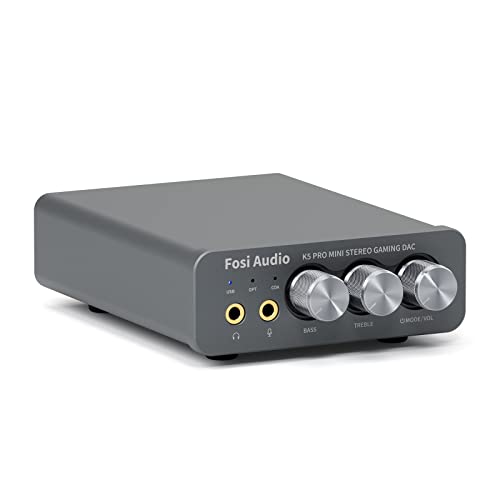
Budget DAC Amp Combo – Fosi Audio K5 Pro
The Fosi Audio K5 Pro is a compact DAC amp combo that fits well in entry-level standalone DACs for studio monitors and desktop speakers. It takes USB-C, optical, or coaxial input and converts them to RCA or 3.5mm output, while also adding headphone support and basic tone controls for a flexible all-in-one desk setup.
Best For: Small desktop setups that need a budget-friendly DAC with headphone and speaker connections.
Pros:
- USB-C, optical, and coaxial inputs cover common source devices.
- RCA output can feed powered speakers or an amplifier.
- 3.5mm headphone output supports 16 ohm to 300 ohm headphones.
- Master volume, bass, and treble controls add easy adjustment.
Cons:
- USB Type C input is listed at up to 24-bit/96 kHz, which is lower than some rivals.
- Its compact all-in-one design is more practical than premium.
If you want a versatile desktop converter that can serve both monitors and headphones, the K5 Pro is easy to place and easy to use. It is a strong value pick for users who want a simple external audio hub without extra complexity.
Desktop Balanced Power for Studio Monitors – FiiO K11 Desktop DAC & Amp
If you want standalone DACs for studio monitors that also double as a headphone hub, the FiiO K11 is built for flexible desktop use. Its RCA line-out can feed active speakers, while USB, coaxial, and optical inputs make it easy to connect a PC or other digital source.
Best For: Desktop users who want a simple DAC/amp with RCA output for active speakers and enough power for headphones.
Pros:
- RCA line-out supports active speakers and external amplifiers.
- USB, coaxial, and optical inputs cover common desktop audio sources.
- Up to 1400mW balanced output gives plenty of headroom for demanding headphones.
- VA display shows sampling rate, volume, gain, and output mode clearly.
Cons:
- Optical and coaxial inputs are limited to 192kHz.
- It is a desktop unit, so it is not meant for portable use.
The K11 is a practical pick if you want one box for monitors and headphones without extra complexity. Its adjustable 2Vrms RCA line-out and broad digital input support make it especially useful in a compact studio-style setup.
DSP-Tuned Desktop Hub – TOPPING DX1 II Gaming DAC Amp Combo
For buyers comparing standalone DACs for studio monitors, the TOPPING DX1 II stands out because it adds preamp and optical integration to a compact desktop DAC/amp. The optical I/O makes it easy to slot into a speaker-based setup, while the 10-band PEQ lets you shape the sound to match your room or listening preference.
Best For: Users who want a desktop DAC with EQ control, optical connectivity, and flexible use with speakers or headphones.
Pros:
- 10-band PEQ DSP allows detailed sound tuning with software.
- Optical input and output help integrate with TVs, streamers, and active speakers.
- Balanced 4.4mm and 3.5mm outputs support a wide range of headphones.
- Low noise floor and high dynamic range suit clean desktop listening.
Cons:
- Its strongest appeal is tuning and connectivity, not a dedicated speaker controller.
- Some features depend on the TOPPING Tune software workflow.
The DX1 II is a strong fit if you want a DAC that can do more than basic conversion. Its preamp-style flexibility and optical support make it especially appealing for compact audio setups where monitors and headphones share the same desk.
All-in-One Desktop Audio Hub – Fosi Audio K7 DAC Headphone Amp
If you’re shopping for standalone DACs for studio monitors and want a feature-rich desktop control center, the Fosi Audio K7 is built for that role. Along with USB-C, coaxial, optical, and Bluetooth input options, it includes RCA output for powered speakers, making it easy to connect a compact monitor setup.
Best For: Desktop users who want a versatile DAC/amp with speaker-friendly RCA output and lots of input options.
Pros:
- RCA output makes it easy to connect powered speakers or amps.
- USB-C, optical, coaxial, Bluetooth aptX HD/LL, and mic input add flexibility.
- Up to 2100mW output can handle demanding headphones.
- All-metal build and angled controls are made for desktop convenience.
Cons:
- Bluetooth is useful, but wired connections are still the main strength.
- Its many features may be more than needed for a very simple monitor-only setup.
The K7 is the most all-in-one option here, especially if you want one device to manage speakers, headphones, and even voice chat input. For a desktop audio stack centered on active monitors, it offers the kind of connectivity that keeps things tidy.
How We Picked the Best Standalone DACs for Studio Monitors
We prioritized models that make sense in a monitor setup: low-noise playback, reliable digital inputs, usable volume control, and outputs that fit common desktop and home-studio chains. We also weighed balanced connectivity, preamp functionality, and overall flexibility, since Standalone DACs for Studio Monitors often need to do more than just convert signal.
Quick Comparison
If you want the simplest path, look for a DAC with USB input, line-level outputs, and a clean volume stage. If your monitors are balanced, XLR or 4.4mm balanced support can help with noise rejection and cable runs. If you also use headphones, a DAC/amp combo may be the better value. For hybrid desks, a monitor controller with DAC features can be the most practical choice.
Key Buying Factors for Standalone DACs for Studio Monitors
Outputs and Connectivity
Check whether your monitors accept RCA, balanced XLR, or TRS through an adapter chain. The best match is the one that fits your existing cabling without adding unnecessary converters.
Volume Control and Gain
A true preamp or monitor controller is useful if you want direct volume adjustment from the desk. Look for smooth control at low levels, especially for nearfield listening.
Noise Floor and Transparency
For studio use, a quiet output stage matters more than flashy specs. A low-noise DAC helps reveal mix details without hiss, hum, or channel imbalance at low volume.
Format Support
USB is the most common desktop connection, but optical and coaxial inputs add flexibility for consoles, streamers, and other source devices. High sample-rate support is nice, though it is usually less important than clean implementation.
Who Should Buy Which Standalone DACs for Studio Monitors?
Buy a straightforward DAC/preamp if you want clean playback and easy monitor volume control. Choose a DAC/amp combo if you also listen on headphones at the desk. Pick a monitor controller with DAC functions if you switch between sources, adjust levels often, or want a more studio-oriented control center. If your main goal is everyday music, editing, or production playback, the most practical Standalone DACs for Studio Monitors are the ones that fit your desk layout and monitoring workflow first, and chase specs second.