The right table can make a home podcast studio easier to record in, organize, and expand. The best choice depends on your guest count, available floor space, equipment, and preferred workflow.
These 10 options include conference tables for group conversations and studio desks with keyboard trays, raised platforms, and cable-management features. Use the guide below to narrow the list before choosing a setup.
Best 10 Podcast Tables for Home Studios Picks for 2026
Spacious Group Setup
Bonzy Home 8-Foot Conference Table

- Two tables combine into a 94.4-inch workspace
- Seats four to eight people
- Adjustable feet and sturdy metal frame
Best For: Multi-person podcasts and collaborative home studios
Connected Production Hub

- Three USB ports and two power outlets
- Raised shelf supports two monitors
- Keyboard tray and three storage levels
Best For: Solo podcasters and compact production setups
Compact Interview Table
Tribesigns Square Podcast Table
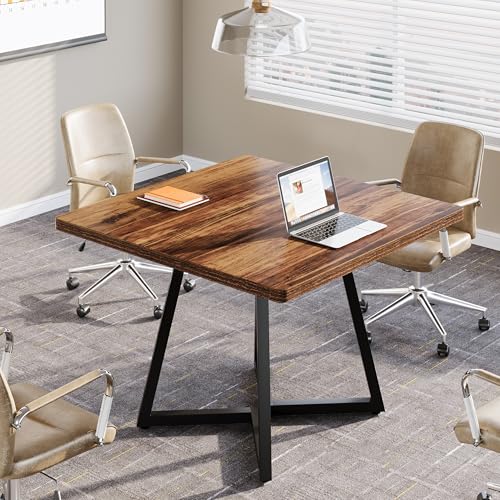
- 31.5-inch square footprint saves space
- Metal base supports up to 250 pounds
- Industrial brown-and-black finish
Best For: Small studios and minimal interview setups
Keyboard-Ready Studio Desk

- Sliding tray fits a 61-key MIDI keyboard
- Pegboard and headphone hook organize accessories
- Steel frame supports a full studio setup
Best For: Music-focused podcasters and hybrid creator studios
Best Round Table

- Seats up to six people
- Thick E1 MDF tabletop
- Pedestal base with black finish
Best For: Round-table podcasts and group interviews
Best Production Desk

- Built-in USB ports and outlets
- Raised shelf fits two monitors
- Three storage layers and keyboard tray
Best For: Solo podcast and music-production workstations
Best Large Table
8-Foot Podcast Conference Table

- Seats approximately eight to ten people
- Two grommets aid cable management
- Scratch-resistant, waterproof finish
Best For: Large podcast panels and multi-guest studio sessions
Compact Studio Pick
Monoprice Stage Right Recording Desk

- Compact 31.5-inch width
- Raised monitor platform
- Pullout 49-key keyboard tray
Best For: Small rooms and streamlined home studios
Large-Format Pick
Tribesigns 8FT Conference Table

- Two oversized rectangular tables
- Seats large groups
- Two cable-management grommets
Best For: Group podcasts and spacious studios
Connectivity Pick

- Three USB ports and two outlets
- 47-inch two-monitor shelf
- Pullout keyboard tray
Best For: Organized home production and podcast setups
Spacious Group Setup – Bonzy Home 8-Foot Conference Table
For creators comparing podcast tables for home studios, the Bonzy Home set is a practical option when you need room for multiple people and larger equipment layouts. The two-piece design can be used together as a 94.4-inch table or arranged separately to suit your room.
Best For: Multi-person podcasts, collaborative recording spaces, and home studios that need a long, flexible work surface.
Pros:
- Two 47.2-inch tables can be combined or arranged independently.
- Accommodates four to eight people when used as a conference table.
- Powder-coated metal frame and particleboard top support up to 124 pounds.
- Adjustable rubber feet help stabilize the table on uneven floors.
Cons:
- The 23.6-inch depth may limit space for extensive microphones, mixers, and monitors.
- Assembly is required.
- The white high-gloss finish may show studio marks more readily than a darker surface.
This set stands out for flexibility and seating capacity rather than specialized studio storage. It is a strong choice for interview-style podcasts or shared production spaces where rearrangement matters.
Connected Production Hub – Armocity Music Studio Desk
The Armocity workstation is one of the more equipment-focused podcast tables for home studios, with integrated power, monitor shelving, and a keyboard tray. Its layered layout is designed to keep a compact recording or editing setup organized.
Best For: Solo podcasters, music producers, and editors who want built-in charging and dedicated space for monitors, keyboards, and accessories.
Pros:
- Built-in two outlet plugs and three USB ports simplify charging.
- Raised 47-inch shelf can hold two monitors and helps position them at eye level.
- Pull-out keyboard tray and three levels provide dedicated equipment storage.
- Metal legs and a brace bar provide a stable base with usable legroom.
Cons:
- The 47.3-inch width may feel tight for larger podcast teams or extensive gear.
- Assembly is required.
- The raised shelving layout may not suit setups that need one uninterrupted desktop surface.
With power and organization built into the design, this desk is particularly practical for a one-person studio. It offers more production-specific features than a basic conference table while remaining relatively compact.
Compact Interview Table – Tribesigns Square Podcast Table
For small rooms, the Tribesigns square table offers a compact alternative among podcast tables for home studios. Its 31.5-inch square top can support a focused interview setup, while the industrial brown-and-black finish gives the space a polished meeting-room look.
Best For: Small home studios, two-person interviews, and creators who need a versatile table that can also serve as a meeting or work surface.
Pros:
- Compact square footprint works well in space-constrained rooms.
- Engineered-wood top and metal base are rated for up to 250 pounds.
- Industrial styling suits both professional and casual studio environments.
- Surface is designed for easy maintenance with a dry-cloth wipe.
Cons:
- The 31.5-inch tabletop offers limited room for multiple microphones and recording accessories.
- It has no built-in cable management, power outlets, or equipment shelving.
- Assembly is required.
This is a sensible pick when floor space is the main constraint. Its simple, sturdy design works best for a minimal podcast setup rather than a large production workstation.
Keyboard-Ready Studio Desk – 61-Key Recording Workstation
Built for creators who combine podcasting with music or streaming, this 47.2-inch workstation provides a dedicated sliding tray for a 61-key MIDI keyboard. It is a focused option among podcast tables for home studios, with organization features for headphones, cables, and smaller accessories.
Best For: Music-focused podcasters, streamers, and home producers using a MIDI keyboard alongside microphones, monitors, and an audio interface.
Pros:
- Sliding tray is designed for 61-key MIDI keyboards.
- Wide desktop accommodates monitors, interfaces, mixers, microphones, laptops, and ultrawide displays.
- Built-in pegboard and headphone hook help organize studio accessories.
- Reinforced steel frame is designed for stability with demanding equipment.
Cons:
- The 47.2-inch width may limit larger multi-person podcast layouts.
- Its specialized keyboard tray may be unnecessary for voice-only podcasting.
- The supplied notes do not specify integrated power outlets or USB ports.
This desk makes the most sense for a hybrid studio where music production and podcasting share the same workspace. The keyboard tray and pegboard add useful functionality without requiring a separate equipment stand.
Best Round Table – 47-Inch Podcast Table
For creators seeking podcast tables for home studios, this 47-inch round conference table offers a clean, collaborative setup for up to six people. Its thick engineered-wood top, pedestal base, and black contemporary finish suit a dedicated home office or studio.
Best For: Round-table podcasts, interviews, and multi-person recording sessions in a home office.
Pros:
- Seats up to six people around a 47.24-inch round tabletop.
- Thick 1.8-inch E1 MDF tabletop with steel-reinforced base construction.
- Pedestal design provides a central support structure and contemporary appearance.
- Includes an assembly guide and installation tool.
Cons:
- The round footprint may use more floor space than a narrow rectangular desk.
- It has no built-in cable-management features listed.
This is a practical choice when conversation and equal access to the table matter more than integrated production storage. Its six-person capacity makes it better suited to group recordings than compact solo setups.
Best Production Desk – RGB Music Studio Workstation
Among podcast tables for home studios, this workstation is aimed at creators who need a compact production hub for a computer, monitors, keyboard, and audio equipment. Its raised monitor shelf, pull-out keyboard tray, built-in power connections, and RGB lighting support an organized recording workflow.
Best For: Solo podcasters and music producers who want a workstation with monitor storage, charging access, and lighting.
Pros:
- Includes three USB ports and two outlet plugs for connected equipment.
- Raised 47-inch shelf accommodates two monitors at eye level.
- Pull-out keyboard tray and three storage layers help organize production gear.
- RGB lighting offers adjustable color, brightness, and music-synced patterns.
Cons:
- The 47.3-inch width provides less shared recording space than a conference table.
- Its feature-rich workstation design may be less suitable for multi-person podcasts.
- Assembly is required.
This desk makes the most sense for a single host who records, edits, and manages equipment from one station. The built-in power and raised monitor shelf are especially useful when reducing desktop clutter is a priority.
Best Large Table – 8-Foot Podcast Conference Table
For larger productions, this 94.49-inch rectangular table is one of the more spacious podcast tables for home studios, with room for roughly eight to ten attendees. Its grey finish, sturdy MDF-and-metal construction, and two tabletop grommets make it suitable for interviews, panels, training, or studio meetings.
Best For: Large podcast panels, group interviews, and studio spaces that need extensive seating.
Pros:
- Large 94.49-by-47.24-inch surface accommodates eight to ten people.
- Two tabletop grommets support cleaner cable routing.
- Scratch-resistant and waterproof finish is designed for daily use.
- Heavy-duty MDF and metal pedestal construction provides a sturdy base.
Cons:
- Its 8-foot-plus footprint requires substantial room space.
- Ships in two parcels that may arrive at different times.
- Assembly is required, although tools and instructions are included.
This is the strongest fit for a dedicated studio or large home-office room where multiple microphones and guests need generous working space. Measure the room and plan for delivery and assembly before ordering.
Compact Studio Pick – Monoprice Stage Right Recording Desk
Monoprice Recording Studio Desk - with Raised Platform and Keyboard Tray, Black - Stage Right
Check Price On AmazonFor shoppers comparing podcast tables for home studios, the Monoprice Stage Right is a compact workstation designed to fit essential recording gear without taking over the room. Its raised platform supports monitor speakers, while the pullout keyboard tray helps reduce the desk’s footprint when not in use.
Best For: Small rooms, apartments, and compact home studio setups using a MIDI keyboard and monitor speakers.
Pros:
- 31.5-inch width and 24-inch depth suit space-conscious setups.
- Raised platform can hold monitor speakers without separate stands.
- Pullout keyboard tray accommodates a typical 49-key MIDI controller.
- Supports up to 175 pounds and includes assembly hardware.
Cons:
- The compact surface may be limiting for larger podcast or production setups.
- Its 38-inch height and raised platform may not suit every seating arrangement.
- Storage is limited to the tray, platform, shelf, and two drawers.
The Stage Right is a practical choice when floor space matters more than a broad tabletop. It delivers dedicated monitor and keyboard placement in a lightweight steel workstation, making it especially suitable for streamlined home studios.
Large-Format Pick – Tribesigns 8FT Conference Table
For podcast tables for home studios that need room for multiple people, the Tribesigns 8-foot conference table offers a wide, rectangular surface with two cable-management grommets. The two-table set can serve as a podcast, training, meeting, or studio table depending on the space.
Best For: Large podcast rooms, group recordings, training spaces, and studios needing seating for many participants.
Pros:
- Each 94.49-by-47.24-inch table provides a generous working area.
- Two tables can be combined or arranged flexibly.
- Two tabletop grommets help route cables and keep the surface organized.
- MDF construction with a metal frame is designed for daily working use.
Cons:
- The large footprint is unsuitable for compact rooms.
- It arrives in four parcels, which may be delivered at different times.
- Assembly is required for this two-table set.
This Tribesigns set is best viewed as a room-scale production or conference solution rather than a personal workstation. Its expansive surface and flexible two-piece configuration make it a strong fit for collaborative podcasting and multi-person studio use.
Connectivity Pick – Armocity Music Studio Desk
Among podcast tables for home studios, the Armocity Music Studio Desk stands out for built-in charging access and a layered workstation design. It includes three USB ports, two outlet plugs, a raised monitor shelf, and a pullout keyboard tray for organizing common recording equipment.
Best For: Home producers, editors, and podcasters who want integrated power access and dedicated monitor placement.
Pros:
- Built-in three USB ports and two outlet plugs reduce the need for a separate charging station.
- The 47-inch shelf can hold two monitors.
- Three layers provide space for laptops, keyboards, speakers, audio equipment, and drives.
- Metal legs and a brace bar provide a sturdy base with usable legroom.
Cons:
- The 47.3-inch width is less spacious than a full-size conference table.
- Assembly is required, and an electric screwdriver may speed installation.
- The raised, multi-level design may not suit users wanting a simple flat tabletop.
The Armocity is a well-equipped workstation for compact production setups that need power and organization close at hand. Its monitor shelf and keyboard tray preserve tabletop space, while the integrated outlets make it convenient for everyday studio equipment.
How We Picked the Best Podcast Tables for Home Studios
We evaluated the selected tables for the practical demands of home recording: usable surface area, seating capacity, footprint, equipment organization, cable access, construction style, and flexibility. The list includes both conventional conference tables and purpose-built music studio desks because podcasters often need different layouts for solo production, interviews, and panel discussions.
We also considered whether a table can accommodate microphones, boom arms, headphones, mixers, laptops, monitors, and notes without making the recording area feel crowded. Dimensions and features should be verified against your room and gear before purchase.
Quick Comparison
| Table type | Best for | Main advantage |
|---|---|---|
| Compact square table | Small interview setups | Efficient footprint for four people |
| Round conference table | Conversational podcasts | Flexible seating and equal access |
| Large rectangular table | Panels and training sessions | Room for several guests and equipment |
| Production studio desk | Solo hosts and editing | Keyboard trays, platforms, and workflow support |
Key Buying Factors for Podcast Tables for Home Studios
Size and Seating
Measure the room, including space for chairs, microphone stands, doors, and walking paths. A table advertised for four to eight people may still feel cramped once boom arms, laptops, and audio interfaces are added. For panel shows, prioritize width and depth over nominal seating capacity.
Shape and Recording Layout
Round tables encourage eye contact and work well for conversational interviews. Rectangular tables provide more linear space for multiple microphones and monitors. Studio desks are usually better for a host who records, edits, streams, or produces from one position.
Gear and Cable Management
Look for keyboard trays, raised monitor platforms, grommets, and open leg clearance if you use desktop equipment. Cable openings can reduce clutter, but confirm their position before buying; a grommet near the back edge may not help if your audio interface sits elsewhere.
Stability and Surface Quality
Microphone arms can transmit bumps and vibrations, so a stable frame matters. Check the base design, tabletop thickness, finish, and weight capacity. A smooth, durable surface is useful for frequent repositioning of mixers, stands, and laptops.
Who Should Buy Which Podcast Tables for Home Studios?
Choose a compact square or round conference table if you record occasional interviews in a limited room. Pick a large rectangular conference table when you host recurring panels, multiple guests, or collaborative sessions and have enough space for wide chair clearance. A dedicated production desk is the better fit for solo hosts, musicians, editors, and streamers who need a keyboard tray or elevated monitor area. If your setup combines group recording with editing, consider using a conference table for guests and a separate studio desk for production.
Before ordering, compare the assembled dimensions with your room measurements, count every device that must remain on the surface, and plan where power strips and microphone cables will run. Those checks usually matter more than appearance alone.