Your first drone should be easy to control, forgiving while you learn, and suited to where you plan to fly. A small indoor quadcopter can make more sense for practice than a camera drone with features you will not use.
These 10 picks span protected toy-style models, lightweight camera drones, and GPS-equipped options. The guide below helps you match the features to your space, filming goals, and budget.
Best 10 Drones for Beginners Picks for 2026
Best for Hands-Free Tracking

- Palm takeoff and gesture control
- ActiveTrack and 4K video
- Controller and three batteries included
Best For: Easy selfies and subject tracking
Best for Stable 4K Footage
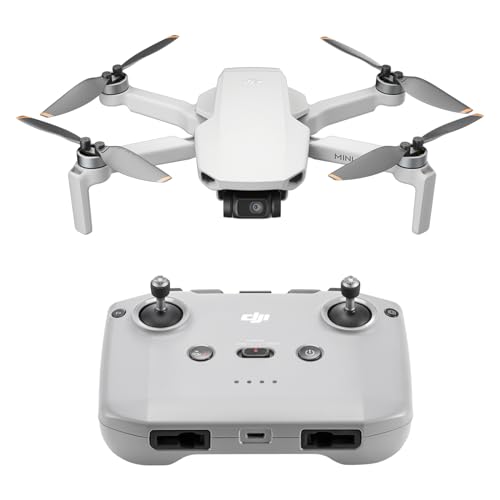
- 4K camera with three-axis gimbal
- GPS Return to Home and QuickShots
- Under 249 g; one battery included
Best For: Learning stabilized aerial filming
Best for Family Flight Practice
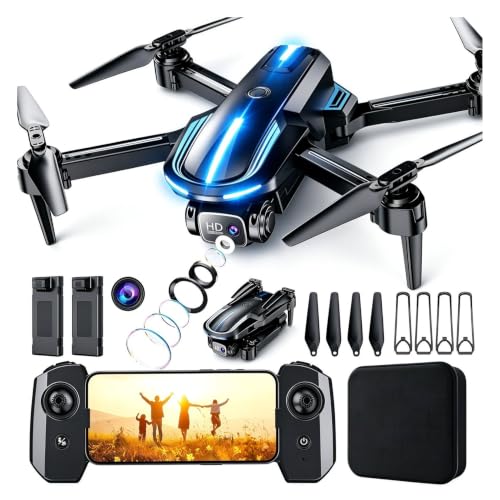
- One-key controls and altitude hold
- 1080P phone-view camera
- Two batteries and propeller guards
Best For: Family practice and recreational flying
Best for Indoor First Flights

- Altitude hold and headless mode
- Guarded propellers and adjustable speeds
- Three batteries; up to 21 minutes total
Best For: Kids learning basic indoor piloting
Best for Longer Flights

- Up to 62 minutes across two batteries
- 4K video with electronic stabilization
- GPS auto-return and three flight modes
Best For: Beginners seeking longer practice sessions and outdoor video
Best Light-Up Toy
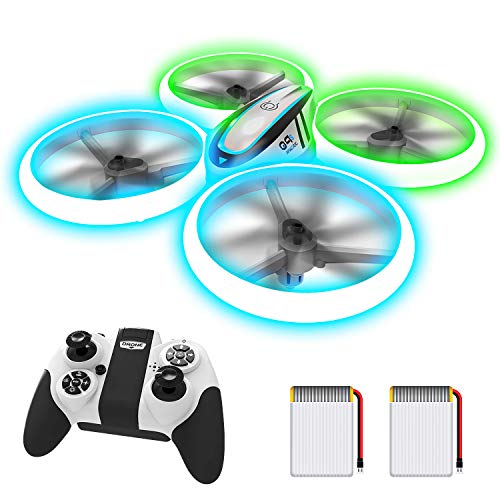
- Green-and-blue LEDs with multiple modes
- Propeller guards and altitude hold
- Two batteries and three speed settings
Best For: Kids learning to fly a light-up toy drone
Best for Hands-Free Video

- Palm takeoff without a controller
- Subject tracking and QuickShots
- Stabilized 4K video in a 135 g drone
Best For: First-time flyers making self-filmed videos
Best Starter Toy Drone
S20 Foldable 1080P Camera Drone

- One-key takeoff and altitude hold
- Two batteries offer up to 24 minutes total
- App required to capture photos and video
Best For: First flights and casual camera fun
Best for Longer-Range Filming
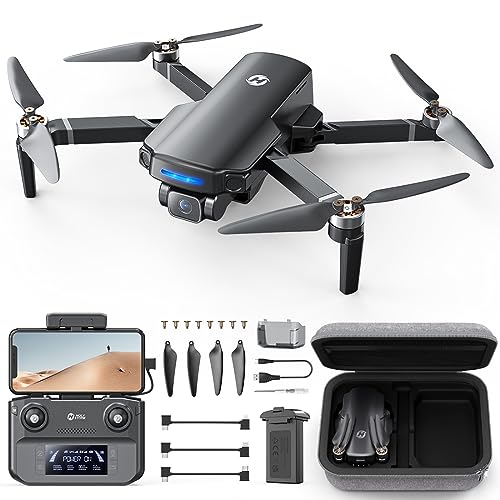
- 4K camera with adjustable angle
- GPS return-to-home and beginner mode
- Up to 20 minutes on one battery
Best For: GPS-assisted outdoor filming practice
Best for Extended Practice

- Up to 46 minutes across two batteries
- GPS auto return and one-key controls
- 4K camera with adjustable tilt
Best For: Longer outdoor practice sessions
Best for Hands-Free Tracking – DJI Neo 2 Fly More Combo
Among drones for beginners, the DJI Neo 2 stands out for palm takeoff and landing, gesture control, and ActiveTrack. This Fly More Combo includes the RC-N3 controller, a digital transceiver, three batteries, a charging hub, and propeller guards.
Best For: New pilots who want easy selfies and subject tracking with a dedicated controller.
Pros:
- Palm controls and SelfieShot make quick captures accessible.
- Omnidirectional obstacle sensing and propeller guards add flight protection.
- Records 4K video; three batteries are included.
Cons:
- Android users must download the DJI Fly app from DJI rather than Google Play.
Choose this bundle if hands-free filming matters more to you than a bare-bones starter kit. Its included controller also gives you an option beyond gesture control.
Best for Stable 4K Footage – DJI Mini 4K
The DJI Mini 4K is a practical pick among drones for beginners who care about smoother aerial video. Its 4K camera sits on a three-axis gimbal, while one-tap takeoff and landing, stable hovering, and GPS Return to Home help simplify early flights.
Best For: First-time pilots prioritizing stabilized 4K footage in a sub-249 g drone.
Pros:
- Three-axis gimbal helps produce steady 4K video.
- QuickShots automate several camera moves.
- Under 249 g; the included single battery is rated for up to 31 minutes.
Cons:
- This package includes only one battery.
- Android users must get the DJI Fly app from DJI, not Google Play.
Its gimbal and beginner flight aids make it a strong choice for learning aerial photography. Check current local rules before flying; registration requirements depend on how and where you use it.
Best for Family Flight Practice – X80 Foldable 1080P Drone
For families comparing drones for beginners, the X80 combines one-key takeoff and landing with altitude hold and headless mode. Its foldable body, carrying case, and two batteries suit casual indoor or outdoor play.
Best For: Kids and adults who want a camera-equipped starter drone for recreational flying.
Pros:
- 1080P camera sends an FPV view to a phone.
- Two batteries provide up to 24 minutes of combined flight time.
- Propeller guards, three speeds, and 3D flips support practice and play.
Cons:
- Listed maximum range is 100 meters.
- 1080P capture is lower resolution than the 4K models in this roundup.
This is a play-focused option with room to try app-controlled paths and gravity steering. Pick it for approachable controls and variety rather than long-range filming.
Best for Indoor First Flights – Holy Stone HS210 Mini Drone
The Holy Stone HS210 is a compact choice among drones for beginners, especially younger pilots learning to fly indoors. Altitude hold, headless mode, adjustable speeds, and enclosed propellers make its controls and handling more approachable.
Best For: Kids and new pilots practicing short, playful flights in a suitable indoor space.
Pros:
- Propeller guards surround the blades.
- Three included batteries offer up to 21 minutes of combined flight time.
- Toss launch, flips, Circle Fly, and auto rotation add variety.
Cons:
- Listed maximum range is 160 feet.
- The supplied feature list does not describe a camera or camera controls.
Choose the HS210 for basic piloting and tricks rather than buying it specifically for photography. Its small size and spare batteries make repeat practice sessions convenient.
Best for Longer Flights – Potensic ATOM SE
Among drones for beginners, the Potensic ATOM SE suits new pilots who want more time to practice and a camera for outdoor footage. Its two included batteries offer up to 31 minutes each, while GPS auto-return adds reassurance when the signal is lost or power runs low.
Best For: Beginners seeking longer flight sessions and 4K video in a foldable drone.
Pros:
- Two batteries provide up to 62 minutes of combined flight time.
- Records 4K video with electronic image stabilization.
- GPS auto-return and three flight modes support skill-building.
Cons:
- A microSD card is not included.
- The 62-minute figure is the combined maximum across two batteries, not one continuous flight.
The ATOM SE is a practical choice if flight time matters more than a simple toy-drone experience. Start in Beginner mode, then explore its tracking and waypoint features as your confidence grows.
Best Light-Up Toy – Q9s Kids Drone
The Q9s is one of the more playful drones for beginners, pairing green-and-blue LED lighting with straightforward controls. Its propeller guards, altitude hold and one-button takeoff make it especially approachable for kids learning basic flight.
Best For: Kids and first-time pilots who want a guarded drone with colorful lights and simple tricks.
Pros:
- Four propeller guards help protect against contact with spinning blades.
- One-button takeoff and landing, headless mode and altitude hold simplify controls.
- Includes two batteries, three speed settings and 360-degree flips.
Cons:
- The supplied notes do not specify a flight-time estimate per battery.
- The listed maximum range is 0.03 miles, making it better suited to nearby flying.
Choose the Q9s for hands-on flying fun rather than long-range exploration. Its lights and tricks give new pilots something to enjoy while they practice hovering and steering.
Best for Hands-Free Video – DJI Neo
The DJI Neo takes a different approach to drones for beginners: it can launch from your palm and capture footage without a separate controller. Subject tracking, QuickShots and stabilized 4K video make it appealing to people who want to film themselves on walks or outings.
Best For: First-time flyers who prioritize easy self-filming over traditional stick-control practice.
Pros:
- Palm takeoff and landing enable controller-free use.
- Subject tracking and QuickShots simplify creative filming.
- Weighs 135 g and includes propeller guards.
Cons:
- Only one flight battery is listed in the standard package.
- Activation requires the DJI Fly app; Android users must download it from DJI’s website rather than Google Play.
Neo is the strongest fit here when getting yourself into the shot matters most. If you want to learn conventional remote-control flying, note that the standard package is ready for controller-free or smartphone use, not bundled RC use.
Best Starter Toy Drone – S20 Foldable 1080P Camera Drone
For shoppers comparing drones for beginners, the S20 keeps the first flights simple with one-key takeoff and landing, altitude hold, and no manual pairing step. Its foldable body and adjustable 1080P camera make it a practical choice for casual flying and photos.
Best For: New pilots who want a simple camera drone for short, casual flights.
Pros:
- One-key controls, headless mode, and speed adjustment help new pilots practice.
- Two batteries provide approximately 12 minutes each, or up to 24 minutes combined.
- Adjustable camera, 3D flips, and app-based features add room to experiment.
Cons:
- Capturing photos or video requires a Wi-Fi connection and the Hiturbo FPV app.
- Some app controls require disconnecting the remote and flying through the app instead.
The S20 suits learning the controls more than longer excursions: its listed maximum range is 0.05 km, and fast flying or flips can shorten battery life.
Best for Longer-Range Filming – Holy Stone HS360S GPS Drone
Among drones for beginners, the Holy Stone HS360S is a step toward outdoor aerial filming. It combines a 4K camera, GPS return-to-home, beginner mode, and a stated control range of up to 10,000 feet in a foldable, sub-250g design.
Best For: Beginners who want GPS assistance and more room to practice outdoor filming.
Pros:
- GPS return-to-home can activate when the battery runs low or the connection breaks.
- 4K camera has an 85° wide-angle view and remotely adjustable tilt.
- Cable-connected phone streaming avoids a Wi-Fi connection between the phone and controller.
- Follow Me, waypoint flight, and automated recording modes support creative shots.
Cons:
- The supplied battery supports up to 20 minutes of flight, so longer sessions require recharging or another battery.
- Phone-based live viewing requires connecting your smartphone to the controller with a data cable.
Choose the HS360S if GPS safeguards and camera options matter more than a bare-bones first-flight setup. Its long stated range is a capability, not a reason to fly beyond applicable rules or safe visual range.
Best for Extended Practice – Holy Stone HS175D GPS Drone
The Holy Stone HS175D stands out among drones for beginners who want more practice time: its two batteries provide up to 46 minutes combined, depending on conditions. GPS-assisted return, altitude hold, and one-key takeoff and landing help make outdoor flights more approachable.
Best For: New outdoor pilots who prioritize flight time and beginner-friendly controls.
Pros:
- Two included batteries deliver up to 46 minutes of combined flight time.
- GPS auto return helps when the signal is lost, range is exceeded, or the battery runs low.
- 4K camera has a 110° wide-angle lens and adjustable tilt.
- Foldable design, carrying case, and Follow Me and waypoint modes add versatility.
Cons:
- The listed maximum range is 500 meters, shorter than the HS360S’s stated 10,000-foot control range.
- The 46-minute figure is spread across two batteries and varies with conditions.
The HS175D makes sense if swapping batteries for a longer outing appeals to you. Its stabilization aids support learning, while GPS and smart flight modes leave room to grow.
How We Picked These Drones for Beginners
We focused on features that make early flights less frustrating: stable hovering, straightforward controls, propeller protection where appropriate, and useful recovery aids. We also considered what each drone is meant to do. An indoor practice drone needs to tolerate bumps; an outdoor camera drone benefits more from GPS, dependable video transmission, and a return-to-home function. Published flight times and ranges are best treated as comparison points, not guarantees in wind or other real-world conditions.
Quick Comparison: Match the Drone to the Job
For indoor practice or younger pilots with supervision, look first at the Holy Stone mini drone or Q9s, whose small size and beginner-oriented controls fit short flights in a clear space. The two generic 1080p foldable models offer an entry-level way to try camera flying, but check the exact listing, included accessories, and support before ordering.
For a compact outdoor camera drone, compare the DJI Mini 4K, Potensic ATOM SE, Holy Stone HS360S, and HS175D. If hands-free clips matter more than traditional stick flying, consider the DJI Neo or Neo 2 Fly More Combo. The Neo 2 bundle includes an RC-N3 controller; compare what comes in the box rather than assuming every version has the same controls.
Key Buying Factors for Drones for Beginners
Where You Will Fly
Small drones with propeller guards are easier to practice with indoors, away from people, pets, and breakables. Outdoors, even a light drone can drift in a breeze. If you plan to fly in open areas, prioritize stable positioning and check the manufacturer’s wind guidance.
Controls and Safety Features
Altitude hold can reduce the work of maintaining height, while headless mode can simplify steering on basic models. GPS positioning and return-to-home can help outdoor pilots, but neither replaces keeping the drone in sight, monitoring battery level, and leaving room to land. Check whether guards are included or compatible if you expect close-quarters practice.
Camera, Battery, and Total Cost
A 4K label alone does not tell you how smooth footage will look; stabilization and the way the camera moves matter too. Compare estimated flight time per battery, not just a bundle’s combined total, and budget for spare batteries, replacement propellers, and any required storage card. Confirm controller and phone compatibility before buying.
Rules and Setup
Under-249 g weight may affect registration requirements in some places, but it does not exempt you from airspace, safety, or privacy rules. Check current local requirements for your location and intended use before the first flight.
Who Should Buy Which Drones for Beginners?
Choose a guarded mini drone if low-cost control practice is the goal. Pick a GPS camera model if you want outdoor landscapes and a more conventional piloting experience. Choose a Neo model if quick personal videos and simple takeoffs are the priority. For any first drone, start in a wide, calm, permitted area and learn its emergency landing and return functions before flying farther away.