A good boom arm keeps your microphone positioned consistently, clears valuable desk space, and makes recording or streaming more comfortable. The wrong arm can sag, transmit desk vibrations, or leave cables cluttering your workspace.
We selected 10 desk boom arms for home studios across different budgets, microphone weights, mounting styles, and workspace needs. Use the guide below to narrow the list by stability, reach, compatibility, and everyday convenience.
Best 10 Desk Boom Arms for Home Studios Picks for 2026
Professional Quiet Pick
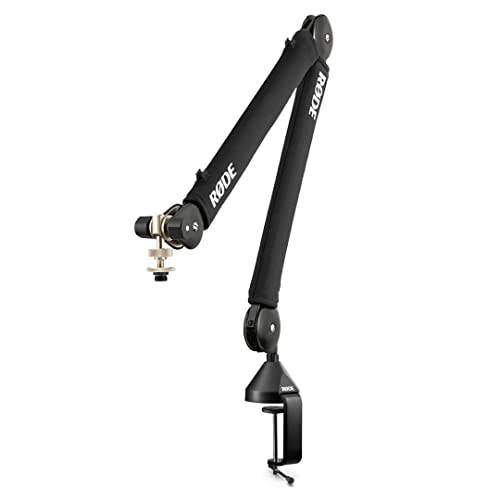
- Quiet internal spring damping
- Supports 0.25–1.2 kg microphones
- 360° rotation with cable management
Best For: Quiet podcasting and streaming setups
Heavy-Duty No-Sag Choice
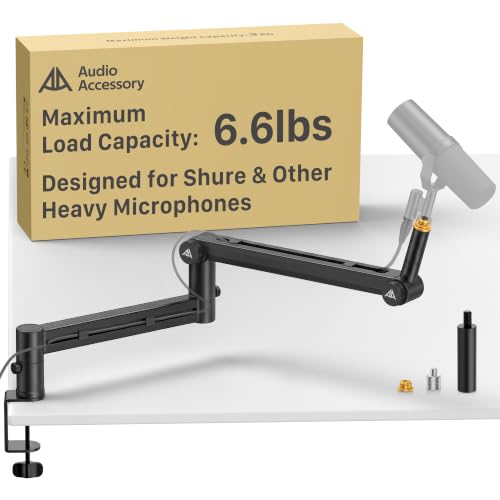
- 6.6 lb maximum load
- Gear-lock design helps prevent sagging
- 780 mm reach with cable channels
Best For: Heavy microphones and stable low-profile setups
Compact Starter Pick
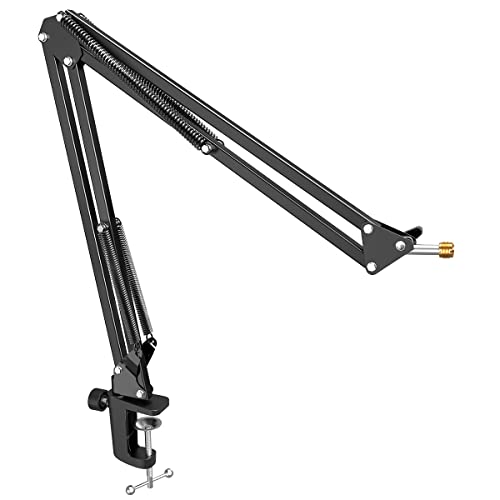
- Clamp fits desks up to 2 inches
- Foldable, portable metal design
- Includes 5/8-to-3/8-inch adapter
Best For: Beginner recording, gaming, and small desks
Long-Reach Cable-Clean Pick

- 32.3-inch horizontal reach
- Built-in cable channels and riser
- 3.5 lb capacity with 360° base
Best For: Extended monitor-overhanging microphone placement
Best Low-Profile Pick

- All-metal construction with a stable C-clamp
- 29-inch reach and low-profile monitor clearance
- Includes 1/4-, 3/8-, and 5/8-inch adapters
Best For: Home studios needing a long, unobtrusive microphone arm
Best for Popular USB Mics

- Fits Blue Yeti, HyperX QuadCast, SoloCast, and more
- Dual springs and reinforced knobs support positioning
- Padded clamp fits desks up to 1.89 inches thick
Best For: Streaming setups using listed Blue Yeti, HyperX, Shure, or Fifine mics
Best Space-Saving Option

- Slim fold-away body saves desk space
- 29-inch reach with a 360-degree base hinge
- Supports up to 3 pounds and includes cable management
Best For: Compact setups using lightweight microphones with 3/8- or 5/8-inch mounts
Best Low-Profile Stability
AK-58i Desk Low Profile Mic Boom Arm

- Low-profile steel design helps minimize desk clutter.
- Supports microphones or shock mounts up to 2 kg.
- Fits desks under 7 cm thick and includes thread adapters.
Best For: Stable, unobtrusive home studio setups
Best for Wide Desk Reach
M05 Pro 360° Rotatable Boom Arm

- Includes a 25 cm extension rod for wider desk setups.
- 360-degree adjustment helps clear monitors and position the mic.
- Aluminum arm supports up to 1.8 kg.
Best For: Wide desks and monitor-spanning microphone placement
Best Complete Mic Arm Bundle

- Includes shock mount, pop filter, adapter, clamp, and cable ties.
- Steel arm has a 1.5 kg recommended load.
- Clamp fits desks up to 2 inches thick.
Best For: First-time creators wanting an all-in-one setup
Professional Quiet Pick – RØDE PSA1+
For desk boom arms for home studios, the RØDE PSA1+ is a polished choice when quiet repositioning and a clean workspace matter. Its spring damping, 360-degree rotation, internal cable routing, and support for microphones from 0.25 to 1.2 kg suit podcasting and streaming setups.
Best For: Podcasters and streamers who want quiet movement, broad microphone compatibility, and hidden XLR cabling.
Pros:
- Internal spring damping helps reduce creaks and handling noise during adjustments.
- Supports microphones and shock mounts from 0.25 to 1.2 kg.
- 360-degree rotation and integrated cable management keep positioning flexible and tidy.
- Includes 3/8-inch and 5/8-inch thread adapters.
Cons:
- Its 1.2 kg capacity may not suit especially heavy microphone setups.
- The clamp fits desks up to 70 mm thick, so oversized desktops may be incompatible.
The PSA1+ is a strong all-around option for a professional-looking home studio, particularly if silent arm movement is more important than maximum load capacity.
Heavy-Duty No-Sag Choice – AA Audio Low-Profile Arm
If your home studio uses a heavier microphone, this low-profile arm stands out among desk boom arms for home studios with its gear-lock mechanism and stated 6.6-pound load capacity. The reinforced aluminum and glass-fiber nylon construction also provides a long 780 mm reach.
Best For: Users mounting heavier microphones such as the Shure SM7B, SM7dB, or RØDE PodMic who want a stable, low-profile arm.
Pros:
- Gear-lock design is intended to resist sagging over time.
- Supports up to 6.6 pounds, or approximately 3 kg.
- Offers 360-degree horizontal and 120-degree vertical adjustment.
- Deep cable channels and tool-free knobs simplify setup and positioning.
Cons:
- Its 1-year warranty is shorter than some competing options.
- The supplied specifications list a 78 cm maximum height, which may be limiting for some elevated setups.
This is the most suitable pick here when microphone weight and long-term positioning stability take priority over a lightweight, minimalist arm.
Compact Starter Pick – FIFINE CS1
The FIFINE CS1 is a straightforward option for buyers seeking desk boom arms for home studios, gaming, or beginner podcasting. Its foldable metal design, upgraded clamp, and included 5/8-inch-to-3/8-inch adapter make it practical for smaller desks and compatible microphones.
Best For: Beginners, gamers, and home-office users who need a portable arm for lighter microphone setups.
Pros:
- Metal clamp includes an anti-scratch pad and fits desktops up to 2 inches thick.
- 180-degree up-and-down adjustment provides useful positioning range.
- Foldable design helps save desk space and makes the arm portable.
- Includes a 5/8-inch-to-3/8-inch metal adapter.
Cons:
- The notes do not provide a specific maximum microphone weight.
- It lacks the internal cable-management channels found on some pricier arms.
- The microphone is not included.
With its compact footprint and simple adjustment range, the CS1 is a sensible entry-level arm, provided your microphone and desk fit its stated requirements.
Long-Reach Cable-Clean Pick – InnoGear Mic Arm
For a home studio that needs extra reach, the InnoGear mic arm combines a 32.3-inch horizontal reach with built-in cable channels and an extension riser. Among desk boom arms for home studios, it is a flexible choice for positioning a microphone over monitors while keeping the workspace organized.
Best For: Streamers and podcasters who need extended reach, flexible angles, and tidy cable routing for microphones up to 3.5 pounds.
Pros:
- Reaches up to 32.3 inches horizontally and 37.4 inches vertically with the riser.
- Built-in cable channels and removable rubber covers help conceal cables.
- Provides 135-degree back-and-forth and 180-degree up-and-down adjustment, plus a 360-degree rotatable base.
- Supports up to 3.5 pounds and fits desks up to 2 inches thick.
Cons:
- The 5/8-inch connector may require an adapter for some microphone setups.
- A shock mount is not included.
- Its 3.5-pound capacity is lower than the heaviest-duty arm in this roundup.
The InnoGear is a practical middle ground for users who need more reach than a compact arm provides without giving up cable organization or broad positioning control.
Best Low-Profile Pick – FIFINE BM88
For home studios where monitor visibility and desk space matter, the FIFINE BM88 is one of the more flexible desk boom arms for home studios. Its all-metal construction, low-profile reach, cable management, and broad thread compatibility make it practical for podcasting, streaming, gaming, and recording.
Best For: Creators who want a sturdy, low-profile arm for a desktop 0.8 to 2.4 inches thick.
Pros:
- All-metal body and clamp are designed to stay stable during use.
- Low-profile design can extend beneath a monitor without obstructing the view.
- Adjusts up to 220 degrees vertically and 360 degrees horizontally, with a 29-inch extension.
- Includes 1/4-, 3/8-, and 5/8-inch thread adapters plus built-in cable management.
Cons:
- The microphone is not included.
- The section near the C-clamp cannot be adjusted vertically.
- The clamp is limited to desktops between 0.8 and 2.4 inches thick.
The BM88 stands out when you need a long reach without putting the arm directly in front of your screen. Its adapter selection simplifies setup, while the low-profile format keeps the workstation visually clear.
Best for Popular USB Mics – SUNMON QuadCast Boom Arm
The SUNMON QuadCast Boom Arm is a straightforward option among desk boom arms for home studios, especially if you use a Blue Yeti, HyperX QuadCast, SoloCast, or another compatible microphone. Its dual suspension springs, reinforced knobs, and padded clamp focus on keeping the mic positioned with less shaking or sinking.
Best For: Owners of compatible USB microphones weighing up to the stated 1.4-kilogram recommendation.
Pros:
- Compatible with several popular models, including Blue Yeti, HyperX QuadCast, SoloCast, Shure MV7, and Fifine AM8.
- Dual suspension springs and reinforced knobs help maintain positioning.
- Pre-installed 3/8-to-5/8-inch adapter simplifies microphone mounting.
- Padded desk clamp fits surfaces up to 1.89 inches thick and helps protect the desktop.
Cons:
- The microphone is not included.
- The supplied notes do not specify a long extension range.
- Compatibility should be checked against the exact microphone and mount before purchase.
This arm is a sensible match for a ready-made streaming setup built around a listed compatible microphone. The pre-installed adapter and padded clamp reduce setup friction, while the spring suspension supports routine positioning adjustments.
Best Space-Saving Option – TODI Lightweight Mic Arm
The TODI Mic Arm is aimed at compact home studios using lighter microphones. It combines a slim, fold-away design with a 29-inch maximum extension, cable channel, 360-degree base hinge, and 3/8- and 5/8-inch threads, making it a practical choice when desk space is limited.
Best For: Users with lightweight microphones who want a compact arm that can be stored close to the desk.
Pros:
- Fold-away slim-body design helps conserve desk space when not in use.
- Low- and high-profile positioning options provide flexibility around a monitor.
- 29-inch extension and 360-degree base hinge support broad positioning.
- All-metal construction, strengthened screws, cable management, and included hex wrench add practical usability.
Cons:
- Designed for light microphones and not heavy-duty or studio microphones.
- It is not compatible with some 1/4-inch microphones, including the listed Blue Yeti ORB, Yeti X, Shure MV7i, and Shure Beta58A.
- The microphone is not included.
The TODI is best considered a space-saving arm rather than a heavy-mic studio mount. If your microphone is within the 3-pound recommendation and uses a supported thread, its fold-away construction and long reach can keep a compact workstation organized.
Best Low-Profile Stability – AK-58i Desk Low Profile Mic Boom Arm
For home studios where desk space and visual clutter matter, the AK-58i is a desk boom arm for home studios with a low-profile design and a 2 kg capacity. Its steel construction, adjustable joints, and cable-hiding arm make it suited to recording, streaming, podcasting, and gaming setups.
Best For: Creators who want a stable, unobtrusive arm that sits below the monitor sightline.
Pros:
- Low center of gravity helps reduce shaking and shifting.
- 360-degree arm rotation and 180-degree microphone-arm movement support flexible positioning.
- Includes 3/8-to-1/4-inch and 3/8-to-5/8-inch adapters.
- Steel construction supports microphones or shock mounts up to 2 kg.
Cons:
- Clamp fits tables under 7 cm thick, limiting compatibility with thicker desks.
- Microphone is not included.
The AK-58i stands out for stability and a discreet footprint. It is a practical choice when you want a clean desktop and broad microphone compatibility, provided your desk fits the clamp specification.
Best for Wide Desk Reach – M05 Pro 360° Rotatable Boom Arm
The M05 Pro is a desk boom arm for home studios that need extra reach across a wide desk or monitor setup. Its 25 cm extension rod, 360-degree adjustment, reinforced clamp, and 1.8 kg capacity provide flexible placement for recording, gaming, podcasting, and streaming.
Best For: Users who need to position a microphone across a monitor without blocking their view.
Pros:
- 25 cm extension rod helps span wider desks and monitors.
- 360-degree arm rotation allows flexible microphone positioning.
- Aluminum-alloy construction supports up to 1.8 kg.
- Clamp fits desks up to 2 inches thick and includes a silicone protective pad.
Cons:
- HyperX QuadCast requires an adapter that is not included.
- Its 1.8 kg capacity is lower than some heavier-duty microphone arms.
Choose the M05 Pro when reach and monitor clearance are more important than a compact arm footprint. The added extension and reinforced clamp make it a versatile option for larger home studio desks.
Best Complete Mic Arm Bundle – InnoGear Mic Boom Arm Set
The InnoGear set is a desk boom arm for home studios that want mounting hardware and recording accessories in one package. Along with the steel arm and desk clamp, it includes a shock mount, pop filter, thread adapter, and cable ties for a more complete starter setup.
Best For: New or budget-conscious creators who need a bundled microphone mounting solution.
Pros:
- Bundle includes a shock mount, double-screen pop filter, cable ties, clamp, and thread adapter.
- Strong spring is designed to help prevent dropping, shaking, and unwanted noise.
- Clamp fits desktops up to 2 inches thick and includes protective sponge layers.
- Compatible with standard 3/8-inch and 5/8-inch microphone connections.
Cons:
- Maximum recommended load is 1.5 kg.
- Included shock mount does not fit the Blue Yeti.
- Bundled accessories may be unnecessary if you already own a pop filter or shock mount.
The InnoGear is the most package-oriented option here. Its lower weight rating and Blue Yeti shock-mount limitation are worth noting, but the included accessories can simplify assembling a complete home recording station.
How We Picked the Best Desk Boom Arms for Home Studios
We focused on the factors that matter during real recording, streaming, podcasting, and video calls: load capacity, arm stability, movement range, clamp security, microphone compatibility, and cable management. The lineup includes professional-style spring-damped arms, low-profile models for compact desks, and affordable scissor arms for lighter microphones.
We also considered included adapters and mounts. Many microphones use either 3/8-inch or 5/8-inch threads, while some USB models require a compatible shock mount or yoke. A broad range of included hardware makes an arm more useful as your setup changes.
Quick Comparison
| Best For | Look For | Recommended Type |
|---|---|---|
| Heavy microphones | High load rating and rigid joints | Heavy-duty metal arm |
| Small desks | Low-profile design and compact clamp | Low-profile boom arm |
| Streaming and gaming | Easy repositioning and cable routing | Scissor or rotating arm |
| Professional recording | Quiet movement and vibration control | Spring-damped studio arm |
| Budget setups | Included adapters and shock-mount support | Entry-level adjustable arm |
Key Buying Factors for Desk Boom Arms for Home Studios
Weight Capacity and Balance
Check the arm’s stated capacity against the complete microphone setup—not just the microphone body. Add the weight of a shock mount, pop filter, and any accessories. An arm operating near its limit is more likely to drift or sag.
Desk Clamp and Reach
Measure your desk thickness and confirm the clamp can open wide enough. A sturdy clamp with broad contact points is preferable for heavier microphones. Also check the arm’s horizontal reach and vertical adjustment so the microphone can sit close without blocking your monitor.
Movement, Noise, and Cable Routing
Spring damping or controlled joints can reduce sudden movement and handling noise. For frequent repositioning, choose an arm that rotates smoothly and folds away easily. Built-in channels or clips help keep USB and XLR cables from pulling on the microphone.
Thread and Microphone Compatibility
Confirm whether your microphone uses a standard 5/8-inch mount, a 3/8-inch thread, or a proprietary holder. Included 3/8-to-5/8-inch adapters are useful, but they do not replace a proper shock mount when your microphone needs one.
Who Should Buy Which Desk Boom Arms for Home Studios?
Choose a professional, heavily built arm if you use a large condenser or broadcast microphone and want dependable positioning. A low-profile model suits compact desks, keyboard-heavy gaming stations, and setups where the arm must stay out of the camera frame. Lightweight microphones can work well with simpler, more affordable scissor arms.
If you frequently switch between speaking, gaming, and recording positions, prioritize smooth rotation, generous reach, and easy folding. For a permanent podcast or voiceover station, favor rigidity, quiet adjustment, and strong cable management over maximum portability. Finally, verify the clamp dimensions and thread compatibility before buying; those two checks prevent most setup problems.