Choosing the right monitor can make a huge difference when you need a cleaner view of focus, framing, and exposure on set.
These 10 picks for 2026 balance brightness, wireless video support, screen size, and camera control features for different shooting styles and budgets.
Best 10 Camera Field Monitors with Wireless Video Picks for 2026
Wireless All-in-One Field Rig
Hollyland Pyro 5 for Multi-User Monitoring

- Monitor, transmitter, and receiver in one unit
- 60ms latency with up to 400m range
- 1,500-nit screen with HDMI/SDI and LUT tools
Best For: multi-user wireless monitoring on film sets and live productions
Camera Control Focus Monitor
Portkeys LH5C with Touchscreen Control

- Touchscreen control for supported Sony, Canon, and Panasonic cameras
- 800-nit screen with sunshade for outdoor use
- Freeze frame, waveform, LUTs, and anamorphic tools
Best For: operators who want direct camera control and exposure tools
Bright 7-Inch Production Monitor

- 2000-nit 7-inch IPS touch display
- 4K HDMI loop in/out plus LUT support
- Ships with two NP-F750 batteries
Best For: bright outdoor monitoring and detailed production assist tools
Wireless Control Field Monitor
Portkeys LH7P for Multi-Camera Use

- Built-in wireless camera control for many brands
- One-to-many control for up to four monitors
- 7-inch 1000-nit display with 4K HDMI in/out
Best For: multi-camera crews needing wireless control and monitoring in one unit
Ultra-Bright Touchscreen Monitor
NEEWER F600 7" 2400nit Field Monitor

- 2400nit 7-inch touchscreen with auto brightness
- 4K HDMI loop in/out plus headphone monitoring
- Includes 2 NP-F750 batteries and cold shoe mount
Best For: Bright outdoor shoots and creators who want advanced exposure tools
Wireless Workflow Ready Monitor
Portkeys LH7C 7" Camera Monitor

- HDMI 3D LUT output fits wireless transmitter workflows
- Wired touchscreen control for supported Sony, Canon, and Panasonic cameras
- Lightweight 245g body with freeze frame and anamorphic tools
Best For: Wireless transmitter setups and lightweight rigs
Portable Daylight Monitor
VILTROX DC-550 5.5" Field Monitor

- 1200-nit 5.5-inch touchscreen with 1080p panel
- 4K HDMI in/out and support for wireless workflows via output
- Includes waveform, false color, focus assist, and sunshade
Best For: Compact rigs and travel kits that need a bright portable monitor
Portable Touchscreen Pick
FEELWORLD FW759 PRO 7 Inch Touchscreen DSLR Monitor
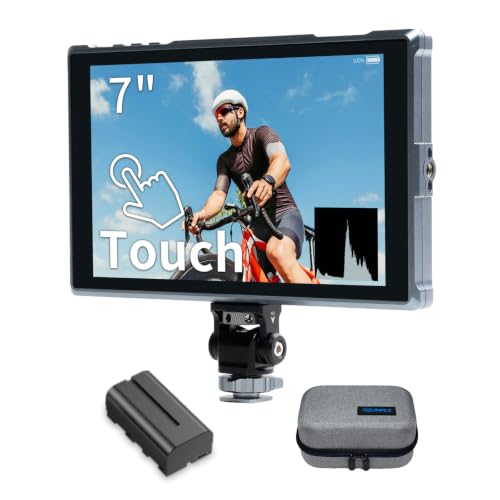
- 7-inch 1280x800 IPS touchscreen display
- Focus and exposure tools for clearer monitoring
- Includes battery, sunshade, bag, and cables
Best For: Creators who want a lightweight starter monitor for handheld or studio shooting
Compact Bundle Choice
FEELWORLD S55 V3 6 Inch On-Camera Monitor Bundle
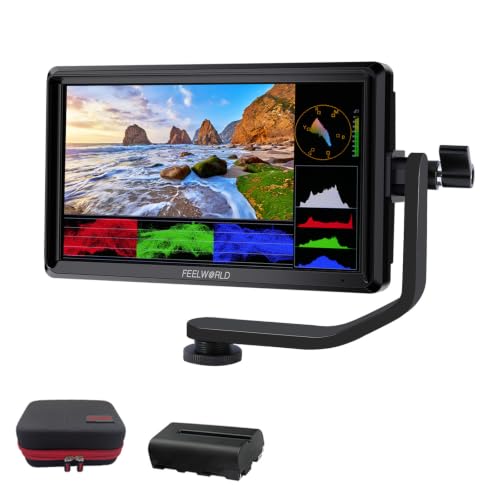
- 6-inch 1080p display with 500 cd/m² brightness
- 4K HDMI input, loop-out, and audio monitoring
- Bundle includes battery, case, sunshade, and tilt arm
Best For: Users who want a compact, ready-to-shoot monitor kit for portable rigs
Outdoor Brightness Pick
FEELWORLD F5 Prox 5.5 Inch 1600nit Field Monitor

- 1600nit brightness for outdoor visibility
- Focus peaking, waveform, histogram, false color, and LUT preview
- Compact kit includes battery, bag, sunshade, and tilt arm
Best For: Outdoor filmmakers who need a bright, portable monitor for accurate focus and exposure
Wireless All-in-One Field Rig – Hollyland Pyro 5 for Multi-User Monitoring
If you want camera field monitors with wireless video built into the same device, the Hollyland Pyro 5 is designed for exactly that workflow. It combines transmitter, receiver, and 5.5-inch monitor functions in one unit, while adding HDMI and SDI support, 1,500 nits of brightness, and 4K input for flexible on-set use.
Best For: Crews that need a compact all-in-one wireless monitoring solution for film sets, live streaming, ENG/EFP, and multi-user viewing.
Pros:
- All-in-one monitor, transmitter, and receiver keeps the setup compact.
- 60ms latency and up to 400m range help with real-time monitoring.
- 1,500-nit display and 4K input improve visibility and image clarity.
- HDMI, SDI, RTMP, waveform, vectorscope, LUTs, and recording add useful production tools.
Cons:
- Wireless capability adds complexity compared with a basic wired monitor.
- 5.5-inch screen may feel small for users who prefer larger displays.
- Best value is in workflows that actually need wireless transmission features.
The Pyro 5 stands out when wireless video monitoring is more important than having a traditional standalone field monitor. If your team needs a versatile, portable hub for sending and viewing video on set, this is the most feature-packed option in the group.
Camera Control Focus Monitor – Portkeys LH5C with Touchscreen Control
The Portkeys LH5C is a practical pick if you want camera field monitors with wireless video features less than camera control and color tools. It focuses on wired touchscreen control for supported Sony, Canon, and Panasonic cameras, while also offering 800-nit outdoor visibility, 4K input, LUT support, and a useful freeze-frame comparison mode.
Best For: Shooters who want a compact monitor with direct camera control, reference-frame comparison, and solid exposure tools.
Pros:
- Touchscreen control for compatible Sony, Canon, and Panasonic bodies.
- 800-nit display with included sunshade helps outdoors.
- Freeze frame overlay is useful for matching shots and continuity.
- Waveform, histogram, false color, peaking, zebra, and 3D LUT support add depth.
Cons:
- Not a wireless video transmitter/receiver system.
- Brightness is lower than the brightest monitors in this roundup.
- Battery is not included with the monitor.
The LH5C is best when your priority is accurate monitoring plus camera control in a compact footprint. It is a strong on-rig tool for solo operators and small crews who want hands-on workflow improvements without needing wireless transmission.
Bright 7-Inch Production Monitor – NEEWER F700 with Touch Screen
The NEEWER F700 is a strong choice if you need camera field monitors with wireless video in a broader production setup, but your main priority is a bright, full-size monitor on the camera. Its 7-inch 2000-nit touch screen, 4K HDMI loop in/out, and extensive monitoring tools make it well suited to daylight shooting and detailed framing.
Best For: Filmmakers and video creators who want a bright 7-inch monitor with advanced assist tools and flexible power options.
Pros:
- 2000-nit 7-inch display is excellent for bright environments.
- 4K HDMI loop in/out supports a wide range of video formats.
- Includes waveform, vectorscope, HDR, peaking, zebras, and custom LUT loading.
- Ships with two NP-F750 batteries and includes cold shoe mounting.
Cons:
- It is HDMI-based only, so it lacks SDI connectivity.
- Larger size is less compact than 5.5-inch options.
- Wireless video is not the focus of this monitor itself.
For users who care most about visibility and monitoring precision, the F700 delivers a lot of screen and toolset for the money. It fits well on larger rigs, studio setups, and daylight shoots where a bright display matters more than compactness.
Wireless Control Field Monitor – Portkeys LH7P for Multi-Camera Use
If you are comparing camera field monitors with wireless video-adjacent control features, the Portkeys LH7P is built around remote operation as much as display quality. It offers a 7-inch 1000-nit touchscreen, built-in wireless camera control for many major brands, one-to-many operation for up to four Portkeys monitors, and 4K HDMI input with no-delay monitoring.
Best For: Multi-camera crews and operators who need wireless control, monitoring tools, and on-set flexibility in one display.
Pros:
- Built-in wireless control supports many Sony, Canon, Panasonic, Nikon, Blackmagic, and Fujifilm cameras.
- One-to-many control can manage up to four Portkeys monitors within 50 meters.
- 4K HDMI in, 1080p60 out, and 7-inch 1000-nit screen support reliable monitoring.
- Freeze frame, LUT loading, waveform, vectorscope, false color, and anamorphic de-squeeze add value.
Cons:
- NP-F battery is not included.
- Wireless control is limited to supported camera and monitor ecosystems.
- Heavier and larger than smaller 5.5-inch field monitors.
The LH7P is a good fit when you want a monitor that can do more than display an image. Its wireless control system makes it especially useful for coordinated shoots where multiple units and camera settings need to stay in sync.
Ultra-Bright Touchscreen Monitor – NEEWER F600 7" 2400nit Field Monitor
If you need camera field monitors with wireless video support in a rigged or director-style setup, the NEEWER F600 stands out for its 2400nit brightness, 7-inch touchscreen, and 4K HDMI loop in/out. It is built for shooters who want a bright daylight monitor with plenty of exposure tools, LUT support, and flexible power options.
Best For: Bright outdoor shoots, solo operators, and creators who want a high-bright monitor with advanced focus and exposure tools.
Pros:
- 2400nit screen with auto backlight control for strong daylight visibility
- 4K HDMI loop in/out and real-time audio monitoring via headphone jack
- Professional tools include waveform, vectorscope, zebra, false color, HDR, and peak focus
- Includes 2 NP-F750 batteries plus USB-C charging and multiple mounting options
Cons:
- Wireless video transmission is not built in; it relies on HDMI connections
- DC power cable is not included
- Larger 7-inch setup may be less compact than smaller field monitors
Overall, this is a strong choice if brightness and monitoring tools matter more than minimal size. The included batteries, touchscreen controls, and cooling system make it especially practical for longer video sessions.
Wireless Workflow Ready Monitor – Portkeys LH7C 7" Camera Monitor
The Portkeys LH7C is a compact option for camera field monitors with wireless video workflows in mind, thanks to its HDMI 3D LUT output and lightweight build. It is aimed at users who want wired camera control, solid color handling, and an easy way to feed a graded signal to a wireless transmitter or director’s monitor.
Best For: Shooters using wireless transmission setups, especially those who want camera control and a lightweight rig monitor.
Pros:
- HDMI 3D LUT output can send a color-graded signal to a wireless transmitter
- Wired touchscreen camera control supports multiple Sony, Canon, and Panasonic models
- Lightweight 245g design is easier to use on cages and gimbals
- Includes freeze frame overlay and multiple anamorphic de-squeeze options
Cons:
- Brightness is 1000 nits, which is lower than some daylight-focused competitors
- Battery is not included
- Control is wired rather than fully wireless
For crews that need a monitor to sit in a wireless video chain, the LH7C is especially appealing. Its combination of camera control, LUT output, and compact size makes it a practical rigging choice.
Portable Daylight Monitor – VILTROX DC-550 5.5" Field Monitor
The VILTROX DC-550 is a smaller camera field monitor built for users who want a bright touchscreen, professional assist tools, and HDMI in/out in a portable package. It fits well in compact kits and can also support wireless video workflows when paired with an external transmitter through its HDMI output.
Best For: Compact camera rigs, travel kits, and shooters who want a bright 5.5-inch monitor with pro assist features.
Pros:
- 1200-nit daylight-viewable display with 1920 x 1080 resolution
- 4K HDMI input and output for larger-screen monitoring or wireless workflows
- Includes waveform, vector, histogram, false color, and focus assist tools
- Triple power support with NP-F battery, DC input, and Type-C power bank power
Cons:
- 5.5-inch screen is smaller than many 7-inch field monitors
- Brightness is lower than the brightest options in this roundup
- Only one NP-F550 battery is included
If you want a compact monitor that still covers the essential exposure and focus tools, the DC-550 is easy to justify. Its included accessories and flexible power options make it especially convenient for run-and-gun shooting.
Portable Touchscreen Pick – FEELWORLD FW759 PRO 7 Inch Touchscreen DSLR Monitor
If you want camera field monitors with wireless video workflow support through a simple, portable viewing setup, the FEELWORLD FW759 PRO is a practical 7-inch option for checking framing, focus, and exposure on set. Its 1280×800 IPS display, touchscreen control, and included accessories make it a straightforward external monitor for DSLR, mirrorless, and camcorder shooting.
Best For: Vloggers, beginners, and creators who want a lightweight monitor kit for handheld, studio, or outdoor shoots.
Pros:
- 7-inch touchscreen display with 1280×800 IPS resolution for a larger viewing area.
- Includes focus and exposure tools like histogram, zebra pattern, focus assist, and false color.
- Lightweight 300g design works well on handheld rigs and gimbals.
- Comes with a sunshade, F550 battery, bag, cables, and mounting accessories.
Cons:
- 400nit brightness is more modest than high-brightness outdoor monitors.
- Uses HDMI monitoring rather than a built-in wireless video link.
- Best suited to basic external monitoring rather than advanced production setups.
Overall, the FW759 PRO is a good value-oriented field monitor when you want a bigger screen and useful exposure tools without a complicated setup. It is especially appealing if you need a ready-to-shoot bundle for everyday video work.
Compact Bundle Choice – FEELWORLD S55 V3 6 Inch On-Camera Monitor Bundle
For buyers comparing camera field monitors with wireless video-friendly on-rig workflows, the FEELWORLD S55 V3 focuses on compact size, solid image quality, and practical monitoring tools. Its 6-inch 1920×1080 panel, 4K HDMI input and loop-out, and included tilt arm make it a convenient choice for compact camera builds.
Best For: Videographers who want a lightweight monitor bundle with useful exposure tools and easy mounting.
Pros:
- 6-inch FHD 1920×1080 display with 500 cd/m² brightness and 160° viewing angle.
- 4K HDMI input and loop-out support for passing video to another display.
- Includes waveform, histogram, focus assist, false color, zebra, zoom, and image flip.
- Comes as an all-in-one bundle with battery, carry case, sunshade, and tilt arm.
Cons:
- Smaller screen size may feel tight for users who prefer larger framing areas.
- Brightness is strong, but not as high as ultra-bright outdoor-focused monitors.
- Wireless video transmission is not built into the monitor itself.
The S55 V3 is a balanced option if you want a compact monitor that is easy to mount and ready to use out of the box. It stands out most for creators who value a practical bundle over a bigger display or extreme brightness.
Outdoor Brightness Pick – FEELWORLD F5 Prox 5.5 Inch 1600nit Field Monitor
If your priority is visibility outdoors, the FEELWORLD F5 Prox is a strong candidate among camera field monitors with wireless video-compatible on-rig setups thanks to its bright, compact design and pro monitoring tools. The 5.5-inch display reaches 1600 nits, making it easier to judge focus and exposure in direct sunlight while staying small enough for travel and gimbal use.
Best For: Filmmakers, vloggers, and outdoor shooters who need a bright, compact monitor for field work.
Pros:
- Ultra-bright 1600nit display improves visibility in outdoor lighting.
- Includes focus peaking, waveform, histogram, false color, and LUT preview.
- Compact 5.5-inch form factor is suitable for rigs, cages, gimbals, and handheld setups.
- Comes with a battery, carry bag, sunshade, tilt arm, and cables for a complete kit.
Cons:
- Smaller 5.5-inch screen may be less comfortable for users who want a larger display.
- Designed around HDMI monitoring rather than built-in wireless video transmission.
- Best at outdoor visibility rather than large-screen studio monitoring.
For shooters who work in bright environments, the F5 Prox offers one of the most practical mixes of brightness and portability. It is a sensible pick when visibility matters more than screen size and you want reliable exposure tools in a compact package.
How We Picked These Camera Field Monitors with Wireless Video
We focused on models that make real-world monitoring easier for solo creators, small crews, and hybrid shooters. The main criteria were wireless video support where available, screen visibility in bright environments, latency, compatibility, touch controls, and useful exposure tools such as waveform, false color, peaking, and 3D LUT support. We also considered whether a monitor is best used as a compact on-camera display or as part of a more advanced wireless monitoring setup.
Quick Comparison: What Matters Most
When comparing Camera Field Monitors with Wireless Video, the biggest differences usually come down to screen size, brightness, and how much control the monitor gives you over the camera and image. A 5.5-inch display is easier to rig compactly, while 7-inch models are better for critical focusing and client viewing. High-nit panels are easier to see outdoors, and HDMI loop-through can be valuable if you need to feed additional accessories. Wireless systems are most useful when you want to reduce cable clutter or monitor from farther away.
Key Buying Factors for Camera Field Monitors with Wireless Video
Display Brightness and Size
If you shoot outdoors, prioritize higher brightness. Sub-1000-nit screens can work indoors, but brighter panels are much easier to read in daylight. Size is a tradeoff between portability and visibility, so choose based on how often you travel versus how often you need a larger reference image.
Wireless Performance and Latency
For wireless video use, latency matters. Lower delay is better for operating, focus pulling, and fast movement. Also check range, stability, and whether the wireless system uses dual-band or other interference-reducing features.
Monitoring Tools and Camera Control
Good Camera Field Monitors with Wireless Video should offer practical tools like peaking, waveform, false color, zebra, zoom, and LUT support. Some models also provide wired or wireless camera control, which can be a big advantage for solo shooters who want fewer separate devices.
Connectivity and Power
Make sure the monitor matches your camera’s outputs, especially HDMI versions and any SDI needs. Battery options, power pass-through, and accessory mounting are also important if you plan to build a reliable rig for longer shoots.
Who Should Buy Which Camera Field Monitors with Wireless Video?
Choose a wireless-capable monitor with stronger brightness if you shoot run-and-gun, outdoors, or in changing light. Pick a more compact 5.5-inch option if you want a lightweight rig for gimbals or mirrorless cameras. Go with a larger 7-inch display if focus accuracy and on-set readability matter most. If you mainly want a simple monitor for dependable framing and exposure, a feature-rich wired model may be enough; if you need distance monitoring and cleaner rigs, wireless video support is worth paying for.