Choosing the right camera for live television means balancing image quality, connectivity, control, and workflow speed. The best options are the ones that integrate cleanly with your switcher, capture chain, and production team.
This roundup highlights 10 strong picks for different broadcast needs, from compact studio cameras to PTZ and run-and-gun models that can still fit into professional TV workflows.
Best 10 4K Studio Cameras for Television Production Picks for 2026
Broadcast-Ready Studio Pick
Blackmagic Studio Camera 4K Pro G2
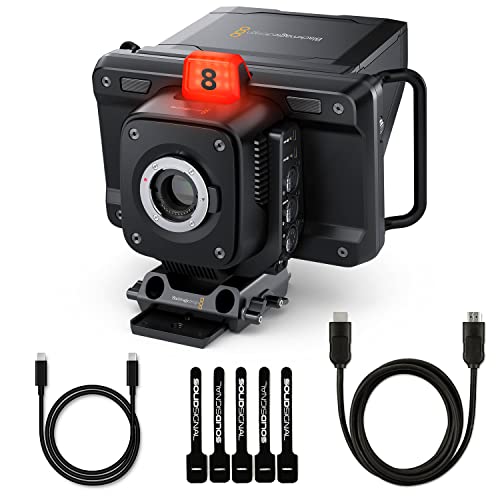
- 4K sensor with up to 25,600 ISO
- 12G-SDI, HDMI 2.0, XLR, and 10G Ethernet
- 7-inch HDR LCD with live production tools
Best For: Live television and multi-camera studio workflows
Fixed-Angle IP Studio Choice
PTZOptics Studio 4K 20x Box Camera

- 20x optical zoom in a compact box body
- NDI|HX2 support for IP video output
- Wired design with 3.5mm audio I/O
Best For: Fixed studio shots and IP-based production systems
Portable Pro Camcorder Bundle
Panasonic HC-X2100 UHD 4K Bundle

- UHD 4K60 capture with 24x zoom
- 3G-SDI, HDMI, XLR, and dual SD recording
- Includes cards, case, tripod grip, and cleaning kit
Best For: Portable broadcast-style shooting and secondary camera roles
Ultra-Compact Hidden Camera
Blackmagic Micro Studio Camera 4K

- Tiny Ultra HD body for hidden angles
- MFT lens support with B4 adapter option
- Expansion port for remote control connections
Best For: Discreet multi-camera setups and hidden studio placements
Run-and-Run 4K Broadcast Cam

- 1.0-inch sensor with 4K 60p recording
- Optical 20x zoom and 24.5mm wide angle
- SDI/HDMI, Ethernet, Wi-Fi, and XLR support
Best For: Mobile news, interviews, and live event production
Studio Switcher Companion
Blackmagic Studio Camera 6K Pro

- Built for ATEM and broadcast studio workflows
- 6K sensor with 13 stops and dual native ISO
- 12G-SDI, HDMI, Ethernet, XLR, and USB support
Best For: Broadcast studios and live switcher-based production
Lightweight Live Production Kit

- UHD 4K60 camera with 24x optical zoom
- 3G-SDI, HDMI, Wi-Fi streaming, and dual XLR inputs
- Includes monitor, mic, headphones, tripod, light, and case
Best For: Small crews wanting a complete live-production bundle
Broadcast Micro Cam
Blackmagic Micro Studio Camera 4K G2

- 4K sensor with dual native ISO
- 12G-SDI, HDMI, and USB-C recording
- Built for ATEM and live production
Best For: ATEM studios and compact broadcast rigs
PTZ Live Controller
FoMaKo K600N 4K NDI PTZ Camera

- NDI HX3 with 4K 60fps output
- 20x optical zoom and AI auto-tracking
- HDMI, USB3.0, LAN, and PoE support
Best For: Live streaming studios and worship production
Broadcast Starter Bundle
Blackmagic Micro Studio Camera 4K G2 Kit

- Camera bundle includes HDMI, USB-C, and cable ties
- 4K sensor with Blackmagic RAW support
- 12G-SDI, HDMI, and built-in audio features
Best For: Fast-start buyers who want accessory extras
Broadcast-Ready Studio Pick – Blackmagic Studio Camera 4K Pro G2
If you’re building a workflow around 4K studio cameras for television production, this Blackmagic Design Studio Camera 4K Pro G2 is aimed squarely at live broadcast use. It combines a 4K sensor, 7-inch HDR LCD, built-in color correction, talkback, tally, and multiple broadcast connections, making it a practical match for ATEM switchers and controlled studio environments.
Best For: Live television, broadcast news, chat shows, sports, education, and multi-camera studio production.
Pros:
- 4K sensor with up to 25,600 ISO and 13 stops of dynamic range
- 12G-SDI, HDMI 2.0, XLR audio I/O, and 10G Ethernet for broadcast setups
- 7-inch HDR LCD with sunshade plus built-in microphones and hardware live streaming
- Blackmagic RAW recording, remote camera control, talkback, and tally support
Cons:
- Uses a Micro Four Thirds lens mount, so lens choice matters
- Geared more toward live production than run-and-gun shooting
Overall, this is one of the most production-focused options here, especially if you need a studio camera that integrates cleanly into a professional live switching workflow. The included bundle extras add convenience, but the camera itself is the main reason to choose it.
Fixed-Angle IP Studio Choice – PTZOptics Studio 4K 20x Box Camera
The PTZOptics Studio 4K 20x Box Camera is a compact stationary option for 4K studio cameras for television production where remote-style framing and clean installation matter. With a 1/2.8-inch CMOS sensor, 20x optical zoom, 3.5mm audio I/O, and NDI|HX2 support, it is built for wired studio and IP-based video setups.
Best For: Fixed-position studio shots, IP video workflows, and productions that need optical zoom in a compact box camera.
Pros:
- 4K stationary box camera with 20x optical zoom
- NDI|HX2 support for IP video output
- Wired connectivity and 3.5mm audio I/O
- Compact 3.5-pound form factor for flexible mounting
Cons:
- More specialized than a traditional camcorder-style camera
- No built-in zoom lens controls or handheld shooting design
This model makes sense when you want a discreet, install-friendly camera that can stay on a fixed shot while still delivering 4K detail and strong zoom reach. It is a solid fit for studio systems that lean on IP video delivery and remote operation.
Portable Pro Camcorder Bundle – Panasonic HC-X2100 UHD 4K Bundle
If you need 4K studio cameras for television production that can also move easily between locations, the Panasonic HC-X2100 bundle is a strong camcorder-style option. It records UHD 4K60, offers a 24x optical zoom, and includes 3G-SDI, HDMI, XLR audio, and dual SD card recording for flexible production use.
Best For: Mobile production, secondary cameras, field work, and compact broadcast-style recording.
Pros:
- UHD 4K60 recording with 24x optical zoom
- 3G-SDI and HDMI outputs for broadcast-style connectivity
- XLR input with phantom power plus headphone monitoring
- Dual SD card recording and a useful accessory bundle included
Cons:
- Smaller 1/2.5-inch MOS sensor than studio camera bodies
- Not as purpose-built for fixed multi-camera studio setups as dedicated studio cameras
For crews that want one camera to cover both production and travel, this Panasonic balances portability with the connections expected in pro video work. The bundle also adds practical accessories that help you get started faster.
Ultra-Compact Hidden Camera – Blackmagic Micro Studio Camera 4K
The Blackmagic Design Micro Studio Camera 4K is designed for live production when size is a priority and you need a camera that can disappear on set. As one of the more specialized 4K studio cameras for television production, it offers a broadcast-grade Ultra HD sensor, MFT lens flexibility, and an expansion port for remote control connections.
Best For: Discreet multi-camera production, hidden angles, and compact live studio installs.
Pros:
- Extremely small Ultra HD live studio camera for tight spaces
- Compatible with MFT lenses and B4 adapters
- Expansion port includes multiple control connections
- Broadcast-grade Ultra HD sensor for live multi-camera production
Cons:
- Very minimal body and small screen size compared with larger studio cameras
- More dependent on external production gear and lens choices
This is the most specialized camera in the group, but that tiny design is the point. If you need an unobtrusive live camera that can be placed almost anywhere, it offers a unique fit for creative studio layouts.
Run-and-Run 4K Broadcast Cam – Panasonic HC-X2
If you’re shopping for 4K studio cameras for television production, the Panasonic HC-X2 is a strong fit when you need a handheld camcorder that can move between interviews, news, and event coverage without giving up pro-style controls. Its 1.0-inch sensor, 4K 60p capture, 24.5mm wide-angle lens, and optical 20x zoom make it practical for mixed production environments.
Best For: News, interviews, live events, and mobile television production teams that want a flexible 4K camcorder with broadcast-friendly connections.
Pros:
- 1.0-inch MOS sensor with 4K 60p support for professional image quality
- 24.5mm wide-angle lens plus optical 20x zoom for versatile framing
- 4K high-precision AF, face detection AF/AE, and 5-axis HYBRID O.I.S. for steadier shooting
- Built-in Wi-Fi, Ethernet, SDI/HDMI output, XLR input, and live streaming support
Cons:
- Renewed listing, so condition may vary compared with new stock
- Handheld camcorder design may be less ideal for fixed studio rig workflows
Overall, the HC-X2 is best viewed as a versatile production camcorder rather than a traditional studio box camera. It stands out when you need a single unit that can handle capture, streaming, and pro connectivity in one body.
Studio Switcher Companion – Blackmagic Studio Camera 6K Pro
Blackmagic Design Studio Camera 6K Pro (EF Mount) Live Production Camera (CINSTUDMFT/G26PDK)
Check Price On AmazonFor buyers focused on 4K studio cameras for television production, the Blackmagic Design Studio Camera 6K Pro is built around live workflow needs rather than handheld shooting. It pairs a 6K sensor, EF mount, 7-inch HDR LCD, built-in color correction, and broad broadcast connections, making it a solid match for controlled studio or multi-camera environments.
Best For: Broadcast studios, ATEM switcher setups, live production, and fixed-position television work.
Pros:
- Designed for broadcast use with ATEM switchers and remote camera control
- 6K sensor, 13 stops of dynamic range, and dual native ISO for flexible imaging
- Built-in ND filters, color correction, microphones, talkback, and tally features
- HDMI, 12G-SDI, 10G Ethernet, XLR audio, and USB recording options
Cons:
- Manual focus design may be less convenient for fast solo operation
- EF mount limits you to compatible lenses
This camera makes the most sense in a controlled production chain where switching, monitoring, and remote operation matter. It is especially compelling if your television workflow already centers on Blackmagic gear and SDI-based connectivity.
Lightweight Live Production Kit – Panasonic HC-X2100 Bundle
If you need 4K studio cameras for television production but want a more portable all-in-one package, the Panasonic HC-X2100 bundle is worth a look. The camera records UHD 4K60, adds 3G-SDI and HDMI outputs, and includes a full accessory set for monitoring, audio, lighting, and support, which can reduce the amount of gear you need to source separately.
Best For: Field production crews, small teams, and creators who want a ready-to-shoot 4K broadcast-style kit with accessories included.
Pros:
- UHD 4K60 recording with a 1/2.5-inch MOS sensor and up to 200 Mb/s bitrate
- 24x optical zoom and 25mm wide-angle lens for flexible framing
- 3G-SDI, HDMI, dual-band Wi-Fi streaming, dual SD slots, and dual XLR inputs
- Bundle includes monitor, mic, headphones, tripod, light, case, batteries, and cables
Cons:
- Heavier kit overall because of the included accessories
- 3G-SDI is less advanced than the 12G-SDI found on higher-end studio cameras
The HC-X2100 bundle is a practical choice when you want production readiness right out of the box. It combines camera performance and essential extras in a way that suits compact crews covering live or documentary-style television work.
Broadcast Micro Cam – Blackmagic Micro Studio Camera 4K G2
Blackmagic Design Micro Studio Camera 4K G2 Live Production Camera (CINSTUDMFT/UHD/MRG2)
Check Price On AmazonIf you need one of the most compact 4K studio cameras for television production, this Blackmagic model is built for live broadcast workflows. It pairs a 4K sensor with 12G-SDI, HDMI, built-in color correction, tally, and remote camera control, making it easy to slot into ATEM-based studio or event setups.
Best For: ATEM users, broadcast studios, and small-footprint live production rigs that need a tiny 4K camera with pro connectivity.
Pros:
- 4K sensor with dual native ISO and up to 25,600 ISO for flexible low-light use.
- 12G-SDI, HDMI, USB-C recording, and support for Blackmagic RAW workflows.
- Built-in microphones, tally, and remote control for live production.
- Light carbon composite body keeps the camera easy to mount in tight spaces.
Cons:
- MFT lens mount means you’ll need to choose and budget for the right lens separately.
- Small body and miniaturized design may not suit users wanting a traditional camcorder form factor.
This is a strong fit if your priority is clean integration into a broadcast switcher workflow rather than an all-in-one camera body. It offers a lot of studio-focused features in a very small package.
PTZ Live Controller – FoMaKo K600N 4K NDI PTZ Camera
For teams comparing 4K studio cameras for television production, this FoMaKo PTZ is aimed at multi-camera live streaming and broadcast-style control. It supports NDI HX3 with 4K 60fps output, plus HDMI, USB3.0, LAN, and 3G-SDI, so it can fit into a flexible studio, church, or event workflow.
Best For: Multi-camera live streaming setups, worship spaces, and studios that want PTZ control with NDI and 4K60 support.
Pros:
- NDI HX3 support with 4K 60fps output and low-latency workflow options.
- 20x optical zoom for distant stage, podium, or studio shots.
- Gen 3 AI auto-tracking with adjustable sensitivity, tracking modes, and target behavior.
- Multiple outputs including HDMI 2.0, USB3.0, LAN, and 3G-SDI.
Cons:
- 3G-SDI is listed at 1080p60, so SDI output is not the highest-resolution option here.
- PTZ design is more specialized than a traditional studio camera body.
This camera makes sense when remote framing, tracking, and networked production matter more than interchangeable-lens flexibility. It is especially useful when you want a camera that can be deployed across live venues and streamed from the same setup.
Broadcast Starter Bundle – Blackmagic Micro Studio Camera 4K G2 Kit
This bundle is a practical entry point for buyers looking at 4K studio cameras for television production because it includes the Blackmagic Micro Studio Camera 4K G2 plus the cables and ties you need to get started. The camera itself is built for broadcast-style work with a 4K sensor, 12G-SDI, HDMI, built-in microphones, tally, and remote control.
Best For: Buyers who want the Micro Studio Camera 4K G2 with useful accessory extras for a faster setup.
Pros:
- Includes the camera plus a 10ft HDMI 2.0 cable, 6ft USB-C cable, and cable ties.
- 4K sensor with Blackmagic RAW support and dual native ISO for live production.
- 12G-SDI, HDMI, and USB-C connectivity for broadcast and recording workflows.
- Compact body is designed for television production, news, education, concerts, and events.
Cons:
- Still requires an MFT lens, which is not included in the bundle.
- Bundle accessories are useful, but the core camera remains a compact, specialized production tool.
If you want the Blackmagic platform but prefer a more complete starting package, this kit removes a few setup hurdles. It is most appealing when you already know you want this camera and simply need the essentials to connect and deploy it.
How We Picked These 4K Studio Cameras for Television Production
We focused on models that make sense for live production, not just general video recording. That means strong 4K output, reliable monitoring and tally support, practical mounting options, and broadcast-friendly connections such as HDMI, 3G-SDI, USB-C, Ethernet, or NDI where applicable.
We also considered sensor size, zoom range, low-light performance, remote control features, and how easily each camera can fit into a multi-camera television setup.
Quick Comparison
If you need maximum flexibility in a fixed studio, studio and PTZ cameras are usually the best fit. If you need a mobile camera that can still feed a live show, a pro camcorder can be the smarter buy. For smaller control rooms, compact bodies with SDI or HDMI output can deliver excellent value without taking up much space.
Key Buying Factors for 4K Studio Cameras for Television Production
Connectivity and Signal Workflow
Check whether the camera supports the output your production chain requires. HDMI is common and simple, but SDI is usually preferred for longer cable runs and more robust broadcast setups. NDI can simplify network-based productions, while USB-C may help with streaming or direct computer capture.
Remote Control and Camera Management
In television production, remote control matters almost as much as image quality. Look for support for pan, tilt, zoom, iris, color, and tally control, especially if the camera will live on a studio floor, wall mount, or tripod far from the operator.
Lens and Framing Needs
Zoom range is critical. A wide lens helps in tight studios, while longer optical zoom is better for talent on stage, worship spaces, classrooms, and panel discussions. For 4K Studio Cameras for Television Production, optical zoom is more valuable than digital zoom.
Sensor Size and Low-Light Performance
Larger sensors generally offer better background separation and cleaner images in difficult lighting. Smaller sensors can still work well in controlled studios, especially when you need compact size, low heat, and lower cost.
Who Should Buy Which 4K Studio Cameras for Television Production?
Choose a PTZ camera if you want automated framing, remote operation, and easy multi-camera coverage with minimal staffing. Choose a studio camera if you want a dedicated live-production body with more manual control and broadcast styling. Choose a pro camcorder if your workflow needs mobility, handheld operation, or a camera that can move between studio and field work.
For most buyers, the best choice comes down to where the camera will live, who will operate it, and which connection standard your switcher or encoder already uses. Match those three factors first, and the right camera usually becomes obvious.