If you’re looking to enhance your filmmaking skills in 2025, choosing the right camera slider can make all the difference. With so many options available, from budget-friendly to high-end models, it’s essential to understand what features matter most. Whether you’re a beginner or a seasoned pro, the right slider can elevate your shots. Let’s explore the top 10 camera sliders that can transform your video production experience.
NEEWER Motorized Camera Slider (ER1-80)

The NEEWER Motorized Camera Slider (ER1-80) is an excellent choice for filmmakers seeking versatility and smooth operation. Weighing just 9.59 pounds, this carbon fiber slider supports up to 11 pounds of gear, making it perfect for various setups. You’ll enjoy multiple shooting modes, including video, time lapse, and manual, all controlled wirelessly via the NEEWER app or remote. Its silent motor guarantees noiseless filming, while adjustable legs provide stability on uneven surfaces. Although the charger isn’t included, the long-lasting battery keeps you rolling. Just be mindful of connectivity issues and transportation care for peak performance.
Best For: Filmmakers and videographers looking for a lightweight, versatile, and silent camera slider for smooth filming.
Pros:
- Supports various shooting modes, including video, time lapse, and manual.
- Constructed from lightweight carbon fiber with a load capacity of 11 pounds.
- Adjustable legs and stability features provide reliable performance on uneven surfaces.
Cons:
- Charger not included, requiring users to provide their own USB-C charger.
- Initial app connectivity can be finicky depending on phone compatibility.
- Rails must be handled carefully to avoid flex or warp during transport.
GVM Motorized Camera Slider

If you’re looking for a camera slider that combines portability with advanced features, the GVM 48/120cm Motorized Camera Slider is an excellent choice. Weighing just 8.8 pounds, it’s made of carbon fiber for stability and anti-shake performance. You’ll appreciate its six shooting modes, including time lapse and panoramic shooting, all controlled via an intuitive app. With multiple screw ports, it easily attaches to various tripods. Setup is straightforward, though it requires a ball head for ideal positioning. Keep in mind that internet access is needed for app control, so plan accordingly for your shoots.
Best For: Those seeking a lightweight, portable camera slider with advanced shooting capabilities for professional video production.
Pros:
- Supports multiple shooting modes, including time lapse and panoramic shooting, enhancing creative options.
- Constructed from carbon fiber, ensuring stability and anti-shake performance during use.
- Easy to set up and control via a user-friendly app, allowing for precise camera movements.
Cons:
- Relies solely on app control, which may pose challenges in areas with limited internet access or connectivity issues.
- Requires a tripod ball head for optimal camera positioning, which may add to overall setup complexity.
- Some users have reported durability concerns and inconsistent customer service experiences.
Zecti Adjustable Carbon Fiber Camera Slider

For videographers seeking a reliable and portable solution, the Zecti Adjustable Carbon Fiber Camera Slider stands out with its lightweight design and carbon fiber construction, weighing just 600g (21.16oz). Measuring 16 inches, it features four precision bearings for smooth movement and adjustable legs with non-skid rubber feet, making it stable on various surfaces. Multiple mounting options guarantee compatibility with a range of cameras, while the included bubble level aids in fine adjustments. Users appreciate its compact size and portability, although it’s best suited for lighter setups. Overall, it’s a fantastic budget-friendly choice for both beginners and seasoned creators.
Best For: Videographers looking for a lightweight and budget-friendly camera slider for lighter setups.
Pros:
- Lightweight and portable design, making it easy to transport and fit in backpacks.
- Smooth movement with four precision bearings, ensuring stable tracking for video shoots.
- Multiple mounting options enhance compatibility with various camera types, catering to different filming needs.
Cons:
- Not ideal for heavier camera setups, as some users reported bending with heavy equipment.
- Limited travel distance may restrict broader shots for more extensive scenes.
- Some users experienced a need for additional fine-tuning with heavier equipment, which may not suit all filmmakers.
GVM Great Video Maker Camera Motorized Slider
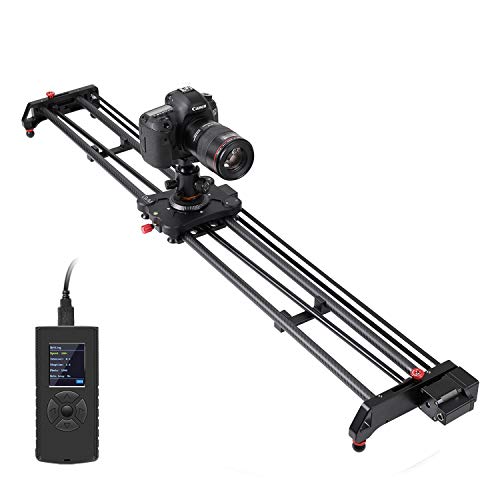
Designed for videographers seeking versatility and precision, the GVM Great Video Maker Camera Motorized Slider offers a range of advanced features that elevate your shooting experience. Available in 48 inches, it supports automatic round trips, time-lapse, and panoramic shooting. With customizable settings for torque, slip speed, and stop time, you can achieve the perfect shot every time. Its carbon fiber construction guarantees stability, while multiple mounting options enhance compatibility with various tripods. Included accessories like shutter release cables and a remote make operation effortless, and you can count on a satisfaction guarantee for peace of mind.
Best For: Videographers and content creators who require a versatile and precise motorized slider for dynamic shooting scenarios.
Pros:
- Customizable settings allow for tailored shooting experiences, accommodating varying creative needs.
- Sturdy carbon fiber construction ensures durability and stability during operation, minimizing vibrations.
- Includes multiple accessories such as shutter release cables and a remote, enhancing functionality and ease of use.
Cons:
- Battery-operated design may require frequent charging for extended shoots, potentially limiting usage time.
- Limited to 48 inches in length, which may not suit all shooting environments or preferences.
- Potential learning curve for users unfamiliar with motorized slider settings and operations.
Neewer DL400 Motorized Camera Slider Dolly with App Control

The Neewer DL400 Motorized Camera Slider Dolly with App Control is perfect for videographers seeking smooth, professional-grade shots without the noise. With its ultra-quiet dual motor and non-slip rubber wheels, you can record uninterrupted at just below 30db. It supports up to 6.6lb (3kg) and connects seamlessly with various cameras, including DSLRs and smartphones. Using the NEEWER App, you can control settings wirelessly, choosing from Manual, Live Video, or Time Lapse modes. Plus, with customizable shooting options and precise motion control, your creative possibilities are endless. It’s a must-have for elevating your filmmaking game!
Best For: Videographers and filmmakers looking for a quiet and versatile motorized slider to enhance their shooting capabilities.
Pros:
- Ultra-quiet operation: Records video at below 30db, ensuring minimal noise disruption.
- Wireless app control: Easily manage settings and modes from iOS or Android devices via the NEEWER App.
- Customizable shooting modes: Offers various options like Live Video and Time Lapse to suit different creative needs.
Cons:
- Requires separate camera shutter cable for Time Lapse mode: Additional equipment needed for full functionality.
- Maximum load of 6.6lb (3kg): May not support heavier camera setups or accessories.
- Caution required on slopes: Starting at higher speeds on inclines can cause shaking during shots.
NEEWER Motorized Camera Slider (ER1-120)

With its smart two-way control featuring both app and remote functionality, the NEEWER Motorized Camera Slider (ER1-120) stands out as an ideal choice for videographers seeking seamless operation and versatility. This 47.2” slider supports up to 11 pounds for horizontal shots and offers multiple shooting modes, including time-lapse. Its lightweight carbon fiber build guarantees durability, while the four roller bearings enhance stability. You’ll appreciate the adjustable angles for varied shots, and the powerful motor operates smoothly and silently. Plus, with multiple power options and a decent battery life, you’re set for extended filming sessions without interruptions.
Best For: Videographers and content creators looking for a versatile and portable camera slider with smart control options.
Pros:
- Smooth and quiet operation thanks to the upgraded powerful motor and four roller bearings.
- Lightweight carbon fiber construction provides durability without adding significant weight.
- Multiple shooting modes and adjustable angles allow for creative flexibility in various filming scenarios.
Cons:
- Some users report wobble during use, which may affect shot stability.
- App functionality concerns have been noted, with some features not performing as expected.
- Recommendations for using two tripods for added stability may limit portability for some users.
NEEWER 16in Carbon Fiber Camera Slider with Adjustable Legs

For videographers looking to enhance their production value without breaking the bank, the NEEWER 16in Carbon Fiber Camera Slider stands out as an exceptional choice. Weighing just 21.7oz, it’s lightweight and portable, making it easy to carry. The upgraded 360° adjustable legs let you achieve flexible angles, while the bubble level guarantees perfect alignment. With a load capacity of up to 4.4lb, it accommodates various devices like DSLRs, smartphones, and action cameras. Plus, the smooth, noiseless sliding action and versatile mounting options make it a fantastic tool for both beginners and seasoned professionals alike.
Best For: Videographers seeking a lightweight, versatile slider that enhances production value for dynamic shots without a hefty price tag.
Pros:
- Lightweight and portable design, ideal for on-the-go shooting.
- Smooth, noiseless sliding action thanks to high precision bearings.
- Versatile mounting options support a range of devices, from DSLRs to smartphones.
Cons:
- Some users report minor imperfections in sliding action.
- Alignment issues may arise for precise shots.
- Load capacity may be limiting for heavier professional equipment.
Neewer Wireless Video Camera Dolly
Looking for an affordable solution to elevate your videography? The Neewer Wireless Video Camera Dolly is a game-changer. Weighing just 10.41 oz and supporting up to 6.6 lbs, it’s perfect for DSLRs, camcorders, and smartphones. Its motorized electric track slider offers three adjustable speeds for dynamic shots. With a remote control range of 19.7 ft, you can easily change speed and direction while filming. The adjustable wheel angle allows for creative movements, making it ideal for B-roll and time-lapses. Though it’s designed for lighter setups, its compact and lightweight design makes it a must-have for hobbyists.
Best For: Amateur videographers and hobbyists seeking an affordable and portable solution for dynamic filming.
Pros:
- Compact and lightweight design makes it easy to transport and set up.
- Offers three adjustable speeds for versatile shot options.
- Compatible with a wide range of devices, including DSLRs, camcorders, and smartphones.
Cons:
- Limited to lighter camera setups, as it may tip with heavier equipment.
- Some users report motor noise, which may be distracting in quiet environments.
- Performance may be hindered on uneven surfaces and inclines.
IFOOTAGE Shark Slider Nano II Motorized Camera Slider

The IFOOTAGE Shark Slider Nano II Motorized Camera Slider is designed for videographers seeking seamless cinematic movement and precision. With a payload capacity of 15.4 lbs, it supports DJI RS series gimbals, ensuring perfect integration for your shoots. The slider offers 360° unlimited pan movement with dual-axis control, delivering smooth, jitter-free motion. Its silent brushless motor operates below 20dB, making it ideal for quiet recordings. You’ll love the user-friendly touchscreen for setting customizable waypoints, along with AI tracking for dynamic shots. Plus, with its durable design and responsive customer support, you can count on this slider for professional results.
Best For: The IFOOTAGE Shark Slider Nano II is best for professional videographers looking for a high-quality motorized slider that integrates seamlessly with DJI RS series gimbals for dynamic and stable shots.
Pros:
- Smooth Operation: Features 360° unlimited pan movement and dual-axis motorized control for cinematic fluidity.
- Silent Performance: Brushless motor operates under 20dB, making it suitable for quiet environments like ASMR recordings.
- User-Friendly Controls: Offers an intuitive touchscreen and smartphone app for customizable waypoints and AI tracking.
Cons:
- Initial Motor Issues: Some users reported experiencing motor problems shortly after purchase.
- Lack of Programmable Delays: Users expressed a desire for programmable delays between keyframes for more complex shots.
- Weight Consideration: At 12.65 lbs, it may be less portable for some users compared to lighter alternatives on the market.
GVM Carbon Fiber Motorized Camera Slider

If you’re seeking a versatile and portable solution for dynamic video production, the GVM Carbon Fiber Motorized Camera Slider is an excellent choice. Weighing just 10.18 pounds, this slider features multiple shooting modes, including time-lapse and tracking. With its remote control, you can easily set parameters like motor torque and slip speed. Its carbon fiber construction guarantees stability and minimizes shake, making it ideal for outdoor shoots. Plus, it’s compatible with most cameras and tripods. With a 365-day warranty and responsive customer support, you’ll be well-equipped to elevate your filmmaking game.
Best For: Filmmakers and photographers looking for a portable, versatile camera slider that offers advanced features for dynamic shooting.
Pros:
- Lightweight carbon fiber construction ensures stability and reduces shake during shooting.
- Multiple shooting modes including time-lapse, tracking, and panoramic shooting cater to various filming needs.
- Remote control functionality allows for precise adjustments to motor settings and shooting parameters.
Cons:
- Some users have reported a lack of persistent memory for saved settings, which could be inconvenient.
- The user interface may not be as intuitive, requiring a learning curve for new users.
- Limited customer feedback indicates a small user base, which may affect long-term reliability assessments.
Factors to Consider When Choosing Camera Sliders for Video
When you’re choosing a camera slider for video, several key factors matter. You’ll want to contemplate payload capacity, build material, and the length and size that fit your setup. Additionally, think about control options and shooting modes to enhance your creative process.
Payload Capacity
Choosing the right camera slider requires careful consideration of payload capacity, especially since it determines how much weight the slider can handle without compromising stability. Most sliders support weights from 2kg to 7kg for horizontal use, while capacities drop for tilted angles. It’s crucial to match the slider’s load capacity with your camera’s weight, factoring in any additional gear like lenses and stabilizers that can add significant weight. When you’re selecting a slider, make sure its payload capacity exceeds the total weight of your setup to avoid performance issues. This will help you maintain smooth, high-quality footage, no matter the shooting angle. Prioritizing payload capacity will elevate your filmmaking experience and enhance your creative potential.
Build Material
After confirming your camera slider’s payload capacity, the next factor to evaluate is the build material. Camera sliders typically use carbon fiber or aluminum, each offering distinct advantages. Carbon fiber sliders are lightweight and possess a high strength-to-weight ratio, making them ideal for portability without sacrificing durability. If you’re looking for a more cost-effective option, aluminum sliders provide robust performance but tend to be heavier, which can affect transportation ease. Remember, the material also influences the slider’s load capacity, with carbon fiber generally supporting heavier setups. Additionally, pay attention to construction quality; features like precision bearings and anti-shake mechanisms are vital for achieving smooth, noiseless operation during your filming sessions. Choosing the right material guarantees you get the best performance for your needs.
Length and Size
Understanding the length and size of camera sliders is essential for optimizing your filming capabilities. Sliders typically range from 16 inches (40 cm) to over 47 inches (120 cm). A longer slider gives you more motion, ideal for dynamic shots, while a shorter one is perfect for tight spaces or quick setups. Portability is another factor; shorter sliders fit easily in bags, while longer ones require more careful transport. Weight also plays a role—lightweight sliders are easier to carry but may need stability measures with heavier cameras. Finally, adjustable leg designs enhance flexibility, allowing you to level the slider on uneven surfaces, regardless of length, ensuring smooth shots every time.
Control Options
When it comes to camera sliders, the control options can greatly impact your shooting experience and the quality of your footage. Look for sliders that offer wireless app connectivity, allowing you to operate settings remotely for added convenience. Many models provide customizable features like start and end points, speed adjustments, and programmable intervals, giving you greater creative control. Consider remote control functionality, as some sliders allow operation from up to 19.7 feet away, providing flexibility during shoots. Additionally, features like auto loop and preset saving let you easily repeat complex movements without constant manual resets. By prioritizing these control options, you can enhance your filming process and achieve stunning results.
Shooting Modes
Control options play an important role in enhancing your shooting experience, but the variety of shooting modes available on a camera slider can greatly expand your creative possibilities. When selecting a slider, consider options like tracking shots, panoramic shooting, and time-lapse. These modes can elevate your projects by providing flexibility. Look for customizable settings for start and end points, along with adjustable speed options, to suit different filming styles. The convenience of controlling modes via a smartphone app or remote can simplify complex shots. Additionally, some sliders offer auto-looping for time-lapse, allowing continuous movement without manual adjustments. Choosing a slider with easily switchable modes can streamline your process and improve production efficiency, making your filmmaking experience even more enjoyable.
Portability Features
Portability is vital for filmmakers who often find themselves shooting in diverse locations. The weight of camera sliders varies greatly; for instance, the GVM 48/120cm Motorized Slider weighs around 8.8 pounds, while the lightweight Zecti Camera Slider is just 1.34 pounds, making it easier to transport. Many options, like the NEEWER 16in Carbon Fiber Slider, come with carrying bags for added convenience. Additionally, adjustable legs found in models like the GVM series enhance stability on uneven surfaces, important for outdoor shoots. A compact design, such as the 16-inch Zecti Slider, fits easily into backpacks, while lightweight materials like carbon fiber provide strength without unnecessary bulk. These features guarantee you can take your gear anywhere without hassle.
Stabilization Mechanisms
Choosing the right camera slider goes beyond just portability; stabilization mechanisms play a significant role in capturing smooth, professional-looking footage. Look for sliders with multiple roller bearings—four or more—to enhance stability and guarantee anti-shake operation during movement. The construction material matters too; carbon fiber or aluminum reduces weight while improving stability, leading to smoother slides and less wobble. Adjustable legs with non-skid rubber feet help you level the slider on uneven surfaces, further enhancing stability during your shoots. If you’re considering motorized sliders, opt for those with silent motor drives to minimize noise, especially in quiet environments. Effective stabilization is vital for achieving high-quality shots, particularly in dynamic scenarios or when using heavier camera setups.
Price Range
When considering a camera slider, price is an essential factor that can markedly impact your decision. Sliders can range from budget-friendly options around $50 to high-end models exceeding $1,000. If you’re an amateur or semi-professional videographer, mid-range sliders costing between $200 and $500 strike a balance between functionality and durability. The price often reflects features like motorized controls and material quality; carbon fiber models tend to be pricier due to their lightweight strength. Don’t forget to factor in additional costs for accessories like remote controls and mounting hardware, which can increase your overall investment. Remember, investing in a higher-priced model may offer better long-term value and resale potential, thanks to its quality and features.