A weighted keyboard can make the move from a digital piano to an acoustic piano feel more familiar. But key action is only part of the choice: cabinet size, pedals, speakers, and portability matter just as much in daily use.
These 10 options span portable instruments and home-focused consoles. Use the buying guide below to narrow them down by how and where you plan to play.
Best 10 Digital Pianos with Weighted Keys Picks for 2026
Best Retro-Style Console
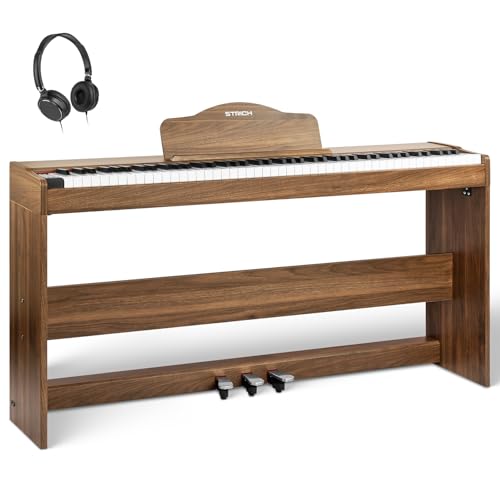
- 88 fully weighted hammer-action keys
- Walnut-grain furniture stand
- 128 timbres and USB-MIDI connectivity
Best For: Beginners wanting a retro-style home piano with varied sounds
Best Desk-Style Design
UISCOM 88-Key Home Digital Piano

- 88-key progressive hammer action
- Sustain, sostenuto, and soft pedals
- Recording and MIDI functionality
Best For: Home players seeking a desk-style piano with three pedals
Best Streamlined Keyboard

- 88 weighted, touch-sensitive keys
- Ten voices with Dual Mode
- 25 pounds; sustain pedal included
Best For: Players wanting simple controls and a movable 88-key piano
Best Feature-Rich Compact Console

- 88 weighted hammer-action keys
- 238 tones and 200 rhythms
- Triple pedals and USB-MIDI
Best For: Beginners seeking a compact home console with many sounds
Best Upright-Style Setup

- 88 graded-hammer keys
- Bench and three pedals included
- Dual headphone jacks
Best For: Home practice in a traditional upright-style setup
Best for Accompaniment
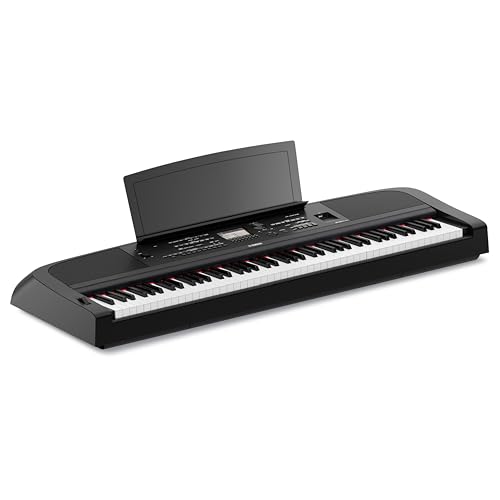
- 88-key graded weighted feel
- 630 voices and 263 styles
- Mic input and score display
Best For: Playing with accompaniments and exploring varied sounds
Best Portable Practice Option
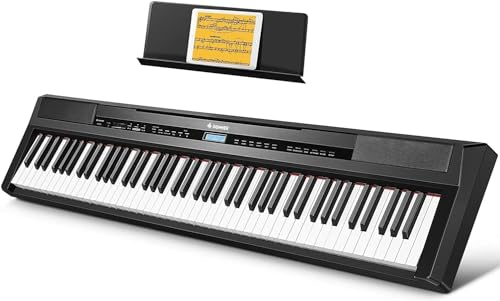
- 88 hammer-action keys
- 238 tones and dual-tone mode
- Sustain pedal included
Best For: Beginner practice and experimenting with instrument sounds
Best for Shared Practice

- 88 fully weighted keys and three pedals
- Split mode creates two 44-key sections
- Bluetooth MIDI, USB, and headphones
Best For: Shared home practice and lessons
Best Beginner Home Setup

- 88 weighted hammer-action keys
- Three pedals and practice accessories included
- Recording, metronome, and wireless MIDI
Best For: Beginners setting up a stationary home piano
Best for Sound Variety

- 88 fully weighted hammer-action keys
- 200 tones and 700 rhythms
- Stand, sustain pedal, and 2 × 15W speakers
Best For: Players exploring varied sounds and accompaniment
Best Retro-Style Console – STRICH SDP-300W
Among digital pianos with weighted keys, the STRICH SDP-300W stands out for its walnut-grain furniture stand and 88 full-size hammer-action keys with an ivory-like texture. It offers a home-piano look alongside a broad selection of sounds and practice features.
Best For: Beginners who want a retro-style home piano with varied sounds and app connectivity.
Pros:
- 88 fully weighted, hammer-action keys.
- 128 preset timbres, 200 rhythms, and layer/split functions.
- USB-MIDI and wireless connectivity support compatible teaching apps.
Cons:
- At 58.8 pounds, it is better suited to a fixed spot than frequent moving.
- The supplied specifications conflict on speaker output, listing both 25W × 2 and 20W.
The SDP-300W is a good fit if appearance and sound variety matter as much as the weighted keyboard. Check the speaker specification if output power is a deciding factor.
Best Desk-Style Design – UISCOM 88-Key Home Digital Piano
For shoppers comparing digital pianos with weighted keys that also work as home furniture, this UISCOM model combines an 88-key progressive hammer-action keyboard with a wooden desk-style design. Its controls cover the essentials without a large sound library.
Best For: Home players who want a desk-style cabinet, three pedals, and MIDI functionality.
Pros:
- Triple pedals provide sustain, sostenuto, and soft functions.
- Offers recording, playback, dual-tone mode, and adjustable effects.
- USB connectivity supports MIDI use and playback from a USB device.
Cons:
- Eight tones give you fewer built-in sound choices than some feature-heavy models.
- Its desk-style design is less suited to players seeking a portable keyboard.
Choose this UISCOM if an integrated home setup and full pedal set matter more to you than a wide range of preset voices.
Best Streamlined Keyboard – Yamaha P71
The Yamaha P71 is a straightforward option among digital pianos with weighted keys: it pairs an 88-key, touch-sensitive weighted action with simple one-button operation. At 25 pounds, it is also easier to move than the furniture-style models in this roundup.
Best For: Players who want a simple, movable 88-key piano for focused practice.
Pros:
- Weighted, touch-sensitive keys support dynamic playing.
- Ten voices include a Yamaha grand piano sound; Dual Mode layers two voices.
- A sustain pedal and power supply are included.
Cons:
- No furniture stand is listed among the included components.
- Ten voices offer less sound variety than models with extensive preset libraries.
The P71 keeps the emphasis on playing rather than navigating features. Budget for a stand if you do not already have one.
Best Feature-Rich Compact Console – Donner DDP-90 Pro
If you are shopping for digital pianos with weighted keys for a smaller living space, the Donner DDP-90 Pro brings a compact console design and 88 full-size hammer-action keys. It also offers far more built-in tones and rhythms than a basic practice piano.
Best For: Beginners who want a compact home console with three pedals and plenty of sounds to explore.
Pros:
- Weighted hammer-action keys have an ivory-feel texture.
- 238 tones, 200 rhythms, and 100 songs provide practice variety.
- Triple pedals, a slow-closing cover, headphone mode, and USB-MIDI add everyday utility.
Cons:
- At 70.6 pounds, it is not a convenient choice for frequent transport.
- Its console design takes more room than a keyboard-only model.
The DDP-90 Pro makes sense when you want an all-in-one home piano with broad creative options. Measure your intended space and plan to leave it set up.
Best Upright-Style Setup – Yamaha Arius YDP-105
For shoppers comparing digital pianos with weighted keys, the Yamaha Arius YDP-105 offers an 88-key Graded Hammer Standard keyboard in a traditional upright-style cabinet. Its dark rosewood finish and included bench make it a ready-to-place option for home practice.
Best For: Beginners and intermediate players who want a furniture-style piano with a three-pedal setup.
Pros:
- Graded Hammer Standard keys with touch response.
- Grand piano sound plus nine other instrument voices.
- Includes a bench, three pedals, built-in speakers, and dual headphone jacks.
Cons:
- At 82.7 pounds, it is less convenient to move than a portable keyboard.
- Its upright cabinet requires dedicated floor space.
Choose the YDP-105 if an acoustic-piano-style practice setup matters more to you than portability or an extensive sound library.
Best for Accompaniment – Yamaha DGX-670B
Among digital pianos with weighted keys, the Yamaha DGX-670B suits players who want more than piano practice. Its 88-key action is heavier in the lows and lighter in the highs, while CFX stereo sampling provides its featured grand piano sound.
Best For: Players who want weighted-key practice alongside accompaniment, varied sounds, and singing features.
Pros:
- Offers 630 instrument voices and 263 automatic accompaniment styles.
- Includes a microphone input with digital vocal effects.
- Built-in score display supports its You Are The Artist learning features.
- Includes a music rest, sustain foot switch, and power adapter.
Cons:
- Furniture stand and bench are sold separately.
- Its many sound and accompaniment options may be unnecessary if you only want basic piano practice.
The DGX-670B is the feature-rich pick here: it combines a graded weighted feel with tools for arranging fuller performances, but budget for furniture separately if you need it.
Best Portable Practice Option – Donner DEP-20
The Donner DEP-20 gives buyers looking for digital pianos with weighted keys an 88-key, full-sized hammer-action keyboard in a portable-style design. Adjustable touch response lets you tailor the key feel as you practice.
Best For: Beginners who want a weighted keyboard for practice, sound exploration, and basic recording features.
Pros:
- Full-sized weighted keys with adjustable touch response.
- 238 tones, dual-tone mode, and 128-note maximum polyphony.
- Includes a sustain pedal, sheet music stand, and power adapter.
- Backlit LCD, MIDI recording mode, MP3 player, and two 25W amplifiers.
Cons:
- The supplied package lists a sustain pedal, not a three-pedal unit.
- A furniture stand and bench are not listed among the included components.
Pick the DEP-20 if you want full-sized weighted keys and plenty of built-in tones without committing to an upright cabinet; check your stand and seating needs separately.
Best for Shared Practice – Ktaxon GPP-203 Walnut Upright
The Ktaxon GPP-203 is a furniture-style option among digital pianos with weighted keys. Its 88-key hammer-action keyboard, three-pedal unit, and two 10W speakers cover the essentials for home practice, while a split mode lets two players use separate 44-key sections.
Best For: Households that want an upright-style piano for lessons, shared practice, and headphone sessions.
Pros:
- Fully weighted 88-key keyboard with soft, sustain, and sostenuto pedals.
- Split mode supports two players; touch control and transpose add practice flexibility.
- Bluetooth audio and MIDI, USB connectivity, and a headphone jack expand practice options.
Cons:
- The split mode gives each player 44 keys rather than a full keyboard.
- Its corded, furniture-style design is less suited to frequent moves.
Choose this model if shared lessons and built-in pedals matter more than portability. Its recording and playback function also gives learners a way to review their practice.
Best Beginner Home Setup – Eastar EUP-100 Retro Wood
For beginners comparing digital pianos with weighted keys, the Eastar EUP-100 combines an 88-key hammer-action keyboard with a three-pedal unit and practice accessories. Its retro-wood cabinet can also serve as a desk when the piano is not in use.
Best For: Beginners who want a home-focused piano with pedals, headphones, and built-in learning tools.
Pros:
- Fully weighted 88-key keyboard and included three-pedal unit.
- Recording, metronome, transpose, 13 voices, and 31 built-in songs support varied practice.
- Includes headphones, stickers, and a protective cover; wireless MIDI supports compatible learning apps.
Cons:
- At 25 kg, it is not a convenient choice for frequent transport.
- Assembly is required, and the manufacturer suggests using two people.
The EUP-100 makes the most sense as a stationary beginner setup. Its accessory bundle reduces the need to source basic practice items separately, provided you have room for the 53.35-inch-wide cabinet.
Best for Sound Variety – STRICH SDP-120 with Stand
The STRICH SDP-120 stands out among digital pianos with weighted keys for its broad built-in sound selection: 200 tones, 700 rhythms, and 110 demo songs. It pairs an 88-key hammer-action keyboard with a stand, sustain pedal, and two 15W speakers.
Best For: Players who want weighted-key practice alongside plenty of tones and accompaniment rhythms.
Pros:
- Fully weighted 88-key keyboard with a stand and sustain pedal included.
- 200 tones, 700 rhythms, and 128-note maximum polyphony offer room to experiment.
- LCD controls, wireless MIDI, USB connectivity, and a headphone jack add flexibility.
Cons:
- Only a sustain pedal is listed; a three-pedal unit is not included.
- The stand and corded power make it better suited to a fixed setup than portable use.
Pick the SDP-120 if exploring sounds and rhythms is a priority. Players who specifically need soft and sostenuto pedals should consider a model that includes a three-pedal unit instead.
How We Picked These Digital Pianos with Weighted Keys
We organized this selection around practical buying needs rather than treating every 88-key piano as interchangeable. The lineup includes portable keyboards, furniture-style home pianos, and an instrument with broader accompaniment features. When comparing them, prioritize the stated key action, included pedals and stand, space requirements, and the features you will actually use. Product listings do not always make it easy to judge touch or sound, so try an instrument in person when possible and check current specifications before ordering.
Quick Comparison: Start with Your Setup
- Need to move or store your piano? Start with the Yamaha P71 or Donner DEP-20. Check whether the stand, bench, and preferred pedal are included or separate.
- Want a permanent home setup? Compare the Yamaha Arius with furniture-style options from STRICH, UISCOM, Donner, Ktaxon, and Eastar. Measure the full cabinet, including space for the bench.
- Want more than straightforward piano practice? Consider the Yamaha DGX-670B if accompaniment and a wider range of playing features appeal to you.
Several models in this roundup have similar names or multiple configurations. Confirm the exact model, finish, and bundle contents on the product page before comparing prices.
Key Buying Factors for Digital Pianos with Weighted Keys
Key Feel and Control
“Weighted” does not guarantee the same feel across instruments. Hammer-action and graded actions are worth looking for if you are practicing acoustic-piano technique, but resistance, key return, and dynamic response vary. If possible, play softly and loudly across the full keyboard to see whether you can control the sound comfortably.
Pedals, Speakers, and Space
A sustain pedal may be enough for early lessons, while a three-pedal unit is more useful as repertoire advances. Check what comes in the box; a compatible accessory can add to the total cost. Built-in speakers are convenient for home playing, but headphones may matter more in a shared space. A furniture cabinet offers a ready-to-play setup, whereas a portable piano can be easier to reposition but may need a sturdy stand.
Connections and Everyday Use
Check headphone, USB or MIDI, and audio connections against your plans for lessons, recording, or apps. Do not assume similarly named models share the same ports. Simple controls can be a benefit for focused practice; extra sounds and accompaniment are valuable only if you expect to use them.
Who Should Buy Which Digital Pianos with Weighted Keys?
Beginners: Choose an 88-key model that feels comfortable and leaves room in the budget for a stable setup, headphones, and lessons. Acoustic-piano students: Put key response and pedal configuration ahead of sound-count claims. Apartment players: Favor a compact footprint and convenient headphone use. Home players who rarely move their instrument: A cabinet-style piano may be the tidiest choice. Players who enjoy arranging or accompaniment: Look closely at the DGX-670B’s feature set before deciding whether those extras justify its place in your setup.