Managing aquarium equipment is easier when key functions run through compact, connected controllers instead of a crowded collection of timers, probes, and power adapters. The best space-saving smart aquarium controllers help automate temperature, lighting, dosing, top-off, and reef equipment while keeping your cabinet or stand more organized.
This roundup compares 10 options for freshwater and saltwater systems, from Wi-Fi power strips and thermostats to lighting controls, automatic top-off systems, dosing pumps, and reef-specific controllers.
Best 10 Space-Saving Smart Aquarium Controllers Picks for 2026
Whole-Setup Control
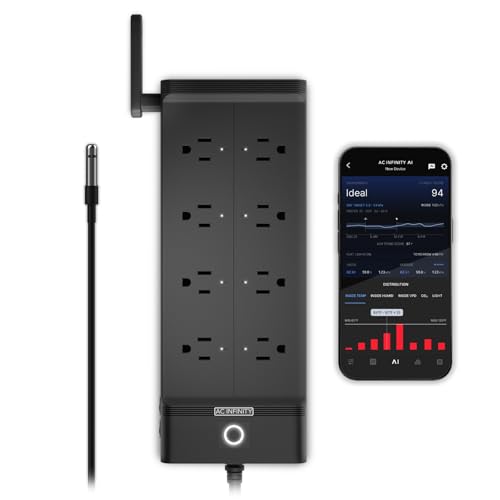
- Eight individually controlled smart outlets
- WiFi app with alerts and data charts
- Dual-zone temperature and humidity monitoring
Best For: Multi-device aquarium setups needing centralized control
Heater Safety Specialist

- Dedicated aquarium heater controller
- Dual probes monitor temperature differences
- Overheating protection and app notifications
Best For: Aquariums needing focused heater control
Water-Level Automation

- Compact optical sensor for varied tank styles
- Dual sensors help maintain water level
- Includes pump and overfill protection
Best For: Freshwater or saltwater tanks needing automatic top-off
Simple Temperature Automation

- Automatic start and stop temperature control
- Clear digital display for quick monitoring
- Overheat and overload protection included
Best For: Basic plug-and-play aquarium temperature regulation
Environmental Insight

- Tracks temperature and humidity
- Monitors CO2 and VOCs
- High-contrast Neptune Apex display
Best For: Neptune Apex users monitoring room conditions
Compact Dosing Control

- WiFi app scheduling
- Up to 24 daily programs
- Compact 12V, one-channel design
Best For: Basic freshwater or saltwater dosing routines
Smart Lighting Control
Lominie 4-Channel WiFi Controller

- Four-channel LED control
- Six timers with dimming
- Remote app operation
Best For: Compatible five-pin LED aquarium lights
Best Dual-Stage Temperature Control

- Controls heating and cooling together
- Temperature and setpoint shown simultaneously
- High, low, and sensor-failure alarms
Best For: Multi-type aquariums needing compact temperature management
Best Compact WiFi Light Control
Lominie Programmable WiFi Controller

- Wired, remote, and WiFi control
- Ramp timer and dimming functions
- Daylight, moonlight, sunrise, and sunset modes
Best For: Programmable LED aquarium lighting
Best Reef Pump Integration
Red Sea ReefRun Dual Controller

- Controls up to two ReefRun devices
- Works with the ReefBeat app
- Custom feed, maintenance, and emergency modes
Best For: ReefRun return and skimmer pump systems
Whole-Setup Control – AC Infinity Outlet AI+
For space-saving smart aquarium controllers that coordinate more than a heater, the AC Infinity Outlet AI+ combines eight individually controlled outlets with WiFi monitoring. It can manage aquarium equipment through schedules, timers, climate triggers, or AI-based targeting from a connected app.
Best For: Aquariums with multiple devices such as heaters, lights, fans, CO₂ systems, and water pumps.
Pros:
- Eight independently programmable outlets support flexible equipment control.
- WiFi app provides remote control, alerts, data charts, and guides.
- Tracks dual-zone temperature, humidity, and VPD, with optional additional sensors.
- Metal enclosure, surge protection, and an 1800W maximum capacity add practical protection.
Cons:
- Optional CO₂, hydro, and soil sensors are sold separately.
- Its broader grow-space feature set may be more than needed for a simple aquarium.
This is the most versatile option here for consolidating several aquarium controls into one connected unit. Its eight-outlet layout can reduce controller clutter, while the app adds useful remote visibility and alerts.
Heater Safety Specialist – Inkbird ITC-306A WiFi
The Inkbird ITC-306A is a focused choice among space-saving smart aquarium controllers, built specifically for heater temperature management. Its dual probes, WiFi notifications, and protective relay design help maintain a more dependable heating setup without managing unrelated equipment.
Best For: Aquarium keepers who want dedicated heater control with dual-probe monitoring and phone alerts.
Pros:
- Dual probes can identify a temperature difference and trigger an alarm.
- Two-relay protection can shut off the connected heater during overheating.
- Supports heating periods from 1 to 72 hours and sends app notifications.
- Plug-and-play design works with most heaters up to the stated power rating.
Cons:
- Designed for heater control rather than broader aquarium automation.
- The supplied dimensions and LCD design may be less compact than a simple plug adapter.
Choose this controller when temperature stability and heater safety are the priority. The dual-probe arrangement adds a useful cross-check, while the app alerts can help identify issues when you are away.
Water-Level Automation – FZONE QST2.0 ATO
The FZONE QST2.0 is a compact option for space-saving smart aquarium controllers focused on automatic top-off duties. Its small optical sensor, dual-sensor monitoring, and included pump help maintain water levels in freshwater or saltwater tanks without requiring a large control unit.
Best For: Rimmed, rimless, or sump aquariums that need automatic evaporation compensation.
Pros:
- Compact 0.79-inch optical sensor suits different tank configurations.
- Dual sensors monitor water level with a stated 0.6 cm difference.
- Overfill protection, sensor-fault detection, and low-reservoir alerts improve safety.
- Includes a quiet micro pump, check valve, magnets, and 6-foot tube.
Cons:
- Recommended for tanks with wave fluctuations under 1 cm.
- The pump requires a reservoir neck wider than 1.97 inches.
- This is an auto top-off system, not a general-purpose controller for heaters or lights.
For tanks where evaporation is the main concern, the QST2.0 keeps the hardware focused and compact. Its included accessories and safety shutdown behavior make installation straightforward, provided the tank and reservoir meet the stated size requirements.
Simple Temperature Automation – Digital Aquarium Thermostat
This digital aquarium thermostat offers a straightforward approach to space-saving smart aquarium controllers by combining a temperature display and automatic socket control. Set the target temperature and adjustable differential, then let the unit start or stop connected equipment automatically.
Best For: Aquarium setups seeking basic plug-and-play temperature regulation with an easy-to-read display.
Pros:
- Microcomputer control supports adjustable start and stop differentials.
- High-definition display shows the set temperature and thermal status.
- Automatic operation begins once the target temperature is configured.
- Includes overheat and overload protection with output cutoff for anomalies.
Cons:
- The supplied notes do not specify a supported wattage or temperature range.
- It is a temperature socket controller rather than a multi-device aquarium hub.
This model is best suited to buyers who want uncomplicated temperature automation in a small footprint. Before connecting a heater, verify that its electrical requirements match the thermostat’s specifications, which are not provided in the supplied details.
Environmental Insight – AvidAqua Insight Pro Display
For aquarists building a setup around space-saving smart aquarium controllers, the AvidAqua Insight Pro adds a compact monitoring display for key room conditions. It tracks ambient temperature, humidity, carbon dioxide, and VOC levels while serving as a high-contrast display for Neptune Apex monitoring.
Best For: Neptune Apex users who want at-a-glance environmental monitoring alongside aquarium control.
Pros:
- Monitors surrounding room temperature and humidity.
- Tracks CO2 and volatile organic compounds.
- Provides a high-contrast monitoring screen for Neptune Apex systems.
Cons:
- Designed specifically for Neptune Apex monitoring rather than general-purpose aquarium control.
- The supplied details do not specify display dimensions or connectivity features.
This is a focused environmental display rather than a dosing or lighting controller. Its strongest advantage is consolidating several room-condition readings in one dedicated monitoring unit.
Compact Dosing Control – Jebao Doser 3.1 WiFi
The Jebao Doser 3.1 is a practical choice for space-saving smart aquarium controllers when the main task is automated liquid dosing. Its mini 12V design fits neatly in a cabinet, while WiFi app control lets you set or adjust schedules remotely for freshwater or saltwater systems.
Best For: Reef and freshwater aquariums needing one-channel, app-controlled dosing in a compact cabinet-friendly package.
Pros:
- Remote scheduling and adjustments through the Jebao Aqua app.
- Supports up to 24 dosing programs per day.
- Compact 12V design measures 3.15 by 2.36 by 2.36 inches.
- Suitable for both freshwater and saltwater aquariums.
Cons:
- Only one independent pump head is included.
- Its 50 milliliters-per-minute flow rate may require careful programming for small doses.
With one dosing channel and extensive daily scheduling, this model suits basic dosing routines while preserving cabinet space. Larger systems with multiple liquids may need additional dosing equipment.
Smart Lighting Control – Lominie 4-Channel WiFi Controller
Lominie Dimmable 4 Channels Wi-Fi Controller with 5-pins Compatible LED Aquarium Light
Check Price On AmazonThe Lominie controller brings space-saving smart aquarium controllers to compatible LED lighting systems without taking up much room. It offers four-channel control, six timers, dimming, and remote operation through a compatible app, making it useful for managing aquarium light settings from anywhere.
Best For: Aquarists with compatible five-pin LED lights who want remote, multi-channel dimming and timer control.
Pros:
- Controls four channels through a five-pin connector.
- Offers six timers and dimming functions.
- Supports remote control from anywhere.
- Compact package dimensions measure 4.92 by 3.23 by 0.51 inches.
Cons:
- Requires a compatible five-pin aquarium LED light.
- The timers are not ramp timers.
- One controller is required for each light.
This is a specialized lighting controller, not a complete aquarium automation hub. It is a strong fit when four-channel adjustment and remote lighting access matter more than gradual ramping.
Best Dual-Stage Temperature Control – Inkbird ITC-308S
The Inkbird ITC-308S is a practical choice for space-saving smart aquarium controllers when your priority is stable water temperature. Its compact body manages both heating and cooling equipment while displaying measured and set temperatures together.
Best For: Freshwater, saltwater, coral, shrimp, and tropical-fish aquariums needing dual-stage temperature control.
Pros:
- Controls heating and cooling devices simultaneously, or one device at a time.
- Supports freshwater, seawater, coral, ornamental shrimp, and tropical-fish setups.
- Includes Celsius/Fahrenheit display options and high, low, and sensor-failure alarms.
- Handles loads up to 1200W at 110V.
Cons:
- Its primary function is temperature control rather than app-based aquarium automation.
- The controller and probe add another wired component to the setup.
With a 6.7-by-2.6-by-1.2-inch housing, the ITC-308S offers capable temperature management without taking much space. It is a strong fit for aquarists who want straightforward dual-stage protection and clear readings.
Best Compact WiFi Light Control – Lominie Programmable WiFi Controller
Lominie Programmable WiFi Controller LED Aquarium Lights with Ramp Timer Dimmer APP Remote Control
Check Price On AmazonThe Lominie controller is a compact option among space-saving smart aquarium controllers for programmable LED lighting. It gives you wired, remote, and WiFi control, making it easy to adjust aquarium lighting without reaching the fixture.
Best For: Aquarium owners who want app-based LED scheduling, dimming, and remote lighting control.
Pros:
- Offers wired controller, remote, or WiFi control options.
- Supports programmable lighting, ramp timing, and dimming.
- Includes daylight, moonlight, sunrise, and sunset modes.
- Compact 2-by-2-by-0.49-inch design.
Cons:
- Designed for LED aquarium-light control rather than temperature, pump, or skimmer management.
- Compatibility details for specific light fixtures are not provided in the supplied information.
Its very small ABS housing makes the Lominie easy to fit into a crowded equipment area. Choose it when lighting schedules and multiple control methods matter more than whole-aquarium automation.
Best Reef Pump Integration – Red Sea ReefRun Dual Controller
The Red Sea ReefRun Dual Controller is built for reef keepers who want space-saving smart aquarium controllers focused on pump and skimmer management. Through the ReefBeat app, it controls up to two compatible ReefRun devices and provides customizable operating modes.
Best For: Reef aquariums using compatible ReefRun return and skimmer pumps.
Pros:
- Controls up to two ReefRun devices.
- Integrates with the ReefBeat app.
- Supports customized feed, maintenance, and emergency modes.
- Compact 0.5 kg controller with an LED display.
Cons:
- Compatibility is limited to ReefRun return and skimmer pumps.
- It is specialized for pump and skimmer control rather than general aquarium equipment.
The ReefRun Dual Controller makes the most sense in a Red Sea ReefRun setup, where centralized app control can simplify routine and emergency operation. Its focused feature set avoids adding unnecessary controls for equipment it does not support.
How We Picked the Best Space-Saving Smart Aquarium Controllers
We focused on controllers that combine useful aquarium automation with a compact footprint or reduced wiring burden. The selection includes products for different jobs rather than treating every controller as interchangeable: temperature regulation, lighting schedules, automatic top-off, dosing, power management, and reef equipment control.
We also considered app connectivity, probe or channel count, compatibility, installation demands, control precision, and whether each device is better suited to freshwater, saltwater, planted, or reef aquariums. Before buying, verify voltage, plug type, device compatibility, and whether the controller requires a separate hub or ecosystem.
Quick Comparison
| Controller type | Best for | What to check |
|---|---|---|
| Smart power strip | Centralized equipment scheduling | Outlet layout, load limits, app features |
| Thermostat | Heating and temperature stability | Probe placement, wattage, heating or cooling support |
| ATO controller | Replacing evaporated water | Reservoir setup, sensor reliability, pump compatibility |
| Lighting controller | Remote dimming and daily schedules | Light compatibility, channel count, connectors |
| Dosing pump | Automated supplements or additives | Dosing accuracy, calibration, tubing capacity |
| Reef controller | Integrated reef equipment management | Supported devices and ecosystem requirements |
Key Buying Factors for Space-Saving Smart Aquarium Controllers
Footprint and Installation
Measure the space inside your stand before ordering. A compact controller is only useful if cables can exit cleanly and the unit can remain dry, ventilated, and accessible. Wall mounting, a vertical power strip, or a single app-controlled hub can free valuable cabinet space.
Compatibility and Electrical Capacity
Check connector types, voltage, amperage, and total wattage. Lighting controllers may support only specific fixtures or pin configurations, while smart outlets may have limits for heaters, chillers, pumps, or multiple devices. Never exceed the controller’s rated load.
Automation and Alerts
Look for dependable schedules, temperature thresholds, calibration controls, outage behavior, and notifications. A controller that can report an overheating tank or failed top-off is more useful than one offering remote access alone.
Freshwater Versus Reef Requirements
Freshwater tanks may need simple heating and lighting automation. Reef systems often benefit from dual-stage temperature control, automatic top-off, dosing, pump management, and broader ecosystem integration. Choose only the functions your setup can use reliably.
Who Should Buy Which Space-Saving Smart Aquarium Controllers?
Choose a smart power strip if you want one compact way to organize several devices. Pick a thermostat when stable temperature is the priority, and choose a dual-stage model if both heating and cooling matter. An ATO controller suits tanks where evaporation causes frequent manual refills.
For planted or reef lighting, select a controller that explicitly matches your fixture and connector. A Wi-Fi dosing pump is best for aquariums requiring repeatable supplement or additive delivery. Reef keepers using compatible equipment should consider an ecosystem controller for centralized pump, skimmer, and app-based management. If you are new to aquarium automation, start with the single most useful task rather than adding unnecessary complexity.