DJI Osmo Nano Standard Combo review is for buyers who want a tiny camera that can be worn, mounted, and carried without getting in the way.
This DJI Osmo Nano Standard Combo review focuses on the practical tradeoffs behind the compact design.
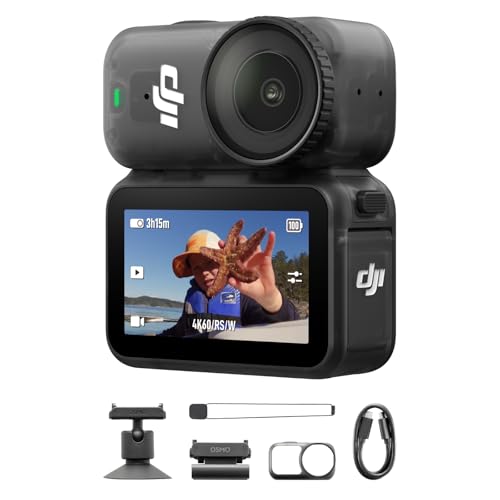
Osmo Nano Review Summary
If you want a portable 4K camera that is built around convenience first, the DJI Osmo Nano Standard Combo makes a strong case.
It is aimed at creators who value a magnetic wearable form factor, 4K/60fps capture, wide-angle footage, built-in storage, and quick sharing over the bulk and setup of a larger action camera.
The appeal is straightforward: DJI is bundling the features that matter most for everyday recording into a body that looks easy to carry, easy to mount, and easy to start using.
That makes it a sensible pick for vlogging, travel clips, pet POV shots, casual action recording, and hands-free filming.
It is less compelling if you want a full-size camera ecosystem, very long recording sessions without planning, or a device you can forget about in rough conditions.
Review Scorecard
| Category | Score | Why it scores here |
|---|---|---|
| Portability | 10/10 | The magnetic wearable design and compact body are the main draw. |
| Image quality potential | 9/10 | The 1/1.3-inch sensor and 4K/60fps support point to strong detail and flexibility. |
| Ease of use | 9/10 | Built-in 128GB storage and portable form reduce setup friction. |
| Shooting versatility | 8/10 | Wide 143-degree framing, body/pov use, and mic support expand how it can be used. |
| Endurance planning | 8/10 | Up to 200 minutes of battery life is useful, though it is still a compact device. |
| Rugged convenience | 7/10 | Waterproofing and splash resistance help, but compact hardware still has limits. |
Key Features and Specifications of Osmo Nano
DJI positions the Osmo Nano Standard Combo as a wearable 4K camera built for quick, flexible capture.
The standout hardware details are the 1/1.3-inch sensor, 4K/60fps recording, and 143-degree ultra-wide field of view.
Those specs matter because they suggest a camera that can handle action, vlogging, and POV framing without feeling cramped.
The product also includes 128GB of built-in storage, so it is ready to record right away.
That is a meaningful convenience feature for casual creators and travelers who do not want to think about inserting media before every outing.
DJI also says storage can be expanded with a microSD card.
Battery life is listed at up to 200 minutes, which is a useful figure for a device this small.
It will not replace larger camera systems for all-day production, but it does give the Nano a respectable amount of runtime for short shoots, errands, walks, outings, and repeat clips.
Other notable details from the listing:
- Magnetic wearable design for quick mounting and hands-free use
- 10-bit and D-Log M color support for more flexible editing
- Direct connection to two microphones for better audio setup options
- Waterproof up to 10m and IPX4 splash resistance with the Vision Dock
- Fast charging support for quicker turnaround between sessions
The listing also notes that heating during high-resolution recording is normal for the compact design and that built-in overheat protection can stop recording to protect the hardware.
That is not a flaw unique to this model, but it is a reminder that ultra-compact cameras trade thermal headroom for size.
Pros and Cons of Osmo Nano
Pros
- Very portable and wearable without feeling like a burden
- Strong capture specs for the size, especially 4K/60fps and a 1/1.3-inch sensor
- Wide 143-degree field of view suits POV and immersive clips
- Built-in 128GB storage reduces friction at the start of a shoot
- Good creative flexibility with 10-bit and D-Log M support
- Practical audio expansion through dual microphone connection support
Cons
- Compact design means thermal limits still matter during high-res recording
- Not the right choice for buyers who want a larger traditional camera body
- The built-in battery format favors convenience over replaceable power
- Water resistance is useful, but it is still not a substitute for rugged pro gear
Who Should Buy Osmo Nano?
Buy the DJI Osmo Nano Standard Combo if you want a small, easy-to-wear camera for everyday video capture.
It fits creators who want something lighter than a conventional action camera setup, especially if the goal is quick POV footage, casual vlogging, pet-level perspectives, or a camera that can travel in a pocket.
It also makes sense for buyers who value fast setup and low friction.
The built-in storage, magnetic mounting style, and small footprint all reduce the number of decisions you need to make before recording.
Skip it if you mainly want:
- A camera for long continuous shoots without thermal or battery planning
- A larger control-focused body with more physical room to work
- A device meant for serious underwater or extreme-environment use beyond the listing’s stated protection
- A traditional camera replacement rather than a wearable companion device
For many buyers, the key question is not whether it is powerful enough on paper.
It is whether you actually want a camera that disappears into your day-to-day routine.
If that is the goal, the Nano has a clear identity.
How the Wearable Design Changes the Experience
Magnetic Mounting and Everyday Carry
The magnetic wearable approach is the feature that shapes almost everything else.
It makes the Osmo Nano feel like a camera you can put on quickly instead of a device that requires a kit mentality.
That matters for spontaneous shooting, where delays often mean missed moments.
4K POV Framing
The 143-degree field of view and 4K/60fps support give the Nano a strong base for POV footage and casual action recording.
Wide framing helps keep the subject and surroundings readable, which is useful for travel, walk-and-talk clips, and pet perspective shots.
Audio and Color Flexibility
The listing’s support for 10-bit, D-Log M, and dual microphone connection suggests DJI expects buyers to do more than just point and shoot.
That combination is especially valuable if you want footage that can be edited later instead of only shared immediately.
Thermal and Battery Tradeoffs
Compact cameras always balance size against heat and runtime.
DJI’s note about heat during high-resolution recording is worth taking seriously because it sets expectations correctly.
The battery figure is strong for the category, but buyers should still plan around session length rather than assume unlimited recording.
Alternatives to Osmo Nano
If you like the idea of a small action-style camera but want to compare form factors, these are reasonable Amazon search alternatives:
- DJI Osmo Action 5 Pro for a more conventional action-camera layout
- GoPro HERO series if you want a familiar ecosystem and accessory range
- Insta360 GO series if ultra-compact POV capture is your main priority
- DJI Osmo Pocket series if you prefer stabilized handheld shooting over wearable mounting
Those alternatives are useful because they split the category into different priorities: rugged action form factor, compact POV wearability, or stabilized handheld footage.
The right choice depends on whether you want the camera to live on your body, in your hand, or in a more traditional action-cam mount.
Is Osmo Nano Worth It?
The DJI Osmo Nano Standard Combo is worth it if you want a small, ready-to-record 4K wearable camera and you care more about convenience than about having a large, expandable camera body.
Its mix of a 1/1.3-inch sensor, 4K/60fps capture, wide framing, built-in storage, and magnetic design makes it especially attractive for casual creators and POV-first buyers.
It is not the best fit if you need maximum endurance, a heavier-duty camera body, or a tool for demanding pro-style production.
But for buyers who want a camera that is easy to carry, quick to deploy, and flexible enough for everyday use, it looks like a well-targeted option.