If you are searching for a compact KODAK Luma 150 Mini Projector review, this model stands out for portability first and home-theater ambition second.
It is best understood as a small, battery-powered projector for casual viewing, travel, and quick presentations.
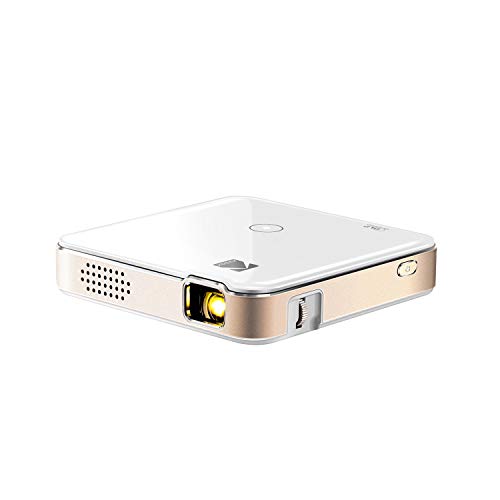
Luma 150 Mini Projector Review Summary
The KODAK Luma 150 Mini Projector makes sense for buyers who want a truly small projector they can carry, set up quickly, and use in places where a wall, cable, or portable entertainment source is available.
Its appeal is not raw brightness or cinema-grade image quality; it is the combination of pocketable size, rechargeable battery power, HDMI and Micro USB connectivity, and wireless mirroring support through AirPlay and Miracast.
That mix makes it a practical choice for apartment living, dorm rooms, travel bags, backyard movie nights with realistic expectations, and simple presentation use.
If you need a lightweight projector that can also play nicely with an external streaming device like a Fire Stick or Roku, this KODAK Luma 150 review points to a clear buyer fit.
Review Scorecard
| Category | Score | Why it scores this way |
|---|---|---|
| Portability | 10/10 | Very compact, built for easy carrying, and powered by a rechargeable battery. |
| Setup flexibility | 8/10 | HDMI, Micro USB, and wireless mirroring cover several common use cases. |
| Everyday convenience | 8/10 | Built-in speaker and onboard controls reduce the number of extras you need. |
| Image ambition | 5/10 | 854 x 480 native resolution and 60 ANSI lumens limit serious theater use. |
| Travel friendliness | 9/10 | Battery operation and small size make it easy to bring along. |
| Media compatibility | 7/10 | Works with a range of devices, but copyrighted streaming content has mirroring limits. |
| Value for casual use | 8/10 | Strong fit if you want portability and flexibility more than a bright home cinema projector. |
Key Features and Specifications of Luma 150 Mini Projector
The core specification story is straightforward: this is a portable LED pocket projector with a stated 150-inch image size capability, 16:9 projection, 60 ANSI lumens, 854 x 480 resolution, and a 1000:1 contrast ratio.
KODAK also says it supports 4K input, which should be read as source compatibility rather than native 4K projection.
The Luma 150 is built around convenience.
It includes HDMI and Micro USB connections for hooking up a camera, storage drive, PC, laptop, or other compatible devices.
It also supports wireless viewing through AirPlay and Miracast, which matters if you want a less cluttered setup for photos, slides, or non-protected video.
Other practical details matter just as much here:
- Built-in speaker for basic audio without an external sound system.
- Illuminated onboard controls for local operation.
- Rechargeable battery rated for up to 2.5 hours.
- Small form factor aimed at easy portability rather than fixed installation.
- Explicit limitation on mirroring or screencasting copyrighted content from services such as Hulu and Netflix.
That last point is important.
If your main goal is streaming subscription apps, KODAK’s own listing steers you toward using a plugged-in streaming device instead of relying on screen mirroring for protected content.
In other words, the projector is flexible, but the content path still matters.
Pros and Cons of Luma 150 Mini Projector
Pros
- Highly portable and easy to move between rooms or take on trips.
- Battery-powered, so you are not tied to wall power for every use case.
- Multiple connection options cover laptops, cameras, drives, and streaming devices.
- Wireless mirroring adds convenience for quick sharing.
- Built-in speaker keeps the setup minimal.
- Good fit for casual, flexible viewing where simplicity matters more than maximum brightness.
Cons
- Native resolution is limited at 854 x 480, so fine detail will not match higher-end projectors.
- Brightness is modest at 60 ANSI lumens, which narrows the ideal viewing environment.
- Not ideal for protected streaming via mirroring, because some services cannot be mirrored or screencast.
- Battery life is finite at up to 2.5 hours, so long sessions may still need power access.
- Best used with realistic expectations, especially if you want a large image in a bright room.
The balance here is clear: the strengths are convenience and portability, while the weaknesses are the predictable tradeoffs of a small battery projector.
Who Should Buy Luma 150 Mini Projector?
Buy the KODAK Luma 150 Mini Projector if you want a compact projector for occasional movies, kids’ content, presentations, travel, or spontaneous sharing from a phone or laptop.
It suits people who value quick setup and a small footprint more than crisp detail or high brightness.
It is also a sensible option for buyers who want a projector they can pack and move, rather than mount and leave in one place.
The built-in speaker and onboard controls reinforce that use case, since they make the device more self-contained.
You should probably skip it if you want a dedicated home theater projector for a bright living room, a high-resolution screen-first experience, or heavy streaming-app usage through mirroring alone.
The listed brightness and resolution make it a casual-use model, not a premium cinematic one.
If your main question is is KODAK Luma 150 Mini Projector worth it, the answer depends on whether portability is the priority.
For travel-friendly, low-friction viewing, yes.
For image performance, look higher up the category ladder.
How the Luma 150 Mini Projector Fits Real-World Use
Portable Movie Nights
The Luma 150 is at its most compelling when you treat it as a flexible, room-to-room movie companion.
The battery, small chassis, and built-in speaker reduce setup friction, which is exactly what you want for an impromptu screening.
The tradeoff is that the experience will be best in controlled lighting rather than a bright room.
Presentations and Sharing
For slides, photo sharing, and lightweight presentation work, the projector’s HDMI, Micro USB, and wireless options are more than enough.
The 150-inch projection claim gives it a wide-enough ceiling for group viewing, while the onboard controls keep it usable even when you are not carrying extra gear.
This is where the device’s practicality may outweigh its image limits.
Streaming and Device Pairing
The listing’s streaming caveat is important.
Since Hulu, Netflix, and similar protected content cannot be mirrored or screencast directly, buyers should plan to use a compatible streaming stick or external device when that is their main content source.
That makes the Luma 150 less of a “phone-only” projector and more of a compact display that works best with the right playback chain.
Battery and Everyday Convenience
Up to 2.5 hours of battery life is enough for many casual sessions, but not for all-night use.
That puts the projector in a convenience-first tier: easy to bring out, easy to use quickly, and best when you know the session length will be modest.
For many buyers, that is the right tradeoff; for others, it will be a clear limit.
Alternatives to Luma 150 Mini Projector
If you want other compact projector options, these Amazon search links are the most relevant places to compare:
- Anker Nebula Capsule projector
- ViewSonic M1 Mini projector
- Kodak Luma projectors
- BenQ portable projector
The most meaningful comparison point is whether you want a similar ultra-portable projector with better image refinement, a different battery-and-speaker balance, or simply a larger ecosystem of portable projector models to choose from.
For buyers who want a step up in brand-recognized portable projection, Anker Nebula and ViewSonic are natural places to look.
Is Luma 150 Mini Projector Worth It?
The KODAK Luma 150 Mini Projector is worth it if your top priority is portability and easy, casual projection.
It is a sensible buy for travel, occasional movie nights, quick sharing, and lightweight presentations, especially if you want built-in audio, wireless mirroring, and battery operation in one small package.
It is not the right choice if your main goal is bright-room performance, sharp native resolution, or a home-theater-first setup.
For the right buyer, though, the Luma 150’s convenience-first design is the point, and that makes it a reasonable compact projector to consider.