Window cleaning robots can reduce the time and effort required to clean large panes, interior windows, mirrors, and other smooth glass surfaces. The best models combine dependable suction with precise navigation, even spray coverage, and safety features that help prevent drops or missed edges.
We compare 10 standout options across compact designs, high-suction systems, intelligent path planning, and automated water delivery so you can choose a robot that fits your windows, cleaning routine, and comfort level.
Best 10 Window Cleaning Robots for Interior Glass Picks for 2026
Editor's Choice
HUTT 10 Premium Round-Square Robot

- Dual-stage round and square pad cleaning
- 6500Pa suction with 55N constant pressure
- Mapping, edge sensors, and 30-minute UPS protection
Best For: Interior glass requiring edge coverage and polishing
Most Versatile

- Four-nozzle spray system for even moisture
- N, Z, and manual cleaning modes
- Up to 25 minutes of power-failure adhesion
Best For: Flexible indoor cleaning patterns and targeted spot work
Best for Large Glass

- 6400Pa variable suction with dual spray
- Smart edge detection and round coverage
- 30-minute UPS and heavy-duty safety cable
Best For: High, floor-to-ceiling, and hard-to-reach interior glass
Best Value Glass Care
Dual-Spray Window Cleaning Robot

- Dual spray with 50ml tank
- 3000Pa suction and edge detection
- Includes 10 microfiber cloths
Best For: Interior glass, glass doors, mirrors, and angled skylights
Best Compact Design
Tosima W5 Window Cleaning Robot
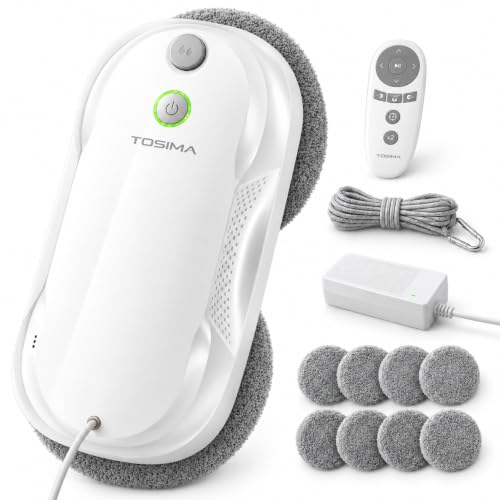
- 6400Pa adaptive suction
- Dual spray and intelligent navigation
- Compact design with 25-minute backup battery
Best For: Small homes, apartments, condos, and smooth interior glass
Best for Small Panes

- Compact 1.3kg design for narrow glass
- Dual-wing spray helps reduce streaks
- Six cleaning modes and edge detection
Best For: Small windows, narrow panes, mirrors, and shower glass
Best Overall – HUTT S55 Pro
The HUTT S55 Pro is a strong all-around option for shoppers comparing window cleaning robots for interior glass. Its adaptive suction, 3D floating pads, pump-driven spray system, and SLAM 4.0 navigation are designed to provide stable, systematic cleaning on glass surfaces.
Best For: Large interior glass areas, high-rise windows, and shoppers who want advanced navigation and spray control.
Pros:
- Up to 6500Pa suction with automatic adjustment for stable adhesion.
- 3D floating pads help maintain contact and improve edge precision.
- HydroJet pump spray, an 80ml visible tank, and microfiber pads support longer cleaning sessions.
- SLAM 4.0 offers Z-path cleaning, edge recognition, repeat cleaning, spot mode, and automatic return.
Cons:
- Its 80ml tank is smaller than some competing models with 85ml tanks.
- Button control may be less flexible than app-based operation.
- Battery life is listed at 30 minutes.
The S55 Pro stands out for combining strong suction with controlled wet cleaning and systematic navigation. It is a particularly capable choice when dependable glass contact and broad feature coverage matter most.
Best for Edges – ECOVACS WINBOT MINI 2
The ECOVACS WINBOT MINI 2 is a compact pick among window cleaning robots for interior glass, especially where edge coverage and access to narrow areas are priorities. Its small body, corner brushes, ultrasonic mist, and dedicated Edge Clean mode target common problem areas around frames and corners.
Best For: Narrow windows, framed or frameless glass, mirrors, glass doors, and detailed edge cleaning.
Pros:
- Compact 8.46-inch square design fits tighter glass areas.
- Corner brushes and thin side wings guide the pad to within 1mm of edges.
- Ultrasonic atomization helps reduce over-wetting while loosening everyday marks.
- WIN-SLAM 4.0 and five cleaning modes provide organized, flexible operation.
Cons:
- It is optimized for light dirt and may require multiple cycles on heavily soiled glass.
- Minimum applicable window size is 8.66 by 9.84 inches.
- At 65dB, it is not silent during operation.
Choose the MINI 2 if reaching close to frames is more important than maximizing tank capacity. Its compact form and edge-focused design make it well suited to routine interior glass maintenance.
Best for Simple Controls – Tosima X1
The Tosima X1 keeps window cleaning robots for interior glass straightforward with remote control, an 85ml visible water tank, and automatic S-shaped cleaning. Dual spray nozzles direct water along the travel path, while manual directional control helps with smaller or overhead glass surfaces.
Best For: Households wanting remote-controlled cleaning for large, small, or overhead interior glass.
Pros:
- Dual ultrasonic spray nozzles apply water in the direction of travel.
- Visible 85ml tank makes the remaining water easy to check.
- Automatic S-shaped movement cleans from top to bottom.
- Remote control supports manual direction changes and surfaces from 30 by 30cm.
Cons:
- It relies on a corded electric power source during operation.
- Remote control is less integrated than app-based systems.
- The listed item weight is 5 pounds, making it heavier than some compact alternatives.
The X1 is a practical fit for buyers who prefer physical remote control over app operation. Its visible tank and flexible directional control also make it useful for varied interior glass layouts.
Best Value Features – Double Helix Window Cleaning Robot
This Double Helix model offers a feature-focused approach to window cleaning robots for interior glass, pairing variable-frequency suction with bidirectional ultrasonic atomization. Its visible 85ml tank, edge detection, and anti-drop technology are designed to support hands-free glass cleaning.
Best For: Buyers seeking automatic spray coverage, adjustable suction, and basic safety-focused features.
Pros:
- Variable 4800-6400Pa suction adjusts to cleaning conditions.
- Bidirectional ultrasonic spray applies water from the side for broad coverage.
- Visible 85ml tank helps reduce unnecessary refills.
- Air-pressure sensing and AI-powered edge detection support anti-drop protection.
Cons:
- The supplied details do not identify a controller type or navigation system.
- Only three cleaning modes are listed.
- The listed dimensions are 1 by 1 by 1 inch, which may not provide a reliable indication of its actual operating size.
The Double Helix is appealing when spray coverage and adjustable suction are the main priorities. However, shoppers who want clearly documented controls or advanced route planning may prefer one of the more fully specified alternatives.
Editor's Choice – HUTT 10 Premium Round-Square Robot
For shoppers comparing window cleaning robots for interior glass, the HUTT 10 Premium stands out for its certified round-square, dual-stage cleaning design. It combines wet lifting with dry wiping and polishing to target fingerprints, pollen, everyday dirt, edges, and frame lines. NAVI 7.0 mapping, 6500Pa suction, and constant 55N pressure support thorough cleaning on glass surfaces.
Best For: Interior windows, mirrors, shower doors, and sliding doors where edge coverage and a clearer, streak-reduced finish matter.
Pros:
- Dual round-and-square pads combine wet cleaning with dry polishing.
- 6500Pa suction and 55N constant pressure support stable, forceful cleaning.
- NAVI 7.0 mapping and 14 sensors help manage edges and cleaning paths.
- Includes a 220kg safety rope and UPS adhesion for up to 30 minutes.
Cons:
- Purified water is recommended, and cleaning liquid is not included.
- Tracks and pads must be kept appropriately clean and dry to maintain traction.
- At 65dB, it is not completely silent during operation.
The HUTT is the most feature-rich option here, particularly for users who want dedicated wet-lift and dry-polish stages. Its setup requires attention to pad moisture and track cleanliness, but the edge-focused design and strong safety package make it a compelling premium choice.
Most Versatile – WA9C Pro Dual-Spray Robot
The WA9C Pro is a practical pick among window cleaning robots for interior glass when you want flexible spray settings and multiple ways to control the cleaning path. Its four-nozzle system distributes water across the glass, while N-, Z-, and manual modes accommodate routine coverage or targeted work on stubborn spots.
Best For: Users who want adjustable cleaning patterns, remote-controlled spot cleaning, and a balanced safety system for indoor glass.
Pros:
- Four precision nozzles provide even spray coverage across the glass.
- Offers N-shape, Z-shape, and manual cleaning modes.
- Air-pressure monitoring and a drop sensor help maintain adhesion.
- Battery backup holds the robot to the window for up to 25 minutes after power loss.
Cons:
- Its 2600–3200Pa suction range is lower than the suction ratings of the other listed models.
- The safety rope must be anchored to a reliable object for overhead use.
- Water pipes and nozzles may require maintenance, although an unclogging kit is included.
The WA9C Pro emphasizes control rather than maximum suction. Its broad spray system and manual mode are useful for interior windows that need occasional spot attention, while the included replacement nozzles and unclogging needle make ongoing upkeep more manageable.
Best for Large Glass – X6 High-Window Cleaning Robot
The X6 is designed for shoppers seeking window cleaning robots for interior glass, including large panes, floor-to-ceiling windows, mirrors, skylights, and tile walls. Its 6400Pa variable suction, dual-spray system, round body, and smart navigation are intended to cover glass efficiently while reducing the need for ladder work.
Best For: High or broad interior glass surfaces, especially homes and offices with windows that are difficult to reach manually.
Pros:
- 6400Pa variable suction supports vertical adhesion and adjusts to cleaning conditions.
- Dual-spray nozzles and a round body are designed for broad surface coverage.
- AI navigation detects edges and plans the cleaning path automatically.
- Includes 30-minute UPS protection, edge sensors, and a heavy-duty safety cable.
Cons:
- It is corded electric, so it must remain connected during cleaning.
- Glass should not be oversprayed, and dirty pads need timely replacement to avoid smears.
- Very dirty windows may require two cleaning passes.
The X6 offers a strong combination of suction, reach-oriented safety features, and broad surface compatibility. It is particularly appealing for high interior windows, though achieving a streak-free result still depends on controlled water use and clean pads.
Best Value Glass Care – Dual-Spray Window Cleaning Robot
For shoppers comparing window cleaning robots for interior glass, this model offers dual water spraying, edge detection, and three cleaning paths for smooth glass surfaces. Its 50ml tank and included microfiber cloths support a practical two-pass routine: dry wipe first, then wet wipe for finishing.
Best For: Interior windows, glass doors, mirrors, skylights angled at least 30° from horizontal, and shoppers who want an included-cloth cleaning setup.
Pros:
- Dual-spray system delivers 0.05ml of water per cycle for even coverage.
- 3000Pa suction, edge detection, a safety rope, and a 20-minute UPS backup provide layered protection.
- Includes 10 microfiber cloths and supports frameless glass.
Cons:
- It must remain plugged in; the UPS battery is for emergency holding rather than cordless cleaning.
- Heavily soiled surfaces and stubborn stains require manual pre-cleaning.
- Not recommended for curved glass, thick trim, raised decorative elements, or horizontal surfaces.
This is a sensible choice when you want broad glass-surface compatibility and a straightforward spray-and-wipe workflow, provided you follow the pre-cleaning and safety-rope instructions.
Best Compact Design – Tosima W5 Window Cleaning Robot
The Tosima W5 is a compact option for window cleaning robots for interior glass, especially in apartments, condos, and smaller homes. It combines adaptive suction, dual spraying, intelligent navigation, and remote control in a relatively lightweight design.
Best For: Apartment and condo owners who want a compact robot for smooth glass windows and other surfaces, including frameless glass.
Pros:
- Adaptive suction reaches up to 6400Pa and adjusts to the surface.
- Dual-spiral cleaning and dual spray help address dust, fingerprints, and stains.
- Triple safety system includes a safety rope rated to support up to 220kg and a backup battery lasting up to 25 minutes.
- Compact, lightweight design is easy to handle and store.
Cons:
- The product is intended for smooth surfaces, so it is not a general-purpose cleaner for textured areas.
- It remains a corded cleaning appliance despite its emergency backup battery.
With adaptive suction and a space-conscious form, the W5 is a strong fit for routine indoor glass cleaning where easy storage and simple operation matter.
Best for Small Panes – MOVA N1 Window Cleaning Robot
For interior glass shoppers who need to reach small windows or narrow panes, the MOVA N1 pairs a compact, 1.3kg body with dual spray, edge detection, and intelligent path planning. Six cleaning modes let you adjust the routine for quick, deep, edge, spot, or remote cleaning.
Best For: Small windows, narrow panes, balcony glass, mirrors, shower glass, tiles, and other indoor areas where a slim, lightweight design is useful.
Pros:
- Compact 215 × 215mm body and 59mm profile are suited to tighter spaces.
- Dual-wing misting helps loosen grime while distributing water evenly.
- Six cleaning modes provide flexibility for different cleaning tasks.
- Multiple sensors support edge detection and coverage on framed and frameless glass.
Cons:
- Its compact format may be less suitable for shoppers prioritizing larger coverage per pass.
- The listed controls combine app and button operation, which may be more technology than some users need.
The N1 stands out for maneuverability and cleaning-mode flexibility, making it a practical match for indoor glass areas that are narrow, small, or difficult to reach.
How We Picked the Best Window Cleaning Robots for Interior Glass
We focused on the features that matter most for indoor glass cleaning: suction strength, edge detection, navigation, spray control, pad design, safety systems, and ease of setup. Models with automatic water delivery, visible tanks, multiple cleaning modes, and backup protection received particular attention because these features can make repeated cleaning more convenient.
Specifications such as suction ratings and cleaning claims can vary by manufacturer and surface conditions. Treat them as useful comparison points rather than guarantees of identical real-world performance.
Quick Comparison
| Feature | What to look for | Why it matters |
|---|---|---|
| Suction | About 3,000Pa to 8,000Pa or more | Helps maintain contact on smooth glass |
| Water delivery | Single, dual, or multi-nozzle spray | Improves coverage and loosens light grime |
| Navigation | Edge detection and intelligent path planning | Reduces missed areas and unnecessary passes |
| Safety | Backup battery, tether, alarms, and fault detection | Provides protection if power or suction changes |
| Design | Compact body or larger cleaning pads | Affects access, coverage, and storage |
Key Buying Factors for Window Cleaning Robots for Interior Glass
Glass Compatibility and Surface Condition
Most robots are intended for smooth, relatively flat glass. Check the manufacturer’s guidance before using one on textured, frosted, coated, tiled, or heavily irregular surfaces. Interior windows with dust or loose debris should be lightly cleared first so the cleaning pad does not drag grit across the glass.
Suction, Pads, and Edge Performance
Higher advertised suction can help a robot stay attached, but pad size and condition are equally important. Look for washable or replaceable pads, edge-cleaning capability, and a shape that suits your window frames. Compact robots can be easier to position on narrow panes, while larger units may cover broad windows more efficiently.
Spray System and Maintenance
Automatic spray systems reduce manual pre-wetting, but they also require regular tank filling and nozzle care. Dual or multi-nozzle designs may distribute moisture more evenly. Avoid oversaturating pads, since excess liquid can reduce grip and leave streaks.
Safety and Supervision
A tether, backup battery, audible alerts, and automatic stop functions are important, especially when cleaning high interior glass or windows near fragile furnishings. These devices should not be treated as fully unattended appliances; stay nearby, use the safety line correctly, and follow the operating instructions.
Who Should Buy Which Window Cleaning Robots for Interior Glass?
Choose a compact model if you have smaller panes, tight interior spaces, or limited storage. A high-suction robot may suit larger smooth windows or users who prioritize firm attachment. Models with stronger spray systems are useful for routine cleaning where light dust and fingerprints are common, while advanced navigation and edge detection are worth prioritizing for expansive glass areas.
If your windows have heavy buildup, deep frames, unusual textures, or difficult obstructions, manual cleaning may still be necessary before or instead of using a robot. For the best results, match the machine to your glass type, supervise each cleaning cycle, and keep spare pads available.