Driveway alarms can add a simple first layer of awareness before visitors, vehicles, or wildlife reach your home.
In this roundup, we focus on driveway alarm systems for outdoor use that balance range, reliability, weather resistance, and easy setup.
Best 10 Driveway Alarm Systems for Outdoor Use Picks for 2026
Long-Range Solar Coverage
eMACROS 1/2 Mile Solar Wireless Driveway Alarm

- 1/2-mile wireless range
- Solar-powered outdoor sensor
- Expandable to 64 sensors
Best For: Long driveways and larger properties
Dual-Detection Alerting
GreenCycle Outdoor Motion Sensors with Alarm
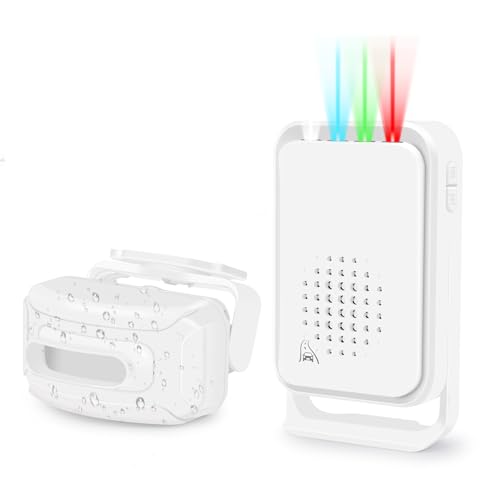
- Infrared plus microwave radar detection
- Up to 918 ft wireless range
- 4 LED zones with vibration alert
Best For: Users wanting flexible alerts and lower false alarms
Maximum Distance Pick
Dakota Alert DCMA-4K Plus 1-Mile Motion Sensor Kit

- 1-mile wireless range
- Four adjustable volume levels
- Pairs with up to 16 sensors
Best For: Very large properties needing maximum range
Solar RGB Visibility
TECKNET Non-APP Solar RGB Wireless Driveway Alarm

- 1/2-mile wireless signal
- RGB alerts with 4 zones
- IPX5 waterproof solar sensor
Best For: Users wanting color-coded outdoor alerts
Wide-Coverage Pick
1/2 Mile Long Range Motion Sensor

- 1/2 mile wireless range in ideal conditions
- 2 motion sensors with adjustable sensitivity
- Expandable up to 32 sensors
Best For: Large properties needing broad outdoor coverage
Solar-Powered Pick
Outdoor Motion Sensor with Rechargeable Battery
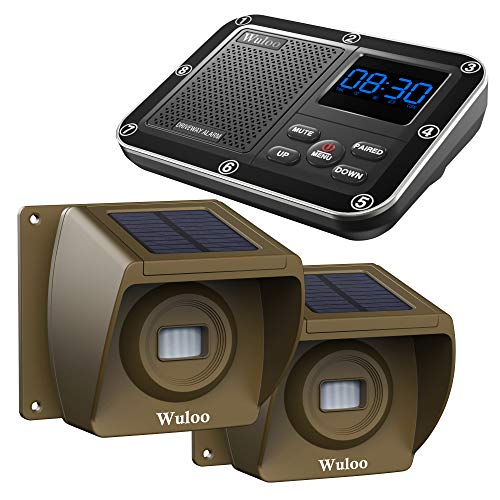
- Solar panel and rechargeable battery
- Weatherproof for rain and snow
- Receiver includes clock, alarm, and custom chimes
Best For: Low-maintenance outdoor monitoring with customizable alerts
Simple Setup Pick

- Up to 1000 ft/300 m wireless communication
- 3 alert modes: sound, flash, or both
- Expandable up to 5 sensors
Best For: Easy-to-install outdoor alerts with flexible notifications
Solar-Powered Outdoor Alert
HTZSAFE Solar Driveway Alarm 1/2 Mile Long Range

- Solar-powered motion sensor reduces battery upkeep
- Expandable to 4 sensors with multiple chimes
- Up to 1/2 mile range in ideal conditions
Best For: driveways and larger outdoor areas that need solar-powered coverage
Durable Long-Range Option
Hosmart 1/2 Mile Driveway Alarm System

- Up to 1/2 mile receiving range in ideal conditions
- Weather-resistant sensor with PVC housing and seal
- Expandable system with 38 ringtones
Best For: buyers wanting durable outdoor monitoring with flexible chimes
Adjustable Outdoor Motion Alert
Driveway Alarms Wireless Outside, Weatherproof Motion Sensor Alarm System

- Adjustable 19-65 ft detection range
- IP44 weatherproof sensor with swivel mount
- 60 ringtones and 4 volume levels
Best For: homes needing customizable short-to-mid range outdoor alerts
Long-Range Solar Coverage – eMACROS 1/2 Mile Solar Wireless Driveway Alarm
If you want driveway alarm systems for outdoor use with a strong focus on distance, the eMACROS solar wireless kit is built for larger properties and long approaches. Its 1/2-mile wireless range, solar-powered sensor, and simple no-wiring setup make it a practical option for homeowners who need early alerts without a complicated install.
Best For: Long driveways, larger properties, and users who want a simple solar-powered alert system.
Pros:
- Up to 1/2 mile wireless range for long-distance alerting
- Solar-powered outdoor sensor reduces battery upkeep
- Detects people, cars, and large animals
- Expandable to up to 64 sensors and unlimited receivers
Cons:
- Includes only 1 receiver and 1 sensor
- Adjustable detection settings may take some tuning to reduce false alarms
This is a strong fit if range and low-maintenance outdoor operation matter more than extra accessories. The customizable sensitivity and expandable platform also make it easy to grow with a property over time.
Dual-Detection Alerting – GreenCycle Outdoor Motion Sensors with Alarm
For driveway alarm systems for outdoor use where reducing false alerts matters, the GreenCycle motion sensor stands out with infrared plus microwave radar detection. It adds a wireless chime system, multiple LED zones, and vibration reminders, making it useful for homes and properties with several outdoor entry points.
Best For: Users who want dual-detection sensing and flexible alert options for outdoor coverage.
Pros:
- Infrared + microwave radar composite detection for lower false alarms
- Wireless range up to 918 ft in open areas
- Supports up to 32 motion sensors and 8 remotes per receiver
- 4 LED zones plus sound sync and vibration reminder
Cons:
- Needs batteries for both sensor and receiver
- Sensor detection distances are relatively short compared with long-range models
This is a versatile choice if you want a weather-resistant outdoor alert system with more detailed notification options. It’s especially appealing for users who like visual and silent alert modes alongside standard chimes.
Maximum Distance Pick – Dakota Alert DCMA-4K Plus 1-Mile Motion Sensor Kit
If your priority is distance, this Dakota Alert kit is one of the strongest driveway alarm systems for outdoor use in a large-property setting. Its 1-mile wireless range, simple code-learning setup, and battery-powered motion sensor are designed to keep installation straightforward while covering more ground.
Best For: Very large properties and users who need maximum wireless range.
Pros:
- 1-mile wireless range for extended coverage
- Four volume levels for easier sound control
- Pairs up to 16 sensors with one receiver
- Battery-powered sensor can last a year or more
Cons:
- Sensor uses a 9V battery rather than solar power
- Only one sensor is included in the kit
This model is a good fit when signal reach is the main concern and you want a system that can scale to multiple zones. The adjustable volume options also help it work in different outdoor settings without being overly loud.
Solar RGB Visibility – TECKNET Non-APP Solar RGB Wireless Driveway Alarm
Among driveway alarm systems for outdoor use, the TECKNET solar alarm adds visual cues to the usual motion alert setup. It combines PIR motion sensing, a 1/2-mile signal range, and RGB lighting with multiple zones, which is useful if you want both sound and color-coded alerts for different areas.
Best For: Homeowners who want solar power, color-coded alerts, and outdoor weather resistance.
Pros:
- Up to 1/2 mile wireless transmission
- Solar-powered sensor helps avoid battery replacement
- IPX5 waterproof design and wide temperature tolerance
- 36 melodies, 5 volumes, and 4 alert zones
Cons:
- Battery is not included
- Only one transmitter and one receiver are included
This is a practical pick if you want a weather-ready outdoor alarm with more customizable feedback than a basic chime system. The RGB indicators and zone-specific tones make it easier to tell where motion was detected at a glance.
Wide-Coverage Pick – 1/2 Mile Long Range Motion Sensor
If you want driveway alarm systems for outdoor use that can cover a large property, this HTZSAFE setup is built around range and flexibility. It pairs one plug-in receiver with two weather-resistant motion sensors, with transmission rated up to 1/2 mile in ideal conditions and motion detection out to 35-50 feet depending on sensitivity.
Best For: Larger driveways, gates, garages, and properties that need multiple alert points.
Pros:
- Up to 1/2 mile wireless transmission range, depending on terrain.
- Two adjustable motion sensitivities help tailor detection distance.
- Weather-resistant sensors work in temperatures from -30 to 150°F.
- Expandable up to 32 sensors for broader coverage.
Cons:
- Batteries are required for the sensors and are not included.
- Range can vary based on local terrain and interference.
For shoppers prioritizing coverage over extras, this is a practical outdoor alert system with straightforward installation and plenty of room to expand. The multiple melodies and volume levels also make it easier to tell which sensor was triggered.
Solar-Powered Pick – Outdoor Motion Sensor with Rechargeable Battery
For driveway alarm systems for outdoor use where low-maintenance power matters, this Wuloo model stands out with a solar panel and rechargeable battery. It’s designed for weatherproof outdoor monitoring, with a tested wireless range of 1/3 mile in real-world settings and a motion detection distance of up to 30 feet.
Best For: Users who want a solar-charged outdoor alert system with customizable chimes.
Pros:
- Solar-powered sensor with rechargeable battery support.
- Weatherproof design tested for rain and snow.
- Receiver doubles as a clock and alarm.
- Expandable by up to 8 additional sensors.
Cons:
- Detection range is shorter than some long-range competitors.
- Maximum detection distance is listed at 30 feet.
This is a strong fit if you want a set-and-forget outdoor motion alert with more personalization than basic chime-only systems. The ability to adjust sounds, volumes, and sensitivity adds useful control for everyday driveway monitoring.
Simple Setup Pick – 1 Receiver 2 Infrared Sensors
If you want driveway alarm systems for outdoor use that are easy to add around a home or business, this 1byone kit focuses on quick installation and flexible alerting. It offers wireless communication up to 1000 ft/300 m, with motion detection up to 24 ft per sensor and three alert modes to choose from.
Best For: Buyers who want a straightforward plug-and-play driveway alert with customizable notifications.
Pros:
- Wireless range up to 1000 ft/300 m from each sensor to the receiver.
- Three alert options: sound, LED flash, or both.
- Fully expandable up to 5 sensors.
- Plug-and-play installation with included mounting hardware.
Cons:
- Detection range tops out at 24 ft per sensor.
- Not as long-range as some larger-property systems.
This is a practical choice if you value simple setup and want the receiver to act more like a long-range doorbell. The adjustable alert modes make it easier to adapt the system to different spaces and preferences.
Solar-Powered Outdoor Alert – HTZSAFE Solar Driveway Alarm 1/2 Mile Long Range
If you want driveway alarm systems for outdoor use that are simple to place and built to handle open-air coverage, this HTZSAFE kit is a practical pick. It combines a solar-powered motion sensor with a portable receiver, making it useful for driveways, gates, yards, and other perimeter spots where you want early notice of movement.
Best For: Properties that need solar charging, flexible placement, and expandable coverage.
Pros:
- Solar-powered sensor helps avoid routine battery replacement, with rechargeable power supported by the built-in solar panels.
- Expandable up to 4 sensors and unlimited receivers, with different melodies to identify where motion is detected.
- Up to 1/2 mile wireless range in ideal conditions, plus 35 melodies and 5 volume levels on the receiver.
- Sensor offers 3 sensitivity settings and detects motion from about 25 to 70 feet in front of it.
Cons:
- Range will vary with terrain, so real-world performance may be lower than the maximum rating.
- Only one sensor is included in this starter set, so larger properties may need expansion.
- The receiver is plug-in based, so outlet access is needed for the main unit.
For buyers focused on outdoor convenience, the HTZSAFE stands out for its solar power and easy setup. It is a strong fit when you want a low-maintenance alert system that can grow with your property.
Durable Long-Range Option – Hosmart 1/2 Mile Driveway Alarm System
Among driveway alarm systems for outdoor use, this Hosmart setup is aimed at buyers who want strong perimeter coverage and straightforward installation. It includes one receiver and one weather-resistant sensor, with support for multiple sensors if you want to expand the system later.
Best For: Long-range monitoring where you want flexible chimes and durable outdoor hardware.
Pros:
- Rated for up to 1/2 mile receiving range in ideal conditions, with real-world testing reported through challenging outdoor environments.
- Sensor is powered by 4 AA batteries and the receiver can run on an adapter or AA batteries.
- Expandable to 4 sensors and unlimited receivers, with 38 ringtones and different chimes for different areas.
- Weather-resistant PVC housing, rubberized seal, and sunshade are designed for outdoor use.
Cons:
- Sensor batteries are not included, so you will need to supply four AA cells.
- Ideal range claims depend on conditions, terrain, and obstructions.
- The starter kit includes only one sensor, which may be limiting for broader coverage out of the box.
This Hosmart model is a solid choice if you want a more traditional battery-powered outdoor alarm with lots of chime options. Its weather-resistant build and expandable design make it easy to adapt to different property layouts.
Adjustable Outdoor Motion Alert – Driveway Alarms Wireless Outside, Weatherproof Motion Sensor Alarm System
If you are comparing driveway alarm systems for outdoor use and want a budget-friendly motion alert with lots of customization, this FREETIM unit is worth a look. It is built to detect people, vehicles, or animals and uses an adjustable outdoor sensor with a plug-in receiver for easy setup.
Best For: Smaller to mid-size outdoor areas where adjustable detection and a weatherproof sensor matter.
Pros:
- Adjustable detection range from about 19 to 65 feet, which helps tune coverage to your driveway or yard.
- IP44 weatherproof sensor with anti-freeze materials and a 360-degree swivel mount for aiming the detector.
- 60 ringtones and 4 volume levels allow you to customize the alert tone and loudness.
- Supports up to 8 sensors with one receiver, and one sensor can work with unlimited receivers.
Cons:
- Sensor runs on batteries, so you will need to maintain power over time.
- Maximum detection distance is shorter than some long-range rivals.
- Performance can vary with obstacles and weather conditions.
Overall, this alarm is a practical choice if you want adjustable outdoor motion detection without overcomplicating the setup. It offers useful sound and sensor options for homes that need targeted alert coverage.
How We Picked the Best Driveway Alarm Systems for Outdoor Use
We looked for Driveway Alarm Systems for Outdoor Use with practical detection range, dependable outdoor-rated hardware, flexible power options, and alert styles that fit different properties. We also favored systems that are simple to install and expand without unnecessary complexity.
Quick Comparison
For long driveways and larger lots, prioritize strong range and stable wireless performance. For front entries, short access roads, or smaller properties, a compact solar or battery-powered kit may be enough. If you need to cover multiple approach points, choose a system that supports extra sensors.
Key Buying Factors for Driveway Alarm Systems for Outdoor Use
Range and Real-World Signal Reliability
Advertised range is only a starting point. Trees, walls, metal siding, and terrain can reduce performance, so choose more range than you think you need.
Power Source
Solar models can reduce maintenance, while battery-powered units may be easier to place in shaded areas. Plug-in receivers are common, but sensor power is the bigger decision for outdoor placement.
Detection Type
Motion-based sensors are the most common, but sensitivity matters. Look for adjustable settings to reduce alerts from passing cars, animals, or wind-blown debris.
Weather Resistance
For Driveway Alarm Systems for Outdoor Use, weatherproof construction is essential. Check for outdoor ratings, sealed housings, and designs meant to handle rain, dust, heat, and freezing conditions.
Alerts and Customization
Chimes, tones, and visual indicators are all useful depending on where the receiver sits. If multiple people will use it, clear sound options and adjustable volume help a lot.
Who Should Buy Which Driveway Alarm Systems for Outdoor Use?
Choose a long-range kit if your driveway is extended, partially obscured, or far from the house. Pick a solar option if you want lower upkeep and good sun exposure. Go with a multi-sensor system if you need coverage for more than one entrance or approach path. If you want the least complicated setup, a basic single-sensor kit is usually the easiest place to start.
In short, the best system is the one that matches your property layout, power availability, and tolerance for occasional false alerts. Focusing on those three factors will narrow the field quickly and help you choose a model that works well year-round.