Keeping an aquarium clean is much easier when you can monitor water conditions and remove waste before it becomes a problem. The right tools can reduce guesswork and make routine maintenance faster.
In this roundup, we focus on practical aquarium monitoring systems for easy cleaning, from real-time water testers to gravel vacuums and siphon helpers that support a healthier tank.
Best 10 Aquarium Monitoring Systems for Easy Cleaning Picks for 2026
Smart Water Watcher
8-in-1 WiFi Water Quality Meter

- Tracks 8 water parameters for detailed monitoring
- Sends real-time updates through the Tuya Smart app
- Exports daily, weekly, and monthly data reports
Best For: App-connected aquarium monitoring with detailed water logs
Gravel Cleaning Helper
Electric Aquarium Vacuum Cleaner

- 6-in-1 tool for water changes, filtering, and sand washing
- 530 GPH pump helps remove debris from the tank bottom
- Adjustable telescopic pole fits different tank sizes
Best For: Hands-on tank cleaning and routine gravel maintenance
Long-Range Tank Guard

- 24/7 monitoring with instant app alerts
- Works with freshwater and saltwater tanks
- Probe supports fixed-mount or free-floating setup
Best For: Remote aquarium monitoring with long-range flexibility
All-in-One Clean Cycle

- 8-in-1 tool for cleaning, filtration, and water changes
- Adjustable 36W/27W/19W power with timed shutoff
- 3-stage filtration uses reusable media
Best For: Multi-function electric cleaning with automated shutoff
Smart 7-in-1 Tank Watcher
Kactoily Smart Aquarium Monitor
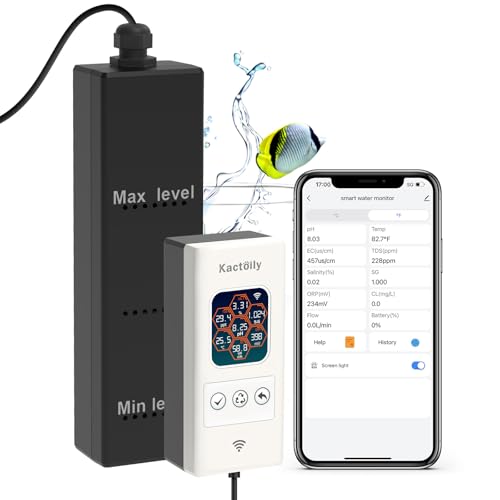
- Tracks 7 water parameters in one unit
- Wi-Fi alerts via app, phone, or SMS
- Includes pH and ORP calibration powders
Best For: Freshwater or saltwater keepers who want remote water monitoring
Electric Gravel Vac

- 3-stage electric suction with adjustable modes
- Functions as siphon, vacuum, and water changer
- Includes attachments for multiple tank-cleaning tasks
Best For: Hands-on aquarists who want faster gravel cleaning
Wi-Fi Water Watcher

- Monitors 7 parameters in real time
- Custom alerts for unsafe water levels
- Three probe mounting options for flexible setup
Best For: Nano tanks, reefs, planted tanks, and ponds
Quick Water Change Kit
enomol 30ft Gravel Vacuum Water Changer

- Semi-automatic water changer for quick maintenance.
- No bucket required; reduces spills and noise.
- Includes gravel-cleaning tube and faucet adapters.
Best For: Medium to large tanks needing faster water changes
Smart Water Tracker
kactoily Multi-Parameter Aquarium Monitor

- 24/7 alerts for changing water conditions.
- Measures pH, salinity, temp, TDS, EC, and more.
- Works in freshwater, saltwater, ponds, and hydroponics.
Best For: Aquarists wanting continuous water-quality alerts
All-in-One Test Kit
Tetra EasyStrips Aquarium Water Tests

- 7 water tests in one strip for quick checks.
- Works in freshwater and saltwater tanks.
- Ideal for weekly use and after water changes.
Best For: Simple routine testing before or after cleaning
Smart Water Watcher – 8-in-1 WiFi Water Quality Meter
For aquarium monitoring systems for easy cleaning, this 8-in-1 water tester helps you track the conditions that matter before and after maintenance. With WiFi connectivity, a clear digital display, and detailed logging, it’s built for users who want a fast read on water quality without guessing.
Best For: Aquarium owners who want app-based water monitoring with logged trends for routine maintenance.
Pros:
- Monitors 8 parameters: pH, S.G., EC, salt, ORP, TDS, CF, and temperature
- Tuya Smart app support provides real-time updates on your phone
- Three LCD screens show instant readings for quick checks
- Data logs can be exported as daily, weekly, or monthly reports
Cons:
- The tester is not waterproof and must be kept away from moisture
- Requires wall mounting, so it is less portable than handheld testers
This is a strong pick if your cleaning routine depends on knowing water conditions at a glance. It is especially useful for keeping a long-term record of changes, but it does rely on careful placement and protection from water exposure.
Gravel Cleaning Helper – Electric Aquarium Vacuum Cleaner
If you want aquarium monitoring systems for easy cleaning to include an actual cleanup tool, this electric vacuum is built to handle the mess. It combines water changing, filtration, sand washing, and debris removal in one kit, making routine tank maintenance faster than doing it by hand.
Best For: Aquarists who want a multi-function electric cleaner for gravel, debris, and water changes.
Pros:
- 6-in-1 design handles water changes, filtering, sand washing, brushing, manure suction, and water circulation
- 530 GPH pump provides strong flow for pulling dirt and debris from the tank bottom
- Adjustable water flow helps tailor cleaning strength to the tank
- 4-layer filtration system and reusable sponge support ongoing maintenance
Cons:
- Motor placement requires the unit to stay above the minimum water level line
- Assembly and operation may take a quick look at the manual or video
This cleaner is practical for users who want to reduce the time spent on manual siphoning and gravel work. Its adjustable pole and reusable filter sponge make it a flexible everyday maintenance tool for many tank sizes.
Long-Range Tank Guard – WiFi Aquarium Water Monitor
For aquarium monitoring systems for easy cleaning, a reliable monitor can help you spot water changes before they become a problem. This long-range WiFi unit tracks key readings in real time and sends alerts when values move outside your chosen range, which is useful for keeping maintenance on schedule.
Best For: Owners who want remote alerts and long-distance monitoring for freshwater or saltwater tanks.
Pros:
- Provides 24/7 real-time monitoring with app alerts for out-of-range values
- Supports pH, ORP, EC, TDS, salinity, SG, and temperature tracking
- Probe can be installed in fixed-mount or free-floating mode
- Long connection range reaches up to 980 ft between probe and display
Cons:
- EC solution is not included and must be purchased separately
- Only pH calibration powders are included for calibration setup
This monitor stands out for flexibility and distance, especially if your tank setup is not near your main living space. The alert system and broad compatibility make it a useful choice for staying ahead of water issues during routine cleaning.
All-in-One Clean Cycle – 8-in-1 Aquarium Vacuum
If you want aquarium monitoring systems for easy cleaning to include a powerful cleanup device, this 8-in-1 vacuum is built around convenience. It handles water changes, gravel cleaning, filtration, circulation, algae removal, and more, so you can manage routine tank maintenance with fewer separate tools.
Best For: Aquarium owners who want a multi-accessory electric cleaner with timed shutoff and reusable filtration.
Pros:
- 8-in-1 design covers automatic water change, gravel cleaning, filtration, circulation, sand cleaning, and algae removal
- Adjustable power settings let you choose 36W, 27W, or 19W
- Timer can shut off automatically after 10, 30, or 60 minutes
- 3-stage filtration uses sponge, biofiltration ball, and activated carbon balls
Cons:
- The external independent switch is not waterproof
- May be more than needed if you only want a basic siphon tool
This is a versatile cleaner for users who want one tool to do several maintenance jobs. The reusable filter media and timed operation make it especially practical for regular, repeatable cleaning sessions.
Smart 7-in-1 Tank Watcher – Kactoily Smart Aquarium Monitor
For aquarium monitoring systems for easy cleaning, this Kactoily unit is built to keep water conditions visible around the clock so you can spot problems before routine maintenance turns into a bigger job. It tracks multiple key parameters in one device and sends alerts through the Tuya Smart app, phone, or SMS when values move outside your set range.
Best For: Hobbyists who want one Wi-Fi monitor for freshwater or saltwater tanks with customizable alerts.
Pros:
- 7-in-1 monitoring covers pH, ORP, salinity, specific gravity, TDS, EC, and temperature.
- Custom max/min settings can trigger instant notifications in the app, by phone, or SMS.
- Includes calibration powders for pH and ORP setup.
- Wi-Fi monitoring lets you check tank status remotely in real time.
Cons:
- EC calibration solution is not included and must be purchased separately.
- Saltwater use requires careful probe placement in consistent flow.
Overall, this is a strong choice if you want a single smart monitor to reduce guesswork during water maintenance. Its value is in continuous tracking and alerts rather than cleaning hardware, making it a good companion to a simple tank care routine.
Electric Gravel Vac – FISHANDS Aquarium Cleaner
If you want aquarium monitoring systems for easy cleaning, this electric gravel cleaner focuses on the cleaning side of maintenance with a 3-stage siphon setup and adjustable suction. It acts as both a vacuum and a water changer, helping remove debris and fish waste while handling tanks from small setups to larger aquariums.
Best For: Aquarists who want an electric gravel vacuum that also works as a water changer.
Pros:
- 3 adjustable suction modes for targeted gravel vacuuming.
- Works as both an aquarium siphon and water changer.
- Includes multiple attachments for different cleaning tasks.
- Adjustable reach supports a wide range of tank sizes.
Cons:
- Performance details are centered on cleaning, not water testing.
- Best suited to users who want a powered cleaner rather than a manual siphon.
This is the most practical pick in the group for hands-on tank upkeep because it tackles debris removal and water changes directly. If your priority is easier cleaning rather than constant parameter tracking, it fits that need well.
Wi-Fi Water Watcher – Smart Water Quality Tester
For aquarium monitoring systems for easy cleaning, this Wi-Fi tester helps you stay ahead of water issues by tracking the core numbers that affect tank stability. It monitors pH, salinity, temperature, TDS, conductivity, specific gravity, and ORP in real time, with app alerts when values drift outside your chosen range.
Best For: Nano tanks, reefs, planted tanks, and ponds that benefit from app-based water alerts.
Pros:
- Real-time monitoring covers seven key water parameters.
- Custom alerts help you react quickly to unsafe readings.
- Three probe mounting options add flexibility for different tank layouts.
- Includes calibration powders and accessories for setup.
Cons:
- Needs 2.4GHz Wi-Fi for app connectivity.
- Like other monitors, it supports maintenance but does not clean the tank itself.
This model stands out for flexible installation and broad parameter coverage, making it useful for a range of tank types. If you want a smart monitor that supports cleaner, more controlled maintenance routines, it is an easy fit.
Quick Water Change Kit – enomol 30ft Gravel Vacuum Water Changer
If you’re looking for aquarium monitoring systems for easy cleaning in the form of a simple water-change tool, this semi-automatic gravel vacuum is built for speed and less mess. It uses tap-water pressure with just two valves and a long hose to drain dirty water, then switch over to refill, which can make routine tank maintenance much easier on medium and large aquariums.
Best For: Medium to large fish tanks where fast water changes and gravel cleaning matter more than automation.
Pros:
- Uses tap water pressure for quick draining and refilling.
- No bucket needed, which helps reduce spills and cleanup.
- 16.5-inch cleaning tube includes a built-in filter for gentle gravel agitation.
- Includes multiple faucet adapters for broad compatibility.
Cons:
- Designed for water changes, not sensor-based water monitoring.
- Best suited to users comfortable with hose-and-valve operation.
This is a practical choice if your priority is efficient weekly maintenance rather than constant parameter tracking. It focuses on making cleaning simpler, quieter, and less messy, while still giving you a way to clear debris from the gravel.
Smart Water Tracker – kactoily Multi-Parameter Aquarium Monitor
For aquarium monitoring systems for easy cleaning, this smart tester helps you catch water-quality changes before they turn into bigger maintenance problems. It continuously tracks multiple parameters and sends app or SMS alerts when values move out of your set range, making it a strong fit for anyone who wants more insight between cleanings.
Best For: Freshwater and saltwater keepers who want real-time water checks and alert-based maintenance.
Pros:
- 24/7 monitoring with custom app and SMS alerts.
- Measures pH, salinity, temp, TDS, EC, ORP, and specific gravity.
- Three installation modes: fixed-mount, suction cup, or free-floating.
- Smaller upgraded probe is designed for more stable data.
Cons:
- EC calibration solution is excluded and sold separately.
- Requires calibration for best accuracy.
This monitor is a good fit if you want ongoing visibility into water conditions rather than manual spot checks. It is especially useful for planning cleaning and water changes based on actual readings, not guesswork.
All-in-One Test Kit – Tetra EasyStrips Aquarium Water Tests
If you want aquarium monitoring systems for easy cleaning without a powered device, this strip kit offers a simple weekly check on core water conditions. It gives you seven tests in one strip, so you can quickly review ammonia, nitrates, nitrites, hardness, chlorine, alkalinity, and pH before or after a water change.
Best For: Routine at-home water testing for freshwater or saltwater tanks.
Pros:
- Checks 7 water-quality factors with one strip.
- Works for freshwater and saltwater aquariums.
- Fast, simple testing: dip, wait 60 seconds, read results.
- Useful for weekly monitoring and after water changes.
Cons:
- Manual test strips do not provide continuous monitoring.
- Less detailed than multi-parameter electronic testers.
This is the simplest option in the group and a solid backup to more advanced monitoring tools. It keeps routine testing quick, which can make cleaning decisions easier when you just need a basic water-quality snapshot.
How We Picked the Best Aquarium Monitoring Systems for Easy Cleaning
We looked for Aquarium Monitoring Systems for Easy Cleaning that help reduce manual effort, improve water visibility, and support consistent maintenance. Priority went to accurate parameter coverage, simple setup, clear readings, and features that fit both freshwater and saltwater tanks. For cleaning tools, we favored adjustable suction, reliable water flow, and designs that make gravel cleaning or water changes less messy.
Quick Comparison
For fast monitoring, smart WiFi and app-connected testers are best if you want ongoing tracking of pH, salinity, TDS, EC, temperature, and related metrics. For hands-on maintenance, electric vacuums and siphon systems are the better choice when your main goal is removing debris, changing water, and keeping substrate cleaner. Basic test strips remain useful as a simple backup or for occasional spot checks.
Key Buying Factors for Aquarium Monitoring Systems for Easy Cleaning
Measurement Needs
Choose a monitor that covers the parameters your tank actually needs. Freshwater setups may only require pH, temperature, and TDS, while reef and saltwater tanks often benefit from salinity, specific gravity, ORP, and EC tracking.
Automation and Alerts
Smart monitors with WiFi connectivity, app access, and alerts can help you spot changes early, which often leads to easier cleaning and fewer emergency water changes. If you prefer a simpler routine, a manual tester or strip kit may be enough.
Cleaning Efficiency
For vacuums and siphons, look for adjustable water flow, strong suction, and easy priming. A longer hose or more flexible setup can make it simpler to reach larger tanks without spills.
Tank Type and Compatibility
Make sure the product matches your aquarium size, freshwater or saltwater use, and whether it is suitable for a home tank, hydroponics, or a wall-mounted setup. Compatibility matters as much as features.
Who Should Buy Which Aquarium Monitoring Systems for Easy Cleaning?
If you want constant oversight with minimal checking, choose a WiFi-enabled multi-parameter monitor. If your priority is easier physical maintenance, go with an electric gravel cleaner or siphon tool. Beginners who want a low-cost starting point may prefer test strips, while experienced aquarists managing sensitive systems will usually get the most value from a smarter, multi-parameter solution.